

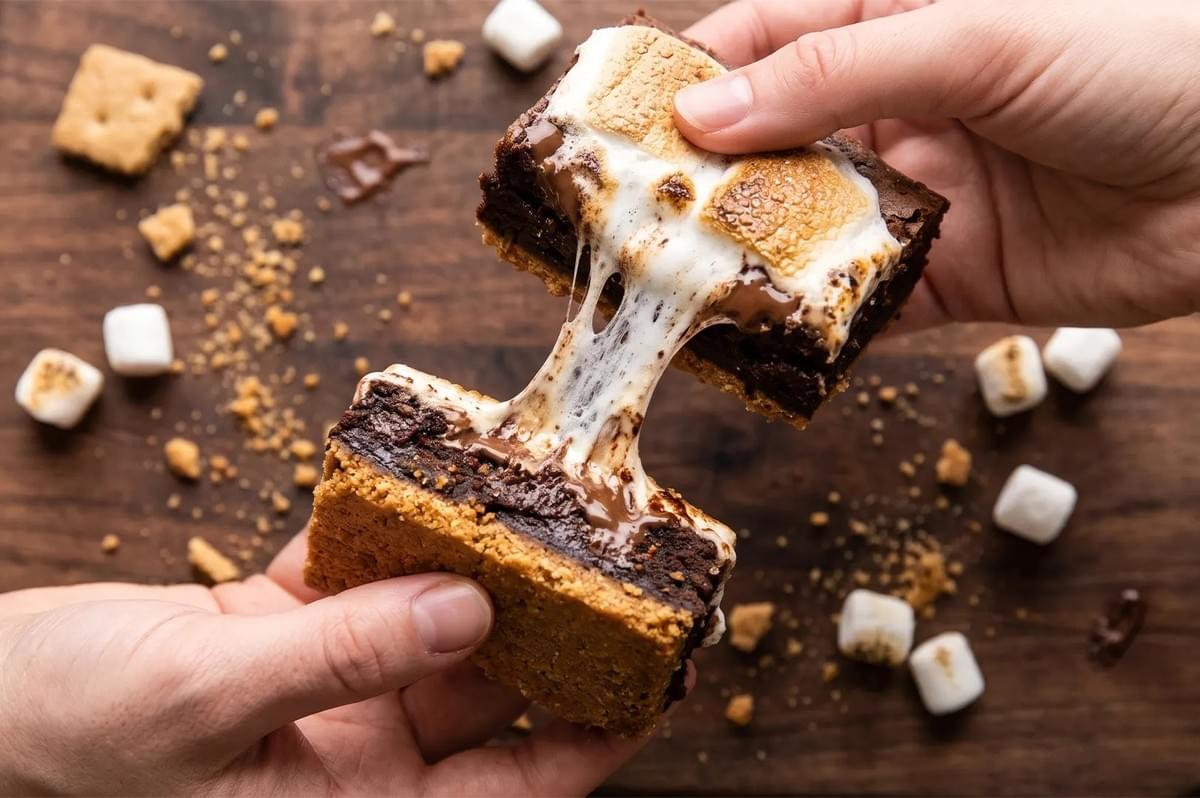
A marshmallow on the end of a stick. It turns slowly over the flames, puffs, and goes golden, then darker at one corner. Someone is already holding out a square of chocolate and two graham crackers, waiting.
That small moment is what these American s'mores brownies try to hold onto. There's no campfire here, just an oven and a square pan.
At the bottom sits a buttery graham cracker crust, crisp at the edges. In the middle is a dense, fudgy brownie layer. On top, marshmallows puff in the heat and toast until golden and soft enough to stretch when you pull a piece away.
It's the same three flavors, arranged in layers and cut into squares you can share.
A Little Background on S'mores
A classic s'more is simple. You toast a marshmallow over a fire, press it onto a piece of chocolate, and sandwich both between two graham crackers. The heat from the marshmallow softens the chocolate just enough.
The name is widely understood as a shortened form of "some more," which is what people tend to ask for after the first one. It's a campfire treat, tied to summer evenings, backyards, and camping trips across the United States.
S'mores brownies are a newer idea. They keep the familiar trio of graham cracker, chocolate, and marshmallow, but bake them into a pan. Think of them as a home-baking variation on the original, not an old recipe of their own.
Why You'll Love These Brownies
- Three textures in one bite: Crisp crust, fudgy center, and a soft, toasted top.
- Familiar ingredients: Graham crackers, chocolate, cocoa, butter, sugar, eggs, flour, and marshmallows.
- Easy to share: One pan makes 16 squares, with no assembly at the table.
- A good weekend project: Each layer is simple, and the steps happen in a clear order.
Ingredients and Their Roles
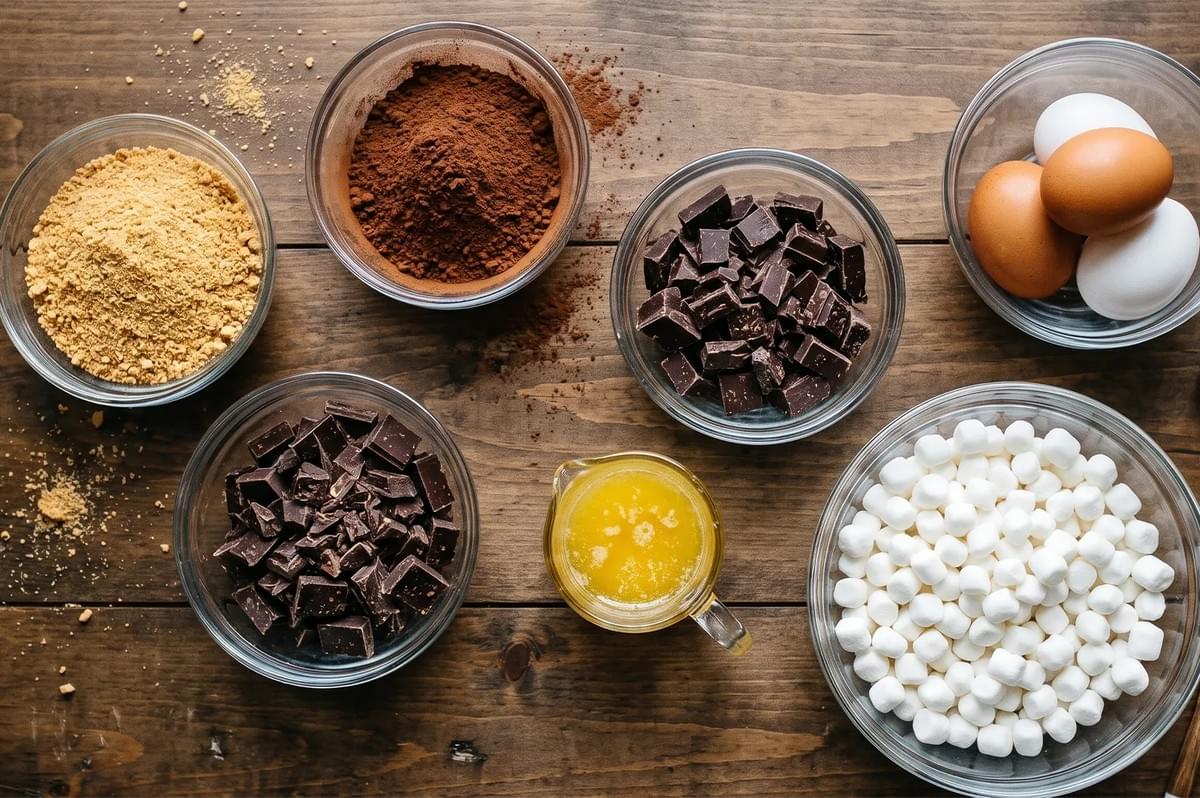
You'll find exact quantities in the recipe card below. Here's what each layer needs and why.
Graham Cracker Crust
Graham cracker crumbs, sugar, salt, and melted butter. The butter binds the crumbs, and a short bake turns them crisp and toasty. Crush the crackers finely so the crust packs together evenly.
If you can't find graham crackers, digestive biscuits are a practical swap. Use the same weight. They're less sweet and a little more crumbly, so the crust will taste slightly more savory and feel sandier.
Brownie Layer
- Semisweet or bittersweet chocolate (up to 60% cacao): This gives the brownies their fudgy body. A chopped bar melts more smoothly than chips, which often contain stabilizers.
- Unsweetened cocoa powder: It deepens the chocolate flavor. Natural or Dutch-process both work here, since the recipe has no baking soda or baking powder. Dutch-process tastes slightly mellower and looks darker.
- Butter, granulated sugar, and brown sugar: Brown sugar adds moisture and a soft caramel note.
- Eggs, vanilla, flour, and salt: Just enough flour to hold everything together. Less flour keeps the brownies dense rather than cakey.
Marshmallow Topping
Mini marshmallows cover the surface evenly and toast at the same rate. Regular marshmallows cut in half also work, though they leave more gaps. A broken graham cracker scattered on top at the end is optional, but it's a nice nod to the original.
How to Make American S'mores Brownies
1. Prepare the Pan
Heat the oven to 350°F (175°C), with a rack in the center. Use a 9-inch square metal pan. Metal matters here, because you'll finish the brownies under the broiler, and glass bakeware should never go under a broiler.
Line the pan with parchment, leaving a short overhang on two sides for lifting the brownies out later. Keep that overhang no more than an inch above the rim.
2. Make and Bake the Crust
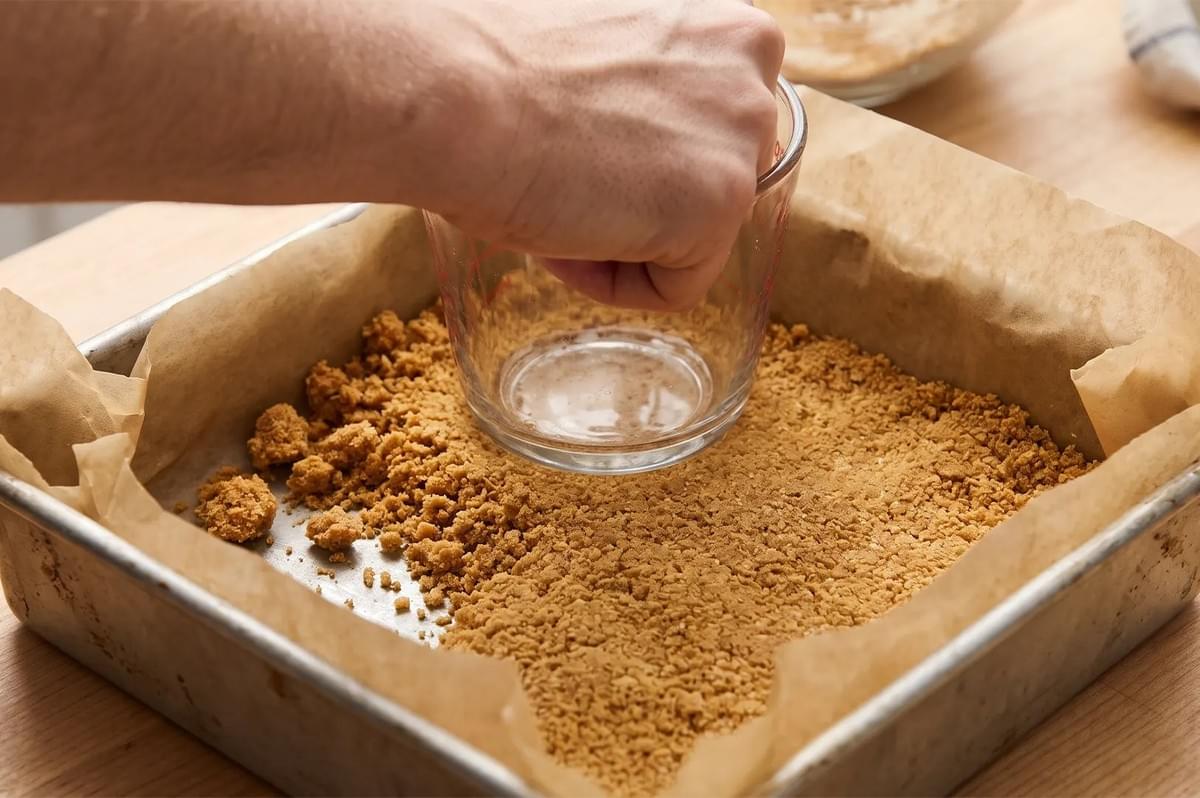
Stir the crumbs, sugar, and salt together, then add the melted butter. The mixture should look like damp sand and hold together when you squeeze a handful.
Press it firmly into the pan with the bottom of a measuring cup. Pay attention to the corners. Bake for 8 to 10 minutes, until it smells toasty and looks slightly darker at the edges. Set it aside while you make the batter.
3. Mix the Brownie Batter
Melt the butter and chopped chocolate together in a heatproof bowl, either in short microwave bursts or over a pan of barely simmering water. Stir until smooth, then let it cool for a few minutes.
Whisk in both sugars. The mixture may look a little grainy, and that's fine. Add the eggs one at a time, whisking well after each, then the vanilla. The batter should turn glossy and thick.
Sift in the flour, cocoa, and salt. Fold gently with a spatula until no dry streaks remain. Stop there. Overmixing builds gluten, which can make brownies tough.
4. Bake the Brownie Layer
Pour the batter over the warm crust and spread it to the edges. Bake for 20 to 22 minutes.
Here's what to look for. The top should look dry and set, with a thin, slightly crackled surface, and the edges should start pulling away from the pan. Insert a toothpick about an inch from the center. It should come out with moist crumbs, not wet batter.
If you hit a pocket of melted chocolate, the tester can look wetter than the brownie really is. Try another spot.
5. Add the Marshmallows
Take the pan out and scatter the mini marshmallows over the top in a single, close layer. Return it to the oven for 3 to 4 minutes, just until they puff and soften.
The marshmallows go on near the end for a reason. A full bake would melt them flat and dry them out.
6. Toast the Topping
Move a rack about 6 inches below the broiler and turn it on, following your oven's guidance. Fold the parchment overhang down against the outside of the pan so it stays well away from the heating element.
Broil for 30 to 60 seconds, watching the entire time. Marshmallows go from golden to burnt in seconds, so don't step away. Pull the pan as soon as the tops look deep golden in spots.
Prefer more control? Skip the broiler and use a kitchen torch, moving the flame steadily across the surface until it browns.
Scatter the broken graham cracker over the top now, if using.
7. Cool Before Slicing
Let the pan cool on a wire rack for at least 2 hours. The brownie needs this time to firm up, and the marshmallow needs time to settle.
Tips and Troubleshooting
Dry brownies: Check early and trust the moist-crumb test. Brownies keep cooking from the pan's heat after they leave the oven.
A crumbly crust: Press it firmly and give it the full prebake. If it still won't hold, add another tablespoon of melted butter next time.
Burnt marshmallows: Keep the rack at least 6 inches from the broiler and stay right there. A torch is the gentler option.
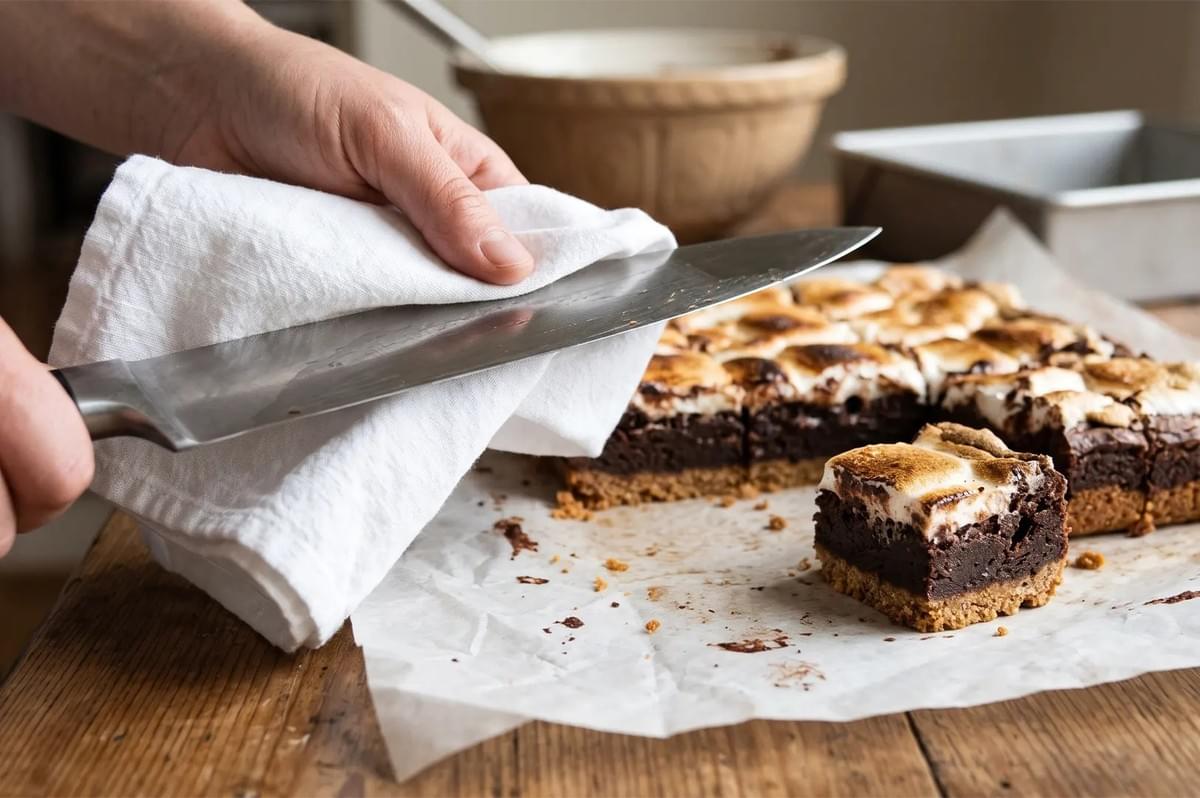
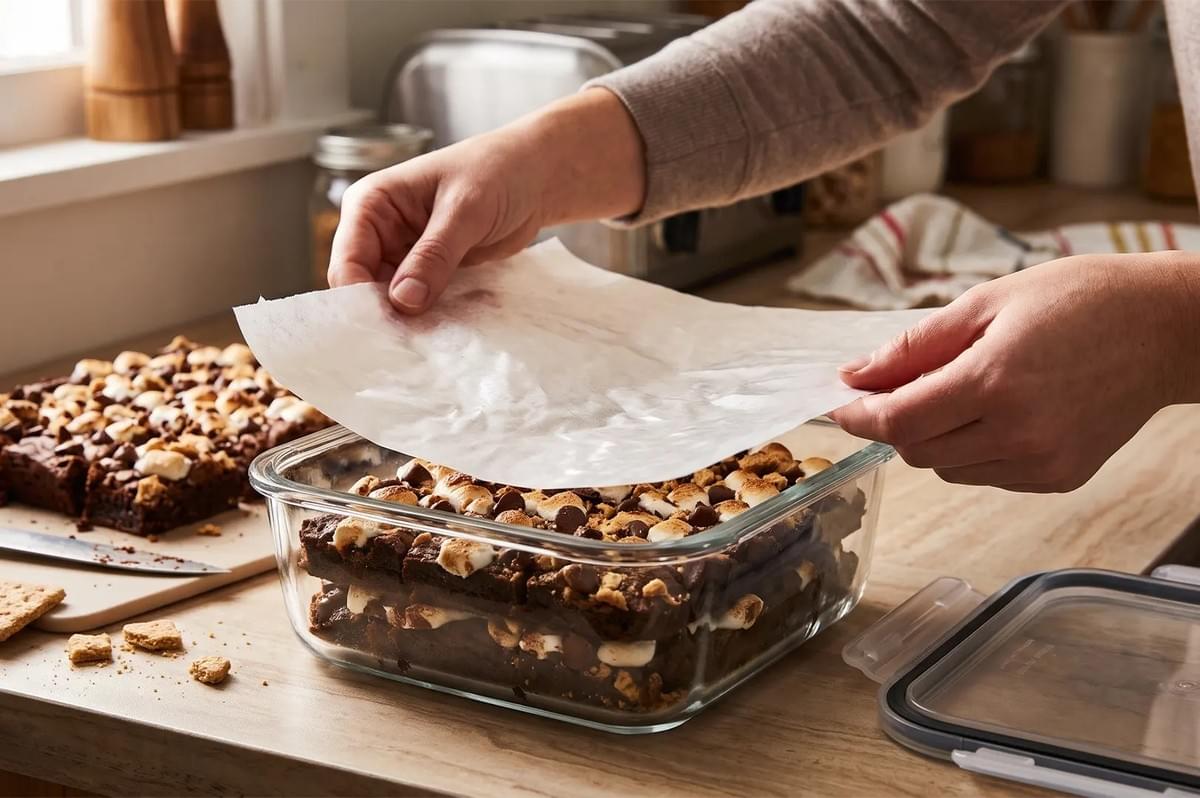
Neat slices: Lift the cooled slab out using the parchment. Use a long knife, lightly greased or dipped in hot water and wiped dry between cuts.
Warm or tidy: Warm brownies are soft, stretchy, and a little messy, which is part of the charm. For clean, sharp-edged squares, wait until they've fully cooled.
Variations and Serving Ideas
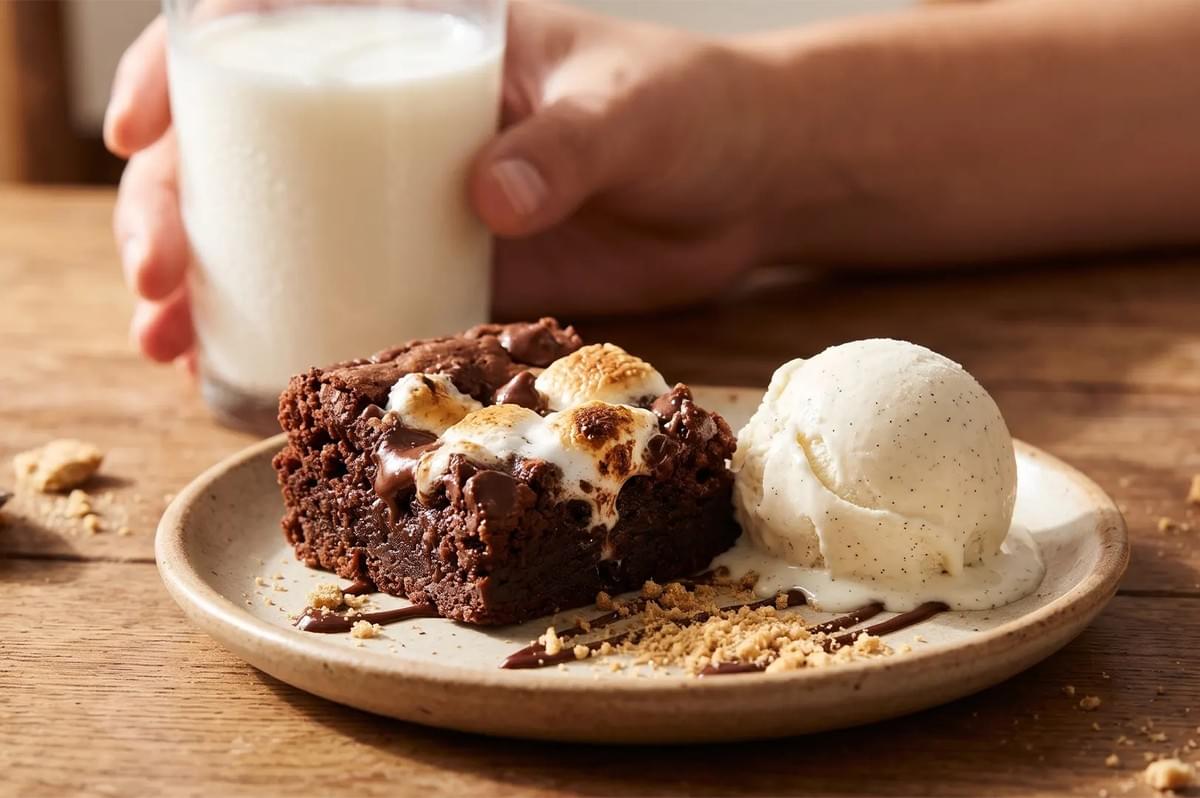
- Dark chocolate: Use chocolate around 70% cacao for a less sweet, more bitter layer. It may bake slightly firmer, so start checking at 19 minutes.
- Peanut butter swirl: Warm 3 tablespoons of creamy peanut butter until pourable. Dollop it over the batter and drag a knife through it before baking. This adds a peanut allergen.
- Gluten-free: Gluten-free graham-style crackers and a 1:1 gluten-free flour blend may work, but expect a different texture.
A note on allergens: the standard recipe contains wheat, dairy, and eggs. Most marshmallows also contain gelatin, so check the label if that matters to you.
Serve them plain, or with a cold glass of milk. A spoonful of vanilla ice cream beside a warm square is also hard to argue with.
Storage and Make-Ahead Guidance
Marshmallow topping
- 3 cups (about 150 g) mini marshmallows
- 1 graham cracker sheet, broken (optional)
Instructions
- Heat the oven to 350°F (175°C). Line the pan with parchment, overhang no more than 1 inch above the rim.
- Mix the crumbs, sugar, salt, and melted butter. Press firmly into the pan. Bake 8 to 10 minutes.
- Melt the butter and chocolate. Cool slightly. Whisk in both sugars, then the eggs one at a time, then the vanilla.
- Fold in the flour, cocoa, and salt until just combined.
- Spread over the crust. Bake 20 to 22 minutes, until set with moist crumbs on a tester.
- Top with marshmallows. Bake 3 to 4 minutes, until puffed.
- Fold the parchment down. Broil 6 inches from the element for 30 to 60 seconds, watching closely, or use a torch. Add the broken graham cracker, if using.
- Cool at least 2 hours, then lift out and slice.
Notes
- Never broil in glass bakeware.
- Melted chocolate can make a tester look wet; test another spot.
- Wipe the knife between cuts for clean squares.
One Last Square
A pan on the counter. A golden top, a little uneven. A knife that comes away sticky.
It's not a campfire, but it remembers one.
Bake a batch this weekend, and share it with whoever's nearby. Then tell us in the comments how you served yours, warm and messy or cool and neat.
