

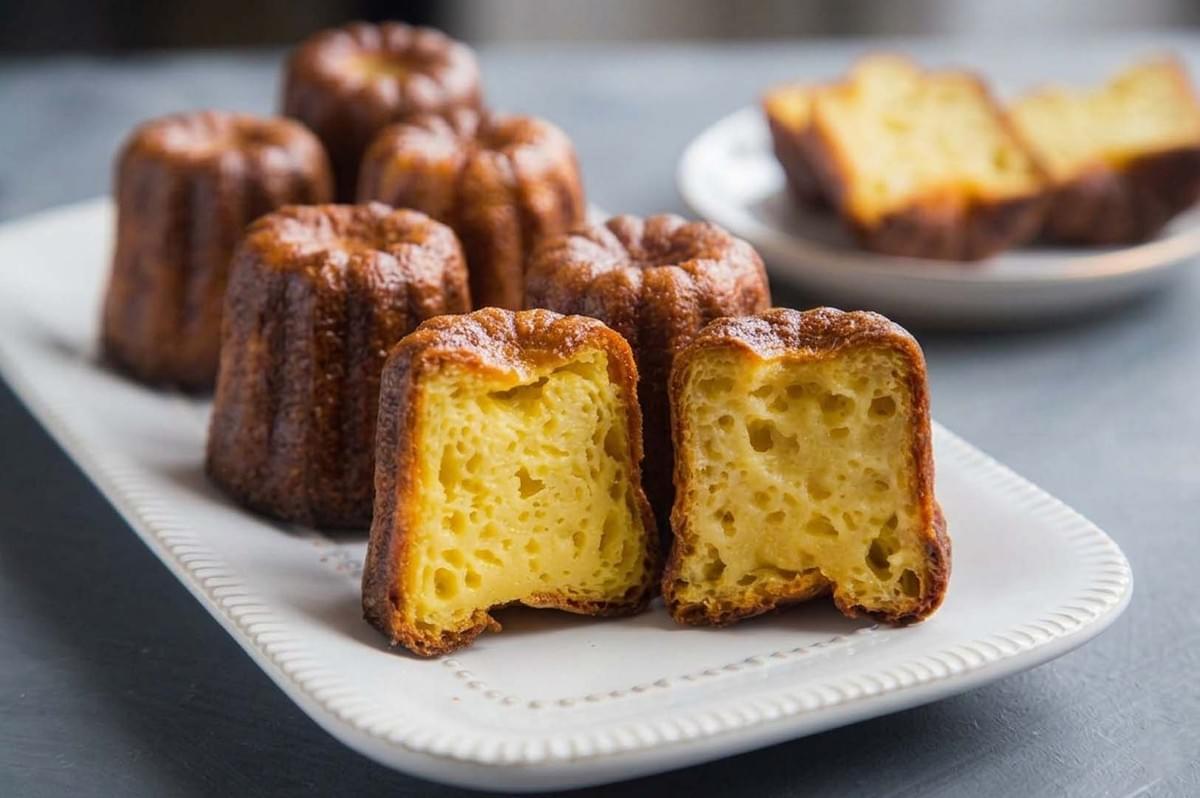
Canelés are tiny French pastries with a very good sense of drama. The outside bakes into a deep, glossy, caramelized shell that crackles when you bite it. Inside, you get a soft, custardy center scented with vanilla and rum. They are small, but they do not whisper.
The good news? This canelés recipe is completely doable at home. You do not need to be a pastry chef with a copper mold collection and a mysterious French apron. You just need clear steps, a little timing, and the confidence to bake them until they are truly deep brown.
By the end, you’ll know how to make a crispy canelé with a tender, custardy center, plus how to troubleshoot sticking, pale shells, eggy flavor, and those slightly rude little bubbles.
What Are Canelés?
Canelés, also spelled cannelés, are classic pastries from Bordeaux, France. A French canelé is usually made with a thin batter of milk, eggs, flour, sugar, butter, vanilla, and rum. The result is a rum vanilla custard pastry with a dark caramelized crust and a soft, almost pudding-like middle.
Their shape comes from special fluted molds, which help create those tall ridges and extra crisp edges. The contrast is the whole point. Crisp outside, custardy inside, deeply browned all around.
Equipment Notes (and What Matters Most)
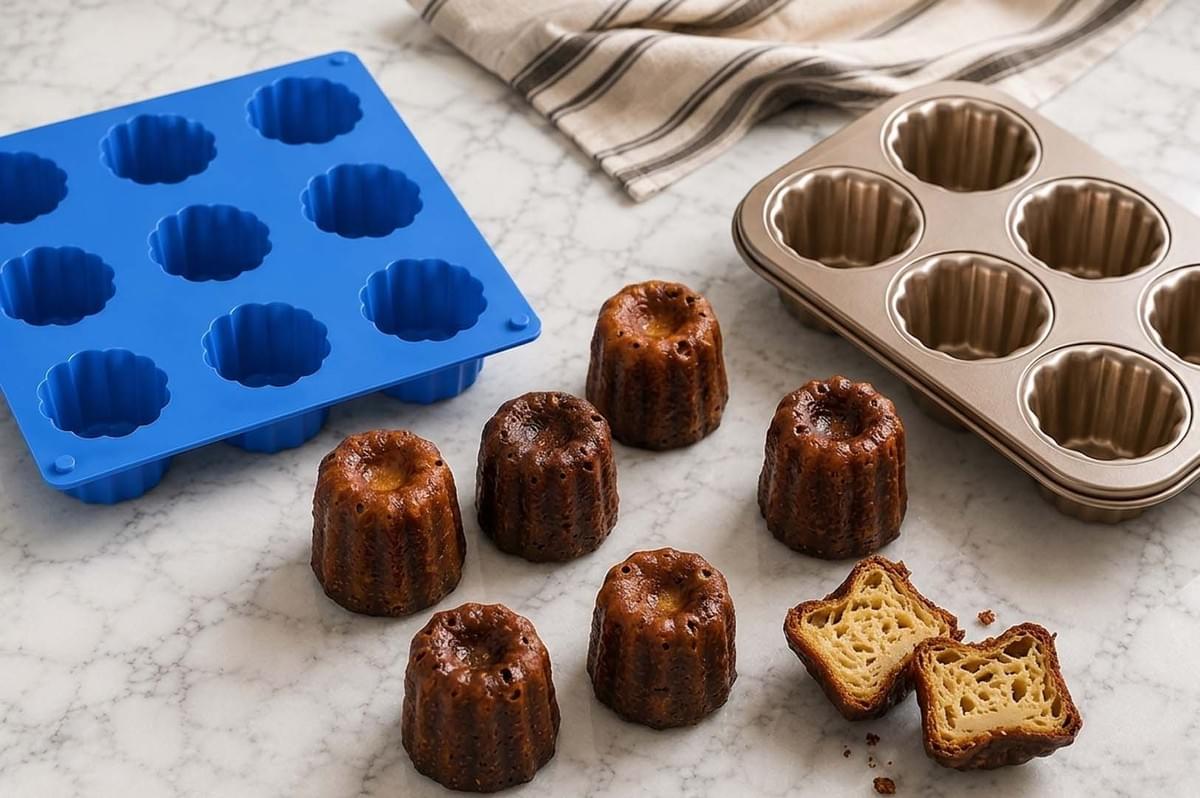
Canelé Molds
You have options, and each one behaves a little differently.
- Copper molds: The classic choice. They conduct heat beautifully, giving the deepest caramelized crust and best shape. They are also expensive and a bit high-maintenance.
- Aluminum or steel molds: A great middle ground. They brown well and are easier to manage than copper.
- Silicone molds: Convenient and affordable, but they usually produce a softer, paler shell. Still delicious, just less dramatic in the crunch department.
If you are using silicone, place the mold on a preheated baking sheet to help the bottoms brown better.
Mold Coating
Traditional canelés use a mix of beeswax and butter. It creates a thin, crisp shell and helps release the pastries. For everyday home baking, melted butter or a good baking spray works too. The crust may be slightly less shiny, but your kitchen will remain calm.
Oven Temperature
Canelés need strong heat at the beginning to set the outside quickly. An oven thermometer is helpful because many ovens run hotter or cooler than they claim. We are asking for caramelized, not cremated.
Helpful Tools
- Medium saucepan
- Mixing bowls
- Whisk
- Fine-mesh sieve
- Measuring cups or kitchen scale
- Canelé molds
- Rimmed baking sheet
- Oven thermometer, optional but helpful
Step-by-Step Recipe
Recipe Card: Canelés with Crispy Shell and Custardy Center
Prep time: 20 minutes
Cook time: 55 to 70 minutes
Rest time: 24 to 48 hours
Total time: About 25 hours, mostly resting
Yield: 12 standard canelés
Ingredients
- 2 cups (480 ml) whole milk
- 3 tablespoons (42 g) unsalted butter, plus more for molds
- 1 vanilla bean, split and scraped, or 2 teaspoons vanilla extract
- 1 cup (200 g) granulated sugar
- 1 cup (125 g) all-purpose flour
- 1/2 teaspoon fine salt
- 2 large eggs
- 2 large egg yolks
- 1/4 cup (60 ml) dark rum
- Baking spray or melted butter for coating molds, as needed
Instructions
1. Warm the Milk
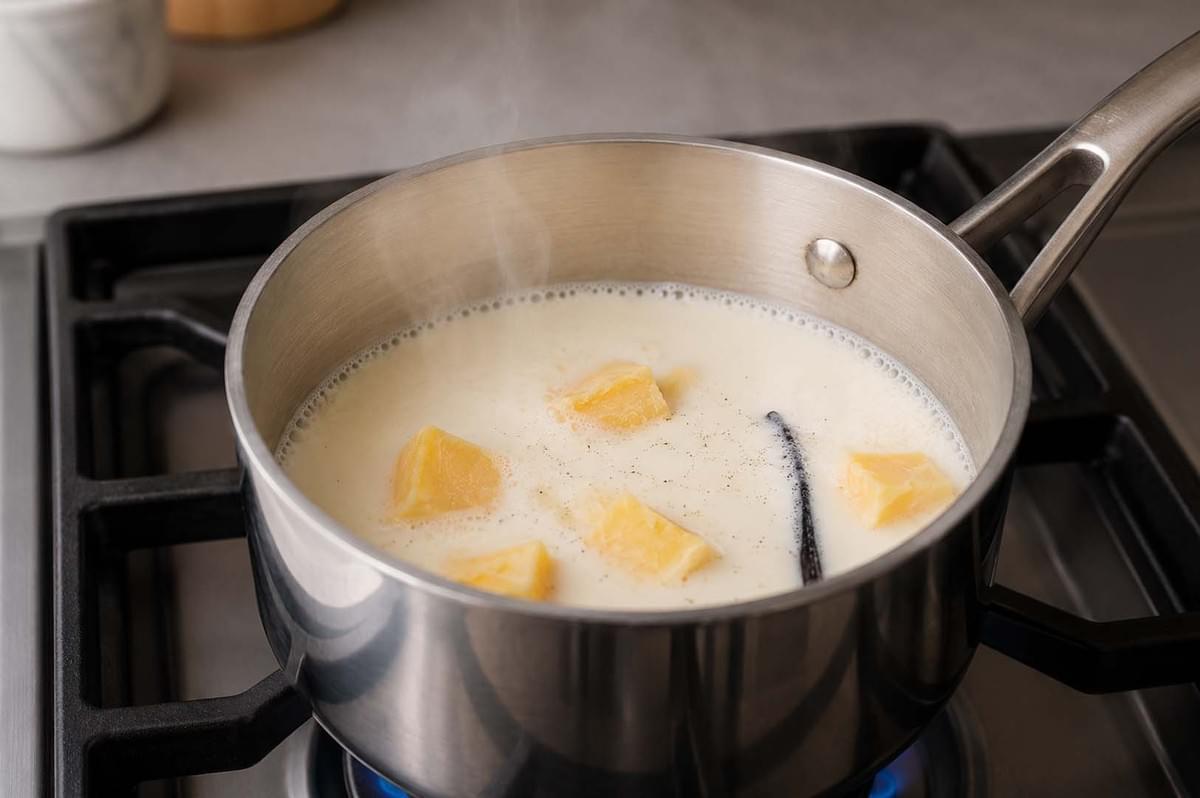
In a medium saucepan, combine the milk, butter, and vanilla bean seeds and pod, if using. Warm over medium heat until the butter melts and the milk is steaming, but not boiling.
Remove from the heat and let it cool for about 10 minutes. If you are using vanilla extract, add it after the milk cools slightly.
Why cool it? Very hot milk can scramble the eggs. We want custard, not breakfast soup.
2. Mix the Dry Ingredients
In a large bowl, whisk together the sugar, flour, and salt.
This helps prevent flour lumps when the liquid goes in. Canelé batter should be thin and smooth, almost like heavy cream.
3. Add the Eggs
In a separate small bowl, whisk the whole eggs and yolks just until combined. Try not to whip in lots of air. Too much air can cause bubbles and uneven interiors.
Add the eggs to the flour mixture and whisk gently. It may look thick and paste-like at first. That is normal.
4. Add the Warm Milk
Slowly pour in the warm milk while whisking gently. Keep going until the batter looks smooth, thin, and pourable.
If you used a vanilla pod, remove it now. Pour the batter through a fine-mesh sieve into a clean bowl or large measuring cup.
5. Add the Rum
Stir in the rum. The batter should smell like vanilla, butter, and a tiny vacation.
Cover the bowl and refrigerate for at least 24 hours, preferably up to 48 hours. Give it a gentle stir once or twice during resting if you remember. If you forget, no pastry police will arrive.
6. Prepare to Bake
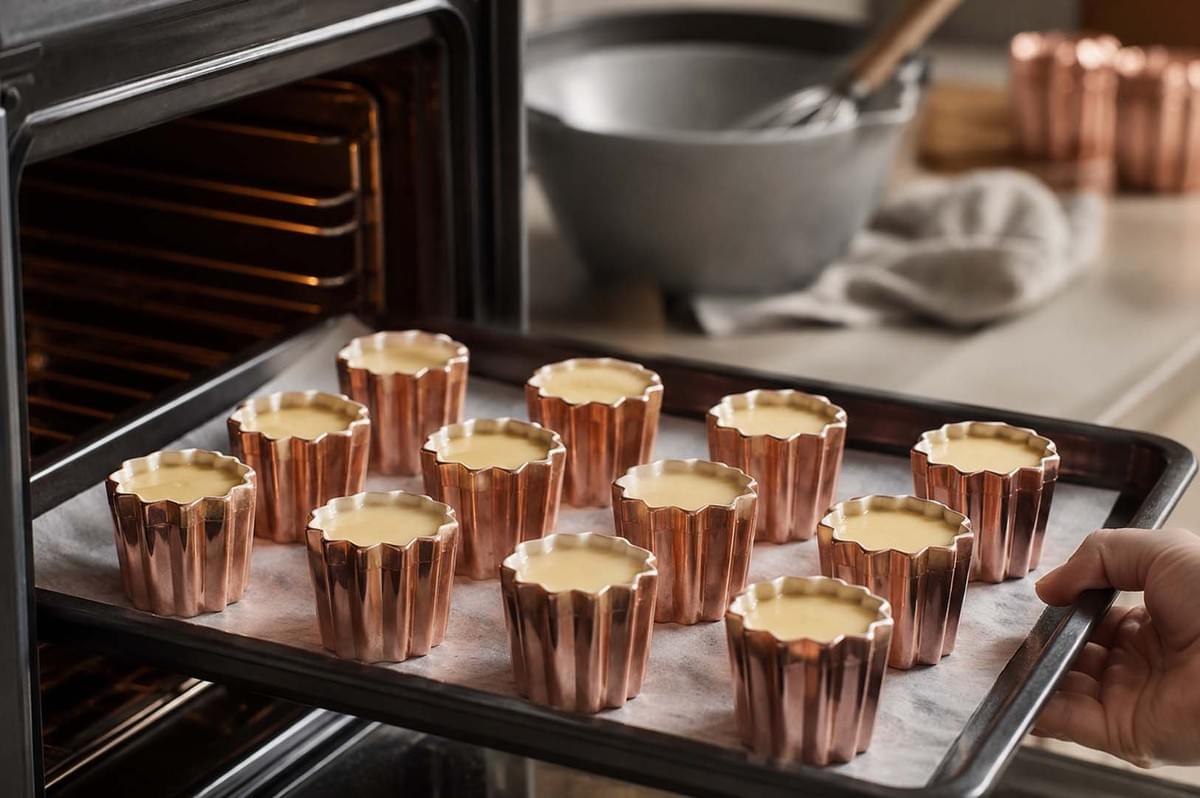
When ready to bake, preheat the oven to 450°F (230°C) for at least 30 minutes. Place a rimmed baking sheet in the oven while it preheats.
A hot pan helps the molds heat quickly, which encourages that crisp shell.
Remove the batter from the fridge and stir gently. Do not whisk hard. You want to bring it back together without adding extra air.
7. Coat the Molds
Brush the inside of each mold with melted butter or coat lightly with baking spray. If using copper molds and beeswax-butter coating, apply a very thin layer. Too much coating can pool and make the canelés greasy.
Place the prepared molds on the hot baking sheet.
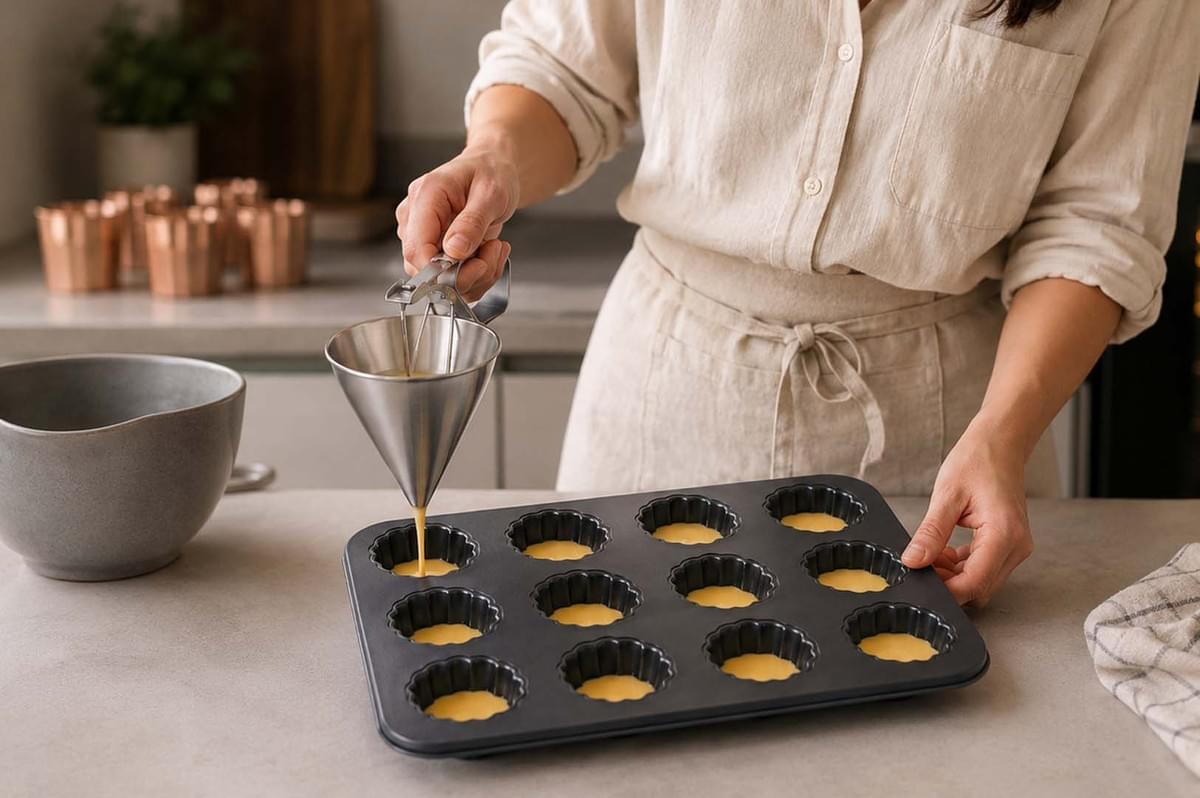
8. Fill the Molds
Fill each mold about 3/4 full, or just below the top ridge. Do not fill all the way to the top. Canelés rise as they bake, then settle back down.
Overfilled molds can overflow, and that is when your oven starts writing a complaint letter.
9. Bake Hot, Then Lower the Heat
Bake at 450°F (230°C) for 15 minutes.
Then reduce the oven temperature to 375°F (190°C) and continue baking for 40 to 55 minutes, depending on your molds and oven.
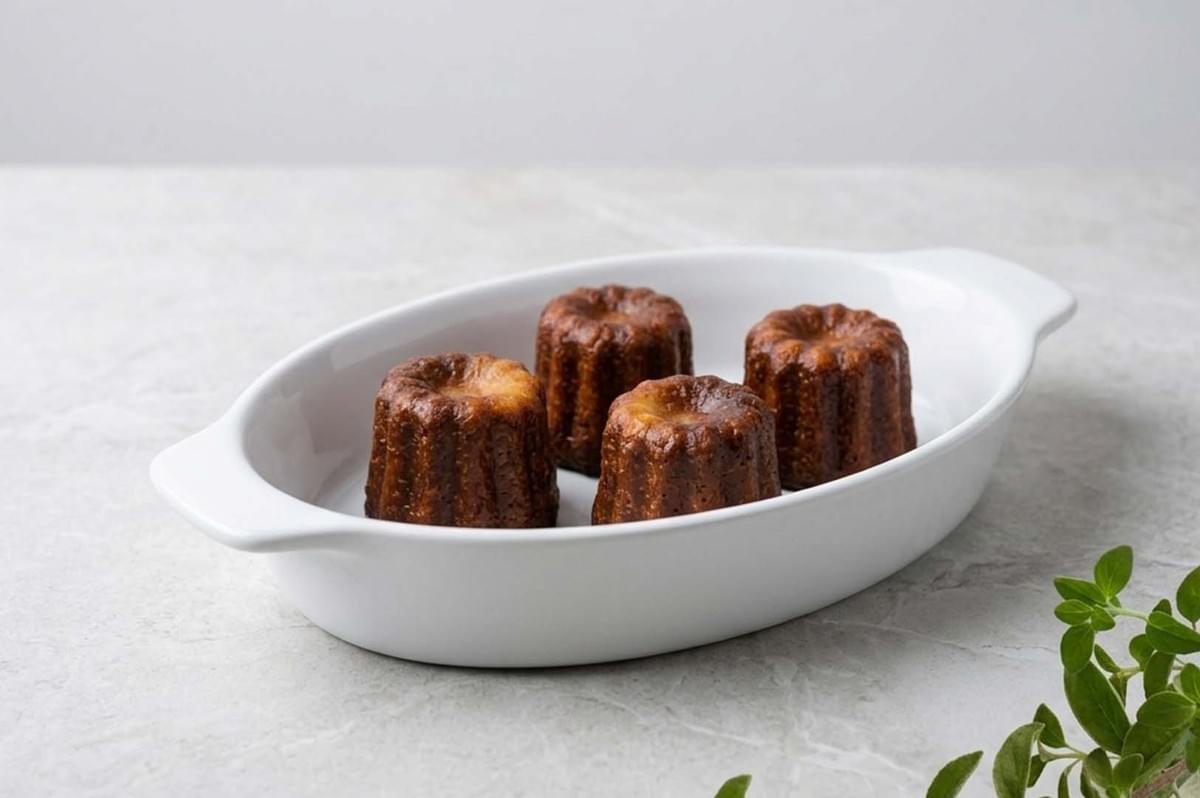
The canelés are done when they are very deep brown, almost mahogany, with firm sides. Pale golden is not enough. A properly baked crispy canelé should look darker than you think, but not black.
10. Unmold While Hot
Remove the molds from the oven. Let them sit for 2 minutes, then carefully unmold onto a wire rack.
If one sticks, let it sit another minute and try again. You can gently loosen the edge with a small offset spatula if needed.
Let the canelés cool for at least 30 minutes. The shell crisps as they cool, and the center settles into that soft custardy texture.
Baking Schedule (Make It Easy)
Best Plan: Day 1 and Day 2
Day 1: Mix the batter
- Warm milk, butter, and vanilla.
- Mix batter.
- Strain, add rum, cover, and chill overnight.
Day 2: Bake
- Preheat oven well.
- Coat molds.
- Fill and bake.
- Cool, then enjoy while the shells are crisp.
Can You Make Same-Day Canelés?
Technically, yes. Rest the batter at least 4 hours if that is all you have.
But here is the honest little baker note: same-day canelés are usually less flavorful, and the texture may be slightly less smooth. Still tasty. Just not quite as polished.
If this is your first time, I recommend the overnight rest. Future you will be pleased.
Storage + Serving
Canelés are at their best the day they are baked, especially within the first few hours. That is when the shell is crisp and the center is soft and custardy.
Store leftovers loosely covered at room temperature for up to 1 day. For longer storage, refrigerate for up to 3 days, though the shell will soften.
To re-crisp, place canelés on a baking sheet in a 350°F (175°C) oven for 5 to 8 minutes. Let them cool for a few minutes before eating, since the shell firms up as it cools.
You can freeze baked canelés for up to 1 month. Thaw at room temperature, then re-crisp in the oven.
Serve them with:
- Strong coffee or espresso
- Black tea
- A small glass of dessert wine
- Fresh berries
- A brunch spread when you want to look casually brilliant
Canelés are one of those bakes that teach you something every time. Maybe your first batch is a little pale. Maybe one sticks. Maybe one comes out so perfect you quietly rotate it under the kitchen light like a pastry jeweler.
All of it counts.
Try different molds, take notes on your oven, and bake them until they are boldly, beautifully brown. A slightly imperfect French canelé is still a rum vanilla custard pastry with a crisp shell and a custardy center, which is to say, very much worth celebrating.
Happy baking, and may your canelés release cleanly and crackle loudly.
