

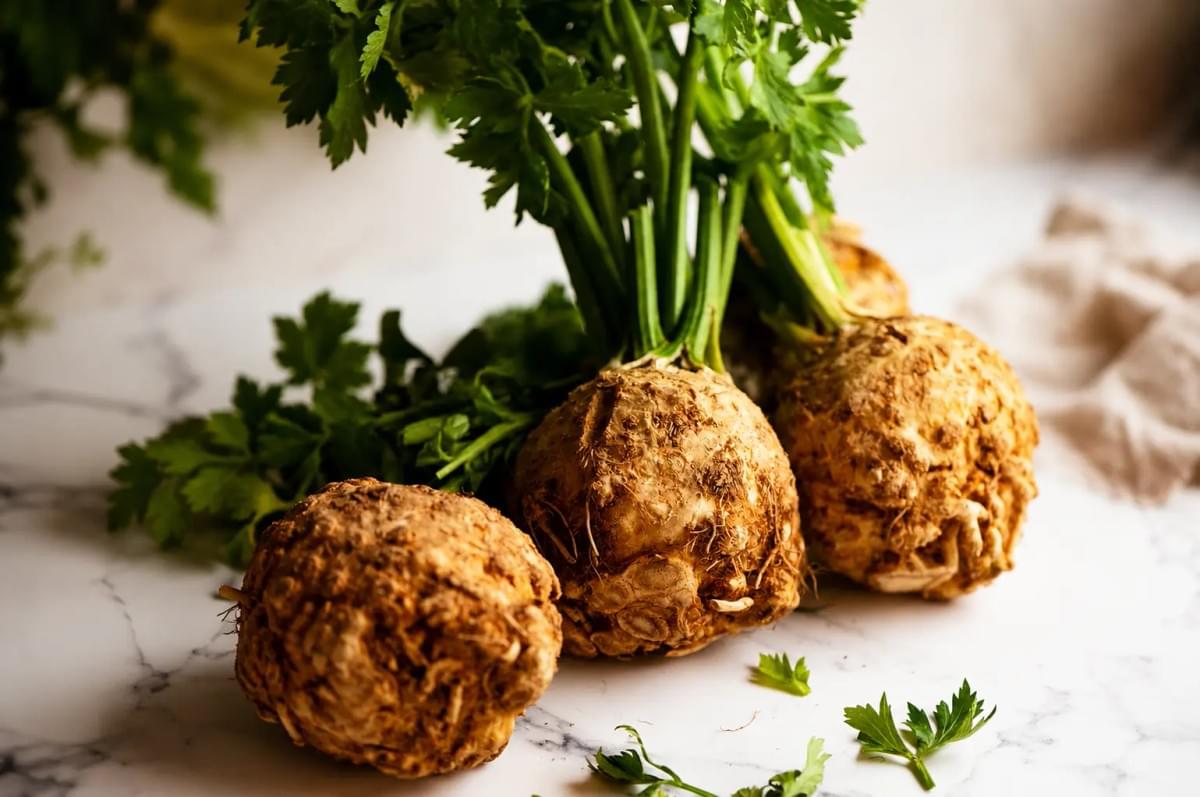
The market is quieter in winter. Fewer bright things, fewer colors shouting for your attention. And there, in a crate near the back, sits the celeriac—pale, knobbly, whiskered with fine roots and clumped with a little soil. It is not a vegetable that tries to impress you.
But that is often where the good ones hide.
I passed celeriac for years, the way you pass a stranger you keep meaning to talk to. Then one cold evening I finally brought one home, not knowing quite what to do with it. What I found underneath that rough skin was quiet and lovely: a flesh that turns silky when cooked, gentle and nutty, with a whisper of celery somewhere in the background.
If you have never cooked with it, let me walk you through it. Winter is the right time, and this is the right root.
Why celeriac deserves a place on your table
Celeriac asks for a little patience. You have to peel past the gnarled exterior, trust that something good waits inside. That small effort is part of why it feels so fitting for the cold months, when cooking slows down and the kitchen becomes the warmest room in the house.
It is humble food. It does not go viral. It just shows up, steady and reliable, and rewards you with comfort.
A short introduction to celeriac
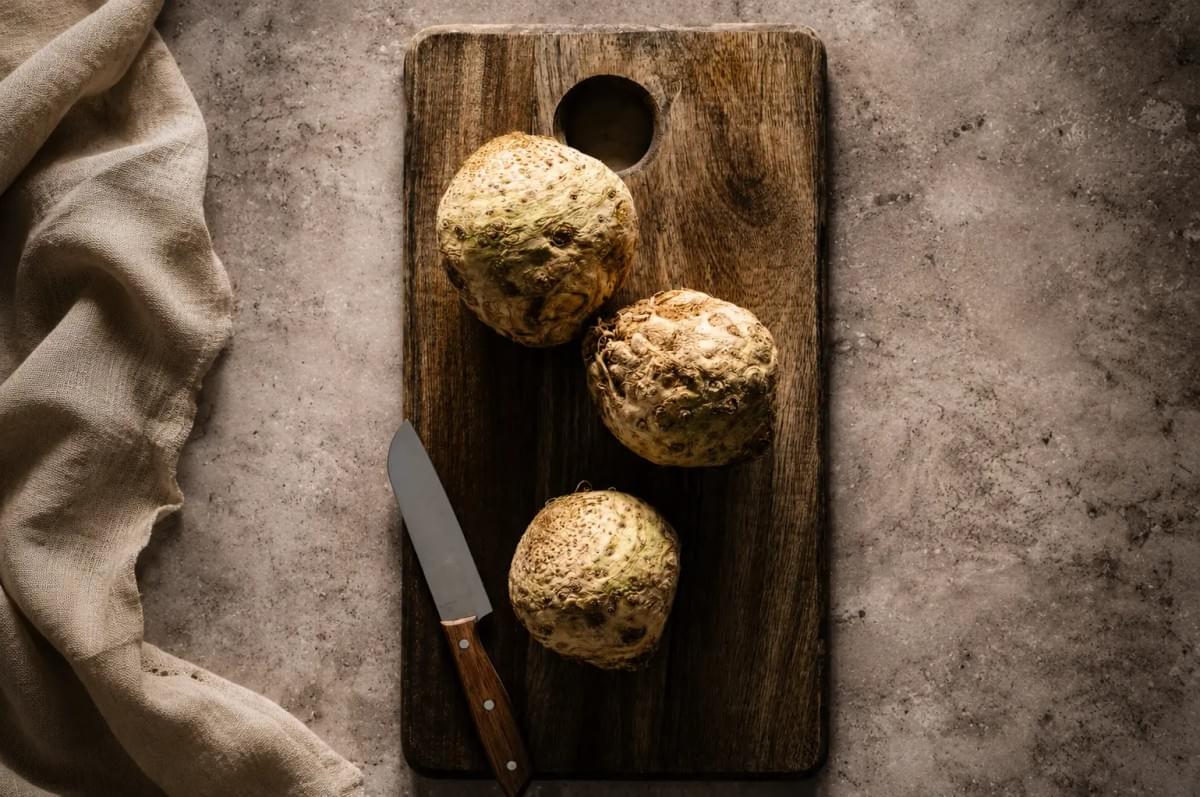
Celeriac (also called celery root) is the swollen, edible base of a celery plant grown specifically for its root rather than its stalks.
Where stalk celery is crisp, watery, and sharp, celeriac is dense and starchy, closer in feel to a potato or turnip. The celery note is there, but softened, more earthy and nutty than green and bright.
What it looks and tastes like
- Appearance: A round, lumpy root, roughly the size of a grapefruit or larger, with pale brown skin and a tangle of fine roots at the base.
- Raw flavor: Fresh, faintly celery-like, a little peppery.
- Cooked flavor: Mellow, sweet, and nutty, with a smooth, creamy texture that takes beautifully to butter, cream, and slow heat.
Why it shines in winter
Celeriac is at its best in the cold season, when it turns up firm and full of flavor. It stores well, which made it a quiet staple in colder climates long before refrigeration.
How to buy it
Pick one that feels heavy for its size, with firm, unblemished skin. Avoid any that feel light, soft, or spongy, or that have soft brown patches.
How to store it
Keep it in the fridge, unwashed, in the crisper drawer. Loosely wrapped, a whole celeriac will happily last two to three weeks. Once peeled and cut, use it within a few days, and drop the pieces in water with a squeeze of lemon to stop them browning.
How to peel and prepare it safely
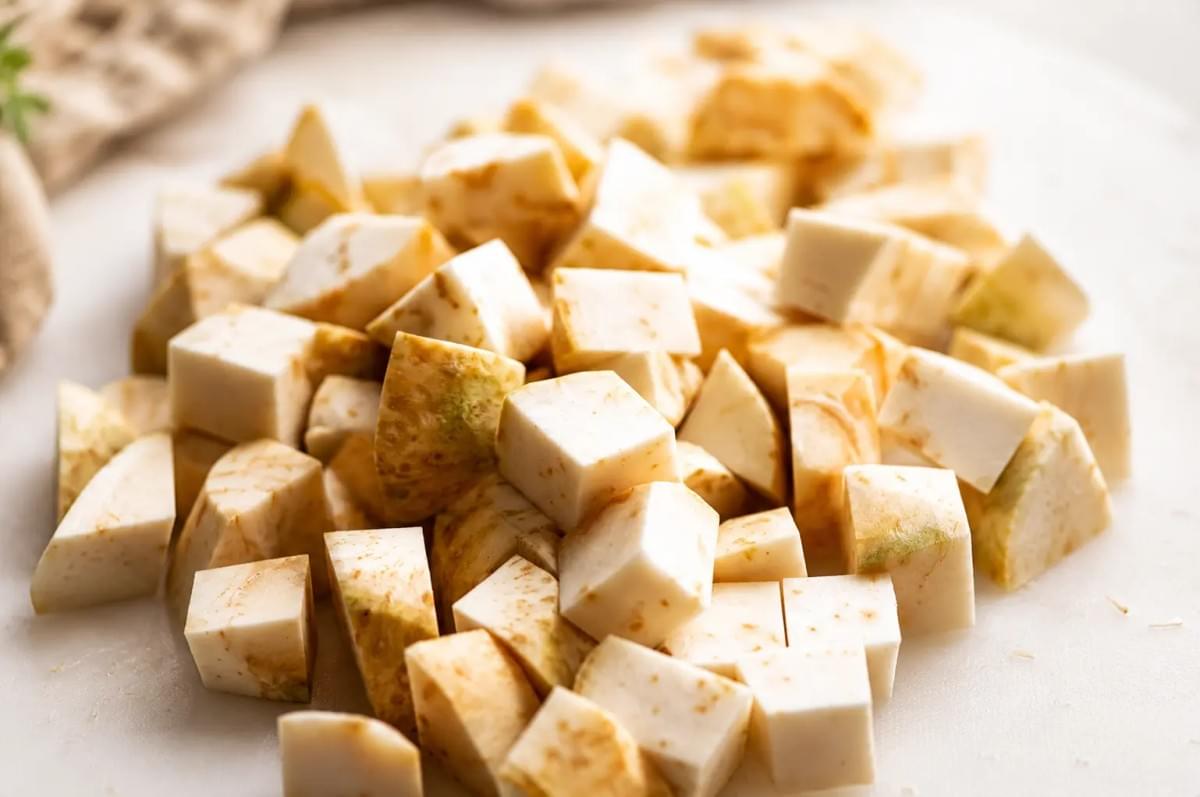
The knobbly skin can look intimidating, but it is simple once you have a plan.
- Slice off the top and bottom so you have two flat, stable ends.
- Stand the root on a flat end on your board.
- Working top to bottom, cut away the skin in strips with a sharp knife, following the curve.
- Trim any stubborn dark spots, then cut as your recipe needs.
A flat base means the root will not roll while you work. That small step keeps your fingers safe.
The recipe: silky celeriac and potato soup with brown butter

I wanted a recipe that shows off what celeriac does best: turning soft and creamy, holding warmth in a bowl on a grey afternoon. This soup does exactly that—smooth without being heavy, gently nutty from the root and the brown butter, and quietly comforting.
It is also forgiving, which matters when you are meeting a new ingredient. You cannot really get this wrong.
Recipe details
- Yield: 4 servings
- Prep time: 20 minutes
- Cook time: 30 minutes
- Total time: 50 minutes
Equipment
- Sharp knife and cutting board
- Large heavy pot or Dutch oven
- Blender or immersion blender
- Small pan (for the brown butter)
Ingredients
For the soup:
- 1 large celeriac (about 800 g / 1.75 lb), peeled and cut into 2 cm (3/4 inch) cubes
- 2 medium starchy potatoes (about 300 g / 10 oz), peeled and cubed
- 1 medium onion, chopped
- 3 garlic cloves, sliced
- 2 tablespoons (30 g) butter
- 1 tablespoon olive oil
- 1 liter (4 cups) vegetable or chicken stock
- 120 ml (1/2 cup) whole milk or single (light) cream
- 1 bay leaf
- Salt and freshly ground black pepper, to taste
- A squeeze of lemon juice, to finish
For the brown butter topping:
- 3 tablespoons (45 g) butter
- A small handful of fresh sage leaves (or 1 tablespoon chopped chives)
Method
- Sweat the aromatics. Warm the butter and olive oil in your pot over medium heat. Add the onion with a pinch of salt and cook gently for 5 to 6 minutes, until soft and translucent but not colored.
- Add the roots. Tip in the celeriac and potato cubes, and stir to coat them in the buttery onion.
- Simmer. Pour in the stock, add the bay leaf, and bring to a gentle boil. Lower the heat, cover, and simmer for 20 to 25 minutes.
- Blend. Remove the bay leaf. Blend the soup until completely smooth. Return it to the pot.
- Finish the soup. Stir in the milk or cream and warm it gently over low heat. Season with salt and plenty of black pepper. Taste, then add a small squeeze of lemon.
- Brown the butter. In a small pan over medium heat, melt the butter. Let it foam, then keep swirling as it turns golden and smells nutty, about 2 to 3 minutes. Drop in the sage leaves and let them crisp for 30 seconds.
- Serve. Ladle the soup into bowls and spoon the brown butter and sage over the top.
Serving suggestions

This soup is happy on its own, but it loves a little something alongside.
- Crusty bread, warm from the oven, for dipping
- A sharp cheese toastie cut into soldiers
- A scatter of toasted hazelnuts or walnuts on top, echoing the nutty flavor
- A few drops of good olive oil and cracked pepper if you skip the brown butter
Serve it hot, in your favorite bowl, with the fan off and something quiet on in the background. It is that kind of meal.
A variation to try
Roasted celeriac soup. For a deeper, cozier flavor, roast the celeriac and potato cubes first. Toss them with a little olive oil and salt, spread on a tray, and roast at 200°C (400°F) for about 30 minutes until golden at the edges.
Storage and reheating
The soup keeps in an airtight container in the fridge for up to 4 days, and the flavor settles nicely overnight.
It freezes well too, for up to 3 months.
Before you go
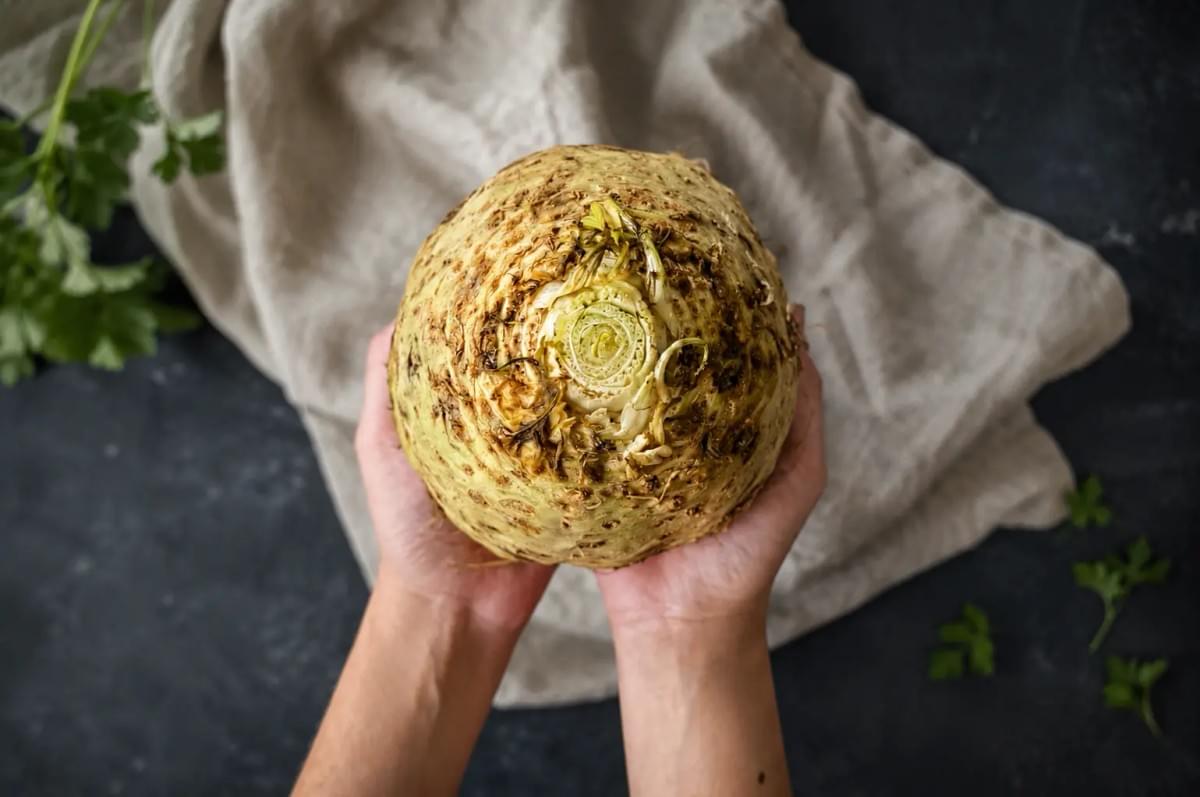
Some vegetables win you over at first glance. Celeriac takes a little longer. You peel past the rough exterior, you cook it low and slow, and it gives you back something gentle and warming that suits a winter evening perfectly.
So next time you pass that crate of pale, knobbly roots, pick one up. Bring it home. Let it surprise you the way it surprised me.
For more seasonal stories and simple, comforting recipes, visit Our Food Rhythms.
