

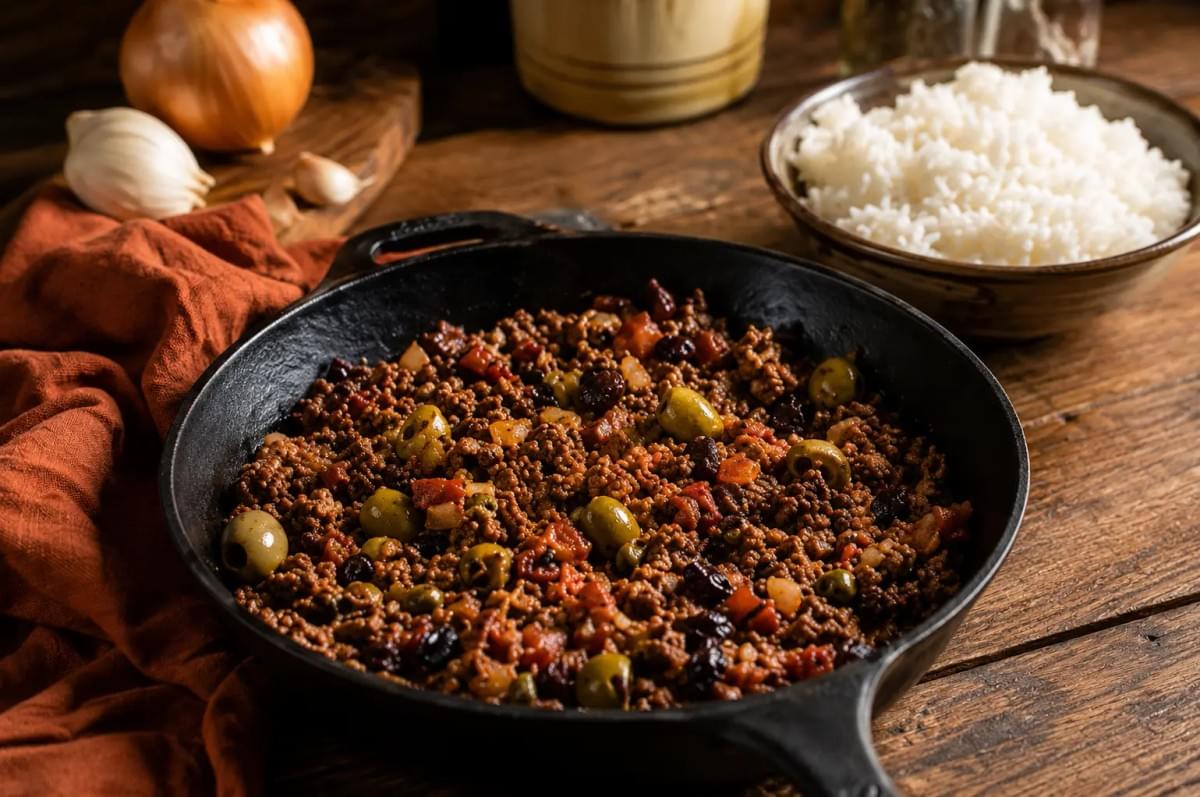
The first time I smelled picadillo simmering, I didn't know its name yet.
I only knew that a kitchen down the hall had turned warm and busy, and that whatever was cooking mixed the smoky punch of cumin with something almost sweet. Later, someone handed me a plate: soft white rice, a spoonful of dark, glistening beef, and a few olives peeking out. There was a fan going somewhere, and rain outside. I ate the whole thing without saying much.
That is the quiet magic of picadillo. It doesn't announce itself. It just fills the room, then fills you.
If you have never made it, you are in for the easy kind of joy. This is a stew that asks for one pan, some patience (not much), and a fridge that probably already holds most of what you need.
Why you'll love this one:
- The sweet-savory balance is the whole story. Plump raisins meet salty olives, and somehow they get along beautifully.
- It is genuinely weeknight-friendly, ready in about 40 minutes from start to plate.
- It tastes even better the next day, so leftovers are a gift, not a chore.
A Quick Word on Cuban Picadillo
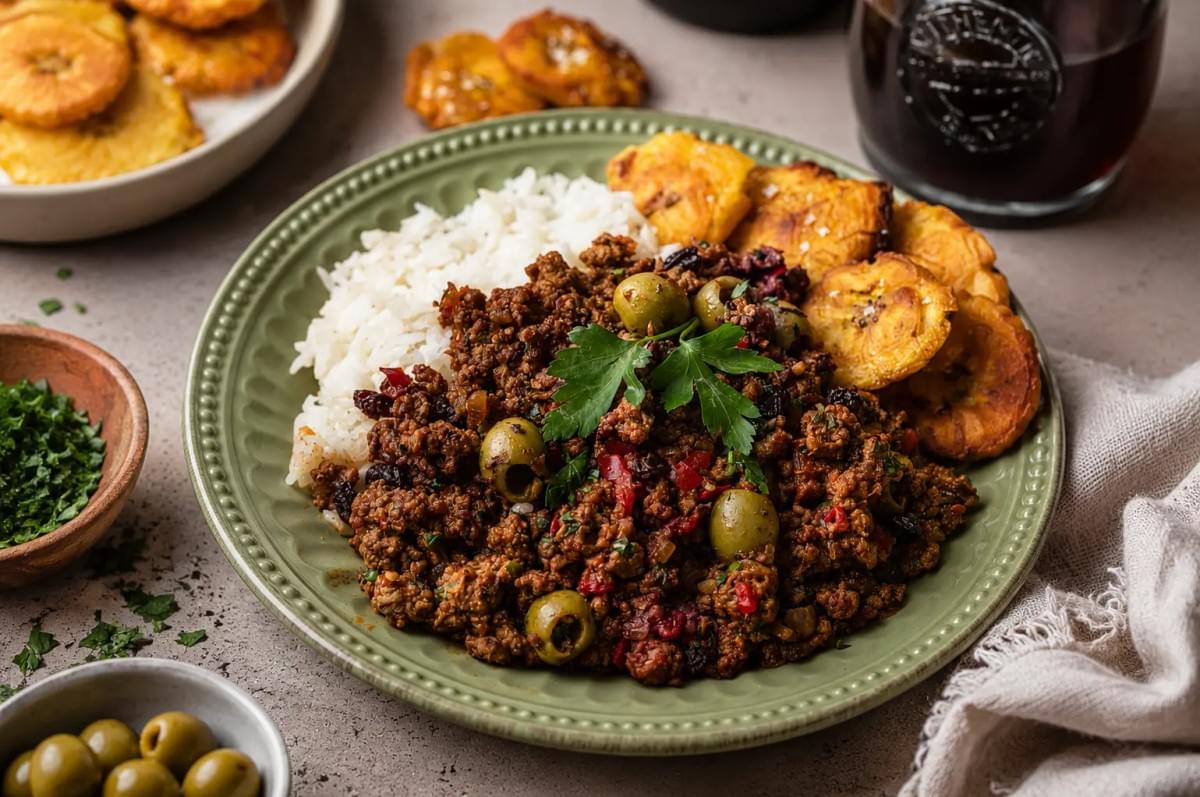
Picadillo is a name you will find across many Latin American and Filipino kitchens, and each place makes it its own way. The Cuban version leans into that sweet-and-salty pull, with raisins, green olives, tomato, and a warm hum of cumin and oregano running underneath.
The word picadillo comes from "picar," to chop or mince. At its heart, it is ground meat cooked down with aromatics until everything melts together. Every household bends it a little. Some add potatoes. Some add capers. Some skip the raisins entirely (and we will talk about that). There is no single correct bowl, only the one your family reaches for.
What It Tastes Like
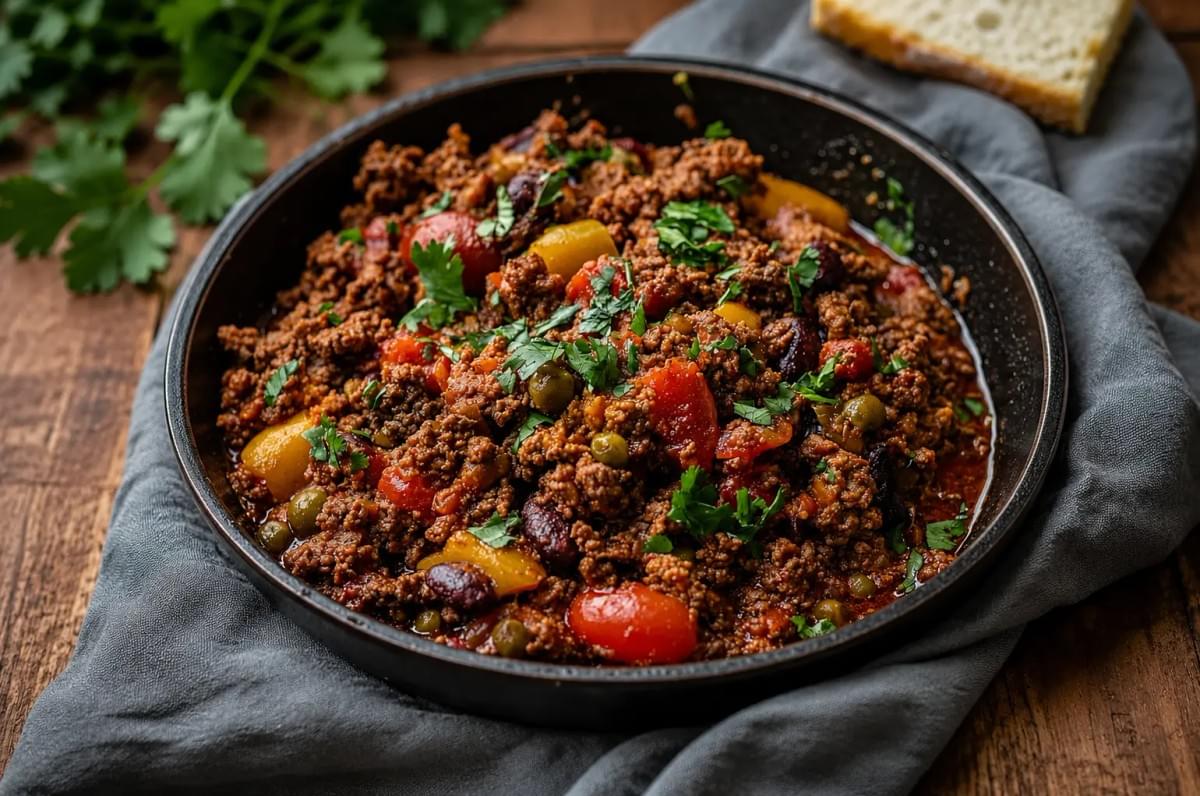
Picadillo is savory first, with a deep, tomato-rich backbone. Then the surprises arrive. A raisin bursts sweet against your tongue. An olive brings a briny snap. The cumin keeps everything grounded and a little smoky.
The texture is soft and saucy, somewhere between a stew and a thick ragu. It clings to rice without turning soupy. The aroma, as it simmers, is the best part: warm spice, gentle sweetness, and that savory pull that makes people wander into the kitchen asking what's for dinner.
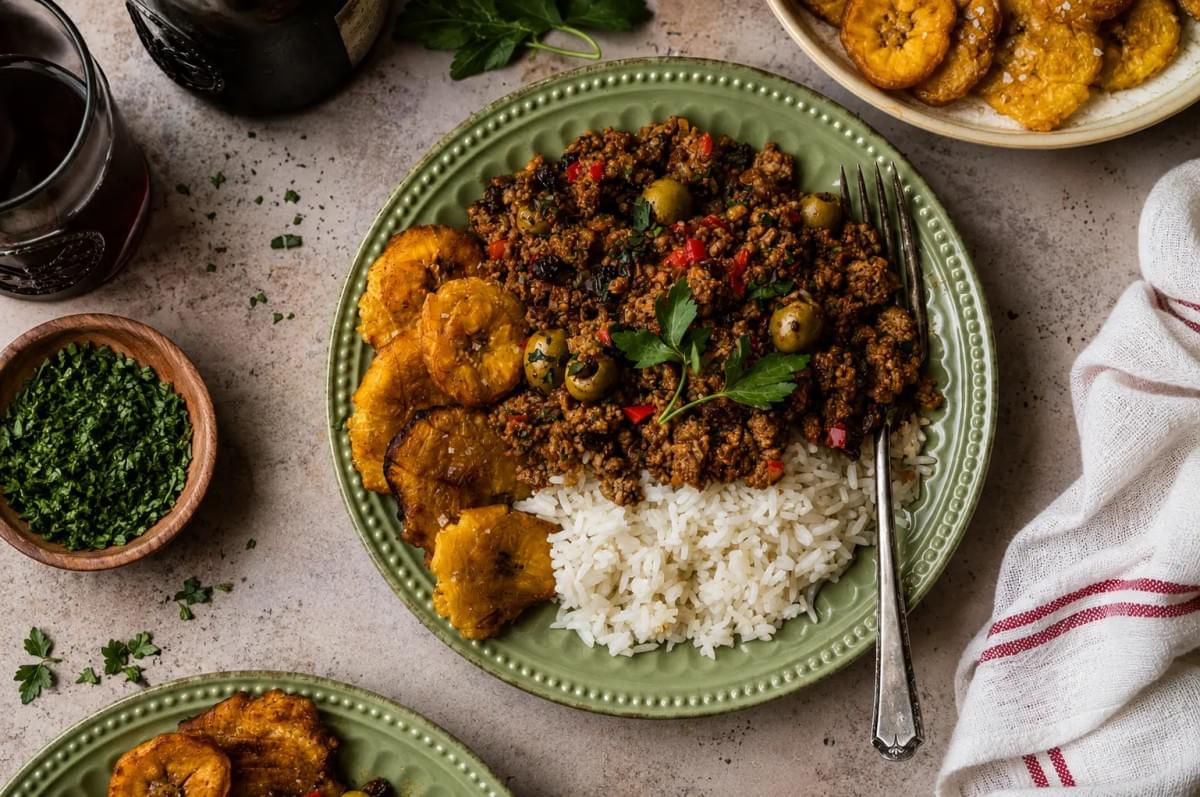
It loves white rice most of all. Spoon it over a fluffy mound and let the sauce sink in. Fried ripe plantains alongside, sweet and caramelized, are a match made somewhere very good. Black beans round it out into a full, comforting plate.
Ingredients You'll Need
Here is your cast. Nothing fancy, all of it working together.
- 1 pound (450 g) ground beef. The heart of the dish. An 80/20 blend gives you flavor and a little richness. Leaner works too, just add a touch of oil.
- 1 medium onion, finely chopped. The sweet, soft base.
- 3 cloves garlic, minced. For that savory depth.
- 1 green bell pepper, diced. Classic in Cuban cooking, part of the flavor foundation.
- 1 can (8 oz / 225 g) tomato sauce, or about 1 cup crushed tomatoes. This is your sauce and your color.
- 1 teaspoon ground cumin. The warm, smoky soul of picadillo.
- 1/2 teaspoon dried oregano. Earthy and herbal.
- 1 bay leaf. Quiet, but it earns its place.
- 1/2 teaspoon black pepper, plus salt to taste.
- 1/3 cup (about 50 g) green olives, sliced, plus 1 tablespoon of their brine. The salty, tangy counterpoint.
- 1/3 cup (about 50 g) raisins. The sweet little pops that make picadillo, picadillo.
- 2 tablespoons olive oil, for cooking.
- Optional: 1 medium potato, peeled and diced small, for a heartier stew.
- Optional: 1 tablespoon capers, for extra brightness.
Substitutions and swaps
- Ground turkey or chicken works well in place of beef. Add a little extra oil, since it is leaner.
- Vegetarian? Swap in crumbled firm tofu, cooked lentils, or a plant-based ground. Brown it well for depth.
- No raisins, no problem. Some folks love picadillo without them. Skip them, or trade in a small spoon of chopped dates for gentler sweetness.
- Olive choices: Manzanilla or pimiento-stuffed green olives are traditional. Kalamata will change the flavor but still taste good, just a bit bolder.
How to Make Cuban Picadillo
Read through once, then let's cook. You've got this.
- Warm the pan. Heat the olive oil in a large skillet over medium heat. Give it a minute until it shimmers.
- Build the base. Add the onion and bell pepper. Cook, stirring now and then, until soft and fragrant, about 5 minutes. Stir in the garlic and cook one more minute, just until you can smell it.
- Brown the beef. Push the vegetables to the side and add the ground beef. Let it sit for a minute before you break it up, so it can catch some color. Then crumble it and cook until no pink remains, about 6 to 7 minutes. Browning is where the flavor lives, so don't rush this part. Drain excess fat if there's a lot.
- Season it. Sprinkle in the cumin, oregano, black pepper, and a good pinch of salt. Stir for 30 seconds so the spices wake up in the warm pan.
- Add the tomato and simmer. Pour in the tomato sauce and tuck in the bay leaf. If you're adding potatoes, stir them in now. Bring it to a gentle bubble, then lower the heat, cover, and let it simmer for 15 to 20 minutes. The sauce should thicken and the potatoes (if using) turn fork-tender.
- Bring in the sweet and salty. Stir in the raisins, olives, olive brine, and capers if using. Simmer uncovered for another 5 minutes. This is where the magic settles in. Taste and adjust the salt.
- Rest, then serve. Fish out the bay leaf. Let it sit off the heat for a few minutes. The flavors keep mingling as it rests. Serve warm over rice.
Make it your way: Want it spicier? Add a pinch of red pepper flakes or a diced chili with the aromatics. Want it saucier? Add a splash of broth or water while it simmers. Want it thicker? Leave the lid off longer and let it reduce.
Common Mistakes to Avoid
- Not browning the beef. Pale, steamed meat means flat flavor. Let it catch some color before you stir.
- Oversweetening. Raisins bring plenty of sweetness on their own. Resist the urge to add sugar unless a taste tells you it truly needs it.
- Adding olives too early. Toss them in near the end so they stay bright and briny instead of dull and soft.
- Too watery sauce. If it looks thin, simmer uncovered a little longer. Patience thickens it beautifully.
What to Serve With Picadillo
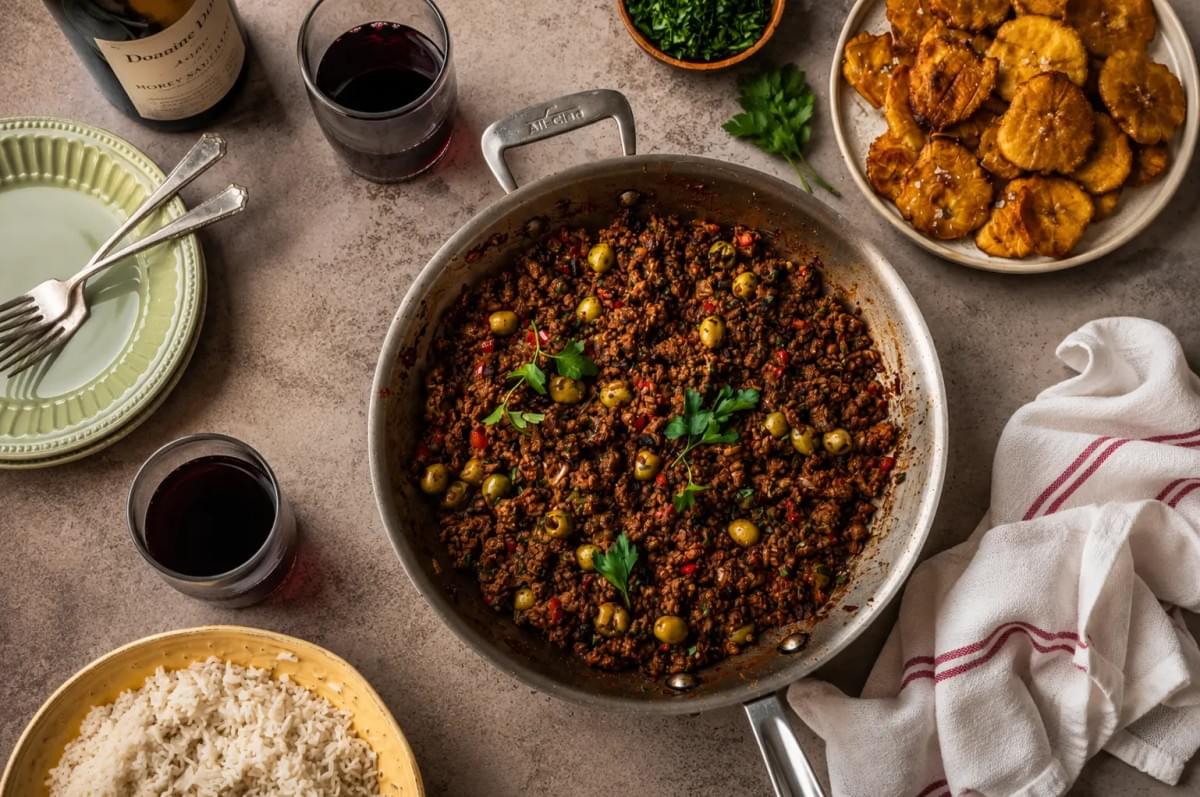
Picadillo is generous. It plays well with almost anything.
- Fluffy white rice (the classic, and for good reason)
- A side of black beans
- Fried ripe plantains (maduros), sweet and golden
- Tostones, those crisp, salty green plantains
- A simple green salad to cut the richness
- Warm tortillas for scooping
- Tucked inside empanadas as a filling
Storage, Reheating, and Make-Ahead
Here's the good news: picadillo tastes even better the next day. The flavors settle in overnight and deepen.
- Fridge: Store in an airtight container for up to 4 days.
- Freezer: It freezes wonderfully for up to 3 months. Cool it fully, then pack in a sealed container.
- Reheating: Warm it gently in a pan over low heat with a small splash of water to loosen the sauce. The microwave works too, in short bursts with a stir in between.
- Make-ahead: Cook a batch on the weekend, and dinner is halfway done all week.
FAQ
Can I make it without raisins?
Absolutely. Some households never use them. Leave them out for a savory-forward version, or swap in a small spoon of chopped dates if you still want a hint of sweetness.
What olives are best?
Manzanilla or pimiento-stuffed green olives are the traditional choice, briny and mild. Kalamata olives work too, though they bring a bolder, deeper flavor.
Can I use ground turkey?
Yes. Turkey (or chicken) makes a lighter picadillo. Since it is leaner, add a bit more olive oil and brown it well so it doesn't dry out.
Can I make it in a slow cooker?
You can. Brown the beef and aromatics first in a pan, then add everything except the olives and raisins to the slow cooker. Cook on low for 4 to 5 hours, stirring in the olives and raisins in the last 30 minutes.
Why does mine taste flat?
Usually it needs salt, or the beef wasn't browned enough. A splash of olive brine at the end also lifts everything. Taste as you go.
One Last Spoonful
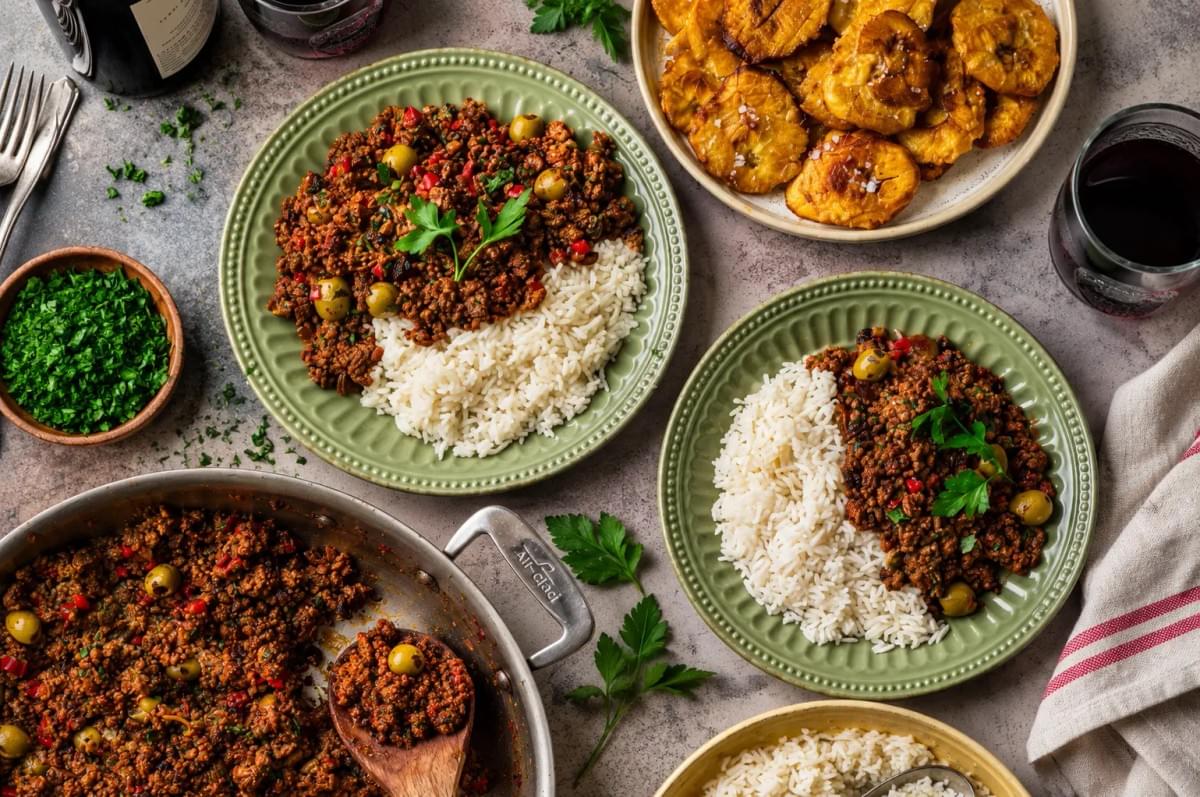
Some dishes are made for photos. This one is made for the table.
Picadillo doesn't need much. A pan, a quiet half hour, and a bowl of rice waiting. It gives back warmth, and a little sweetness where you least expect it, and leftovers that somehow taste like they tried harder overnight.
Make it once, and it becomes the kind of dinner you return to without thinking. When you do, come tell us how it went over at ourfoodrhythms.com. We'd love to hear which spoonful disappeared first.
