

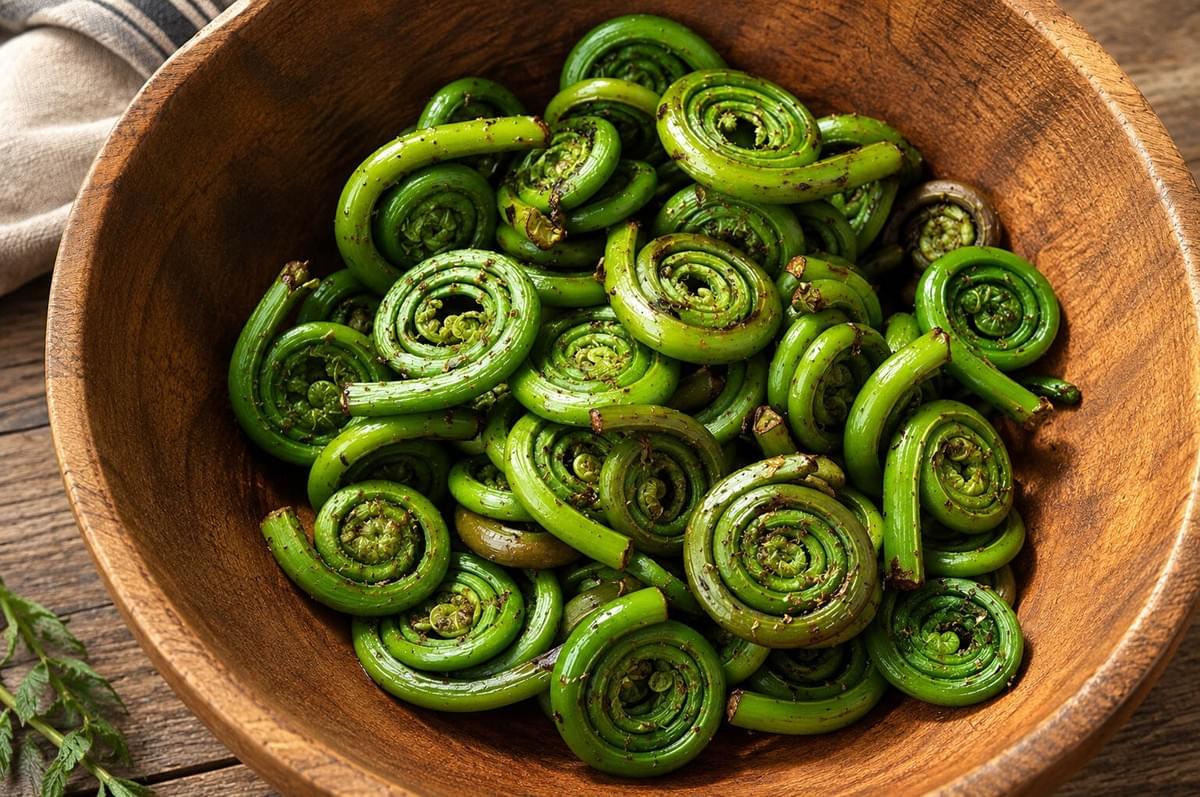
The first time I saw fiddleheads, I thought someone had left a handful of tiny green violins on the market table.
Little coiled fronds, curled tight, still smelling faintly of the forest floor. The woman selling them told me they only show up for a few weeks, then vanish until next spring. So I bought a bag, took them home, and cooked them scared, because I had read all the warnings.
I did not need to be scared. I needed to be gentle, and to boil them first.
Here is what they taste like when you get it right: green, deeply green, crisp-tender, the way good asparagus is, with a quiet nutty edge underneath. A little of springtime itself, caught in a coil. This is not a vegetable you find all year. That is part of why it matters.
Let me walk you through it, from the market bag to the pan.
What Fiddleheads Actually Are
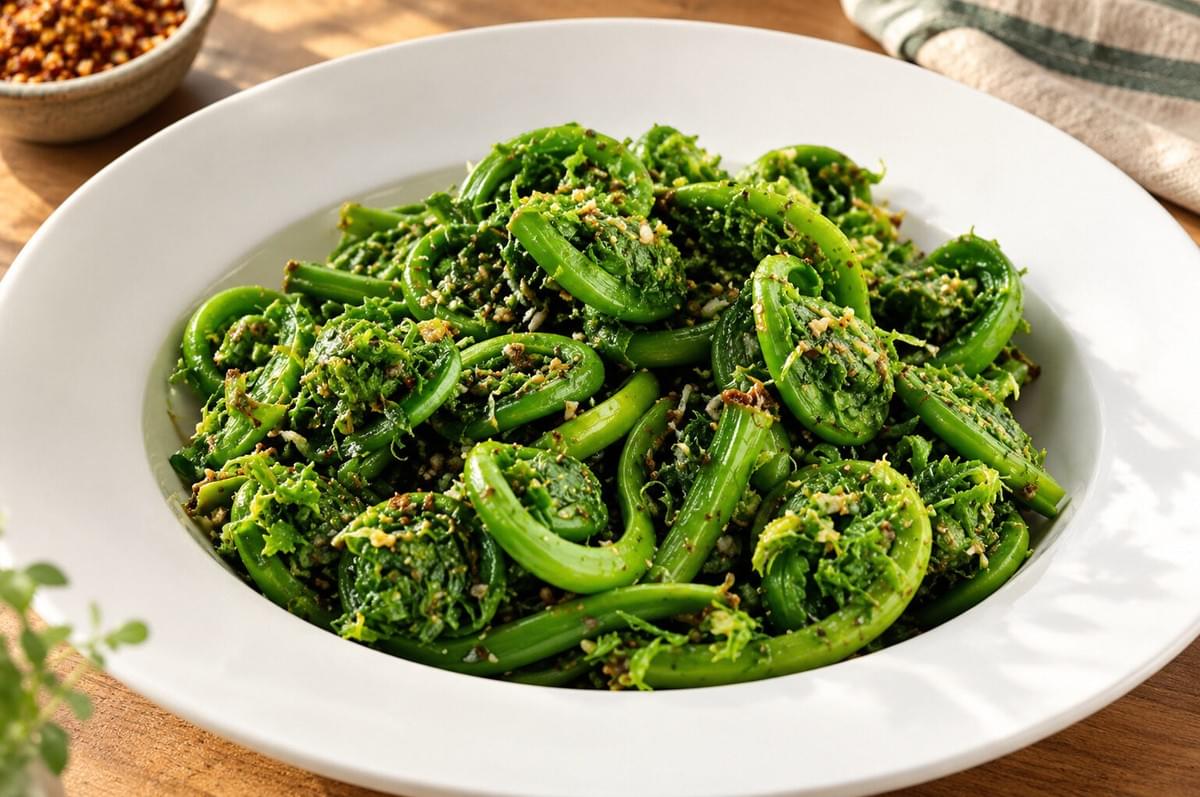
Fiddleheads are young fern fronds, harvested in early spring before they unfurl into the tall ferns you know from shady woods.
The ones we cook are usually ostrich fern fiddleheads. They come tightly coiled, bright and grassy, and they only last a short season, roughly a few weeks somewhere between April and June depending on where you live. Blink and the window closes.
You will find them at farmers markets, at specialty grocers, and sometimes from foragers who know their patch. If you forage yourself, learn from someone who truly knows the plant, since not every fern is safe.
One calm, important note on prep. Fiddleheads should always be cleaned well and cooked through, never eaten raw or barely warmed. Boiling or steaming them first (we will get to that) makes them safe and tender both. This is not a step to skip. It is simply how you cook them, the same way you would not eat a raw potato.
Choosing, Storing, and Cleaning
A little care up front saves you trouble later.
Choosing good ones
- Look for bright green coils, tight and firm.
- Avoid fiddleheads that are yellowing, slimy, or heavily browned.
- A little papery brown husk clinging on is normal. That comes off in cleaning.
Storing them
- Keep them cold, in a breathable bag or a container lined with a paper towel.
- Use them soon, within a day or two. They are a fleeting thing, so treat them that way.
Cleaning them
- Rub off the papery brown bits with your fingers.
- Trim any dark or dry ends.
- Rinse them in a big bowl of cold water, swishing well.
- Change the water and rinse again, two or three times, until no grit settles at the bottom. Fiddleheads hide dirt in their coils, so be thorough here.
Sautéed Garlic-Lemon Fiddleheads
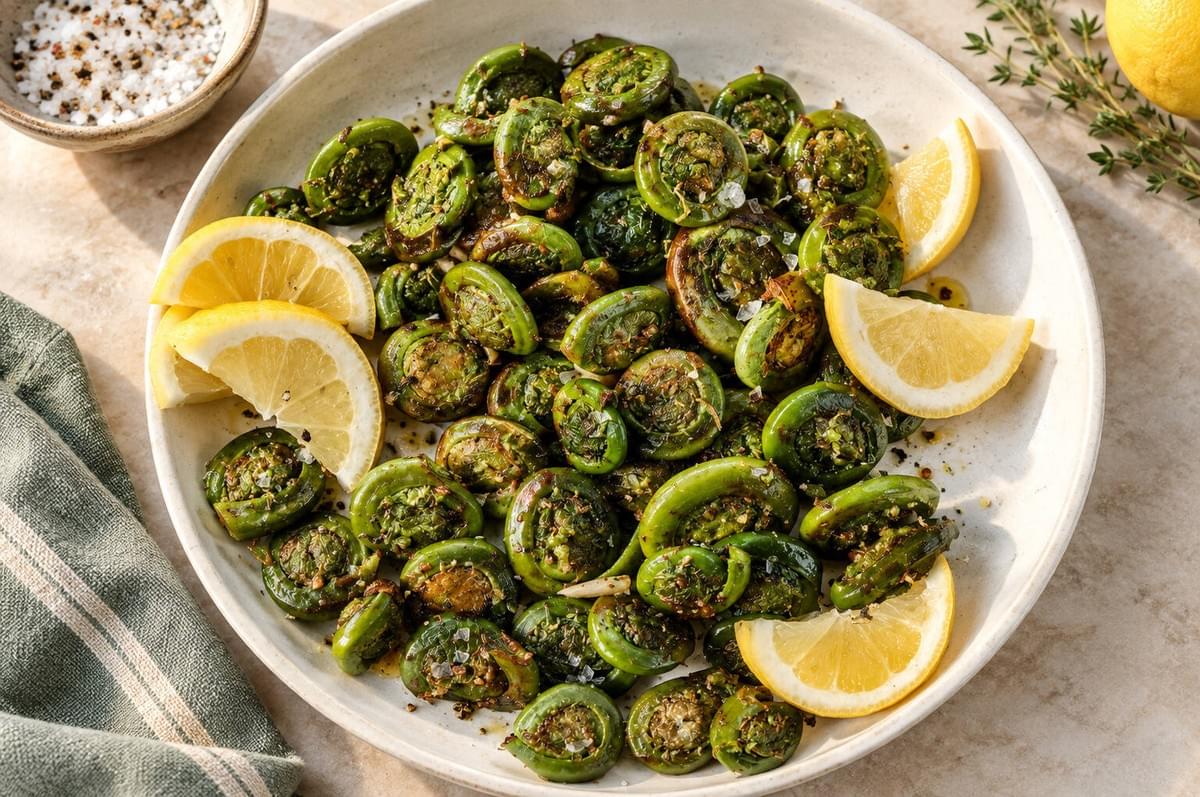
This is the dish I make every single spring, the one that lets the fiddlehead be exactly what it is. Garlic, lemon, butter, salt. Nothing crowding the flavor. Just the green, brightened.
- Prep time: 15 minutes
- Cook time: 10 minutes
- Total time: 25 minutes
- Servings: 4 as a side
Ingredients
- 1 pound (450 g) fresh fiddlehead ferns, cleaned
- 2 tablespoons butter (or olive oil)
- 3 garlic cloves, thinly sliced
- Juice of half a lemon
- Zest of half a lemon
- Salt and black pepper, to taste
- A pinch of chili flakes (optional)
Equipment
- A large pot for blanching
- A bowl of ice water
- A colander
- A large skillet
- Tongs or a wooden spoon
Instructions
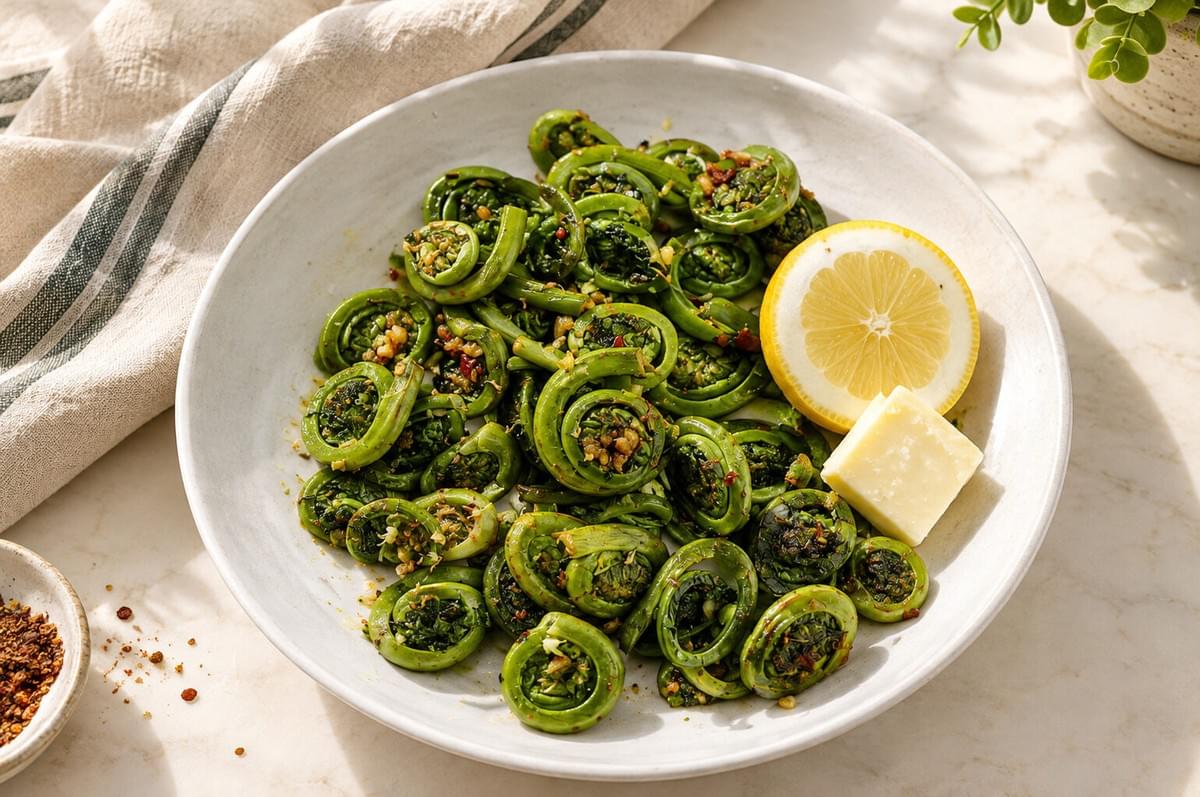
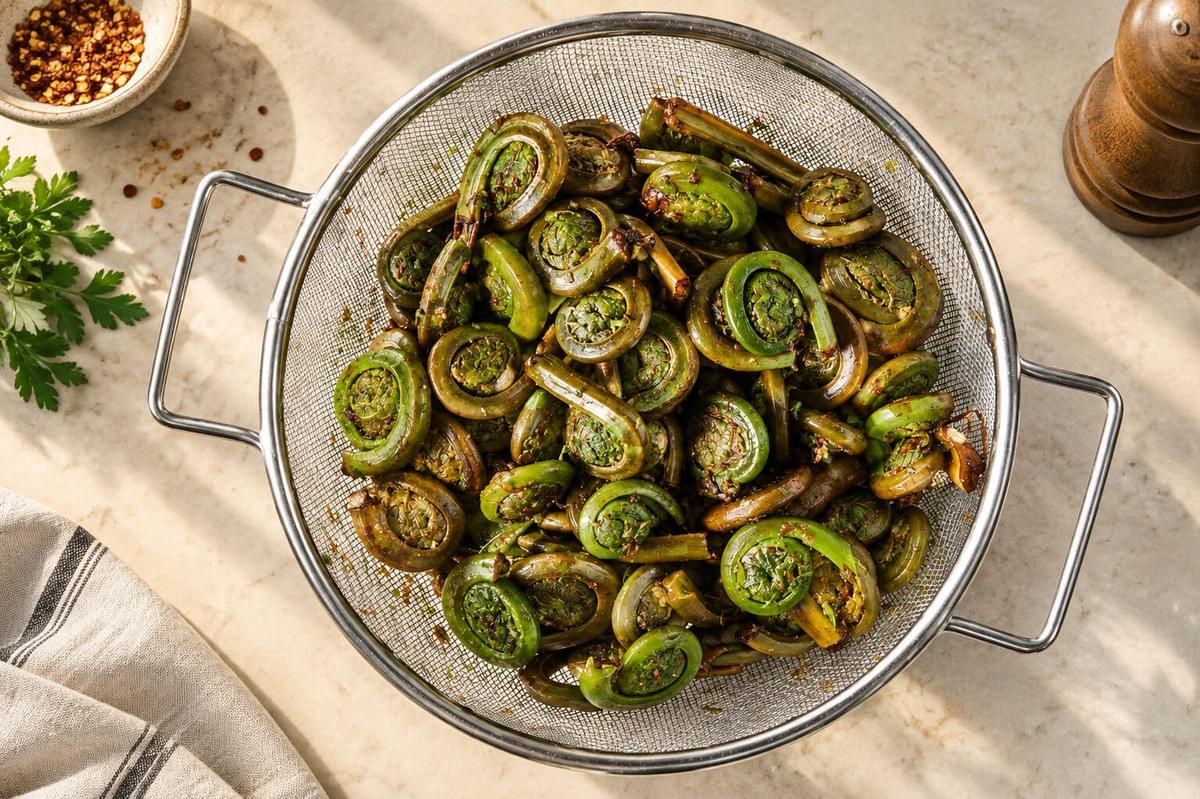
- Blanch first, always. Bring a large pot of salted water to a rolling boil. Add the cleaned fiddleheads and boil them for a full 10 minutes. This is the step that matters most, so do not cut it short. They should turn a deeper, richer green.
- Shock them cold. Scoop the fiddleheads straight into a bowl of ice water. This stops the cooking and keeps them bright and crisp-tender, not floppy. Let them sit a minute, then drain well in a colander. Pat them dry.
- Warm the pan. Set your skillet over medium heat and melt the butter. When it foams gently, add the sliced garlic and the chili flakes if you like a little heat. Cook for about 30 seconds, just until the garlic smells sweet and turns pale gold. Do not let it brown, or it goes bitter.
- Sauté the fiddleheads. Add the drained fiddleheads to the pan. Toss and cook for 4 to 5 minutes, until they are tender and just starting to catch a little color at the edges. They should be tender to the bite, with a slight snap left in them.
- Finish bright. Turn off the heat. Squeeze in the lemon juice, scatter over the zest, and season with salt and pepper. Toss once more.
- Taste, adjust, and serve warm. That first forkful, garlicky and green with a lemon lift, is the whole reason.
Ways to Change It Up
Once you know the base, the fiddlehead bends to your mood.
- Lemon zest and parmesan: a shower of both, for something richer and rounder.
- Chili flakes: a warm, slow heat that suits the green well.
- Toasted nuts: almonds or pine nuts for extra crunch and nuttiness.
- Miso butter: stir a little white miso into the butter for deep, savory depth.
- Soy and ginger: swap the lemon for a splash of soy sauce and grated ginger.
- Bacon or pancetta: render it first, then sauté the fiddleheads in the drippings.
- Mushrooms: add sliced mushrooms to the pan for an earthy, woodsy pairing.
- Shallots: soft and sweet, in place of or alongside the garlic.
- Fresh herbs: a handful of dill, tarragon, or parsley stirred in at the end.
How to Serve Them
Fiddleheads are happy beside almost anything green and springlike.
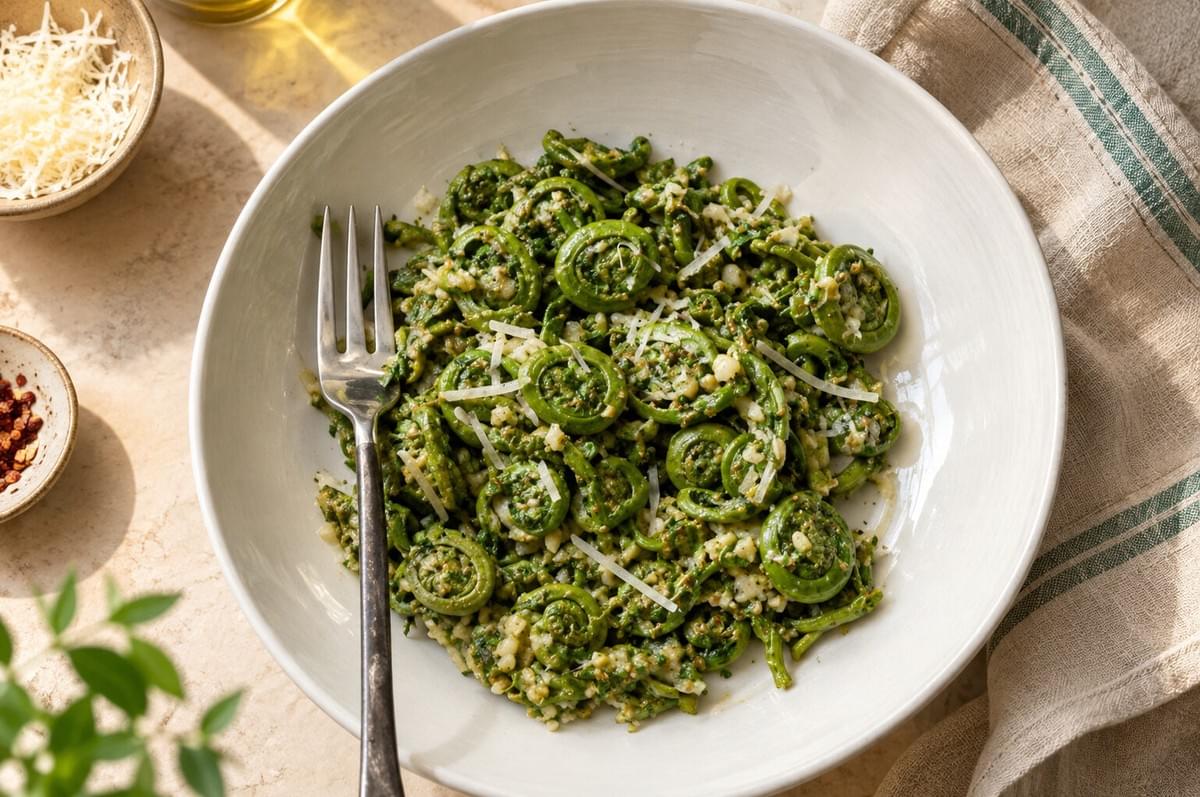
- Tossed through pasta with butter, lemon, and parmesan.
- Piled on toast with a soft egg and a little sea salt.
- Alongside salmon or roast chicken, as the bright green counterpoint.
- Folded into a grain bowl with farro or barley.
- Tucked into an omelet or a spring frittata.
- Scattered over a salad, after blanching, for a little wild crunch.
- Served simply as a side, warm from the pan, no fuss at all.
When Things Go Sideways
A few honest fixes for the common bumps.
Why are mine bitter?
Usually underblanched, or the garlic browned too far. Give them the full 10-minute boil, and keep the garlic pale and gentle.
Why are they mushy?
Overcooked, most likely. Watch the blanch time, shock them in ice water right after, and keep the sauté brief. You want tender with a slight snap, not soft.
Why are they gritty?
Not rinsed enough. Fiddleheads trap dirt in their coils. Rinse in several changes of cold water until the bowl runs clean.
Can I freeze them?
Yes. Blanch them for 10 minutes first, plunge them into ice water, drain, and dry them well. Then freeze in a bag or container. They keep for several months, and they hold that spring green surprisingly well.
One Last Coil
Fiddleheads are a short story, not a long one.
They arrive quietly, stay a few weeks, then slip away until next spring. That is the whole gift of them. You cannot stock up, you cannot rush them, you can only catch them while they are here and cook them with a little care.
So if you spot a bag of those little green coils this spring, take them home. Rinse them well, boil them properly, and let the garlic and lemon do the rest. Then come tell us how it went, and what you served them with. We would love to hear about your first fiddlehead spring.
For more seasonal cooking inspiration, head over to Our Food Rhythms...
