

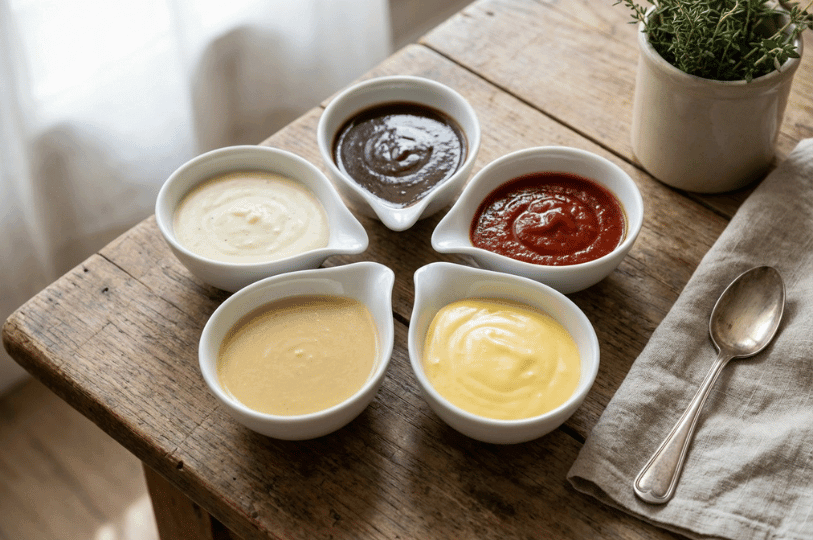
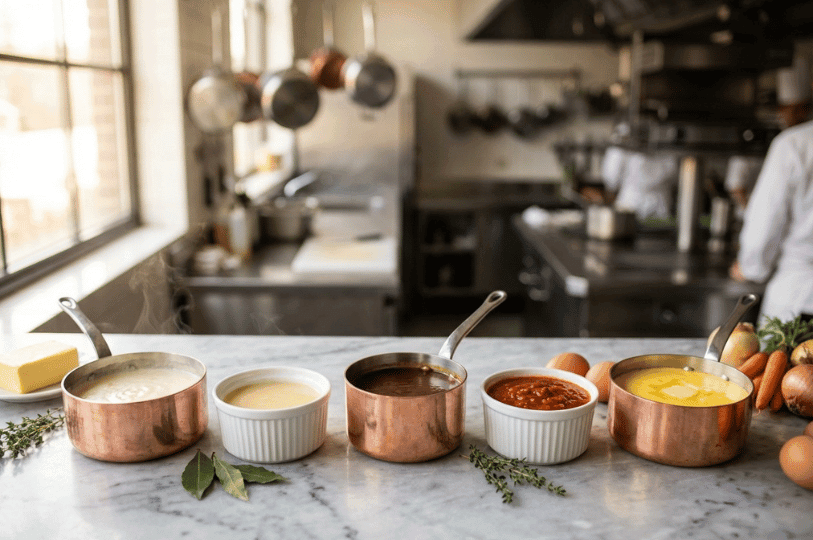
In the world of culinary arts, there are few concepts as fundamental and enduring as the French mother sauces. These five sauces form the bedrock of classical French cuisine, serving as the starting point for hundreds of other sauces known as "derivative" or "small" sauces. For the aspiring home cook or the seasoned food enthusiast, understanding these five pillars is akin to a musician learning their scales. Once you master the basics, the ability to improvise and create becomes limitless.
The classification of these sauces is not arbitrary. It dates back to the 19th century when chef Marie-Antoine Carême first organized sauces into four main families. Later, in the early 20th century, the legendary Auguste Escoffier updated and expanded this list in his seminal work, Le Guide Culinaire, adding Hollandaise and Tomato sauce to create the five we recognize today. These sauces are Béchamel, Velouté, Espagnole, Tomato, and Hollandaise.
Mastering these sauces teaches you essential techniques such as making a roux, creating an emulsion, and reducing stocks. While modern cuisine has evolved to include lighter, broth-based sauces and purées, these five remain the gold standard for understanding flavor structure and texture in Western cooking.
Béchamel: The White Sauce
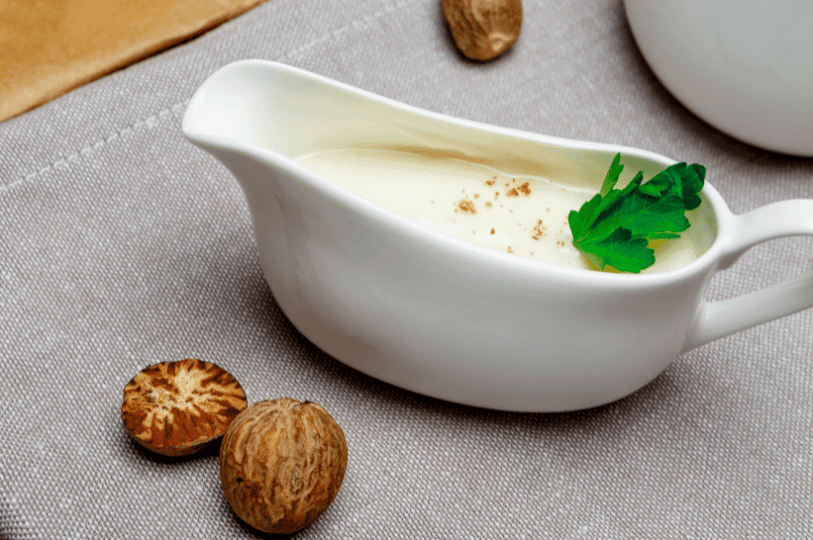
Béchamel is perhaps the most recognizable of the mother sauces. It is creamy, white, and mild, providing a neutral canvas that can be easily manipulated with cheese or spices.
Key Ingredients and Method
A classic Béchamel consists of milk thickened with a white roux. A roux is a mixture of equal parts fat (usually butter) and flour, cooked together to remove the raw flour taste. For Béchamel, the roux is cooked only slightly so it remains pale. Hot milk is then whisked into the roux and simmered until thickened. Traditionally, the milk might be infused with an onion piqued with a clove and bay leaf to add subtle depth without altering the color.
Versatility and Derivatives
Because of its rich and creamy texture, Béchamel is the secret behind many comfort foods. It is the binding agent in a classic lasagna, the base of a creamy mac and cheese, and the smothering sauce for a Croque Monsieur.
Its most famous derivative is Mornay sauce, which is created by folding Gruyère and Parmesan cheese into the finished Béchamel. Another variation is Soubise, which incorporates puréed onions for a sweet, savory richness.
Velouté: The Blond Sauce
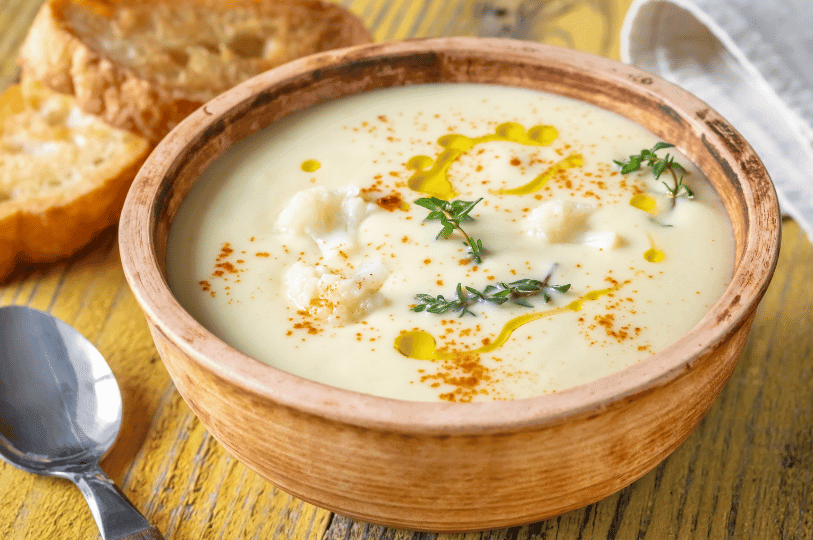
Velouté translates to "velvety," which perfectly describes the texture of this smooth, light sauce. It is technically very similar to Béchamel, but with one crucial substitution that changes its character entirely.
Key Ingredients and Method
Instead of milk, Velouté uses a white stock (typically chicken, veal, or fish stock) thickened with a blond roux. A blond roux is cooked slightly longer than a white roux, allowing the flour and butter to toast until they reach a pale golden color. This gives the sauce a slightly nuttier flavor profile while maintaining a light appearance.
Versatility and Derivatives
Velouté is rarely served on its own. It is almost always a base for more complex creations. A chicken Velouté serves as a perfect starting point for creamy chicken soups or pot pie fillings.
Common derivatives include Sauce Suprême, which is finished with heavy cream and mushrooms, and Sauce Allemande, enriched with egg yolks and lemon juice. If you use fish stock to make your Velouté, you can create a White Wine Sauce by adding white wine, shallots, and herbs, perfect for poaching seafood.
Espagnole: The Brown Sauce
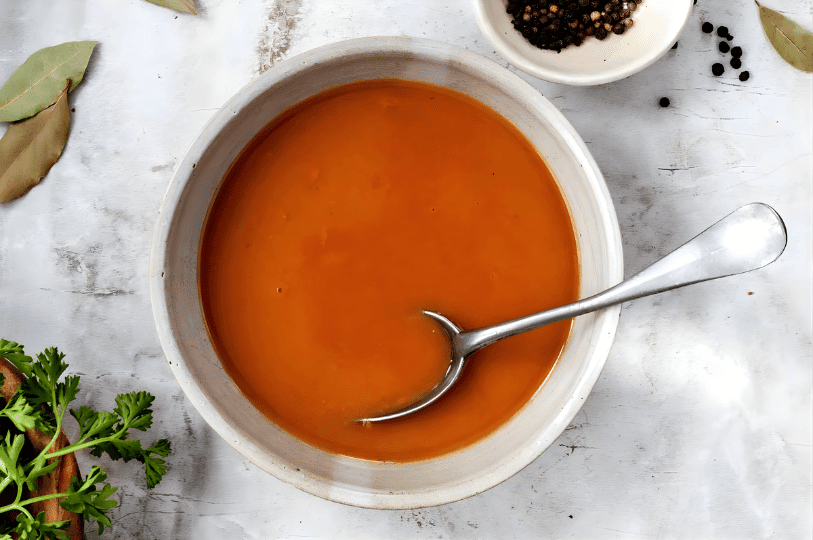
Espagnole is the heavyweight of the group. It has a robust, full-bodied flavor and a dark brown color. It is not something you would typically eat straight, as its flavor can be overpowering. Instead, it is the starting point for rich, meaty reductions.
Key Ingredients and Method
Espagnole begins with a brown stock (usually beef or veal) and a brown roux. To make a brown roux, the flour and butter are cooked for a significant amount of time until the mixture turns a deep, dark brown and smells of toasted nuts. Mirepoix (carrots, celery, and onions) and tomato purée are often added during the cooking process to deepen the flavor and color.
Versatility and Derivatives
This sauce is essential for hearty meat dishes. The most famous application of Espagnole is in the creation of Demi-Glace, a rich reduction made from equal parts Espagnole and brown stock. Demi-Glace is the king of restaurant sauces, known for its sticky, glossy consistency and intense savory flavor.
From Espagnole or Demi-Glace, you can create Sauce Bordelaise (with red wine, shallots, and bone marrow), Sauce Robert (with white wine, onion, and mustard), or Sauce Chasseur (with mushrooms and shallots). These are the sauces that elevate a simple steak or roast beef into fine dining territory.
Sauce Tomate: The Tomato Sauce
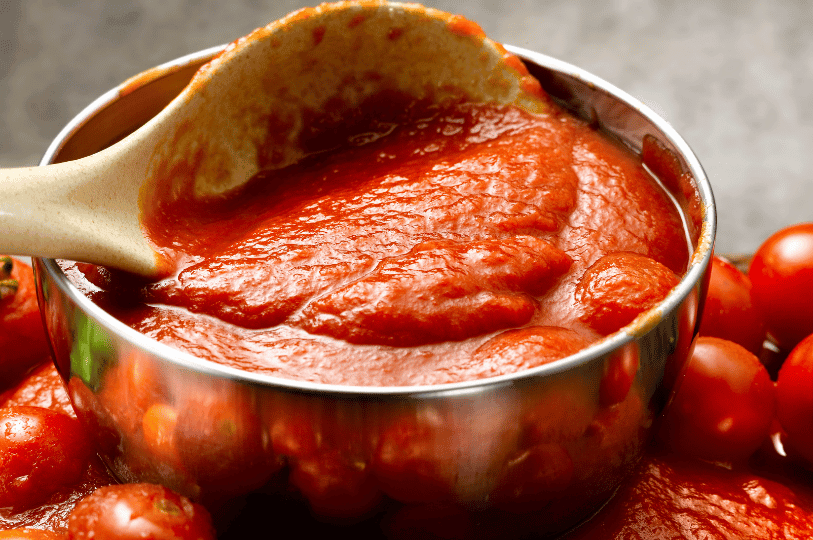
While most home cooks are familiar with pasta sauce, the classical French Sauce Tomate is distinct from its modern Italian counterpart. It is more complex, often richer, and traditionally uses a roux for thickening, though modern interpretations often rely on reduction alone.
Key Ingredients and Method
Classical French tomato sauce starts with salt pork or bacon rendered in butter. Aromatics like carrots, onions, and garlic are sautéed in the fat, followed by fresh tomatoes and tomato stock. Historically, a roux was added to thicken the sauce, creating a glossy, consistent texture. The sauce is then simmered for hours in the oven to concentrate the flavors.
Versatility and Derivatives
This sauce provides brightness and acidity that cuts through rich ingredients. It is served with pasta, fish, grilled vegetables, and breaded meats.
Derivative sauces include Sauce Creole (with onions, celery, peppers, and Cajun spices), Sauce Portugaise (with garlic and fresh herbs), and Sauce Spanish (with mushrooms and sautéed onions). While we often rely on jarred marinara for convenience, making a Sauce Tomate from scratch offers a depth of flavor that is unparalleled.
Hollandaise: The Emulsion
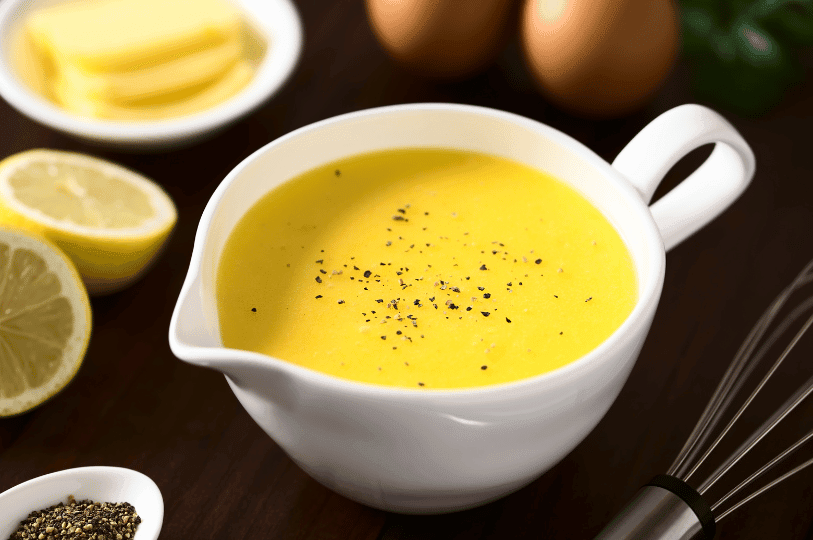
Hollandaise is the outlier of the group. It does not use a roux and it is the only mother sauce that is famously difficult to hold for long periods. It is an emulsified sauce, meaning it forces two ingredients that usually do not mix (fat and water) into a stable, creamy union.
Key Ingredients and Method
Hollandaise is made by whisking clarified butter into warm egg yolks and lemon juice (or a vinegar reduction). The key is managing heat. If the eggs get too hot, they scramble. If the butter is added too quickly, the emulsion breaks and separates into a greasy mess. The result should be a pale yellow, buttery, tangy sauce with a texture similar to heavy satin.
Versatility and Derivatives
Hollandaise is synonymous with brunch, famously draped over poached eggs in Eggs Benedict. It is also exceptional with asparagus, broccoli, and poached salmon.
The most popular daughter sauce is Béarnaise, which replaces the lemon juice with a reduction of vinegar, shallots, tarragon, and chervil. Béarnaise is a classic pairing for steak. Another variation is Sauce Mousseline, which involves folding whipped cream into the Hollandaise for an incredibly airy, light texture.
Mastering the Basics: Tips for Success
Learning these sauces requires patience and attention to detail. Here are practical tips to help you succeed in your own kitchen.
Control Your Heat
Temperature control is vital, especially for roux-based sauces and Hollandaise. When making a roux, high heat will burn the flour before it cooks, resulting in a bitter taste. Low and slow is the mantra. For Hollandaise, consider using a double boiler to gently cook the eggs without scrambling them.
The Whisk is Your Best Friend
Lumps are the enemy of a smooth sauce. When adding liquid to a roux, add it gradually while whisking vigorously. This ensures the starch granules disperse evenly and swell without clumping.
Taste and Season at the End
While you might add salt during the cooking process, the liquid in these sauces reduces as it cooks. If you season perfectly at the beginning, the sauce may be too salty by the end. Always adjust your seasoning right before serving.
Fixing a Broken Sauce
If your Hollandaise breaks (separates into oil and egg), do not panic. You can often fix it by whisking a teaspoon of boiling water into a fresh bowl and slowly dripping the broken sauce into it while whisking constantly.
Hollandaise: The Emulsion
In an era of fusion cuisine and 30-minute meals, one might wonder if these 19th-century techniques are still relevant. The answer is a resounding yes. These sauces teach you the physics of cooking. They teach you how thickeners work, how flavors concentrate, and how fat carries flavor.
Even if you never make a classical Espagnole for a weeknight dinner, understanding the principles behind it will make your Thanksgiving gravy better. Knowing how to make a Béchamel means you never have to buy condensed mushroom soup for a casserole again.
Cooking is a craft, and the five mother sauces are your toolkit. By understanding Béchamel, Velouté, Espagnole, Tomato, and Hollandaise, you unlock the logic behind thousands of recipes. We encourage you to pick one sauce this weekend and try making it from scratch. Taste the history, feel the rhythm of the whisk, and enjoy the incredible flavors that come from mastering the basics.
