

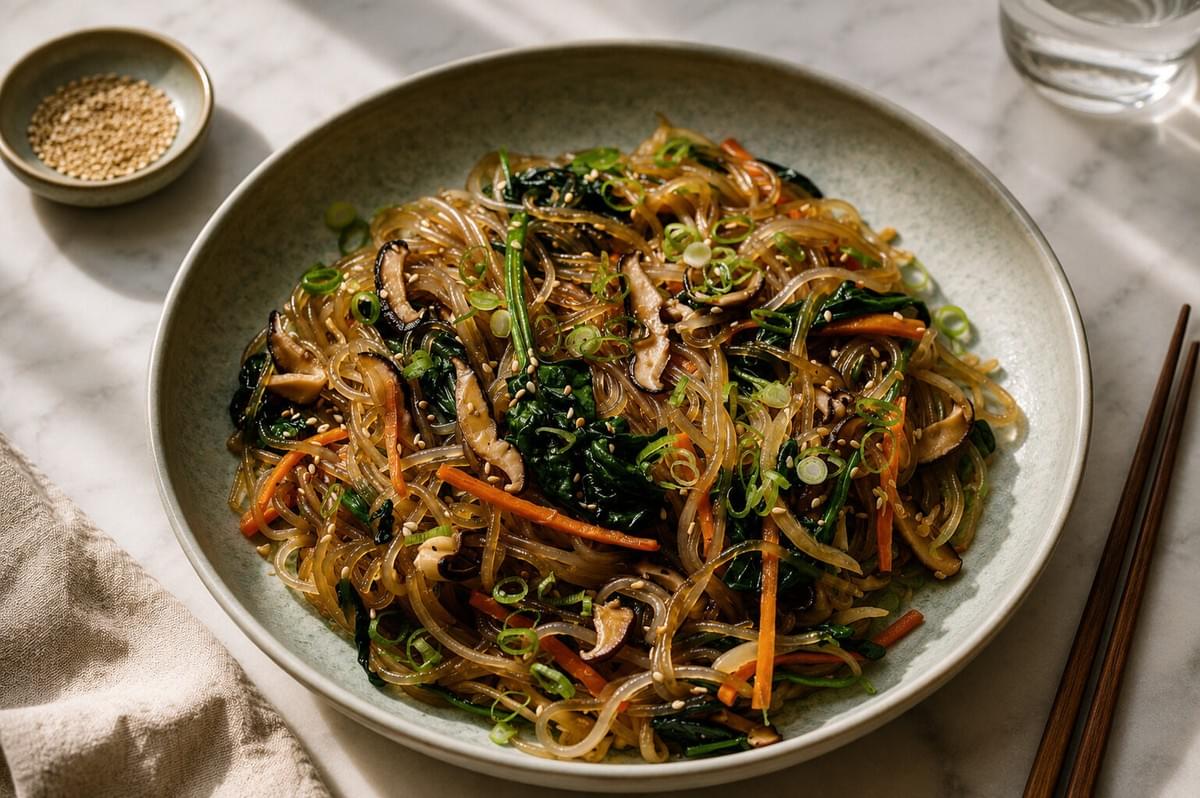
The noodles catch the light before anything else does.
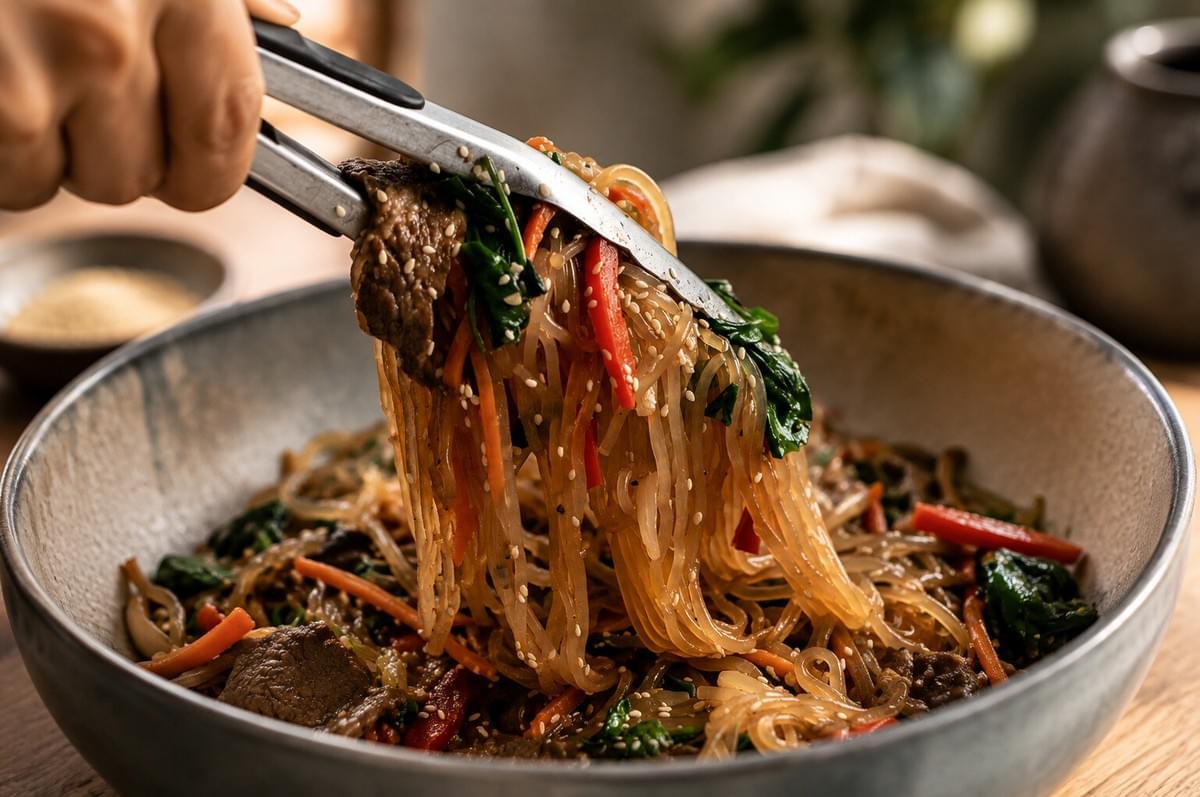
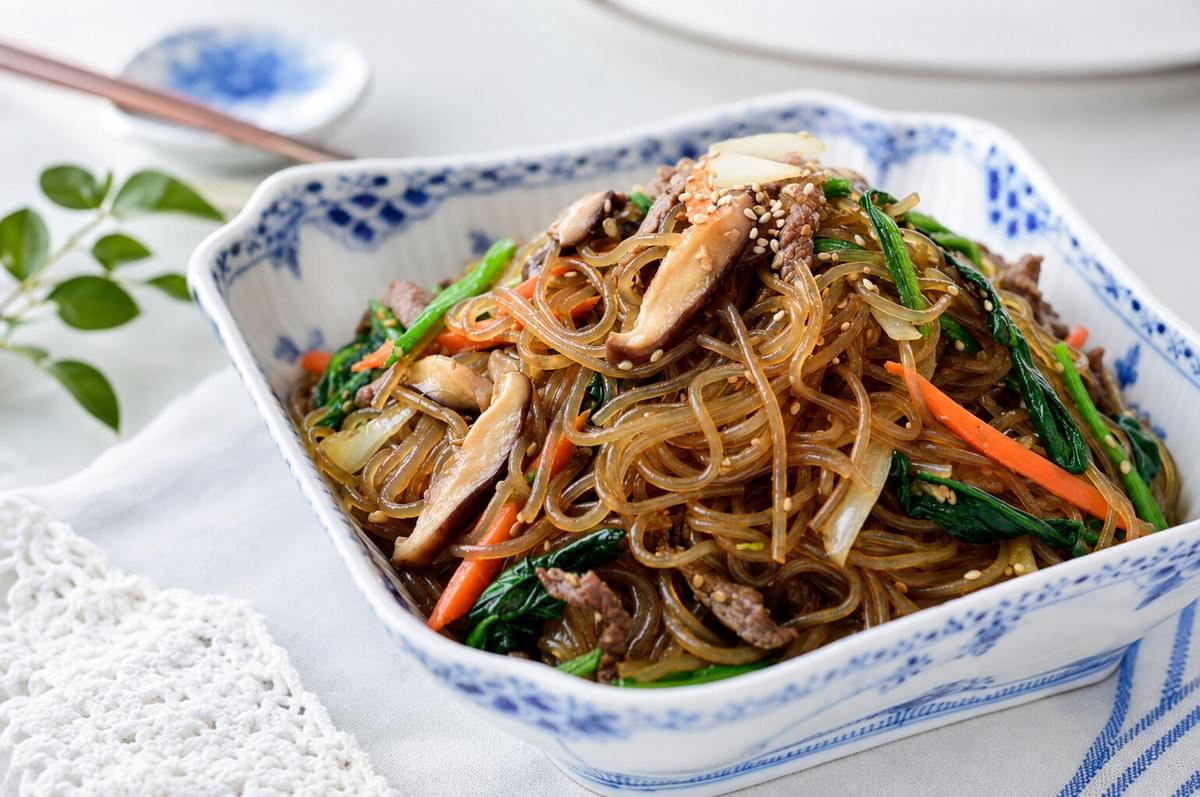
They are glossy and translucent, almost amber, tangled with slivers of carrot and red pepper and dark ribbons of mushroom. You lift a forkful and it slides, springy and slick, with that gentle sweetness and toasty sesame smell rising up to meet you.
That is japchae: Korean sweet potato glass noodles, stir-fried with a rainbow of vegetables and coated in a sweet, savory sesame soy sauce. It shows up at birthdays, holidays, and family tables, the kind of dish someone always makes when people gather.
Here is the good news. You do not need a special occasion, and you do not need to be an expert. Japchae is friendly. It bends to whatever is in your fridge, welcomes whatever protein you like, and forgives a lot along the way. Let me walk you through it.
What Is Japchae?
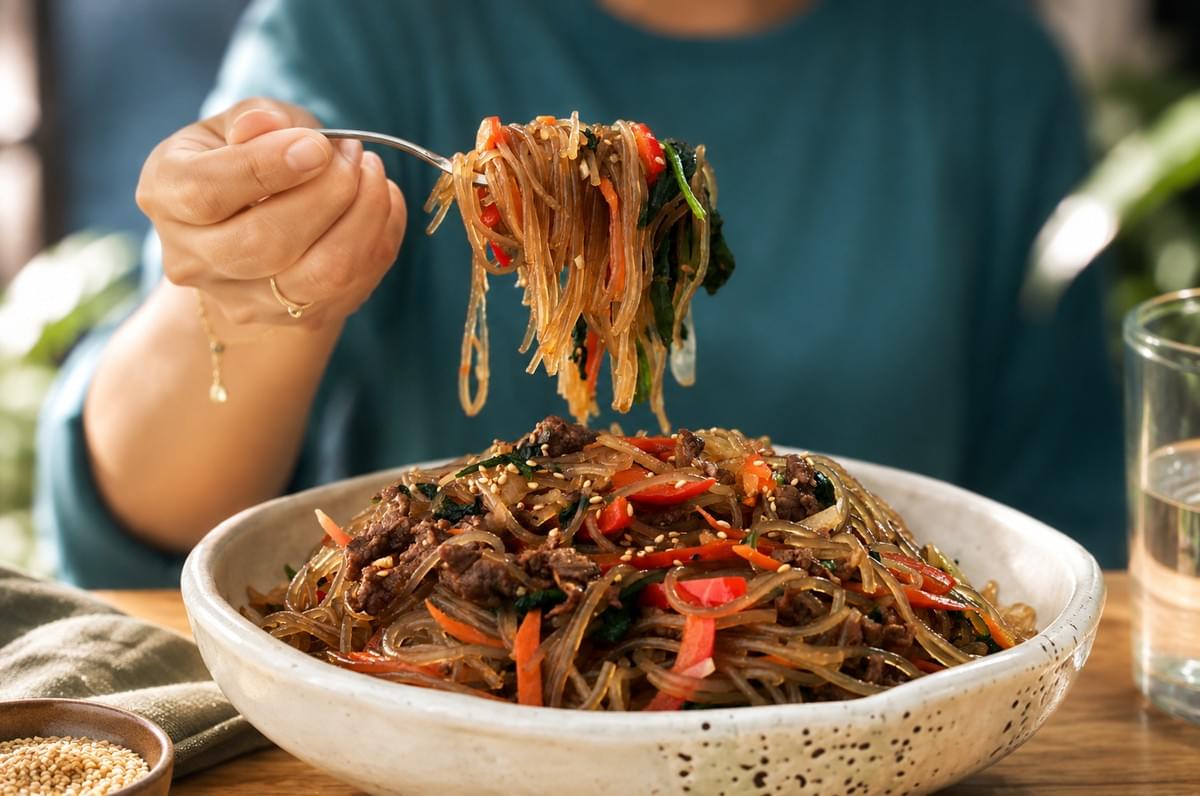
Japchae (잡채) roughly means "mixed vegetables," which is a modest name for something so colorful. The heart of it is dangmyeon (sweet potato glass noodles). They cook up clear and bouncy, with a chew that regular pasta simply cannot copy.
The dish has old roots in Korean home cooking and once carried a festive, celebratory air. These days it is beloved both as a party dish and an everyday one. The flavor sits in a lovely middle place: a little sweet, a little salty, deeply savory, and rounded out with nutty sesame.
One short section is plenty. The real story is in the eating, so let's cook.
Ingredients (with helpful notes)
The noodles
- 8 oz (about 225 g) Korean sweet potato glass noodles (dangmyeon). These are the soul of the dish. Look for them at Korean or Asian grocers, or online, usually sold in a long dried bundle. Honest note: mung bean vermicelli or other glass noodles can stand in, but the texture changes. Dangmyeon is chewier and springier, and it holds sauce beautifully. If you can find it, use it.
The vegetables
- 2 cups fresh spinach (about 60 g), blanched and squeezed dry
- 1 medium carrot, cut into thin matchsticks
- 1/2 medium onion, thinly sliced
- 1/2 red bell pepper, thinly sliced
- 4 oz (115 g) mushrooms, shiitake or cremini, sliced (dried shiitake work too, just soak first)
Optional add-ins: zucchini matchsticks, wood ear mushrooms, or a handful of bean sprouts. Japchae is generous. It makes room.
Protein options (optional)
- 6 oz (170 g) beef, thinly sliced (sirloin or ribeye are classic)
- Or chicken, cut into thin strips
- Or firm tofu, cut into strips and lightly pan-fried
- Or egg ribbons, for a lighter touch (recipe below)
Aromatics
- 3 cloves garlic, minced
- 2 scallions, sliced
The sesame soy sauce
- 1/4 cup (60 ml) soy sauce
- 2 tablespoons sugar (or honey)
- 2 tablespoons toasted sesame oil
- 1 tablespoon toasted sesame seeds
- Optional: 1/2 teaspoon gochugaru (Korean chili flakes) for a gentle warmth
A quick word on what makes the noodles glossy and bouncy instead of gummy: cook them just until tender, rinse briefly, drain well, and toss them with a little sesame oil before they sit. Do not over-stir them into a sticky knot. Gentle hands win here.
Tools You'll Need
- A large pot (for the noodles)
- A colander
- A big skillet or wok
- A mixing bowl
- Tongs (your best friend for tossing)
Step-by-Step Instructions
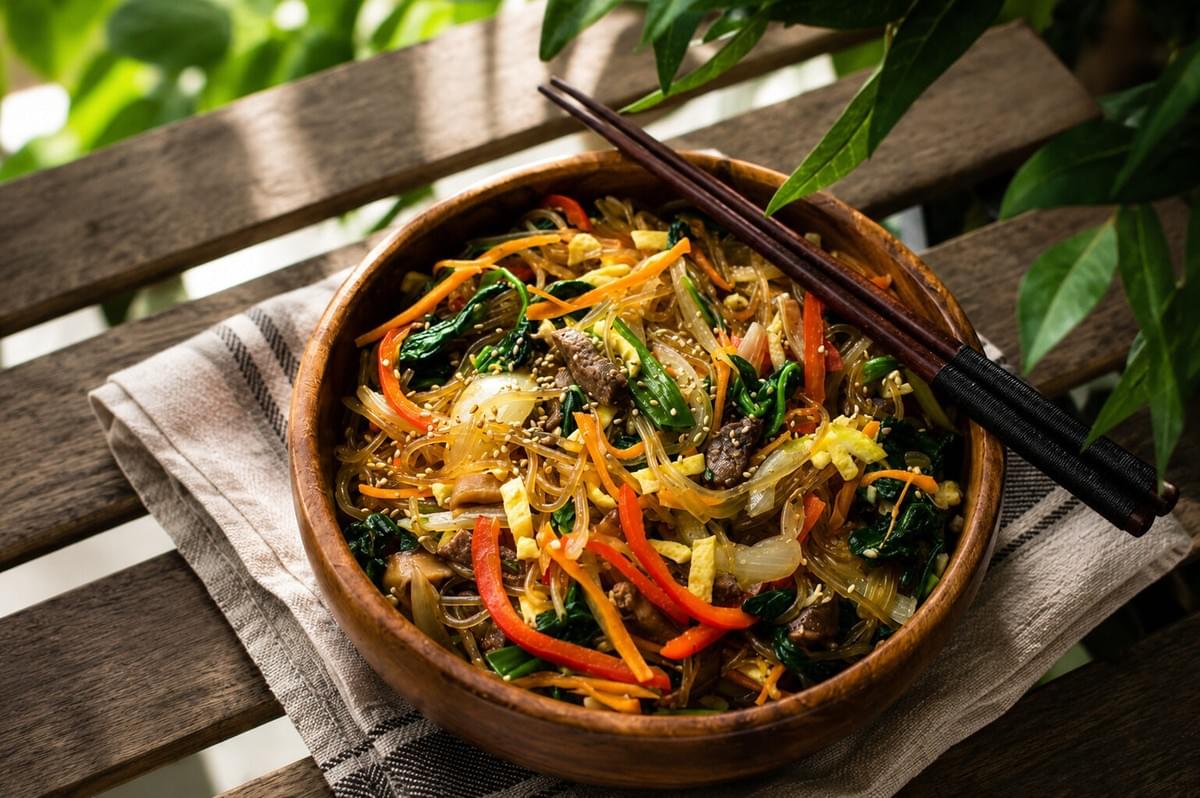
Read through once, then let's cook. You've got this.
1. Prep everything first
Japchae comes together fast at the end, so slice before you start. Cut the vegetables into thin, even pieces so they cook at the same pace. Uniform slices look nicer and eat better.
If you are using dried shiitake, soak them in warm water until soft (about 20 minutes), then slice.
Blanch the spinach in boiling water for about 30 seconds, until just wilted. Drain, rinse under cold water, and squeeze out as much moisture as you can. Wet spinach waters down the whole dish, so give it a good firm squeeze.
2. Mix the sauce
Stir the soy sauce, sugar, sesame oil, sesame seeds, and gochugaru (if using) together in a small bowl. Taste it. It should be sweet and salty and nutty all at once. Set it aside.
3. Cook the noodles
Bring a large pot of water to a boil. Add the dangmyeon and cook according to the package, usually 6 to 8 minutes, until tender but still springy. Drain, rinse briefly under cool water, then drain well again.
Snip the noodles a few times with kitchen scissors. They are long, and shorter strands are far easier to eat and toss. Drizzle with a little sesame oil so they stay loose and glossy.
4. Cook the components separately
This is the one habit that makes japchae sing: cook each item on its own to keep colors bright and textures distinct. It takes a few extra minutes, but it is worth it.
Warm a little oil in your skillet over medium-high heat. Cook each of these in turn, seasoning lightly with a pinch of salt, then set each aside:
- Onion, until soft and sweet
- Carrot, just until tender-crisp
- Bell pepper, quick and bright
- Mushrooms, until golden
If you are adding protein, cook it too. For beef or chicken, toss it first with a spoonful of the sauce, then stir-fry until cooked through. For tofu, pan-fry the strips until golden. The blanched spinach is already done, so it just needs to join the pile.
5. Bring it all together
Add the noodles to the skillet (or a big bowl if your skillet is full) along with the cooked vegetables, protein, garlic, and scallions. Pour the sauce over the top.
Toss gently with tongs until everything is coated and glossy. If you like, warm it all together over low heat for a minute so the flavors settle in. Add the sauce at the end like this, and the noodles stay springy instead of soggy.
6. Taste and finish
Now taste. Want it saltier? A splash more soy. Sweeter? A pinch of sugar. A little flat? A few more drops of sesame oil bring it right back to life.
Finish with a scatter of toasted sesame seeds and sliced scallions. For egg ribbons, beat an egg, cook it thin like a crepe, roll it, and slice into strips. Lay them over the top.
Tips for Success
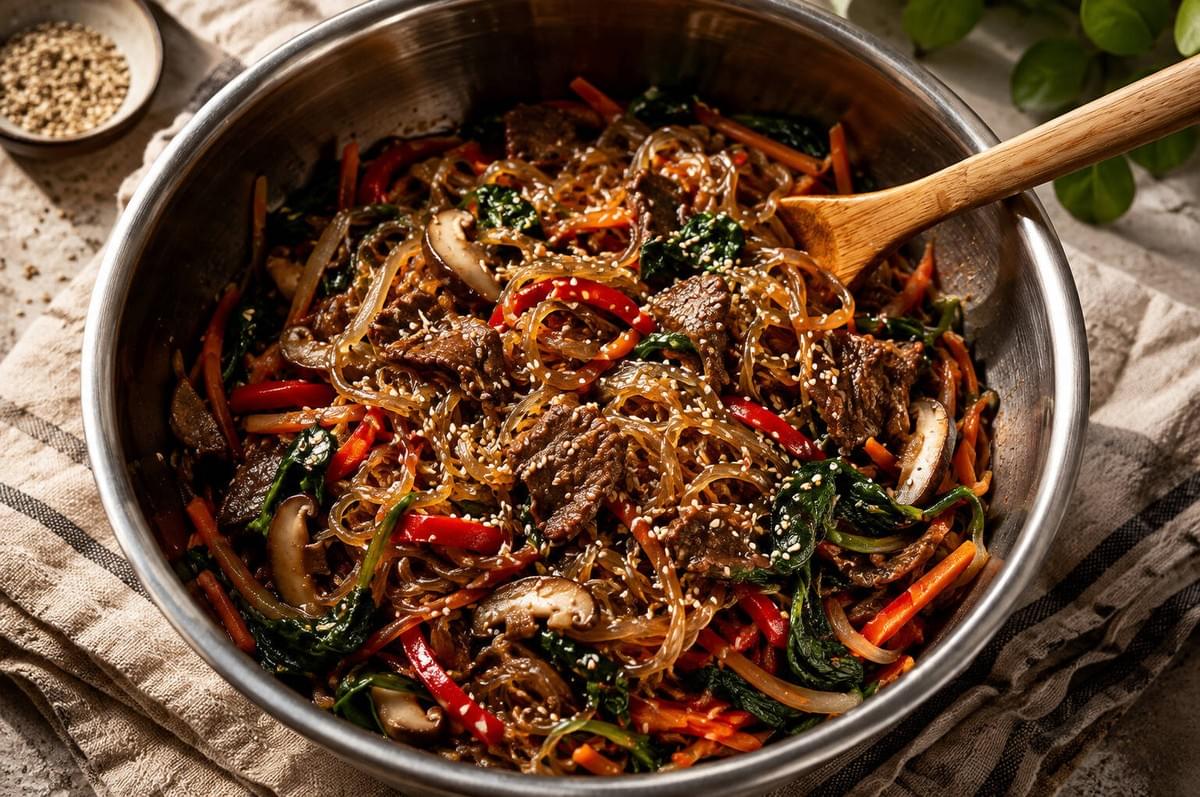
- Do not overcook the dangmyeon. Mushy glass noodles lose their bounce. Pull them while they still have spring.
- Keep the heat medium-high when stir-frying so the vegetables stay bright and lively, not steamed and limp.
- Drain the spinach well. Squeeze it like you mean it.
- Sauce goes in at the end. This keeps the noodles glossy and the dish from turning soft.
- Make-ahead: Japchae is happy to sit. Cook it a few hours ahead and serve at room temperature.
Variations
- Vegan and vegetarian: Skip the meat and lean on mushrooms and tofu. Both bring plenty of savory depth. Use sugar rather than honey to keep it fully vegan.
- Spicy: Add gochugaru to the sauce, or stir in a spoonful of gochujang for a deeper, rounder heat.
- Meal prep and protein: Japchae reheats well, so it is a solid lunchbox choice. Bulk it up with more beef, chicken, or tofu, and it carries you through a busy week.
Serving Suggestions
Japchae plays well with others. A few good companions:
- Kimchi, for a tangy, crunchy contrast
- A simple cucumber salad
- Steamed or pan-fried dumplings
- A bowl of plain rice, if you want to stretch it
Serve it warm, or at room temperature, which is how it often appears at gatherings. Both are lovely.
Storage and Reheating
Keep leftover japchae in an airtight container in the fridge for up to 4 days. The noodles firm up as they chill, which is completely normal.
To reheat, warm it in a pan over medium heat with a small splash of water. The noodles loosen and turn silky again. A quick drizzle of sesame oil at the end brings back that fresh, toasty finish.
One Last Tangle
Some dishes ask you to fuss. Japchae just asks you to show up with a cutting board and a little patience.
It is forgiving in the best way. Swap the vegetables, choose your protein, nudge the sweet and salty until it tastes like yours. That is the quiet joy of it, a dish that becomes a little different in every kitchen and still feels like home.
Make a batch this week, then come tell us how it went over at Our Food Rhythms. What is your favorite veggie combo, and did you go beef, tofu, or all noodles? We would love to know.
