

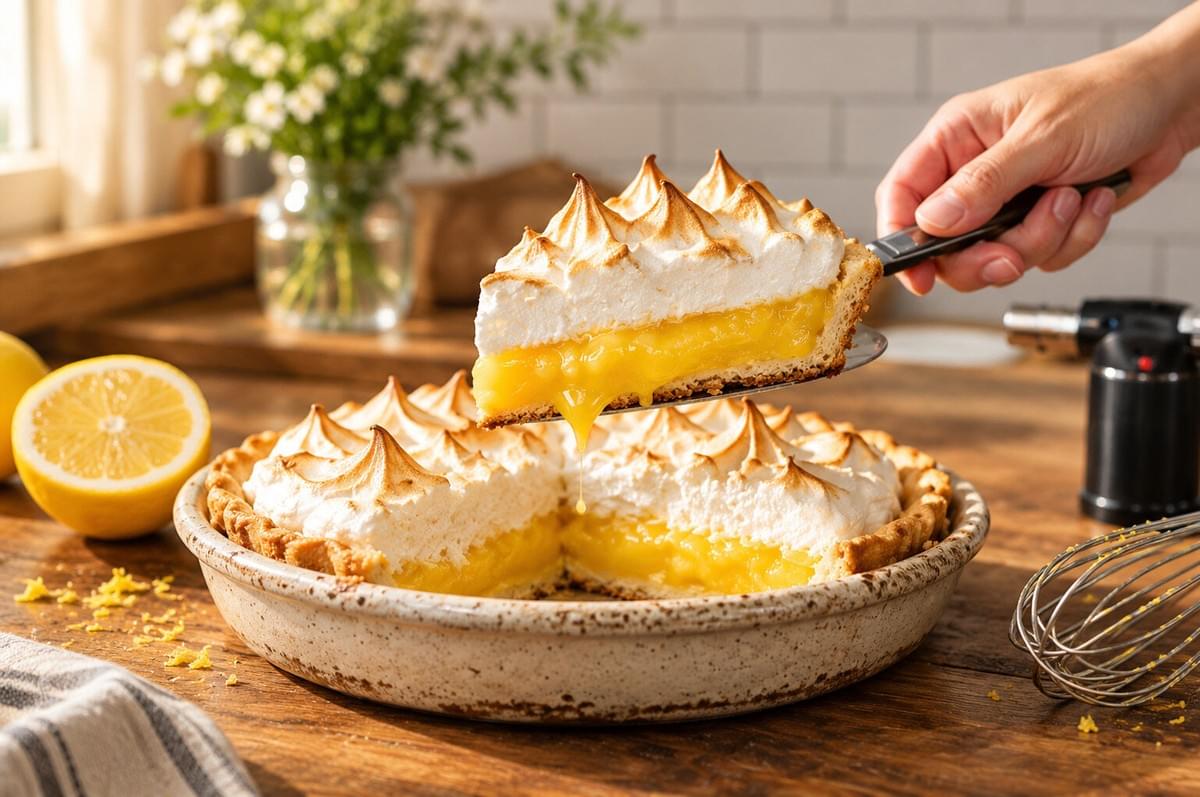
A slice of lemon meringue pie has three layers, and each one has its own job.
At the bottom, buttery pastry that should snap a little under your fork. In the middle, a lemon filling so bright it makes your jaw tingle. On top, a soft, toasted cloud of meringue with peaks that catch the light like the tips of small waves.
Meringue has a reputation. It weeps, it shrinks, it slides around like it has somewhere better to be. Most of that comes down to the science behind it; timing and measurement, not talent. With a thermometer, a clean bowl, and some patience, it becomes one of the calmer parts of the bake.
A Little Background
Lemon meringue pie is a classic of the pastry case and the home kitchen alike: a baked crust filled with a tart, egg-enriched lemon filling, crowned with whipped egg whites and sugar. It rests on contrast. Sour against sweet, silky against crisp, cool filling against a warm, toasted top. It has been baked in countless kitchens for generations, and every version is a small balancing act.
Why This Recipe Works
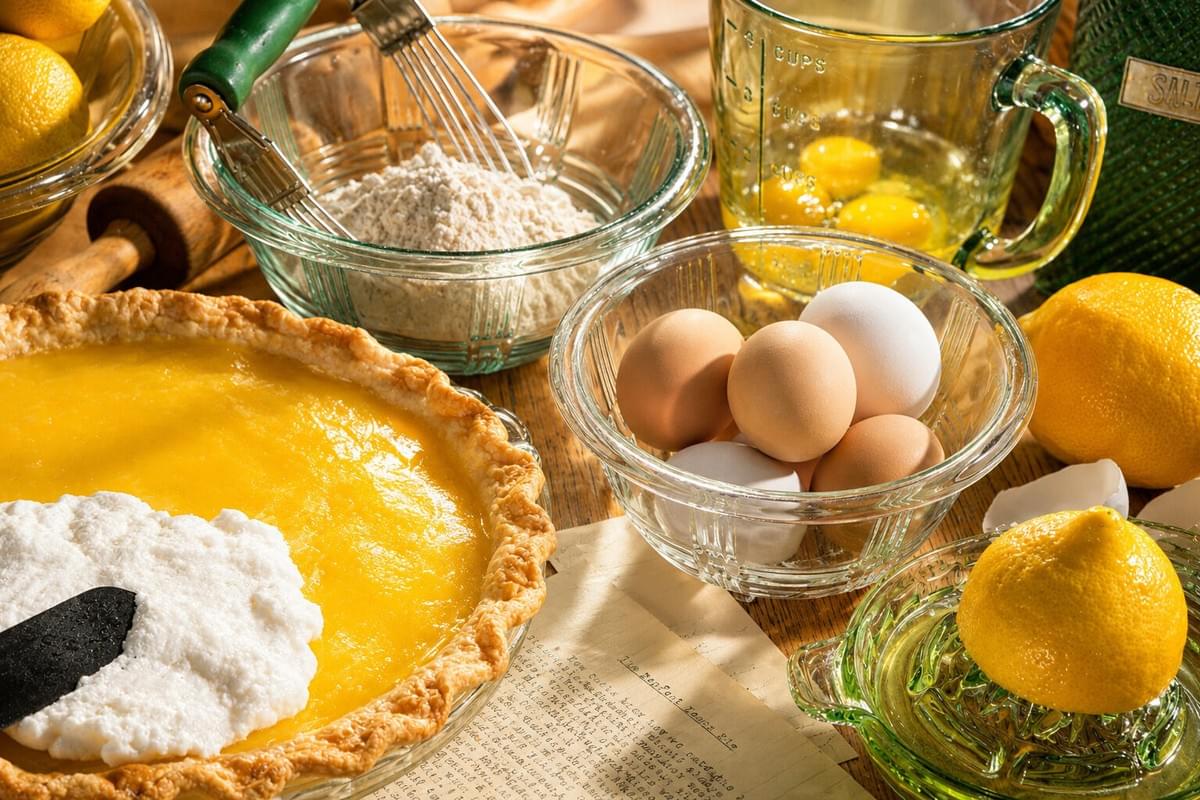
Blind baking keeps the crust crisp. Blind baking means baking the pastry shell empty before the filling goes in. Because this pie never returns to a long, hot bake, the crust needs to be fully golden and dry from the start.
Fresh lemon juice and zest bring brightness. The juice gives the sourness. The zest, the thin yellow outer peel, holds fragrant oils that make the filling taste like lemon rather than just tartness.
Cornstarch and egg yolks make the filling sliceable. A note on the title: a traditional lemon curd is thickened only by eggs and butter, which keeps it soft and spoonable. This filling borrows curd's tang and richness but adds cornstarch, so it sets firmly enough to hold a clean edge.
Swiss meringue gives stable peaks. In a Swiss meringue, egg whites and sugar are warmed together over simmering water until the sugar dissolves and the whites reach a safe temperature, then whipped. Fully dissolved sugar and cooked whites make a dense, glossy foam that holds its shape well.
Ingredients and Equipment
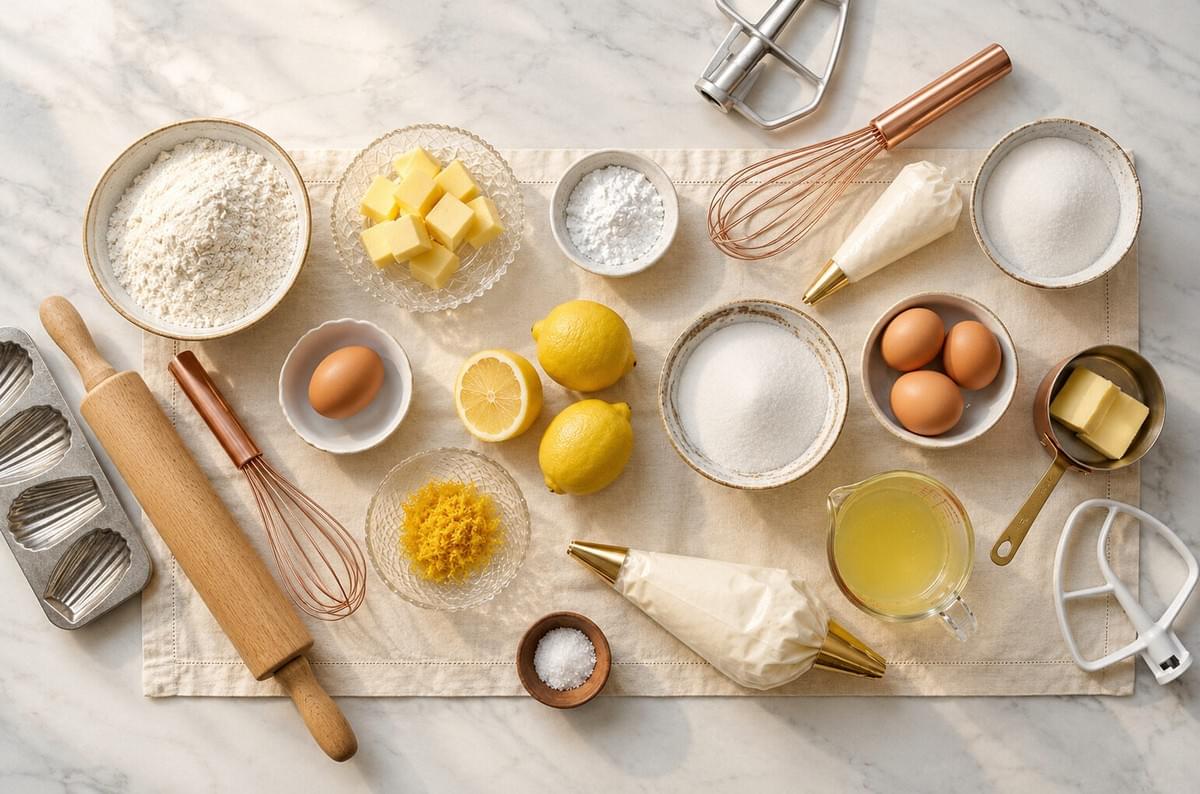
Yield: One 9-inch pie (standard depth, not deep-dish), 8 slices
Prep time: 50 minutes
Cook and bake time: about 55 minutes
Cooling and chilling time: about 6 hours
Total time: about 7 hours 45 minutes (best started in the morning, or spread over two days)
For the Crust
- 1 1/4 cups (160 g) all-purpose flour
- 1 tablespoon (12 g) granulated sugar
- 1/2 teaspoon fine salt
- 1/2 cup (113 g) cold unsalted butter, cut into 1/2-inch cubes
- 3 to 5 tablespoons (45 to 75 ml) ice water
For the Lemon Filling
- 1 1/4 cups (250 g) granulated sugar
- 6 tablespoons (48 g) cornstarch
- 1/4 teaspoon fine salt
- 1 1/2 cups (360 ml) water
- 4 large egg yolks (save the whites for the meringue)
- 1/2 cup (120 ml) fresh lemon juice (about 3 lemons)
- 1 tablespoon finely grated lemon zest (about 2 lemons)
- 2 tablespoons (28 g) unsalted butter
For the Swiss Meringue
- 4 large egg whites (about 1/2 cup / 120 g), at room temperature
- 1 cup (200 g) granulated sugar
- 1/4 teaspoon cream of tartar
- Pinch of fine salt
- 1 teaspoon vanilla extract
Ingredient notes: Zest the lemons before juicing them; it is much easier while they are whole. Separate the eggs while cold, when yolks are firmer, and let the whites come to room temperature. Cream of tartar is a mild acid that helps egg whites hold their structure.
Equipment
- 9-inch pie pan
- Rolling pin, parchment, and pie weights (dried beans or rice work too)
- Medium heavy-bottomed saucepan and whisk
- Fine-mesh strainer
- Heatproof bowl (or stand mixer bowl) that sits over a saucepan
- Instant-read thermometer
- Stand mixer or hand mixer
- Offset or silicone spatula
- Kitchen torch (optional; the oven also works)
How to Make Lemon Meringue Pie
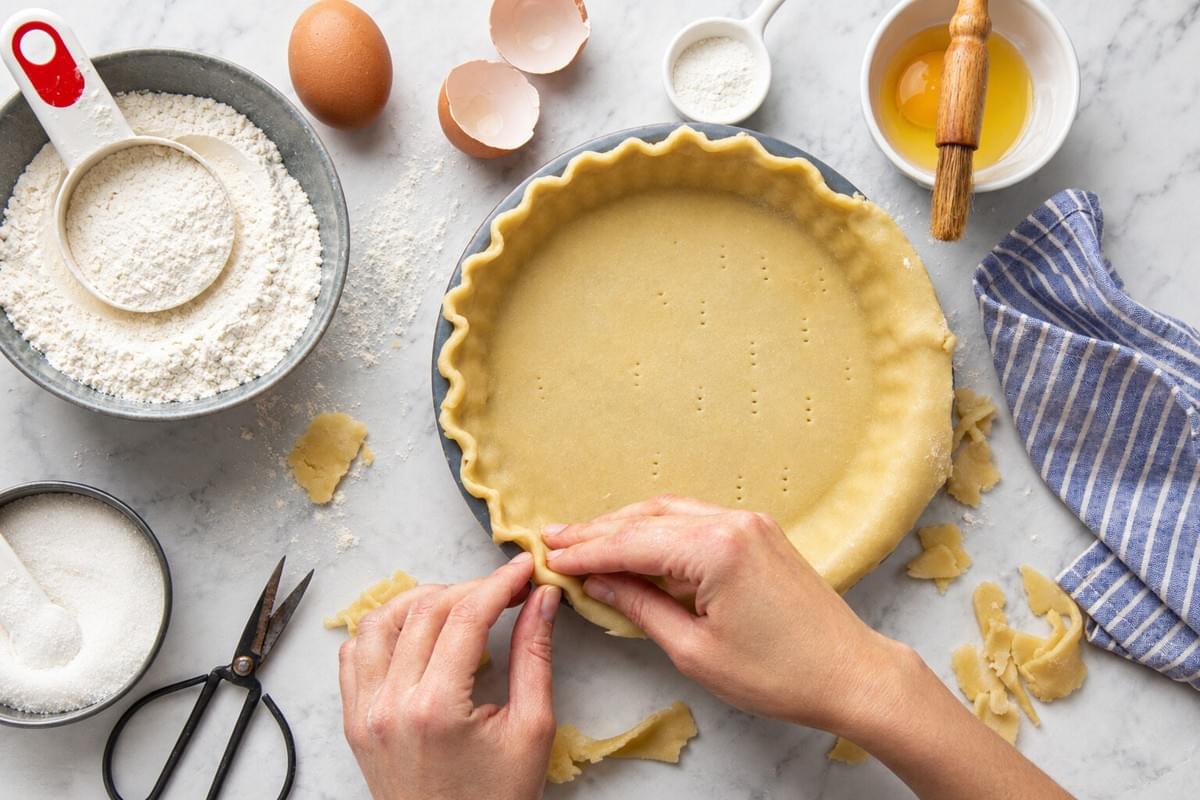
Make and Blind Bake the Crust
- Whisk the flour, sugar, and salt. Cut in the butter until it looks like coarse crumbs with some pea-sized pieces still visible.
- Sprinkle in 3 tablespoons ice water and toss with a fork. Add more, a tablespoon at a time, until the dough holds together when squeezed. Press into a disk, wrap, and chill at least 1 hour.
- Roll the dough into a 12-inch circle and ease it into the pan without stretching. Trim to a 1/2-inch overhang, tuck it under, and crimp. Prick the bottom with a fork. Freeze for 15 minutes; cold dough shrinks less.
- Heat the oven to 400°F (200°C). Line the shell with parchment, fill to the rim with weights, and bake 15 to 20 minutes, until the edges look set and pale gold.
- Lift out the parchment and weights. Bake 10 to 15 minutes more, until the bottom looks dry and the whole crust is evenly golden. Cool completely on a rack, about 30 minutes.
Cook the Lemon Filling
- In the saucepan, whisk the sugar, cornstarch, and salt. Whisk in the water until smooth.
- Cook over medium heat, whisking constantly, until the mixture turns thick, glossy, and translucent and begins to bubble, about 5 to 7 minutes.
- In a bowl, whisk the yolks. Slowly pour in about 1/2 cup of the hot mixture while whisking. This is called tempering: it warms the yolks gently so they don't scramble.
- Pour the yolk mixture back into the pan. Return to a gentle boil, whisking, and cook 1 full minute. That minute matters, since yolks contain an enzyme that can thin cornstarch fillings if it isn't fully heated.
- Off the heat, strain the filling into a bowl, pressing it through with a spatula. Whisk in the lemon juice, zest, and butter until smooth. Taste it. It should make you blink.
- Pour the hot filling into the cooled crust and smooth the top. Press plastic wrap directly onto the surface to prevent a skin. Cool at room temperature for 30 minutes, then refrigerate until fully set and cold, at least 4 hours.
Make the Swiss Meringue
- Bring an inch of water to a bare simmer. Wipe your mixing bowl and whisk with a paper towel dampened with a little lemon juice or vinegar to remove any trace of grease.
- Combine the egg whites, sugar, cream of tartar, and salt in the bowl. Set it over the simmering water without letting the bottom touch the water.
- Whisk gently and constantly until the mixture reaches 160°F (71°C) on an instant-read thermometer, the temperature the USDA recommends for egg dishes. This usually takes 4 to 7 minutes. Rub a drop between your fingers; it should feel smooth, not gritty.
- Move the bowl to the mixer. Whip on medium-high until the meringue is thick, bright white, and glossy, holds stiff peaks, and the bowl feels cool to the touch, about 5 to 8 minutes. Beat in the vanilla.
Assemble, Brown, and Rest
- Peel the plastic from the cold filling. Spoon the meringue around the outer edge first, spreading it until it touches the crust all the way around. Then pile the rest in the center.
- Swirl the top with the back of a spoon to make peaks.
- Brown with a kitchen torch, moving steadily, until the peaks are toasted. Or bake at 425°F (220°C) for 4 to 6 minutes, watching closely, until golden. The whites are already cooked from step 14; this step is purely for color and flavor.
- Rest the pie at room temperature for about 30 minutes before slicing.
Stable Peaks and Tangy Filling: Practical Tips
Clean, grease-free tools. Fat coats the proteins in egg whites and keeps them from linking into a strong foam. Even a little butter residue or oil can mean a weaker, flatter meringue. Glass or metal bowls are easier to keep grease-free than plastic.
Not a speck of yolk. Yolk is mostly fat, so it causes the same trouble. Separate each egg over a small bowl before adding the white to the main batch. One broken yolk then costs you one egg, not four.
Dissolve the sugar completely. The gentle heat over the water does this work. If the mixture still feels gritty at 160°F, keep whisking over the heat a little longer.
Know what stiff peaks look like. Lift the whisk. The meringue should stand straight up, with perhaps a tiny curl at the very tip, and look smooth and shiny like satin.
Stop before it overwhips. If the meringue turns dull, lumpy, or starts to look cottony, it has gone too far. Stop as soon as the peaks are stiff and the bowl has cooled.
Seal the edges. Meringue that touches the crust anchors itself as it settles. Leave a gap, and it tends to pull inward.
Respect the cooking and cooling. A filling that boils its full minute and chills completely is the difference between a clean slice and a lemon puddle.
Serving, Storage, and Make-Ahead
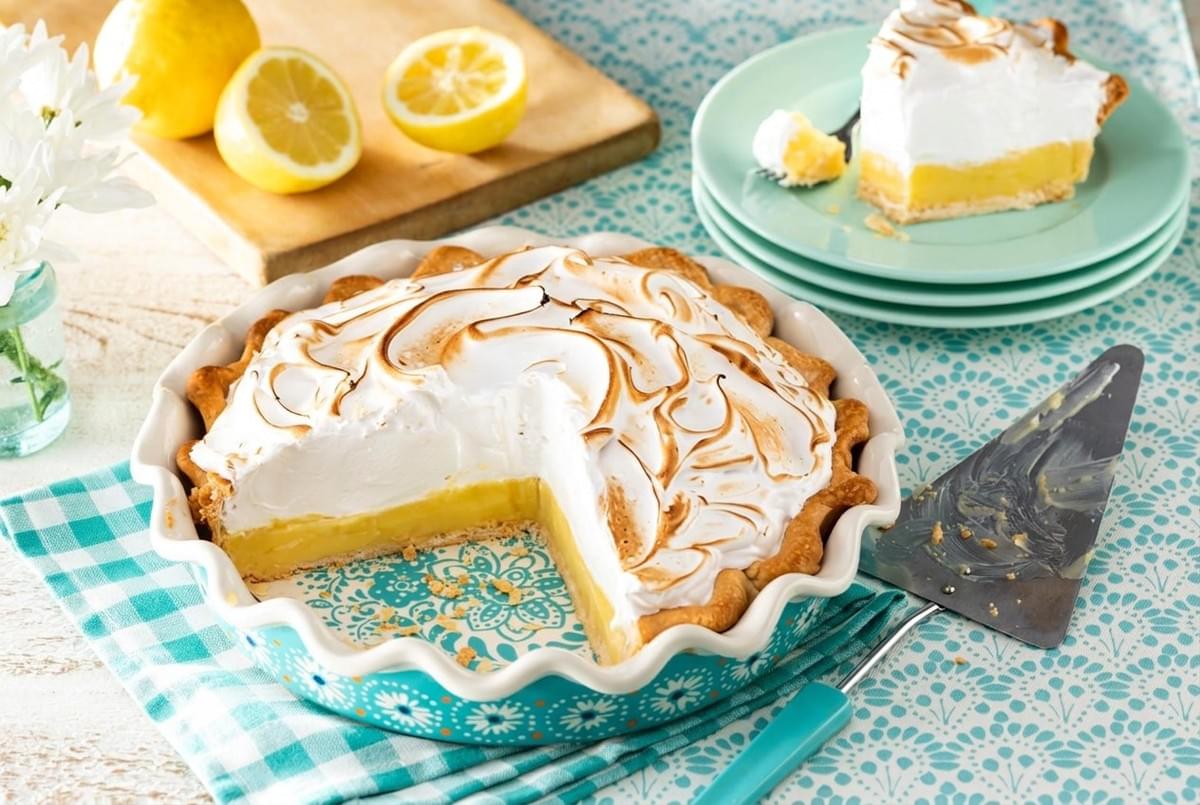
Lemon meringue pie is at its best within a few hours of browning, when the crust is crisp and the meringue is soft.
For tidy slices, dip a sharp knife in hot water, wipe it dry, and cut in one motion. Clean and rewarm the blade between slices.
Refrigerate leftovers loosely covered, with toothpicks keeping the wrap off the peaks, for up to 2 days. Expect the crust to soften and a little moisture to appear over time.
To plan ahead, bake the crust up to 1 day early and keep it covered at room temperature. The filled pie can chill overnight. Make and add the meringue on serving day. Freezing isn't recommended, since the meringue turns spongy and weeps as it thaws.
FAQ
Can I use bottled lemon juice?
It will work, but the flavor is flatter. Fresh juice and zest are what give this filling its brightness.
Can I make the pie the day before?
Make the crust and filling a day ahead, then top with meringue on the day you serve it.
How do I know the meringue is whipped enough?
It's thick, glossy, holds stiff upright peaks, and the bowl feels cool.
One Slice at a Time
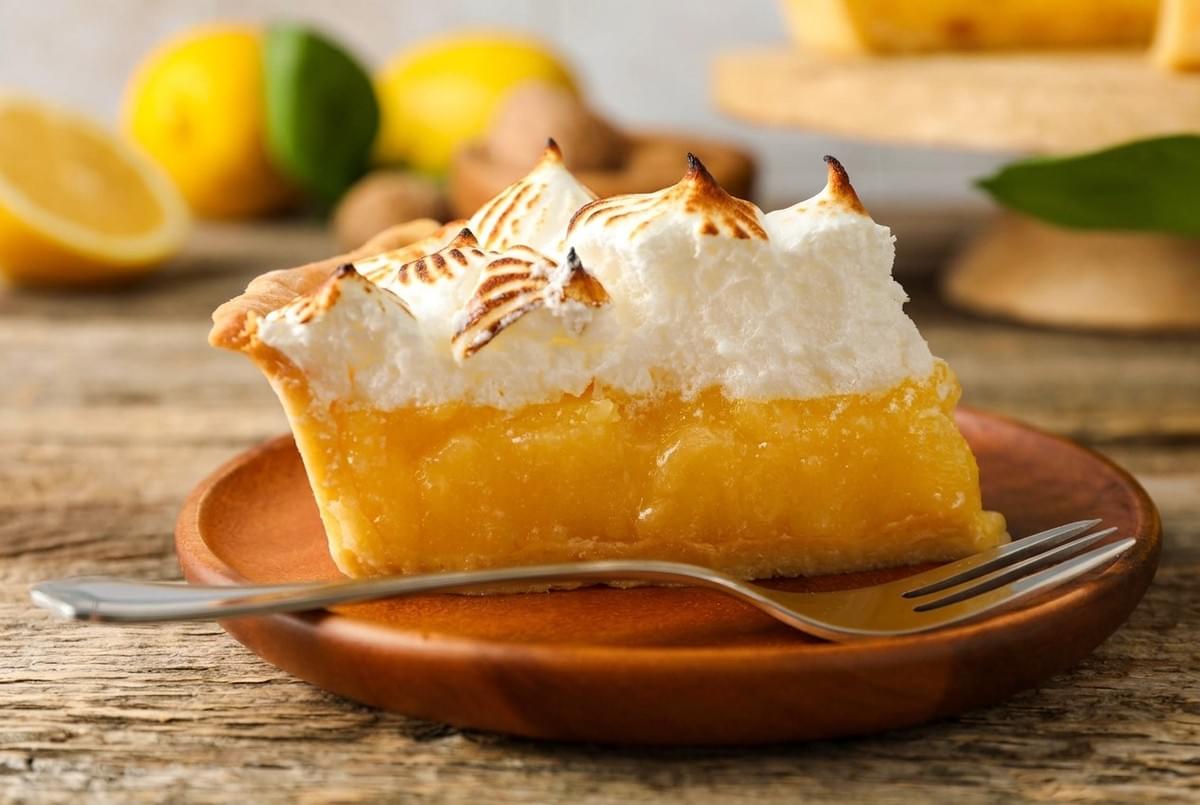
This pie asks you to wait more than it asks you to work. Wait for the crust to turn gold. Wait for the filling to set. Wait for the thermometer.
Then the knife goes in, and there they are: three clean layers, sharp lemon, soft peaks with toasted tips.
Bake one this weekend. When you do, come tell us in the comments how your peaks stood up and how tangy you let it be.
For more recipes like this one, click here!
