

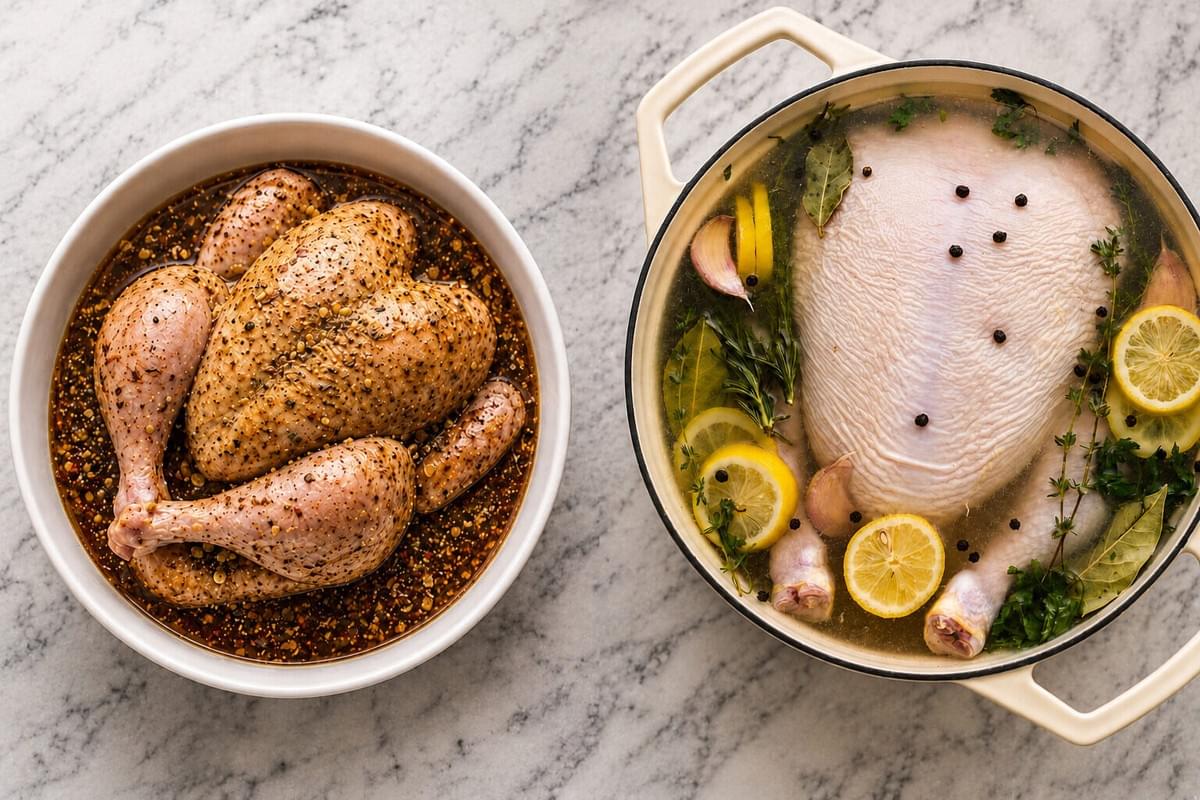
There is a moment many home cooks reach when a recipe says "brine the chicken" and another says "marinate it overnight," and they quietly wonder if those are simply two words for the same thing. They are not. Both involve soaking food in liquid before cooking, and both improve what lands on the plate. But they work in different ways, for different reasons, and choosing the wrong one can leave you with a meal that tastes thin or, worse, turns out salty and strange.
The confusion is understandable. Marinades and brines share ingredients. Both can contain salt, herbs, and aromatics. Both ask you to plan ahead. Yet one is built mostly for flavor, and the other for moisture and seasoning that reaches all the way through.
Consider this a practical guide to telling them apart. Once you understand what each technique actually does, you will know which one your ingredient needs, and you will stop guessing.
What Is Marinating?
Marinating means soaking food in a seasoned liquid or mixture to add flavor and, in some cases, to lightly tenderize the surface. Think of a marinade as a blanket of seasoning that wraps around your ingredient and seeps into the outer layer while it rests.
A typical marinade brings together a few components:
- Acid: citrus juice, vinegar, yogurt, or wine
- Oil: to carry fat-soluble flavors and help with browning
- Aromatics: garlic, ginger, onion, shallot
- Herbs and spices: for depth and character
- Salt: for seasoning
- Sugar: sometimes, for balance and caramelization
Here is the part that surprises people: marinades mostly affect the surface of food, especially with shorter soaking times. They do not penetrate deeply. Flavor molecules are large and move slowly, so most of the action happens on the outer few millimeters. That is not a flaw. A well-seasoned surface is exactly what you want on a grilled chicken thigh or a seared piece of tofu.
The acid plays a particular role. Acids like lemon juice, vinegar, yogurt, and wine break down proteins at the surface, which can soften texture and help flavors cling. Used with care, this is a good thing.
Used carelessly, it is not. Too much acid, or too much time, can leave certain proteins mushy, chalky, or unpleasantly soft. Delicate fish is especially vulnerable; leave it in citrus long enough and the acid will essentially begin to "cook" it, as in ceviche. The lesson is simple: a marinade is a guest, not a roommate. It should not overstay.
What Is Brining?
Brining means treating food with salt, either by soaking it in a saltwater solution (wet brining) or by applying salt directly to its surface (dry brining). The goal is not surface flavor. The goal is moisture and even seasoning throughout.
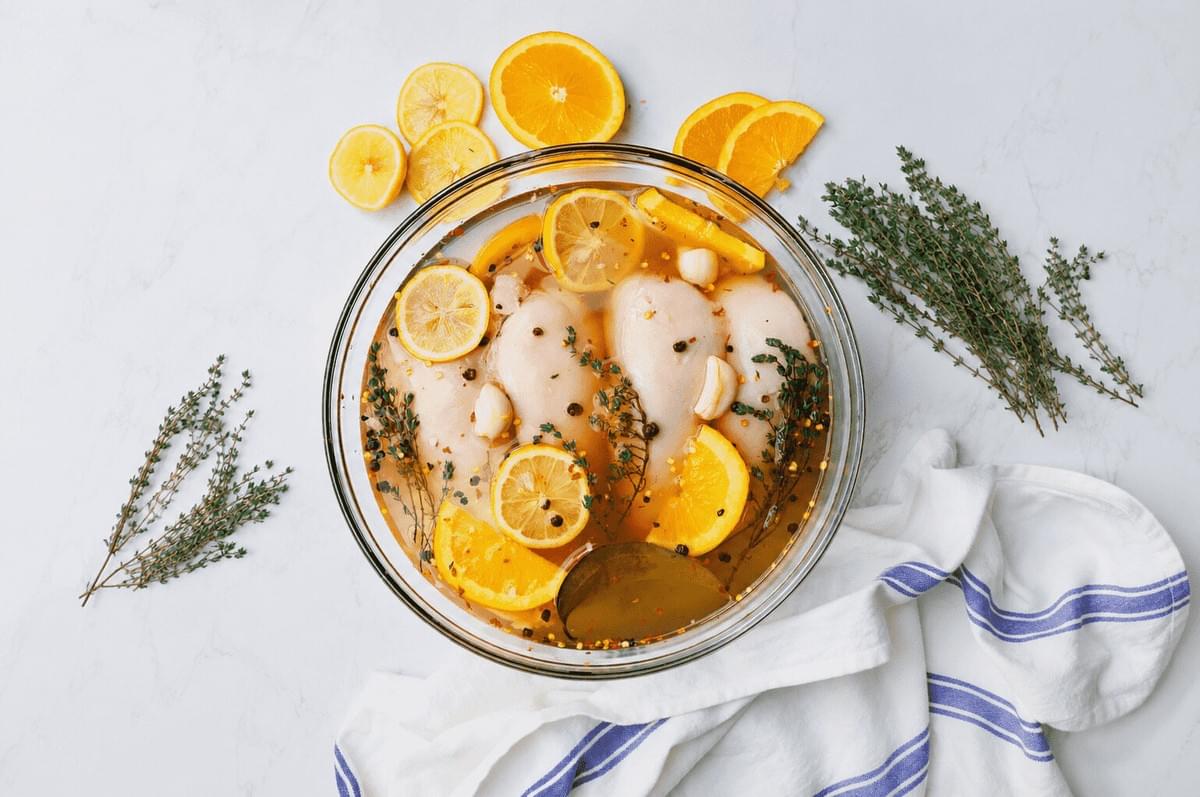
Wet brining submerges the food in water mixed with salt, and often sugar, herbs, and aromatics. The salt helps the food hold on to moisture during cooking, so a lean cut stays juicier even after time in a hot oven.
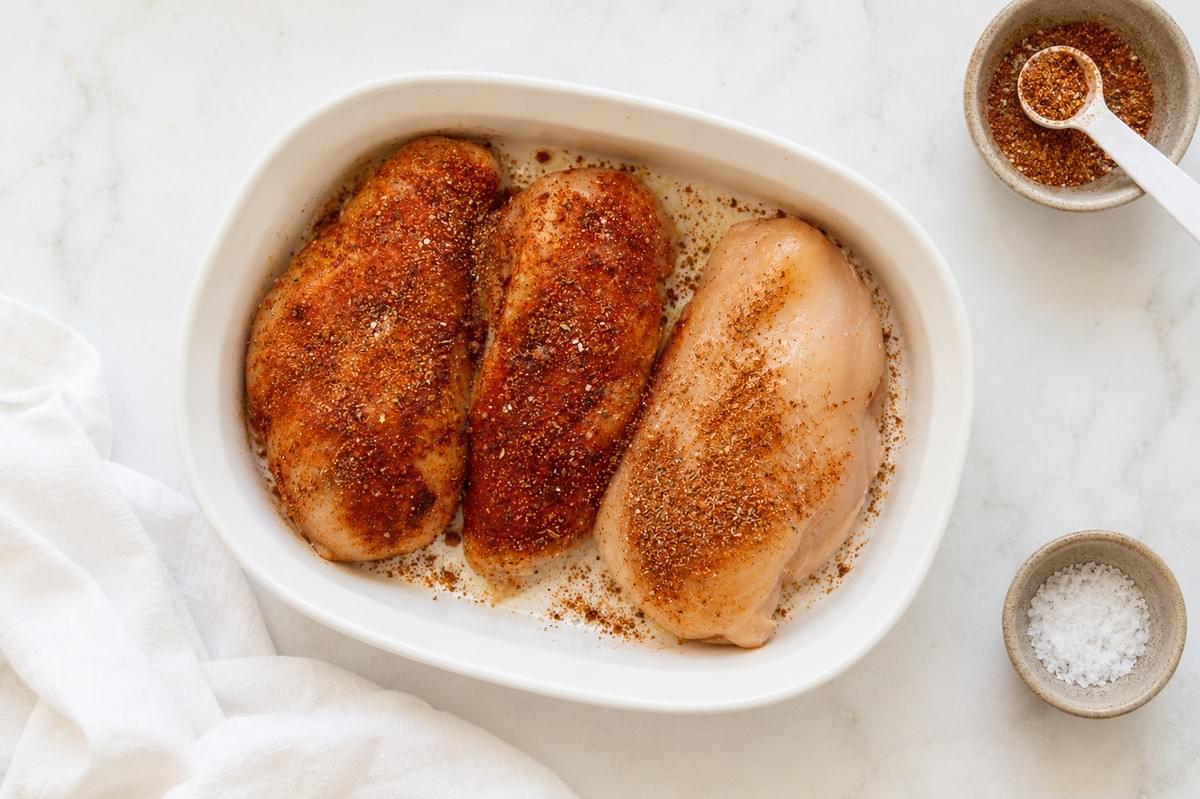
Dry brining skips the water. You rub salt directly onto the surface, then let the food rest, usually uncovered in the fridge. The salt draws out a little moisture, dissolves into it, and is gradually reabsorbed, seasoning the meat from the outside in. A bonus: because the surface dries as it rests, dry-brined meat browns beautifully.
Common brining ingredients include salt (the essential one), water, sugar, herbs, spices, and aromatics like bay leaf, peppercorn, or garlic. The salt is what does the real work. It seasons more deeply than a marinade ever could, and it changes how proteins hold water so they release less of it under heat.
This makes brining especially useful for lean proteins that tend to dry out: turkey, chicken breast, pork loin. These are the cuts that punish you for a minute of overcooking. A brine gives you a wider margin for error.
The Key Difference Between Marinating and Brining
The simplest way to hold these apart is to remember what each one is chasing.
Marinating is flavor-driven. It builds a seasoned, sometimes tenderized surface, and it shines when that surface meets direct heat.
Brining is moisture- and seasoning-driven. It helps food stay juicy and seasons it more evenly from edge toward center.
Marinating is mainly used for surface flavor and light tenderizing. It relies on ingredients like acid, oil, and aromatics to season the outside of the food and build a bold, flavorful crust when grilled, seared, roasted, or broiled. Because it works mostly on the surface, marinating is best for dishes where the outer layer carries much of the flavor. The main risk is leaving food in an acidic marinade for too long, which can make the texture mushy or unpleasantly soft. A marinade usually comes in the form of a seasoned liquid mixture.
Brining, on the other hand, is mainly used for moisture retention and even seasoning. Salt is the key ingredient, and it helps food stay juicy while seasoning it more deeply than a marinade can. Instead of working only on the surface, brining affects the food more thoroughly, making it especially useful for lean cuts that tend to dry out during cooking. The main risk is using too much salt or brining for too long, which can make the finished dish overly salty. Brining can be done as either a wet brine or a dry brine.
Neither is the better technique. They answer different questions. One asks, "How do I make this taste vivid?" The other asks, "How do I keep this juicy and seasoned all the way through?"
When to Use a Marinade
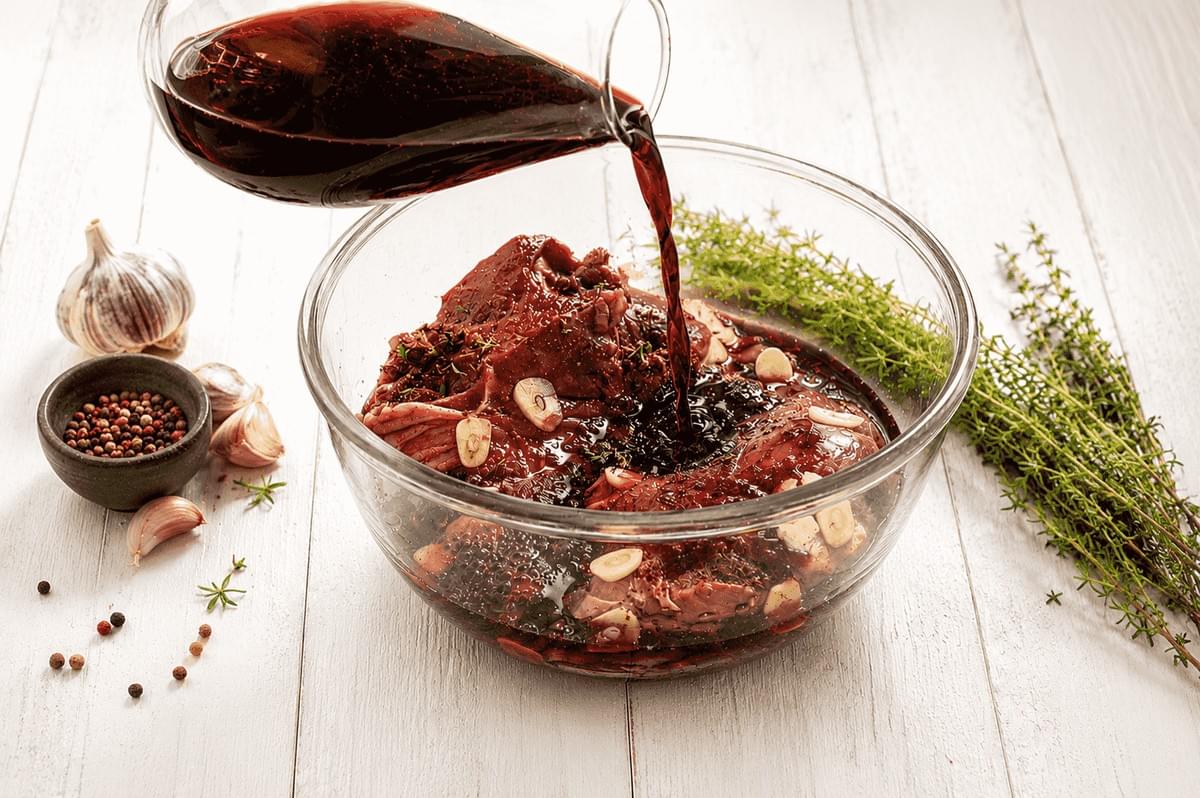
Reach for a marinade when you want bold flavor on the surface, particularly for foods headed to the grill, the broiler, a roasting pan, or a hot skillet. The browning that happens under high heat pairs naturally with the seasoned exterior a marinade provides.
Good candidates include chicken pieces, beef cuts for grilling, pork chops, tofu, seafood, vegetables, and mushrooms.
Timing matters, and more is not better. Use these as general guides:
- Seafood: about 15 to 30 minutes
- Chicken pieces: 30 minutes to several hours
- Beef or pork: several hours, depending on the cut
- Vegetables and tofu: 15 minutes to a few hours
Watch the delicate proteins closely. Fish and shrimp need only a short rest, and an acidic marinade left too long will turn them soft and pasty. When in doubt, marinate for less time rather than more.
When to Use a Brine
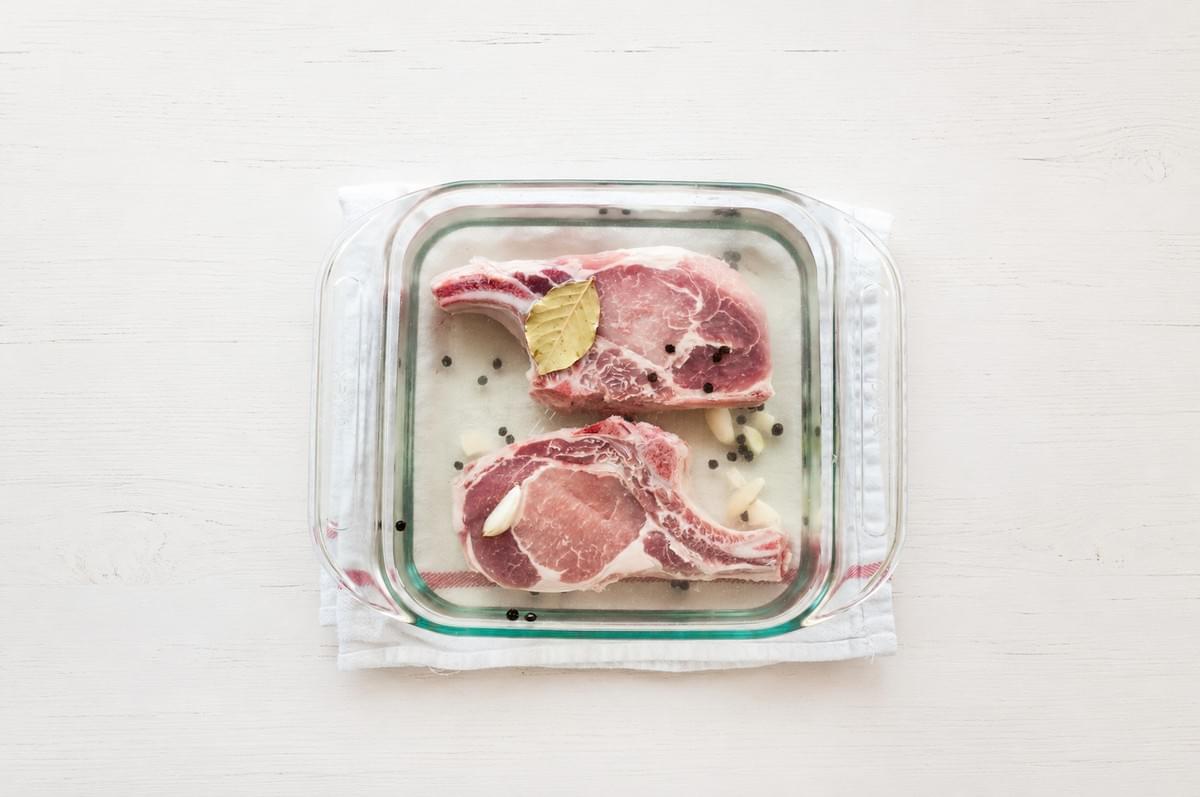
Choose a brine when your main concern is moisture and even seasoning, especially for lean proteins that dry out easily. Turkey is the classic example, but chicken breast, pork chops, pork loin, whole chicken, and some lean fish all benefit. A few firm vegetables can take a brine as well.
When should you choose wet versus dry?
Wet brining suits larger or very lean proteins, like a whole turkey or chicken, where you want maximum moisture insurance. It does require fridge space and a container big enough to submerge the bird.
Dry brining is the tidier option, and it gives better browning because the surface dries as it rests. For many cooks, dry brining a chicken or a few pork chops is the easier everyday choice.
Timing, again as a guide:
- Chicken breasts: 30 minutes to 2 hours
- Whole chicken: several hours to overnight
- Turkey: 12 to 24 hours, depending on size
- Pork chops: 30 minutes to 4 hours
- Dry brining: several hours to overnight, depending on the ingredient
One practical note on rinsing. Whether you rinse after brining depends on the salt level and the recipe. Heavily salted wet brines are often rinsed and patted dry before cooking. Dry-brined meat usually is not rinsed, since the salt has already been absorbed. Follow your recipe, and when it is silent, taste your judgment against the salt you used.
Can You Marinate and Brine Together?
You can, but it calls for care, and most of the time you are better off choosing one.
The trouble is salt. A salty marinade already behaves partly like a brine, so stacking a full brine and a salty marinade can push the food well past pleasant into too salty. Salt does not wash back out once it has done its work.
A cleaner approach is to decide on your primary goal first. Is this dish about flavor impact, or about moisture retention? Pick the technique that serves that goal.
If you want the juiciness of a brine and a bit more surface flavor, a reliable sequence works well: brine first, then finish with a low-salt glaze, rub, or sauce later. That way the brine handles moisture and seasoning, and the finishing layer adds character without doubling up on salt.
Cooking With Intention
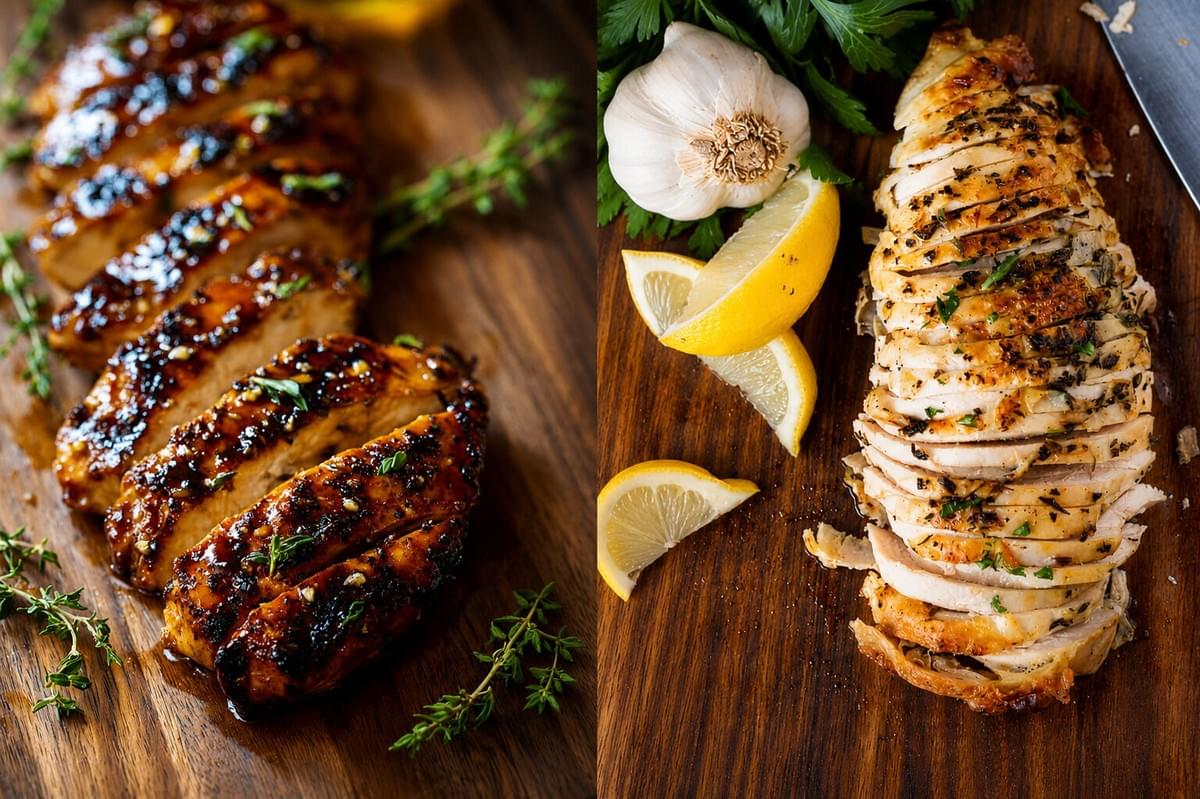
The difference comes down to this: marinating adds flavor to the surface and can lightly tenderize, while brining keeps food moist and seasons it more evenly throughout. One leans on acid and aromatics, the other on salt.
Neither method is automatically the right call. The best choice depends on what you are cooking, how you plan to cook it, and what you hope to taste at the end. A grilled chicken thigh wants a marinade. A holiday turkey wants a brine. A weeknight pork chop might want either, depending on your evening.
Learn what each technique is doing, and you stop following recipes blindly and start making decisions. That is the quiet confidence good cooking is built on, one informed choice at a time. For more kitchen skills, seasonal recipes, and practical cooking guidance, visit Our Food Rhythms.
