

The oven has been on for half an hour, and the kitchen has started to smell sweet.
You open the door and a wave of heat rolls out. On the tray, the kūmara has softened at the centre and darkened at the edges, some corners almost toffee-brown where the sugars have met the hot metal. Beside it, red onion has slumped into soft, glossy wedges.
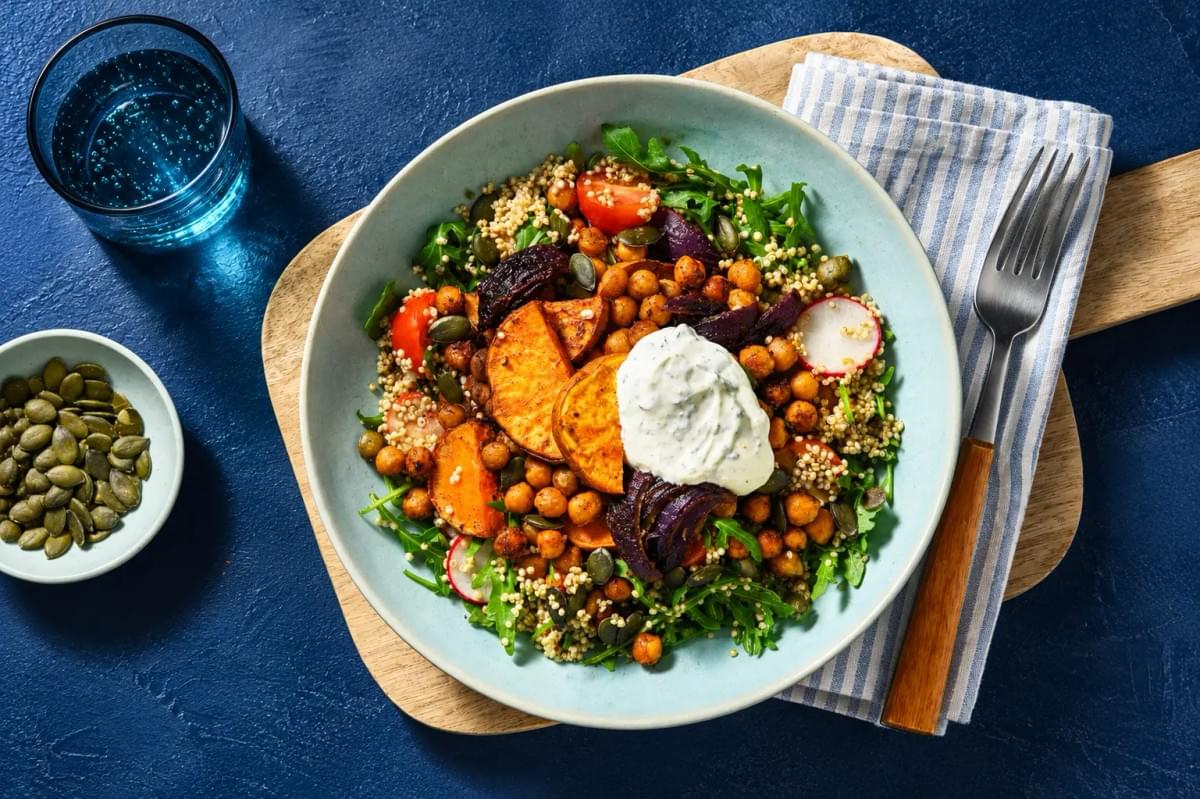
These New Zealand kumara roast bowls come from that tray. Warm roasted kūmara and chickpeas sit on fluffy quinoa and a handful of cool greens, finished with a spoonful of lemon-yoghurt dressing that cuts through the sweetness. A scatter of pumpkin seeds adds a quiet crunch.
The bowl works as an easy lunch or a relaxed dinner. Most of the work happens in the oven while you get on with other things.
A Little Background on Kūmara
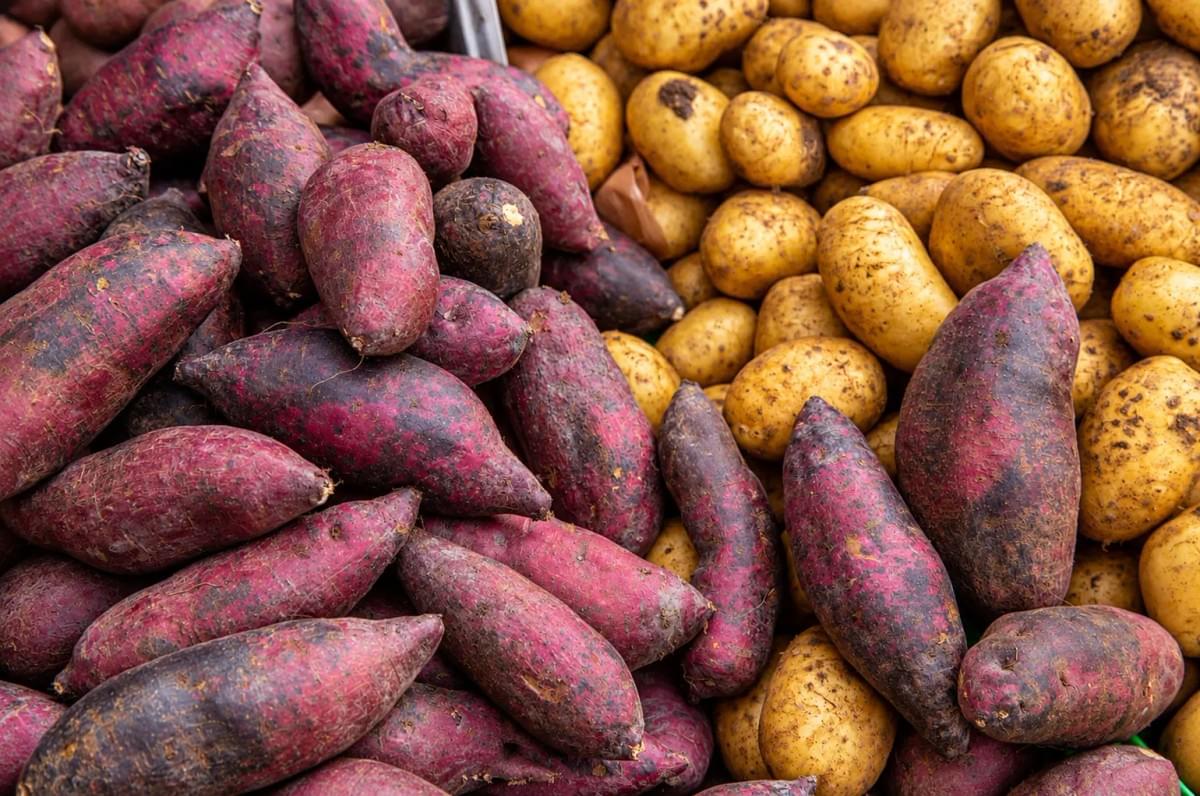
Kūmara is the Māori word for sweet potato, and in Aotearoa New Zealand it is simply what most people call it. The vegetable has a long history in Māori cultivation and cooking, and it remains an everyday staple on tables across the country, from Sunday roasts to weeknight trays.
Its natural sweetness is what makes it so good for roasting. In a hot oven, the centres turn soft and creamy while the edges caramelise. This bowl is a contemporary, New Zealand-inspired recipe, not a traditional Māori dish. If you can't find New Zealand kūmara, ordinary sweet potatoes work well. Just know that varieties differ: some are drier and denser, others softer and more moist, so roasting times may shift a little.
Recipe Overview
- Servings: 4
- Prep time: 20 minutes
- Cook time: 40 minutes (the quinoa cooks while the vegetables roast)
- Total time: about 1 hour
- Difficulty: Easy
Ingredients
Roasted Kūmara and Vegetables
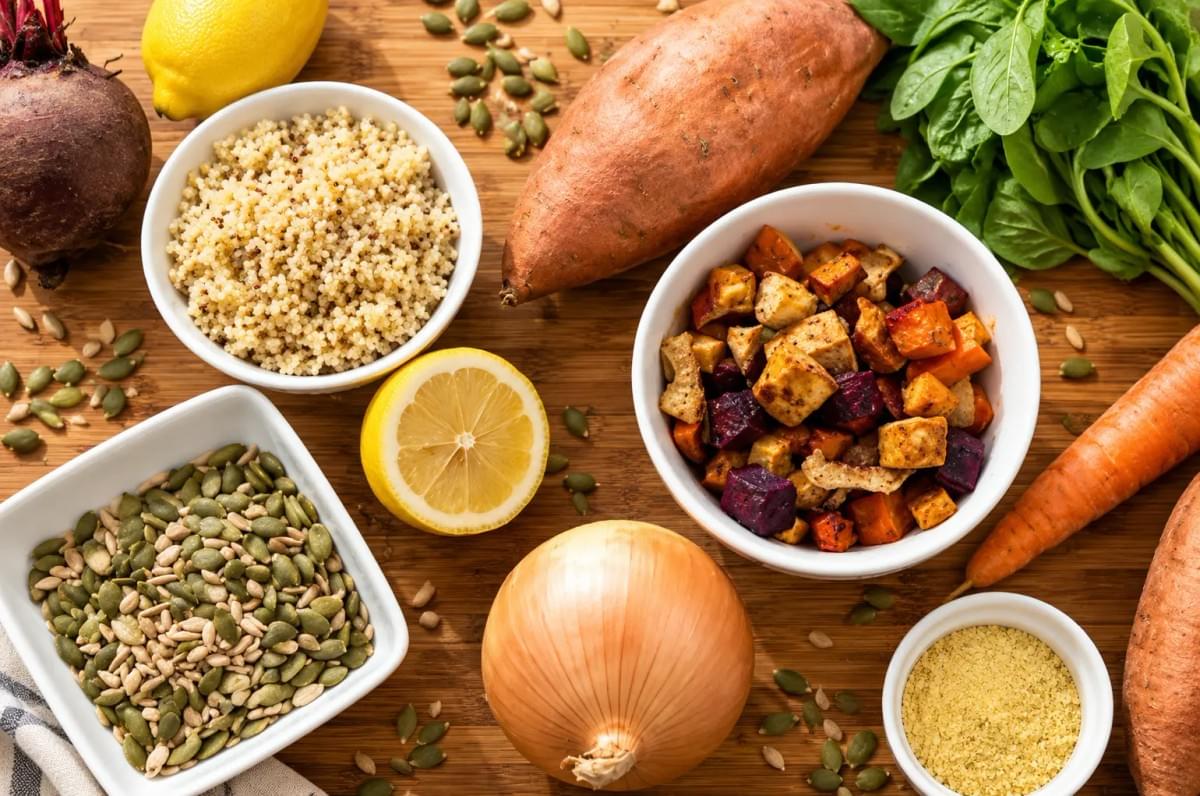
- 1 kg (about 2 lb 3 oz) kūmara, roughly 2 large
- 3 tablespoons olive oil, divided
- 1 teaspoon smoked paprika
- 1/2 teaspoon ground cumin
- 1 teaspoon salt, divided
- 1/4 teaspoon black pepper
- 1 x 400 g (14 oz) can chickpeas, drained and rinsed (about 240 g / 1 1/2 cups drained)
- 1 medium red onion, cut into 8 wedges
Grain Base and Bowl Toppings
- 180 g (1 cup) uncooked quinoa, which makes about 3 cups cooked
- 500 ml (2 cups) water
- Pinch of salt
- 100 g (3 1/2 oz) baby spinach or rocket, about 4 large handfuls
- 35 g (1/4 cup) pumpkin seeds (optional)
- A small handful of fresh parsley, mint, or coriander leaves (optional)
Lemon-Yoghurt Dressing
- 180 g (3/4 cup) plain Greek yoghurt
- Finely grated zest of 1 lemon
- 2 to 3 tablespoons lemon juice
- 1 small garlic clove, finely grated
- 1 tablespoon olive oil
- 1/4 teaspoon salt
- 1 to 3 tablespoons cold water, to loosen
How to Make New Zealand Kumara Roast Bowls
1. Heat the oven
Preheat the oven to 220°C (425°F), or 200°C if you're using a fan oven. Line two large baking trays with baking paper.
Two trays matter here. Vegetables need space to roast. Crowded together, they trap steam and turn soft instead of golden.
2. Prepare the kūmara
Scrub the kūmara well under running water, paying attention to any soil around the ends. Peeling is optional. The skin crisps slightly in the oven and adds a little texture, so leaving it on saves time.
Trim the ends and cut the kūmara into cubes of about 2 to 2.5 cm (roughly 1 inch). Try to keep them close in size so they cook at the same pace.
3. Season and arrange the kūmara
Pile the kūmara onto the first tray. Drizzle with 2 tablespoons of the olive oil, then sprinkle with the smoked paprika, cumin, 1/2 teaspoon salt, and the pepper.
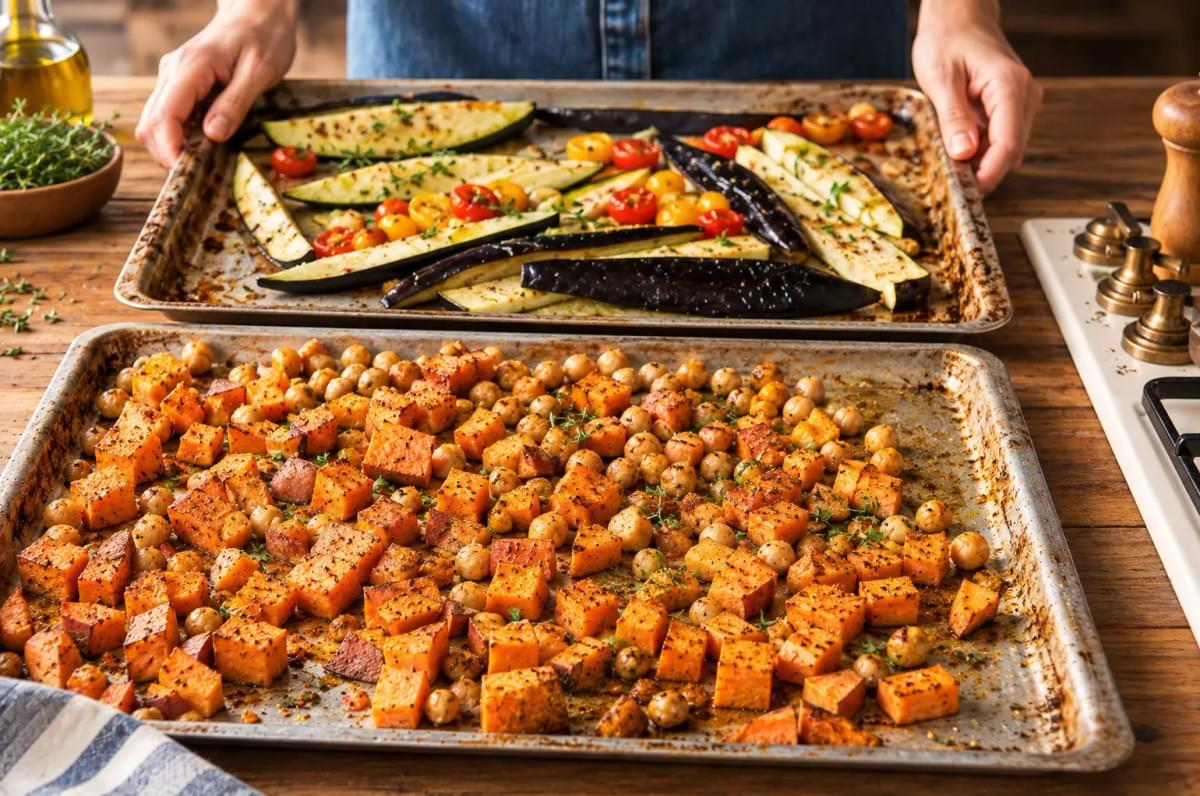
Toss with your hands until every piece looks lightly glossy. Spread the cubes into a single layer with a little space between them, and turn as many as you can onto a cut side. Flat sides touching the tray brown best.
4. Dry and arrange the chickpeas and onion
Tip the drained chickpeas onto a clean tea towel or paper towels. Pat them dry, rolling them gently. Some loose skins will slip off; you can discard them. Dry chickpeas roast with golden, slightly crisp edges, while wet ones tend to steam.
Place the chickpeas and onion wedges on the second tray. Toss with the remaining 1 tablespoon olive oil and 1/4 teaspoon salt, then spread into a single layer.
5. Roast and turn
Put both trays in the oven. If one has to sit on a lower rack, use it for the chickpeas.
After about 20 minutes, take the trays out. Turn the kūmara with a spatula and give the chickpeas and onion a stir. Swap the trays between racks so both brown evenly.
The chickpeas and onion usually need 25 to 30 minutes in total. They're ready when the chickpeas look golden and feel dry on the outside, and the onion is soft with charred tips.
The kūmara usually needs 30 to 40 minutes in total. Look for deep golden, caramelised edges. A fork should slide into the centre of a cube with no resistance. If the edges are browning but the centres still feel firm, give them another 5 minutes and check again.
6. Cook the quinoa while the vegetables roast
Put the quinoa in a fine sieve and rinse it under cold water for about 30 seconds. This washes away its natural coating, which can taste bitter.
Add the quinoa, 500 ml water, and a pinch of salt to a saucepan. Bring to a boil, then cover, reduce the heat to low, and simmer for 12 to 15 minutes. It's done when the water has been absorbed and you can see small, curled tails around each grain.
Turn off the heat and leave it covered for 5 to 10 minutes. Fluff it with a fork.
7. Toast the pumpkin seeds (optional)
Place the pumpkin seeds in a dry frying pan over medium heat. Shake the pan often for 3 to 4 minutes, until they puff slightly, start to pop, and smell nutty. Tip them onto a plate straight away so they don't keep cooking.
8. Mix the dressing
In a small bowl, stir together the yoghurt, lemon zest, 2 tablespoons lemon juice, garlic, olive oil, and salt.
Add cold water 1 tablespoon at a time until the dressing falls from a spoon in a thick ribbon. It should drizzle, not run. Taste it. If it feels flat against the sweet kūmara, add the remaining lemon juice or a pinch more salt.
9. Build the bowls
Divide the quinoa between four bowls. Tuck a handful of greens to one side. Arrange the warm kūmara, chickpeas, and onion in their own sections rather than tossing everything together.
Spoon the dressing over the top, then finish with pumpkin seeds and herbs. Keeping the parts separate lets each bite be a little different: warm, cool, creamy, crisp.
Tips for Getting It Right
- Dry everything well. Moisture is the main reason roasted vegetables turn soggy. Pat the kūmara dry after washing, and dry the chickpeas thoroughly.
- Cut evenly. Similar-sized pieces finish together, so you don't end up with some scorched and some firm.
- Give the tray room. If the pieces touch in a crowded heap, use a third tray. Space is what lets the edges caramelise.
- Don't rush the heat. A fully preheated oven sears the surface quickly. A cool one lets the vegetables sit and soften.
- Balance the sweetness. Kūmara is naturally sweet, so the bowl needs sharpness and salt alongside it. The lemon, the savoury chickpeas, and the charred onion all help.
- Thicken before you thin. If the dressing turns watery, stir in another spoonful of yoghurt rather than adding more lemon juice.
Substitutions and Variations
The core recipe above is one clear method. These options are there if you want to change things up.
- Sweet potatoes instead of kūmara: Use the same weight. Orange-fleshed sweet potatoes can be softer and may roast a few minutes faster, so start checking early.
- Brown rice instead of quinoa: Use 200 g (1 cup) uncooked brown rice. It takes longer, often 30 to 40 minutes, so start it before the vegetables go in and follow the packet directions.
- Vegan dressing with plant-based yoghurt: Swap the Greek yoghurt for an unsweetened plain plant-based yoghurt, such as coconut or soy. Check the label, since some are sweetened.
- Vegan tahini dressing: Whisk 80 g (1/3 cup) tahini with 3 tablespoons lemon juice, 1 small grated garlic clove, and 1/4 teaspoon salt. It may seize and thicken at first. Keep whisking in cold water, about 4 to 6 tablespoons in total, until smooth and pourable. This dressing contains sesame.
- A saltier finish: Crumble about 80 g (2 3/4 oz) feta over the finished bowls.
- Different vegetables or legumes: Pumpkin or carrot can roast alongside the kūmara. Drained cannellini beans or cooked lentils can stand in for chickpeas (lentils don't need roasting, so warm them gently instead).
Allergens: The main recipe contains dairy in the yoghurt dressing, and feta adds more. The tahini option contains sesame. Quinoa and chickpeas are naturally gluten-free, but if you need a gluten-free meal, check every label, including spices and stock, for cross-contamination warnings.
Storage, Reheating, and Meal Prep
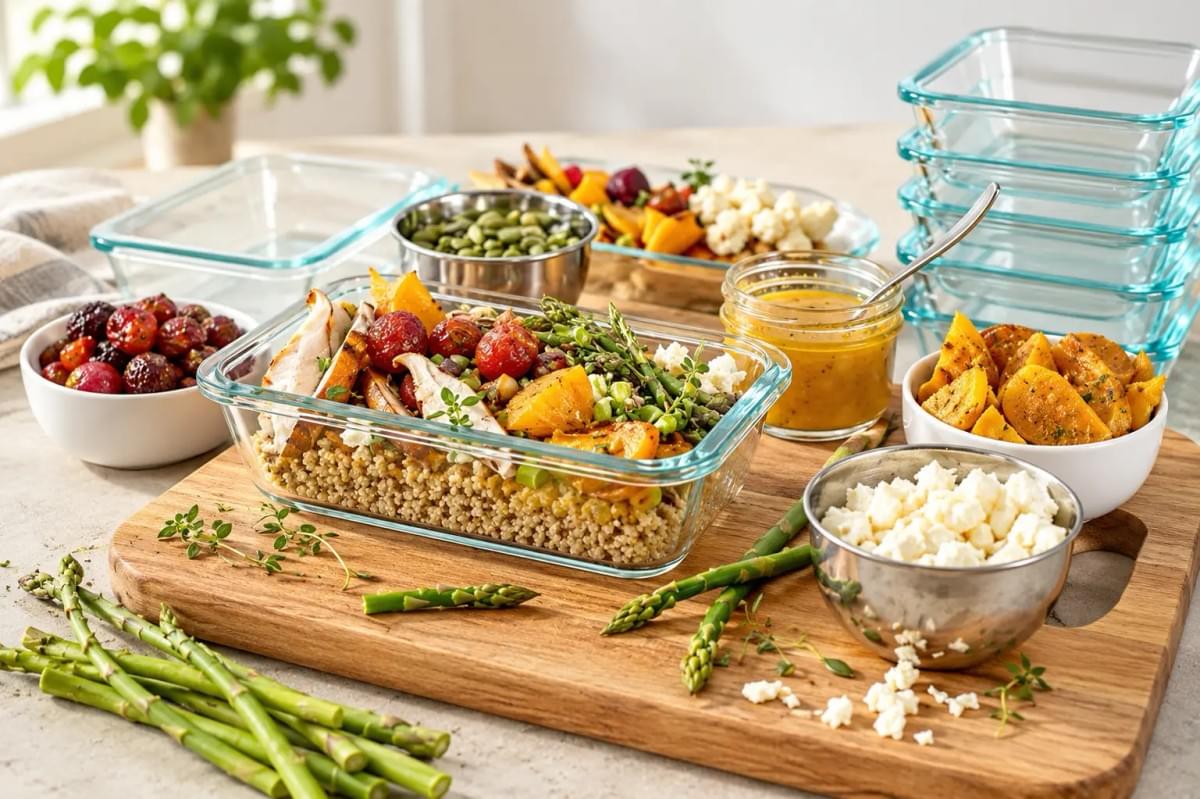
Let cooked components cool for a short while, then refrigerate them promptly, within an hour or two of cooking (sooner on a warm day). Spreading the quinoa and vegetables in shallow containers helps them cool quickly. Don't leave cooked grains sitting at room temperature.
- Roasted kūmara, chickpeas, and onion: up to 3 days in an airtight container.
- Cooked quinoa: up to 3 days in a separate container.
- Yoghurt dressing: up to 3 days, covered. Stir before using.
Keep the greens, dressing, seeds, and warm components apart. Dressing softens the greens and seeds lose their crunch once they sit in moisture.
To reheat, spread the roasted vegetables on a tray and warm them at 200°C (400°F) for 8 to 12 minutes, until hot all the way through. The oven helps bring back some of the edges. Warm the quinoa in the microwave with a splash of water, covered, until steaming hot. Reheat only what you plan to eat, and only once.
For a fresh bowl, start with hot quinoa and vegetables, then add cold greens, dressing, seeds, and herbs at the table.
A Few Questions
Is kumara the same as sweet potato?
Yes. Kūmara is the Māori and everyday New Zealand name for sweet potato. Varieties grown in New Zealand can differ in colour, sweetness, and texture from those sold elsewhere.
Do I need to peel kumara before roasting?
No. Scrubbed well, the skin is fine to eat and roasts nicely. Peel it if you prefer a softer, more uniform texture.
Can I prepare these bowls ahead of time?
Yes. Roast the vegetables, cook the quinoa, and mix the dressing up to 3 days ahead. Store each part separately and assemble just before eating.
One Bowl at a Time
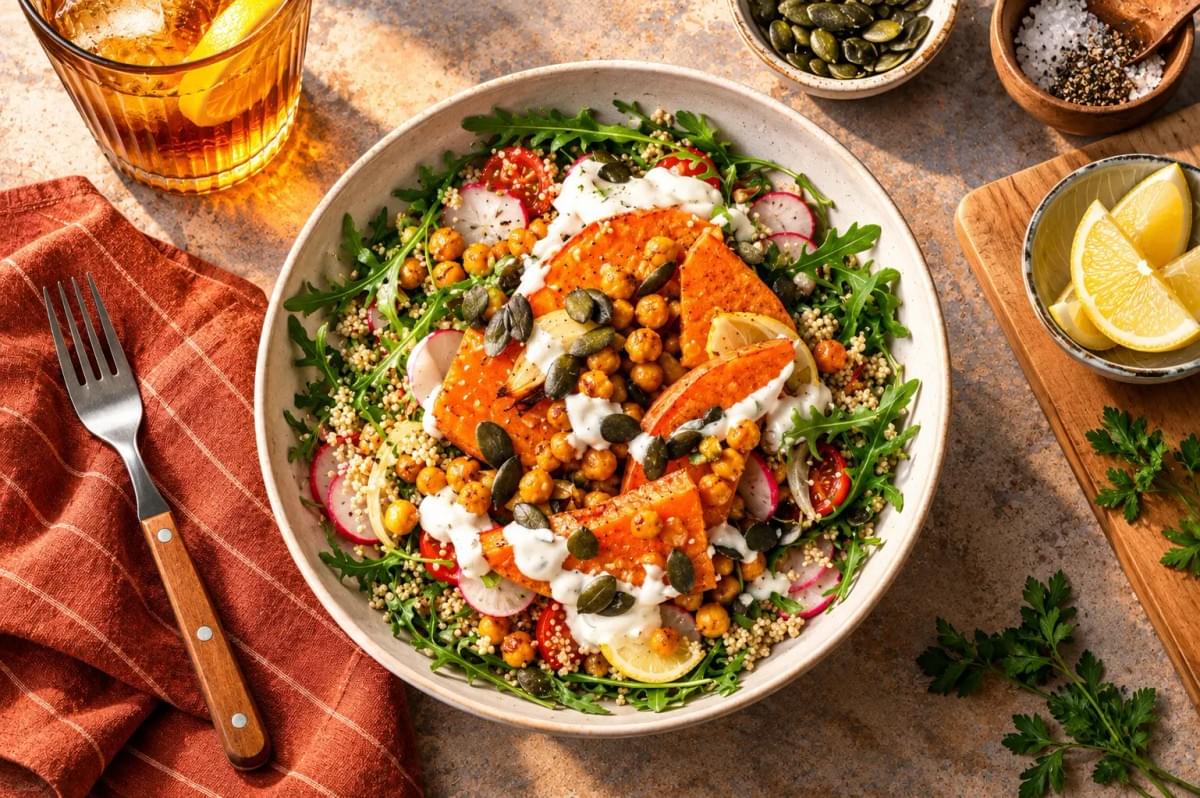
There is something steadying about a meal like this. One tray of kūmara in the oven, a pot of quinoa on the stove, a small bowl of dressing. Nothing hurried.
Then the bowls come together, warm on one side and cool on the other, with lemon catching the sweetness just as it starts to feel too soft.
What would you add to yours? Tell us your favourite toppings or swaps in the comments.
