

The pears sit on the counter for a few days before anyone decides anything.
They start out green and stubborn. Then one morning the kitchen smells faintly of honey, and the skin near the stem gives a little under your thumb. That is the signal. The pears are ready, and so is the pastry.
Some pairings are loud. This one is quiet. Pears are soft-spoken fruit, and buttery pastry is happy to let them talk. Put them together in a hot oven and they become something warm, golden, and very hard to stop slicing.
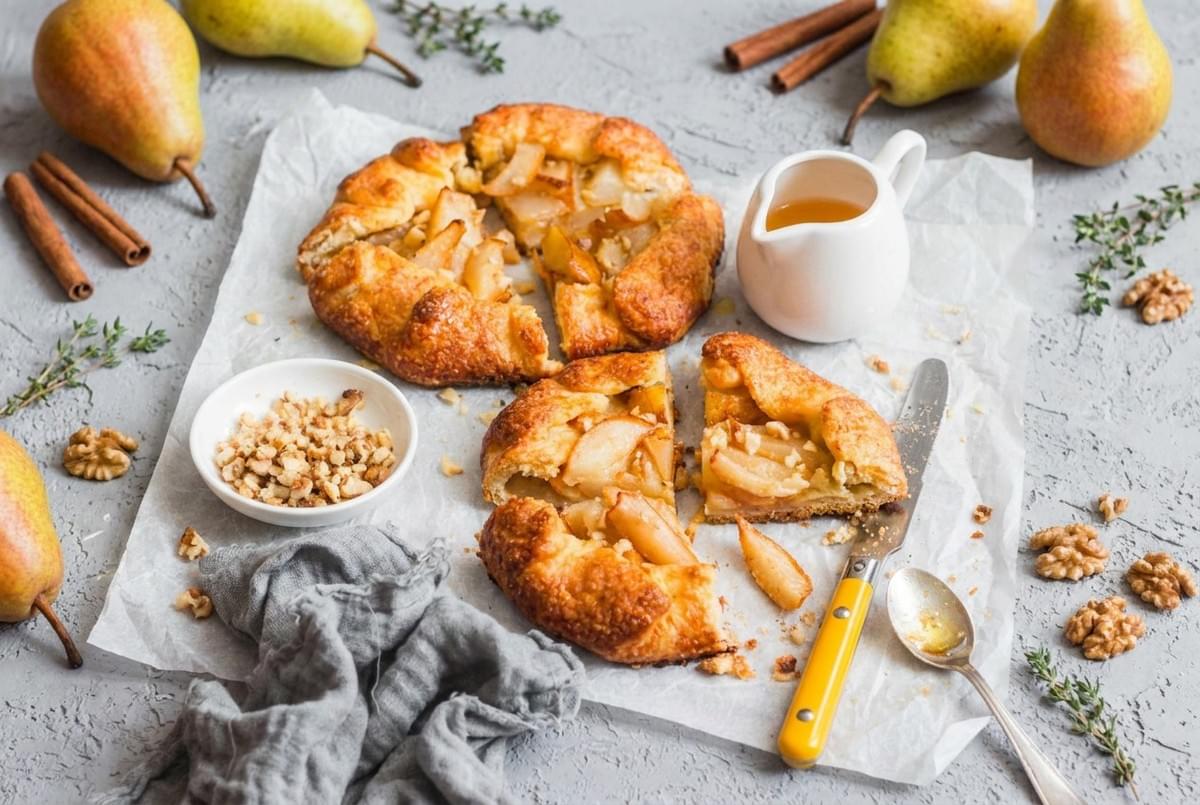
This post is built around one bake: a rustic pear galette. No pie dish, no perfect crimping, no fuss. Just a round of dough folded loosely around spiced pears, baked until the edges blister and the juices turn to caramel.
A Little Backstory: Why Pears and Pastry Work
Pears and butter have a natural understanding. Pears bring sweetness and a gentle floral perfume. Pastry brings salt, richness, and crunch. Each fills in what the other is missing.
A Quick Word on Varieties
You do not need a specialty pear, but a few behave especially well in the oven:
- Bosc: firm, slightly spicy, and they hold their shape well. A reliable choice.
- Anjou (red or green): mild, juicy, and tender when baked.
- Bartlett: very aromatic and sweet, but they soften quickly. Use them just shy of fully ripe.
What Baking Does to a Pear
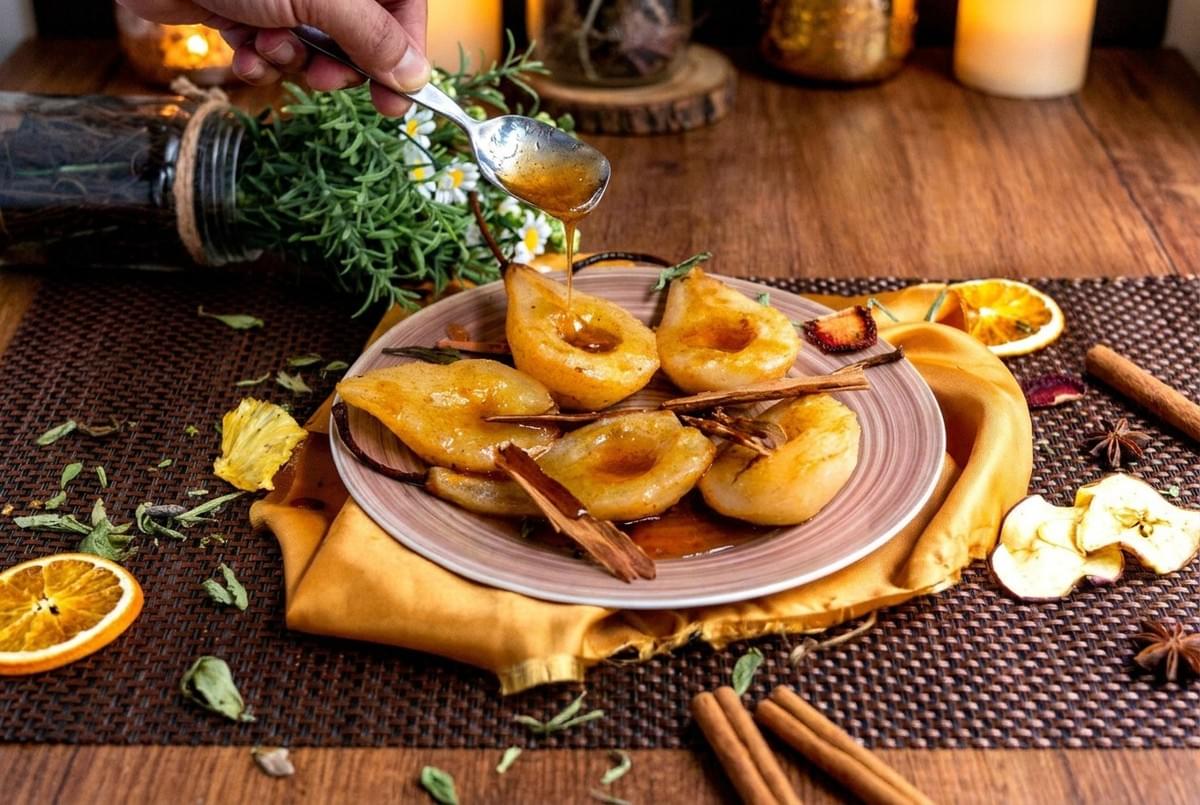
Heat softens the flesh and draws out the juice. As that juice cooks down with sugar, it thickens and caramelizes at the edges of the fruit. The texture shifts from crisp to tender, almost silky, while the flavor deepens into something closer to honey.
Flavors That Keep Pears Company
Pears get along with nearly everyone, but these are especially good friends:
- Vanilla, for warmth
- Cinnamon and ginger, for a cozy kick
- Cardamom, which brings out the pear's floral side
- Almond, toasted and nutty
- Honey and brown sugar, for depth
- Lemon, to keep the sweetness bright
What You'll Love About This Recipe
- It is forgiving. A galette is meant to look homemade. Wobbly edges are part of the charm.
- No pie dish required. A baking sheet and a sheet of parchment do the job.
- It smells wonderful. Butter, pear, and cardamom drifting through the kitchen is reason enough to bake.
- It is flexible. Swap spices, add nuts, or tuck in a layer of almond cream.
- It works for brunch or dessert. Warm with ice cream at night, or cool with coffee the next morning.
Ingredients
Prep time: 25 minutes
Chill time: 1 hour
Bake time: 40 to 45 minutes
Resting time: 20 minutes
Total time: about 2 hours 30 minutes
Yield: one 10-inch galette (6 to 8 slices)
Oven temperature: 400°F (200°C)
For the Pastry
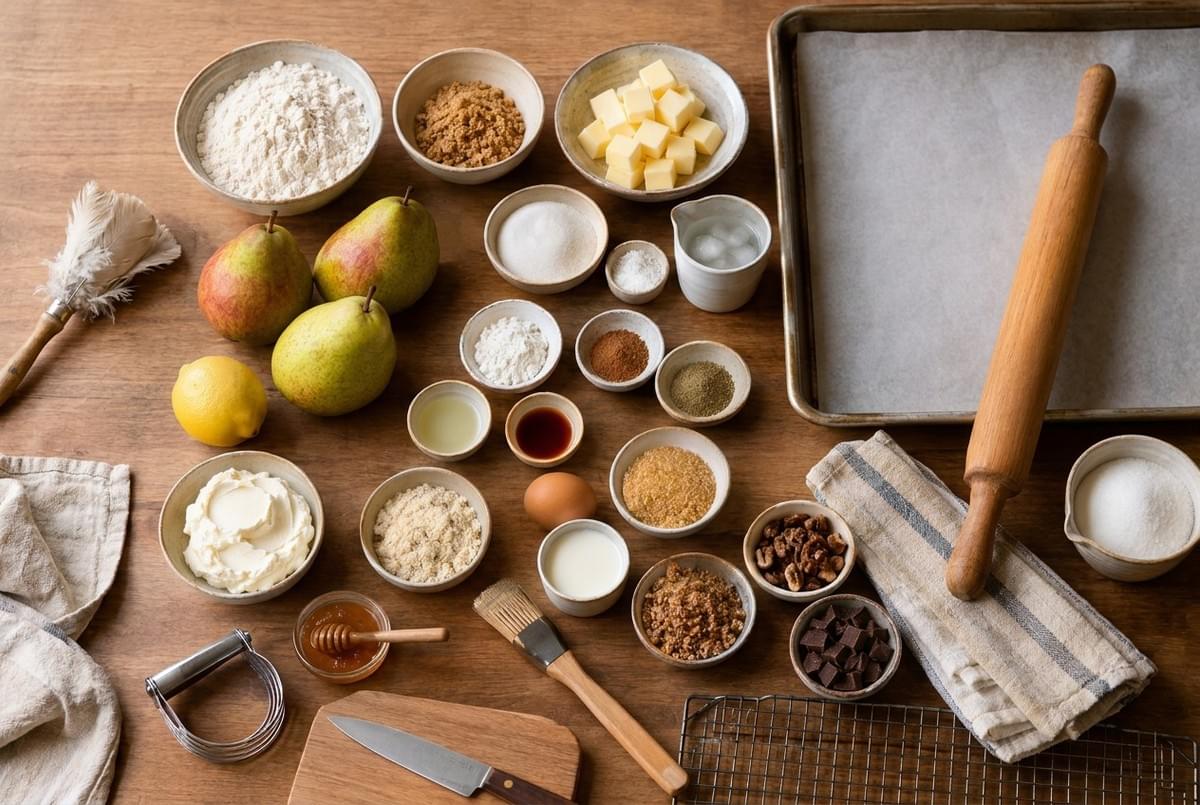
- 1 1/4 cups (160 g) all-purpose flour
- 1 tablespoon granulated sugar
- 1/2 teaspoon salt
- 1/2 cup (113 g) cold unsalted butter, cut into cubes
- 3 to 5 tablespoons ice water
For the Pear Filling
- 3 medium ripe-but-firm pears (about 1 1/4 lb / 560 g)
- 3 tablespoons (40 g) light brown sugar
- 1 tablespoon cornstarch
- 1 tablespoon lemon juice
- 1/2 teaspoon vanilla extract
- 1/2 teaspoon ground cinnamon
- 1/4 teaspoon ground cardamom
- Pinch of salt
For the Base and Finish
- 2 tablespoons almond flour (or finely crushed graham crackers)
- 1 large egg, beaten with 1 tablespoon milk (egg wash)
- 1 tablespoon coarse sugar, such as turbinado
Optional Add-Ins
- 1/4 cup (30 g) chopped toasted walnuts or pecans
- 1/4 cup (45 g) dark chocolate, chopped
- 2 to 3 tablespoons mascarpone, spread thinly over the base
- 1 tablespoon warmed honey or apricot jam, brushed on after baking for shine
Tools You'll Need
- Large mixing bowl
- Pastry cutter or two forks (your fingertips work too)
- Rolling pin
- Baking sheet lined with parchment
- Sharp knife and cutting board
- Pastry brush
- Wire rack
How to Choose Pears (and When to Slice Them)
Ripeness makes or breaks this bake. Too hard, and the pears stay crunchy. Too soft, and they collapse into mush.
- Check the neck. Press gently near the stem. A slight give means ripe. If the whole pear feels soft, save it for snacking.
- Smell it. A ripe pear smells sweet and floral near the stem.
- Plan ahead. Pears ripen off the tree. Leave firm ones on the counter for 2 to 4 days.
- Slice at the last minute. Cut pears brown quickly. Slice them just before assembling, and toss them in lemon juice right away.
Peeling is optional. The skin adds color and a little texture, especially with red Anjou.
Step-by-Step Instructions
- Make the dough. Whisk the flour, sugar, and salt in a bowl. Add the cold butter and cut it in until the mixture looks like coarse crumbs with some pea-sized bits of butter still visible. Those bits become the flaky layers.
- Add the water. Sprinkle in 3 tablespoons of ice water and stir with a fork. Add more, a tablespoon at a time, until the dough holds together when squeezed. It should feel shaggy, not sticky.
- Chill. Press the dough into a flat disk, wrap it, and refrigerate for at least 1 hour.
- Heat the oven. Set it to 400°F (200°C) and line a baking sheet with parchment.
- Prepare the pears. Core and slice them about 1/4 inch thick. Toss gently with the lemon juice, brown sugar, cornstarch, vanilla, cinnamon, cardamom, and salt. The slices should look glossy and smell warm and spiced.
- Roll the dough. On a floured surface, roll it into a rough 12-inch circle about 1/8 inch thick. Ragged edges are fine. Transfer it to the lined baking sheet.
- Build the base. Sprinkle the almond flour over the center, leaving a 2-inch border. If using mascarpone, spread it here first.
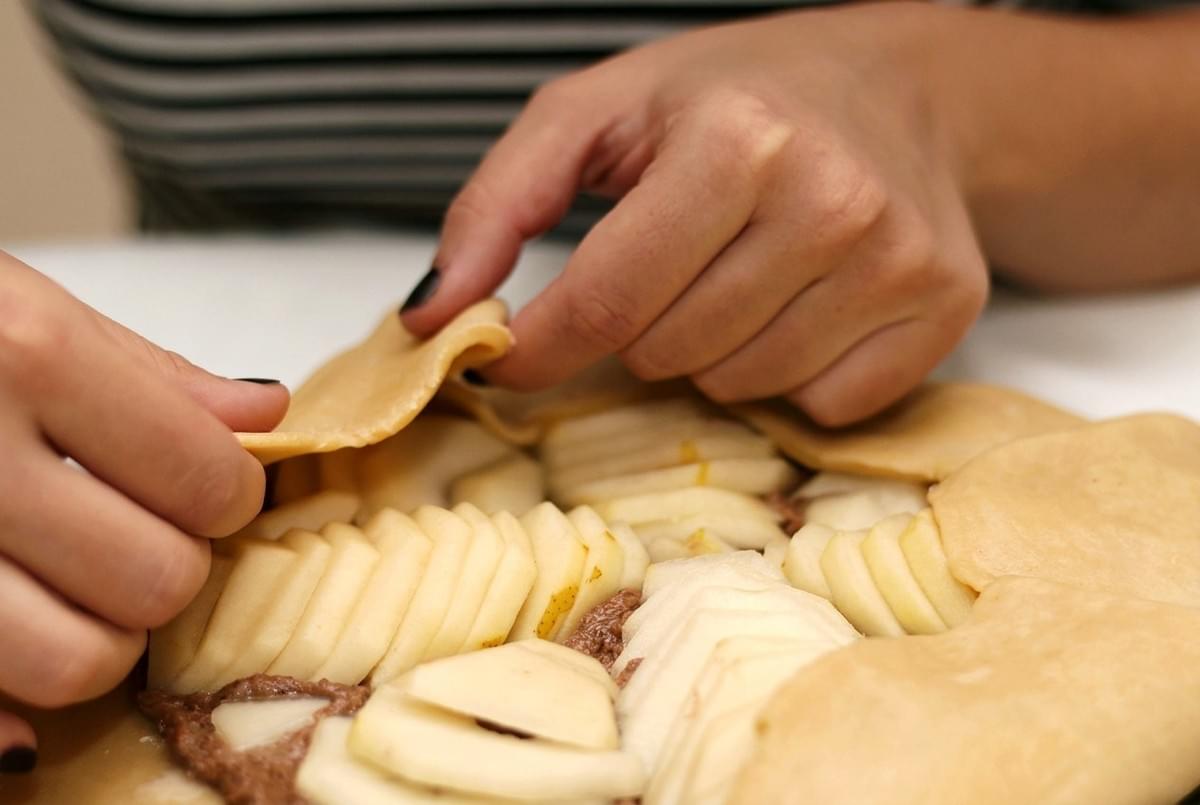
- Arrange the pears. Fan the slices over the base in overlapping circles, or just pile them evenly. Leave the extra juices in the bowl behind.
- Fold the edges. Lift the border up and over the fruit, pleating as you go. The center stays open, like a window into the tart.
- Chill again. Pop the whole sheet into the fridge for 10 to 15 minutes while the oven finishes heating. Cold pastry holds its shape and bakes up flakier.
- Egg wash and sugar. Brush the folded crust with egg wash and scatter coarse sugar over it.
- Bake. Bake for 40 to 45 minutes. You are looking for a deep golden crust, pears that are tender when pierced with a knife, and juices bubbling thickly in the center. The kitchen will smell of butter and spice well before it is done.
- Rest. Let the galette cool on the baking sheet for at least 20 minutes. The juices need this time to settle and thicken.
Tips for Success
- Prevent a soggy bottom. The almond flour layer soaks up juice. Leaving the pooled juices in the bowl helps too.
- Keep everything cold. Cold butter creates steam in the oven, and steam creates flaky layers. If the dough gets soft while you work, chill it for 10 minutes.
- Choose your thickener. Cornstarch gives a clear, glossy set. Flour works in a pinch but looks a little cloudy. Use about 1 1/2 tablespoons if you switch.
- Bake hot. 400°F sets and browns the crust before the fruit releases too much liquid.
- Do not skip the egg wash. It gives the crust its golden shine and helps the sugar stick.
- Be patient with resting. Slicing straight from the oven means runny filling. A short wait gives you clean wedges.
- Watch for leaks. A little juice escaping is normal. Parchment makes cleanup easy.
Variations
- Spiced chai pear: Add 1/4 teaspoon ground ginger and a pinch each of cloves and black pepper to the filling.
- Almond frangipane: Spread a thin layer of almond cream (almond flour, butter, sugar, and egg) over the base instead of plain almond flour.
- Maple pear: Replace the brown sugar with 3 tablespoons maple syrup, and add an extra 1/2 teaspoon cornstarch to balance the liquid.
- Pear and chocolate: Scatter chopped dark chocolate under the pears for pockets of melted richness.
- Gluten-free: Use a 1:1 gluten-free baking flour blend in the dough. It may crack more when folding, so press any tears back together.
- Shortcut version: Use a store-bought refrigerated pie crust. No shame, still delicious.
Serving Ideas
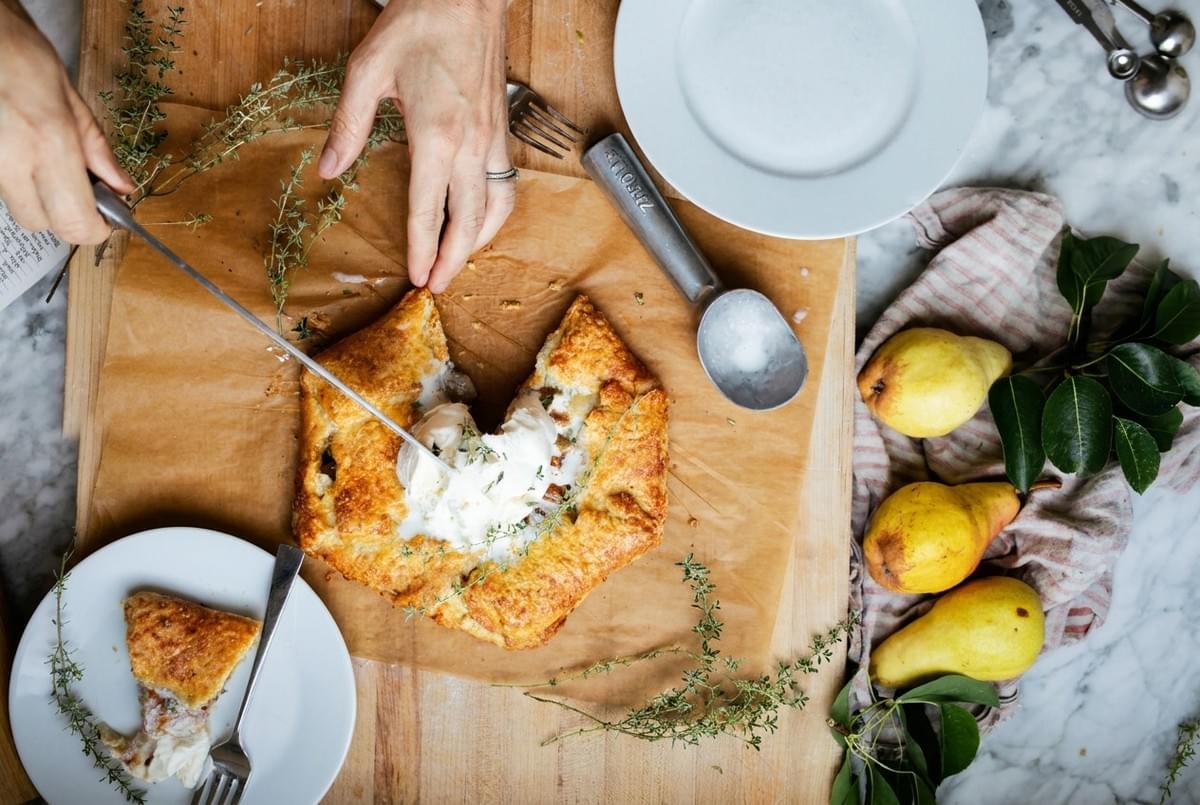
- A scoop of vanilla ice cream melting into the warm center
- Softly whipped cream with a pinch of cinnamon
- A spoonful of plain Greek yogurt and a drizzle of honey for something lighter
- A pot of black tea, chai, or earl grey alongside
- Cool slices at brunch with coffee, next to eggs and fruit
Storage and Reheating
- Room temperature: Cover loosely and keep for up to 1 day.
- Fridge: Store wrapped for up to 3 days. If you used mascarpone, refrigerate from the start.
- Freezer: Wrap cooled slices well and freeze for up to 1 month. Thaw overnight in the fridge.
- Reheating: Warm slices in a 350°F (175°C) oven for 8 to 10 minutes to bring back the crisp crust. The microwave softens pastry, so use it only if you must.
FAQ
Can I make the dough ahead?
Yes. Wrapped tightly, it keeps in the fridge for up to 2 days or the freezer for up to 3 months.
Why did my galette leak so much juice?
The pears may have been very ripe, or the juices from the bowl went in with the fruit. Leave the extra liquid behind and keep the almond flour base.
Do I have to peel the pears?
No. Thin skins soften in the oven. Peel them if you prefer a smoother texture.
My pears are still hard. Can I use them?
Firm pears can work if sliced thinner, about 1/8 inch. Underripe, rock-hard pears will stay crunchy, so give them a few more days if you can.
Can I use puff pastry instead?
You can, but it bakes faster and puffs more. Bake at 400°F for about 25 to 30 minutes, watching closely.
How do I know it's done?
Look for a deep golden crust, bubbling juices in the center, and pears that yield easily to a knife.
Can I make it in a different size?
Yes. Divide the dough into four small rounds for mini galettes, and bake for 25 to 30 minutes.
One Last Slice
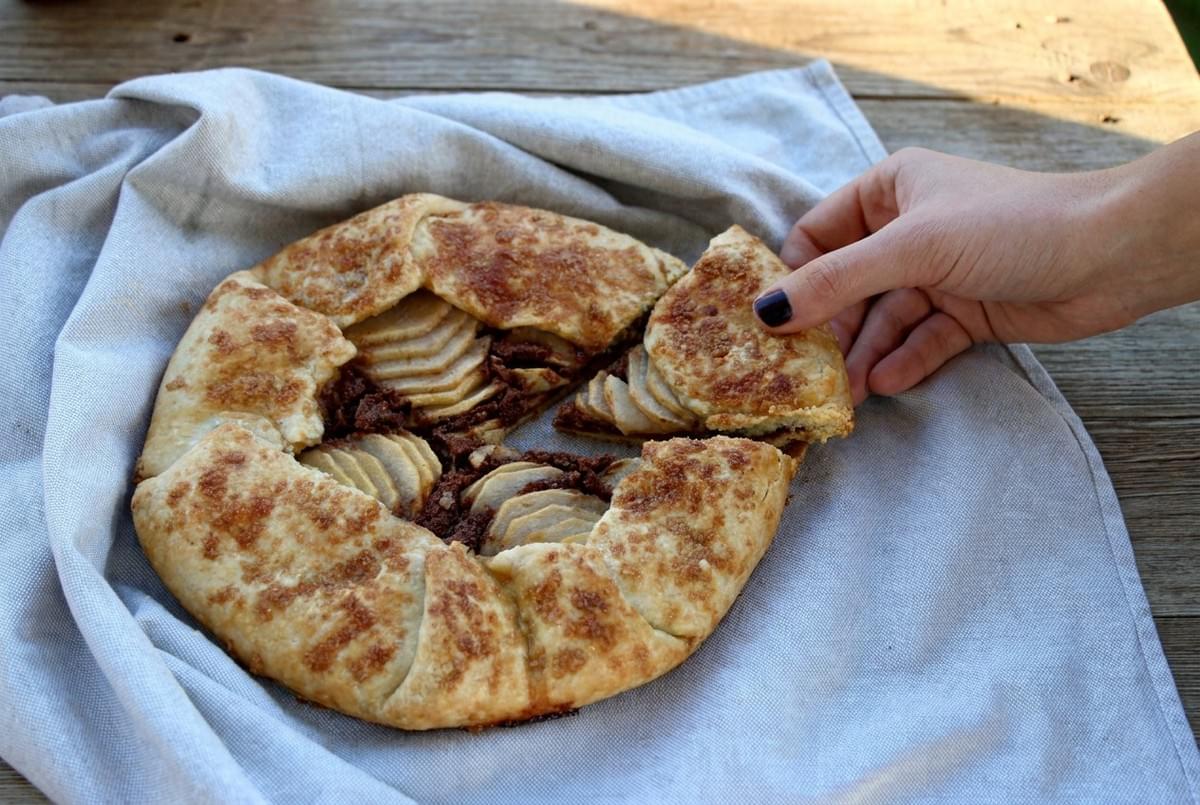
A pear galette asks for very little. A few ripe pears, a cold block of butter, and a bit of patience while the oven does its work.
What comes out is humble and golden, a little uneven at the edges, and quietly lovely. It is the kind of bake that does not need an occasion.
Try it this week while the pears are good. Then come tell us how yours turned out in the comments, which variation you tried, and who got the first slice. If a friend has a bowl of pears ripening on their counter, pass this along. They might need a reason to bake.
