

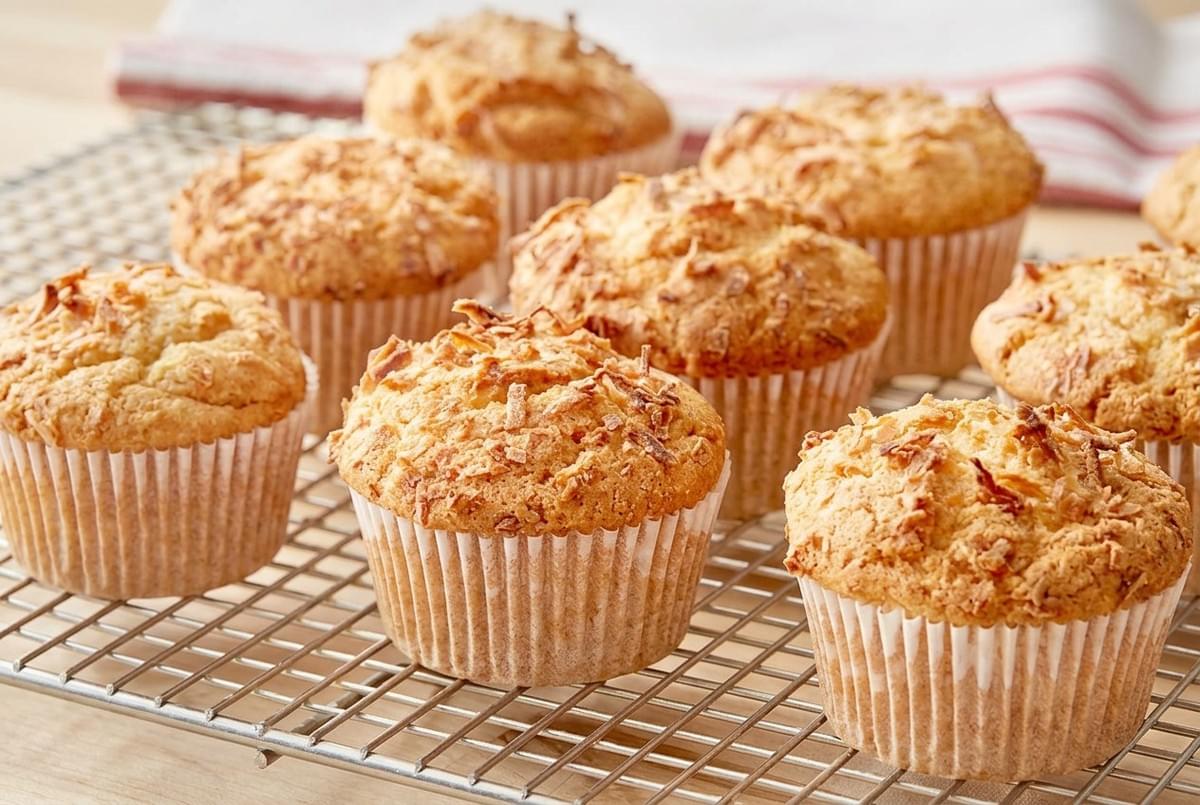
The oven light is on. Behind the glass, twelve muffins rise slowly, their tops cracking open like dry earth after rain.
The kitchen smells of butter and toasted coconut. Under that, there is something softer and green, like vanilla grown in a garden.
A spoonful of kaya sits hidden inside each one. You can't see it yet. You'll find it later, warm and golden, when someone breaks a muffin in half at the table.
These Singapore-inspired kaya muffins are simple. A tender coconut milk crumb, a sugared coconut top, and a soft center of coconut jam. They are made for a slow morning, a pot of tea, and a few people to share them with.
A Little Background on Kaya
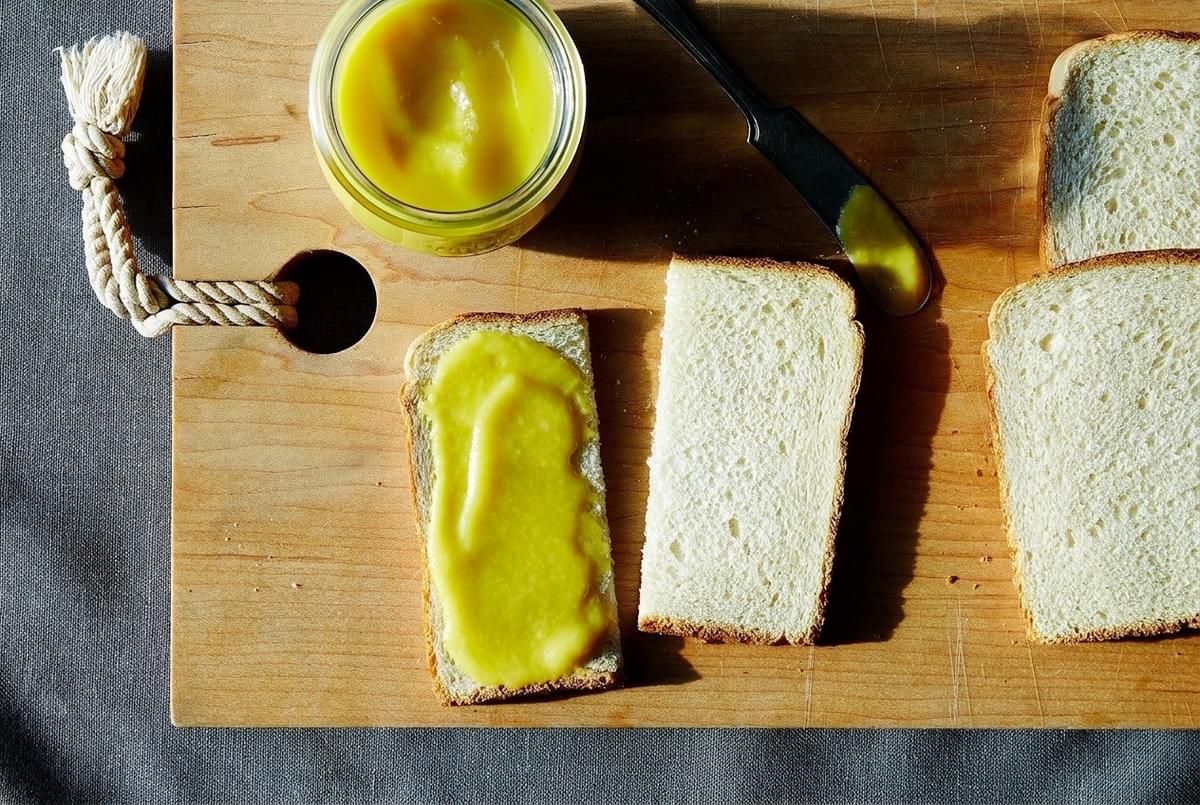
Kaya is a sweet coconut jam. It is made from coconut milk or cream, eggs, and sugar, stirred slowly over gentle heat until it thickens into a smooth, spreadable custard.
Pandan often joins the pot. These long, bright green leaves from Southeast Asia have a fragrance that is grassy, nutty, and a little like vanilla. Kaya cooked with pandan is often pale green. Other versions are a deeper brown, colored by sugar cooked until it caramelizes. Both are loved, and recipes change from kitchen to kitchen.
In Singapore, kaya is closely tied to breakfast. Kaya toast is thin, crisp toast spread with kaya and a slice of cold butter. It is often served at kopitiams (traditional coffee shops) with soft-boiled eggs, a drizzle of soy sauce, and a cup of local coffee or tea. It is an everyday ritual, not a special occasion.
These muffins are not a traditional Singaporean recipe. They are a home bake inspired by those flavors: coconut, pandan, butter, and a quiet sweetness tucked into the middle.
Why You'll Love These Muffins
- A soft surprise inside: Each muffin holds a spoonful of kaya that stays creamy after baking.
- Gentle sweetness: The batter is lightly sweetened, so the kaya leads.
- One bowl, no mixer: You stir everything by hand.
- Clear steps: Frozen kaya mounds make the filling easy to place and keep centered.
- Made for sharing: Twelve muffins travel well to a table, a neighbor, or a lunch bag.
Recipe Overview
- Yield: 12 muffins
- Prep time: 25 minutes (the kaya freezes while you mix)
- Bake time: 18 to 22 minutes
- Cooling time: 25 minutes
- Total time: about 1 hour 10 minutes
Equipment
- 12-cup standard muffin pan
- Paper liners (or butter and flour for the pan)
- Small baking sheet or plate lined with parchment
- 2 mixing bowls, one large and one medium
- Whisk and silicone spatula
- Measuring cups and spoons, or a kitchen scale
- 2 spoons or a small cookie scoop
- Wooden skewer or toothpick
- Wire rack
Ingredients
For the Kaya Centers
- 3/4 cup (about 225 g) kaya, store-bought or homemade (12 level tablespoons)
For the Muffin Batter
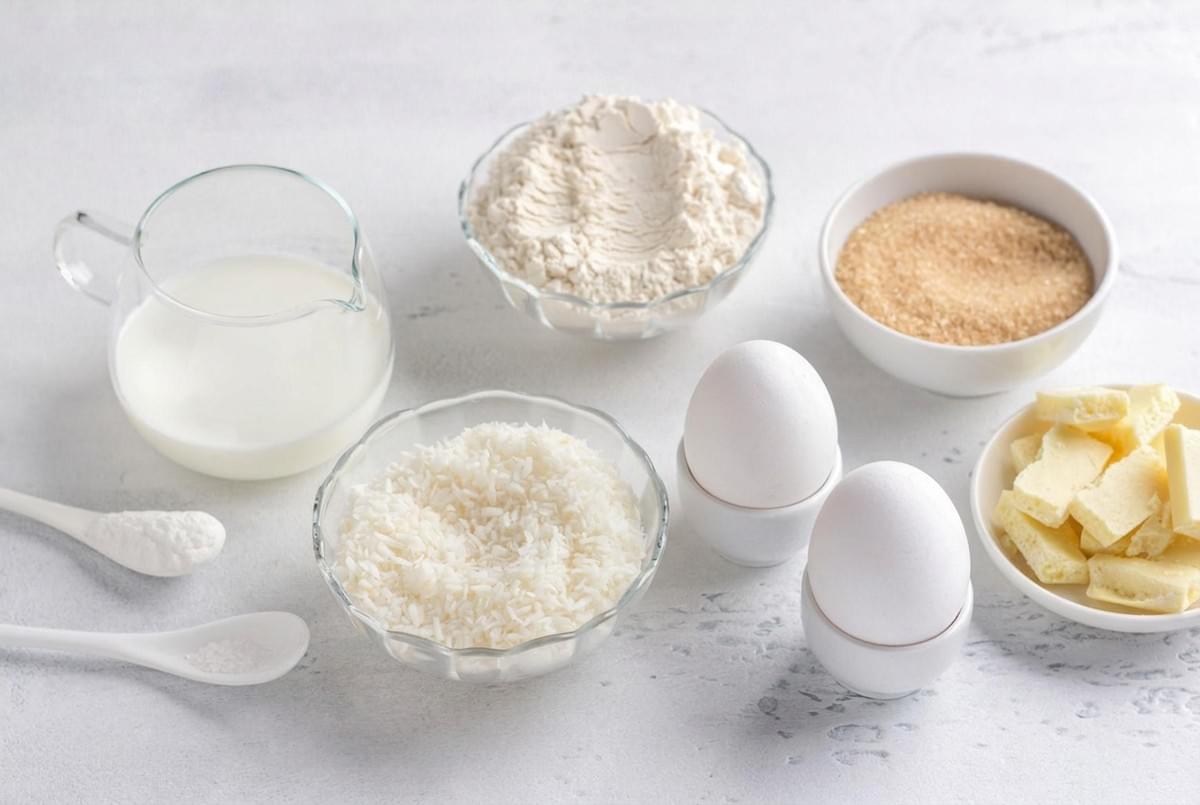
- 2 1/2 cups (315 g) all-purpose flour
- 2 teaspoons baking powder
- 1/2 teaspoon baking soda
- 1/2 teaspoon fine salt
- 2/3 cup (130 g) granulated sugar
- 2 large eggs, at room temperature
- 1 cup (240 ml) full-fat canned coconut milk, well stirred
- 1/3 cup (75 g) unsalted butter, melted and slightly cooled
- 1/4 cup (60 ml) neutral oil, such as canola or vegetable
- 1/2 teaspoon pandan extract (or 1 teaspoon vanilla extract)
For the Topping
- 2 tablespoons (10 g) unsweetened desiccated coconut
- 1 tablespoon (12 g) granulated sugar
Notes on Kaya, Pandan, and Substitutions
Kaya: Look for jars in Asian grocery stores or online. Choose a thick kaya, since a runny one can sink and spread. Once opened, store the jar in the fridge. Kaya contains egg and coconut, so it is not suitable for anyone with egg or coconut allergies.
Pandan extract: It is strong and often bright green, so measure carefully. Too much can taste bitter. Vanilla works well in its place. The muffins will taste warmer and less grassy, and the kaya will carry the pandan note on its own if it was made with pandan.
Coconut milk: Full-fat canned coconut milk gives the richest, most tender crumb. Light coconut milk or whole milk also work, though the muffins will taste less of coconut and feel slightly less moist. Avoid coconut cream, which makes the batter heavy.
Butter and oil: Butter brings flavor, and oil keeps the muffins soft for longer. You can use all butter (1/2 cup / 113 g plus 2 tablespoons) for a richer taste, though the crumb will firm up a little sooner.
Gluten-free: A 1:1 gluten-free baking flour blend can replace the all-purpose flour. Expect a slightly denser, more delicate muffin.
How to Make Singapore-Inspired Kaya Muffins
- Freeze the kaya. Line a small baking sheet or plate with parchment. Scoop 12 level tablespoons of kaya onto it in small mounds. Freeze for at least 20 minutes, until firm enough to pick up. Frozen kaya holds its shape and stays in the center instead of sinking to the bottom.
- Heat the oven and prepare the pan. Heat the oven to 375°F (190°C) with a rack in the center. Line the muffin pan with paper liners, or grease each cup with butter and dust lightly with flour.
- Mix the topping. In a small bowl, stir the desiccated coconut and 1 tablespoon sugar together. Set it aside.
- Whisk the dry ingredients. In the large bowl, whisk the flour, baking powder, baking soda, salt, and 2/3 cup sugar until evenly combined. This spreads the leavening through the flour so every muffin rises evenly.
- Whisk the wet ingredients. In the medium bowl, whisk the eggs until smooth. Add the coconut milk, melted butter, oil, and pandan extract, and whisk until blended. If the butter firms into small flecks from the cool coconut milk, that's fine.
- Combine gently. Pour the wet mixture into the dry ingredients. Fold with a spatula, scraping from the bottom, for about 15 to 20 strokes. Stop as soon as no dry flour remains. The batter should look thick and a little lumpy.
- Add the base layer. Spoon about 1 heaping tablespoon of batter into each muffin cup, just enough to cover the bottom.
- Place the kaya. Take the kaya from the freezer. Set one frozen mound in the center of each cup and press it down very gently.
- Cover the kaya. Divide the remaining batter among the cups, spooning it over the kaya until each one is completely hidden. The cups will be nearly full. Use the back of a spoon to seal the batter around the edges so no kaya peeks through.
- Add the topping. Sprinkle the coconut sugar mixture evenly over each muffin.
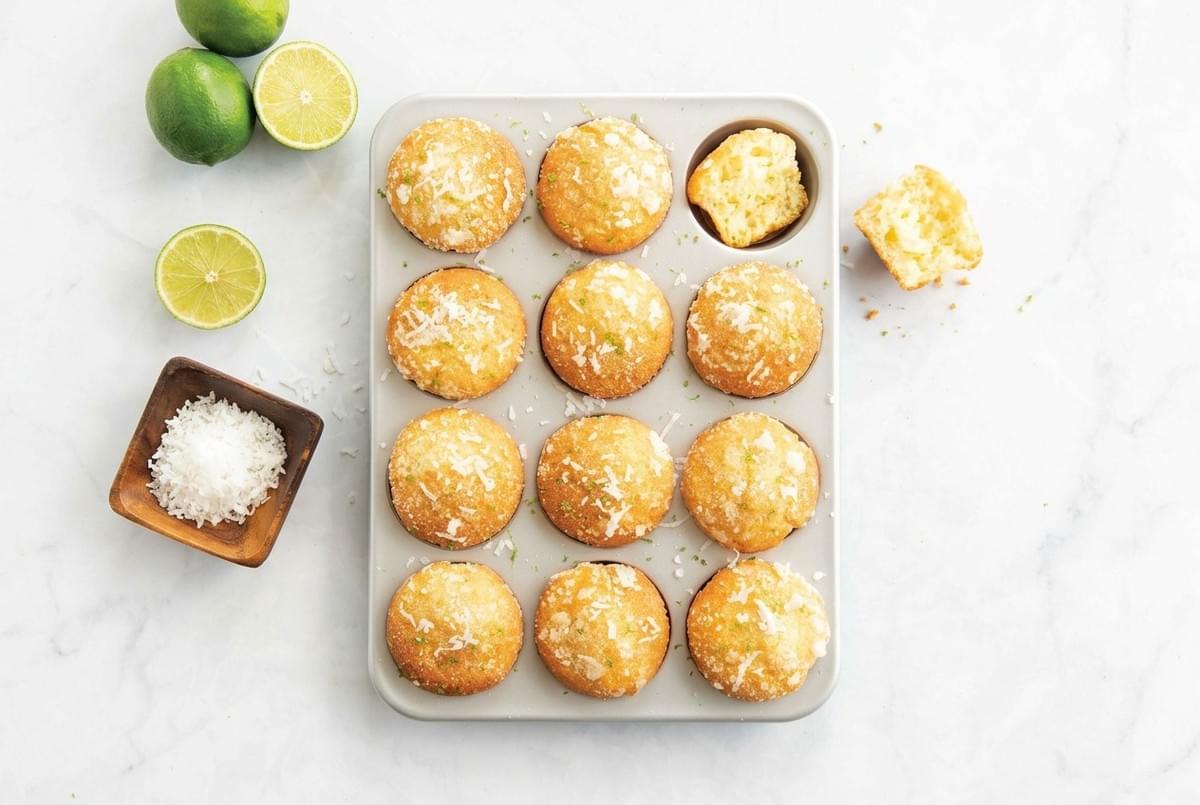
- Bake. Bake for 18 to 22 minutes, rotating the pan halfway through if your oven browns unevenly. The muffins are ready when the tops are domed and golden, the coconut is lightly toasted, and the tops spring back when pressed. Insert a skewer into the side of a muffin at an angle, not straight down the middle. It should come out with no wet batter.
- Cool. Let the muffins rest in the pan for 5 minutes. Then lift them out and cool on a wire rack for at least 20 minutes. The kaya inside stays very hot for a while and needs time to settle.
Food Rhymes Tips and Troubleshooting
Overmixing. Stirring too much develops gluten, the stretchy protein in flour. That makes muffins tough, with tunnels inside and peaked tops. Fold slowly and stop early. A few small lumps will disappear in the oven.
Dense muffins. This often comes from overmixing, old baking powder, or packed flour. Spoon flour into the cup and level it, or weigh it. Check that your baking powder is fresh by dropping a pinch into warm water. It should fizz.
Kaya center vs. raw batter. This is the most common worry. A skewer pushed straight through the middle will hit the kaya and come out sticky, even when the muffin is fully baked. Test from the side, through the cake. Kaya looks glossy, golden or green, and smooth. Raw batter looks pale, wet, and floury.
Kaya sinking to the bottom. The kaya was too soft, or the base layer was too thin. Freeze the mounds until firm and always add that first spoonful of batter.
Kaya leaking out. Some was left uncovered. Seal the top layer of batter fully, edge to edge.
Pale tops. Bake a few minutes longer, or move the pan to a slightly higher rack for the last 2 minutes.
Serving Ideas and Variations
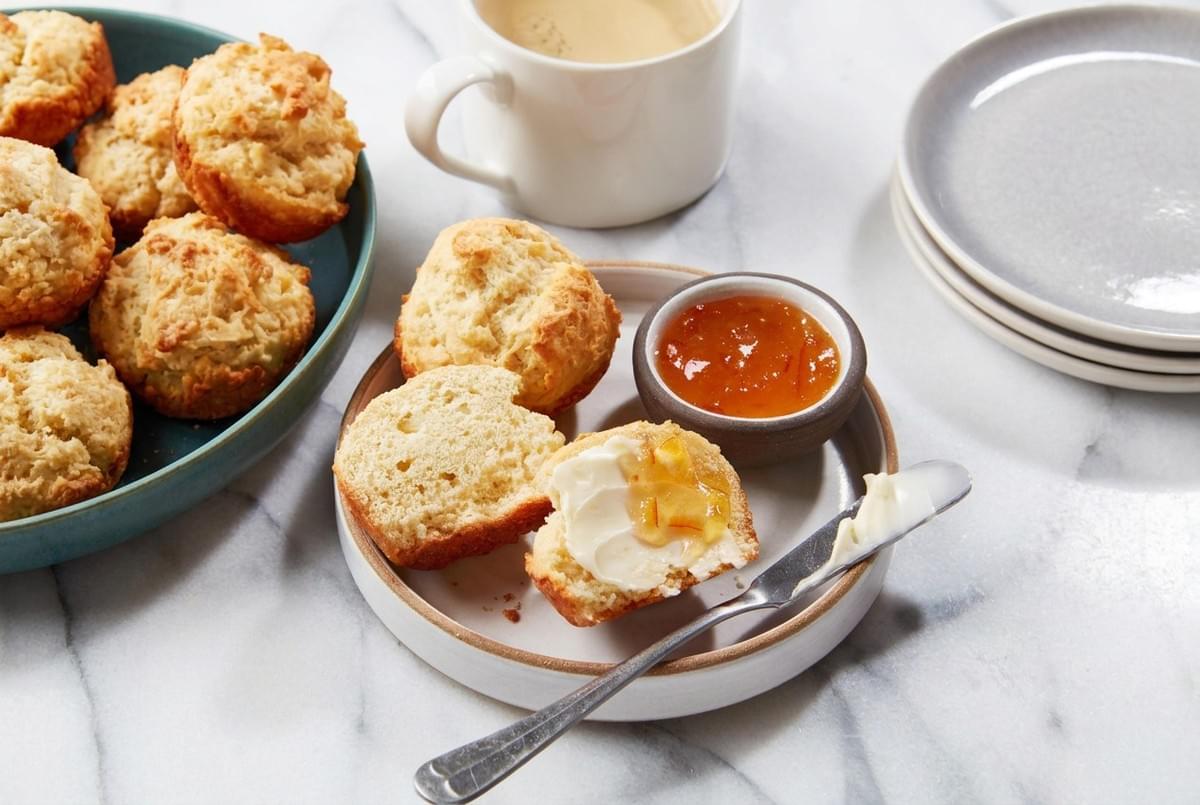
Serve the muffins slightly warm, when the kaya is soft. A small pat of cold salted butter on a split muffin echoes kaya toast. Pair them with black coffee, milky tea, or a cup of jasmine tea.
- Kaya swirl: Skip the freezing. Fill the cups with all the batter, add 2 teaspoons of kaya on top of each, and swirl it in with a toothpick using two or three figure eights.
- Brown kaya: Use a caramel-style kaya for a deeper, toffee-like center.
- Toasted coconut crumb: Fold 1/3 cup (25 g) toasted desiccated coconut into the batter for more texture.
- Salted butter finish: Brush the warm tops with a little melted salted butter before the topping sets.
Make-Ahead, Storage, and Freezing
- Make-ahead: Scoop and freeze the kaya mounds up to 1 week ahead. Store them in a sealed container in the freezer once firm.
- Room temperature: Because the kaya contains egg, keep the muffins in an airtight container at room temperature for no more than 1 day.
- Refrigerator: Store them airtight in the fridge for up to 4 days. The crumb firms up when chilled, so warm them before eating.
- Freezing: Wrap cooled muffins individually and freeze in a freezer bag for up to 1 month. Thaw overnight in the fridge or for about 1 hour at room temperature.
- Reheating: Warm in a 325°F (165°C) oven for 8 to 10 minutes, or microwave for 10 to 15 seconds. The kaya heats quickly, so let it rest a moment before biting in.
A Muffin Broken in Half
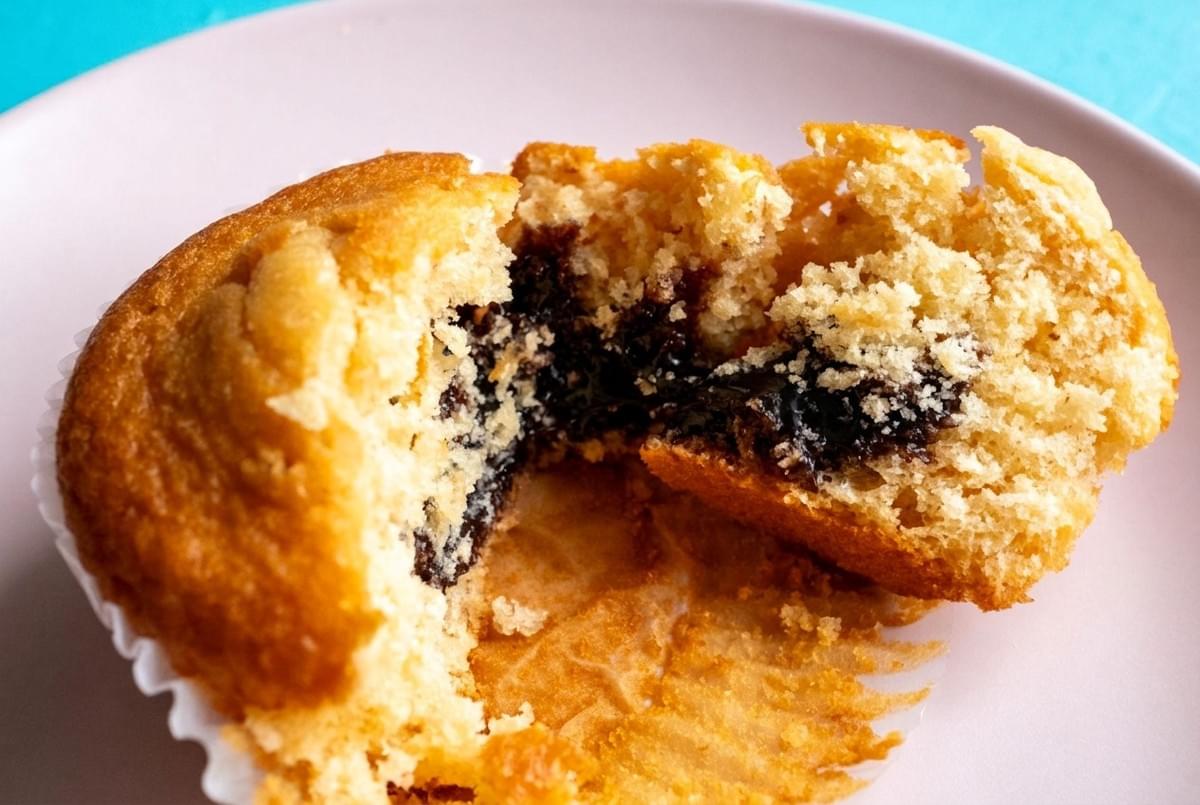
The rack is nearly empty now. A few coconut flakes have scattered across the counter. A paper liner sits folded on a saucer.
Somewhere, a muffin has been broken in half. The kaya catches the light, soft and still warm.
That's all these are, really. A small breakfast ritual, carried into a muffin cup and passed around.
If you bake them, come back and tell us how they turned out. Which kaya you used, what you poured beside them, and who found the first golden center.
