

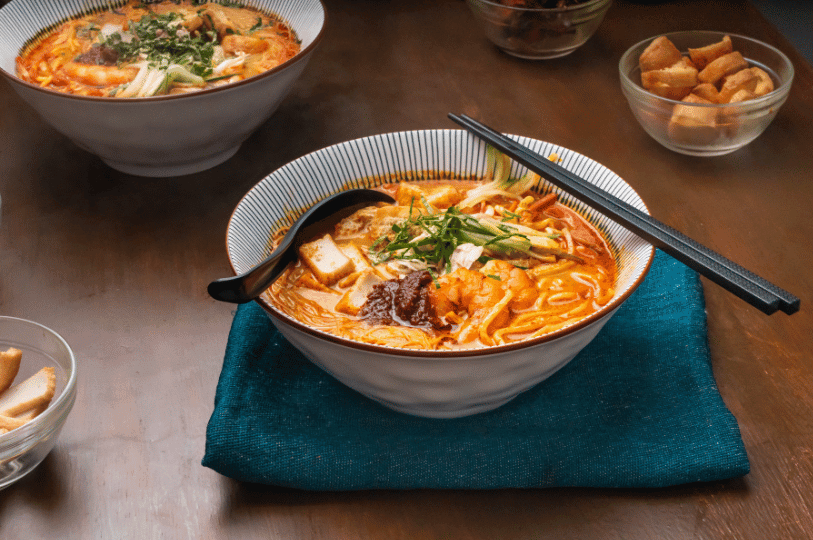
There is a specific moment that happens when you walk into a hawker center in Singapore. It hits you before you even find a table. It is the scent. It is a thick, aromatic cloud of spices, seafood, and coconut milk that wraps around you like a warm hug. That scent belongs to one dish and one dish only. It is Laksa.
If you have ever traveled to the Lion City, you know exactly what I am talking about. If you haven't, get ready, because we are about to bring that entire sensory experience right into your home kitchen.
Laksa is arguably the most iconic dish in Singaporean cuisine. It is the perfect representation of the region's cultural melting pot. It comes from the Peranakans, who are descendants of early Chinese migrants who settled in the Malay archipelago and married local Malays. This marriage of cultures created Nonya cuisine, which blends Chinese ingredients like noodles and pork with Malay spices and coconut milk.
The result is a bowl of noodles that is spicy, creamy, savory, and complex all at once. It is a dish that does not apologize for its boldness. It demands your attention from the first slurp to the last drop of gravy.
Now, I know what you might be thinking. You might be looking at photos of this fiery orange broth and thinking it looks intimidating. You might think it requires a culinary degree or a passport to pull off. I am here to tell you that is simply not true! Making laksa at home is an adventure, yes, but it is a very achievable one. It is also incredibly budget friendly compared to a plane ticket to Singapore.
So tie on your apron and get your blender ready. We are going to make some magic happen today.
The Anatomy of a Perfect Laksa Bowl
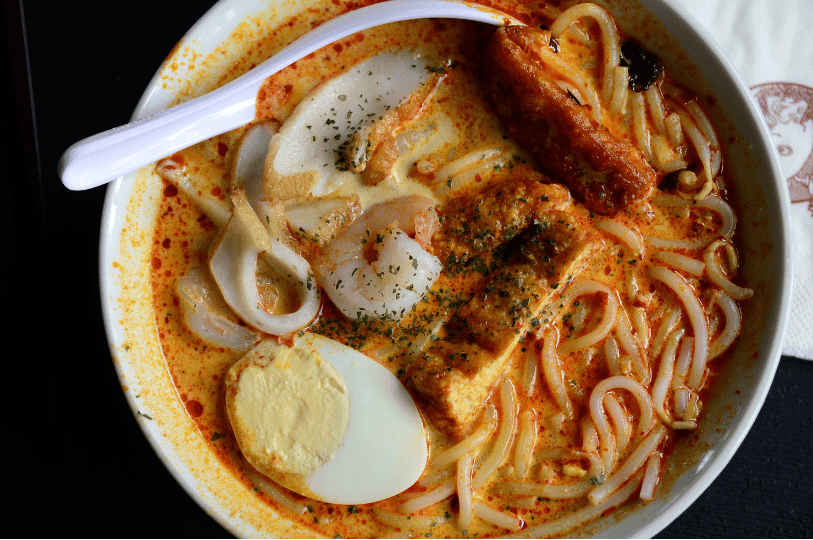
Before we start cooking, let's chat about what actually goes into this bowl of happiness. Understanding your ingredients is half the battle, and it makes the shopping trip much less stressful.
1. The Rempah (The Spice Paste)
This is the heart and soul of the dish. Without a good rempah, you just have spicy milk. A traditional laksa paste is made from a blend of aromatics like lemongrass, galangal (a cousin of ginger with a piney scent), turmeric, and chilies.
The secret weapon here is dried shrimp. We soak them and blend them into the paste to give the curry a deep, savory seafood punch that you cannot get from salt alone. We also use belacan, which is a fermented shrimp paste. It smells very strong when raw, but trust me on this. Once it is toasted, it adds a depth of flavor that is absolutely essential.
2. The Liquid Liquid Gold (Coconut Milk)
Laksa is a curry, and the base of that curry is coconut milk. You want full fat coconut milk here. Do not reach for the "lite" version! We want the richness and the creaminess that comes from the good stuff. This balances out the heat from the chilies and makes the broth velvety smooth.
3. The Noodles
In Singapore, specifically for Katong style laksa, we use thick rice vermicelli. These noodles are white, slippery, and have a wonderful chew to them. They are sometimes cut into shorter strands so you can eat the entire dish with just a spoon. If you cannot find thick rice vermicelli, regular rice vermicelli or even hokkien noodles can work in a pinch.
4. The Sponges (Tau Pok)
This is my favorite part. Tau pok are deep fried tofu puffs. They are airy and spongy on the inside. When you throw them into the broth, they act like little flavor sponges. They soak up all that delicious curry gravy so that when you bite into them, you get an explosion of hot, milky, spicy soup in your mouth. It is purely magical.
5. The Essential Herb (Laksa Leaf)
Also known as Vietnamese coriander or daun kesum, this herb has a unique, lemony, peppery taste that cuts through the richness of the coconut milk. It is the signature scent of laksa.
Ingredients List
This recipe serves 4 hungry people.
For the Spice Paste (Rempah):
- 10-12 dried red chilies (soaked in hot water to soften)
- 3 stalks fresh lemongrass (white parts only, chopped)
- 2 inches galangal (peeled and chopped)
- 1 inch fresh turmeric root (or 1 tsp turmeric powder)
- 1 inch ginger (peeled and chopped)
- 4 shallots (peeled and chopped)
- 3 cloves garlic (peeled)
- 2 tbsp dried shrimp (soaked in hot water for 10 mins)
- 1 tsp belacan (shrimp paste) or 1 tbsp fish sauce if you cannot find it
- 1 tbsp ground coriander
- 1 tbsp vegetable oil (to help it blend)
For the Broth:
- 4 tbsp vegetable oil (for frying the paste)
- 1 liter chicken stock or prawn stock (prawn stock is better if you have the shells!)
- 400ml (1 can) premium coconut milk
- 1 tbsp sugar (to taste)
- Salt to taste
The Goods (Toppings & Noodles):
- 400g thick rice noodles (fresh or dried)
- 12-15 medium prawns (peeled and deveined)
- 10-12 tofu puffs (tau pok), cut in half diagonally
- 1 cup bean sprouts
- 1 fish cake, sliced into thin strips
- 2 hard boiled eggs, cut in half
- A handful of finely chopped laksa leaves (Vietnamese coriander)
- Sambal chili (optional, for serving on the side)
- Lime wedges
Step-by-Step Cooking Instructions
Alright, let's get cooking. Put on some fun music and let's build these flavors.
Step 1: Prep Your Aromatics
Cooking Asian food is usually 70 percent prep and 30 percent cooking. Start by soaking your dried chilies and dried shrimp in hot water in separate bowls. Let them sit for about 15 minutes until they are soft.
While they soak, chop your lemongrass, galangal, ginger, and shallots. You do not need to be neat here because it is all going into the blender anyway. Just chop them small enough so your blender doesn't struggle.
Step 2: Make the Rempah
Drain your chilies and dried shrimp. Toss them into a food processor or blender. Add the chopped lemongrass, galangal, turmeric, ginger, shallots, garlic, belacan, ground coriander, and that tablespoon of oil.
Blend it all up. You might need to stop and scrape down the sides a few times. You are looking for a relatively smooth paste. It should be a vibrant, fiery orange color. Take a sniff. It will smell raw and pungent, but you can already tell it is going to be good.
Step 3: The "Tumis" (Frying the Paste)
This is the most important step in the entire recipe. Heat 4 tablespoons of oil in a large pot or wok over medium heat. When the oil is shimmering, slide your spice paste in.
Fry the paste gently. You need to stir it constantly so it doesn't burn. We are looking for a process called "pecah minyak" in Malay, which means "breaking the oil." You want to cook the paste until it darkens in color, smells incredibly fragrant, and the oil starts to separate from the solids and bubble on top. This usually takes about 10 to 15 minutes. Be patient here. If you rush this, your laksa will taste raw.
Step 4: Build the Broth
Once your paste is perfectly fried and your kitchen smells amazing, pour in your chicken or prawn stock. Stir well to scrape up any yummy bits stuck to the bottom of the pot. Toss in your tofu puffs (tau pok) now so they have plenty of time to soak up the love. Bring the mixture to a gentle boil.
Once it is boiling, lower the heat to a simmer. Pour in the coconut milk. Stir it gently. The color will transform into a creamy, sunset orange. Season with sugar and salt. Taste it! It should be savory, spicy, and a little sweet. Adjust the seasoning until it makes you happy.
Step 5: Cook the Proteins
Add your prawns and sliced fish cake directly into the simmering broth. They only need about 2 to 3 minutes to cook. As soon as the prawns turn pink and curl up, they are done. Do not overcook them or they will get rubbery.
Step 6: Prepare the Noodles
While your soup is simmering, bring a separate pot of water to a boil. Blanch your bean sprouts for 10 seconds and remove them. Then, cook your noodles according to the package instructions. Fresh noodles usually only need 30 seconds to 1 minute. Drain them well.
Step 7: Assembly
This is the moment of truth. Divide your noodles and bean sprouts into four bowls. Ladle that glorious, rich, coconutty broth over the noodles. Make sure everyone gets plenty of prawns, fish cake slices, and those juicy tofu puffs.
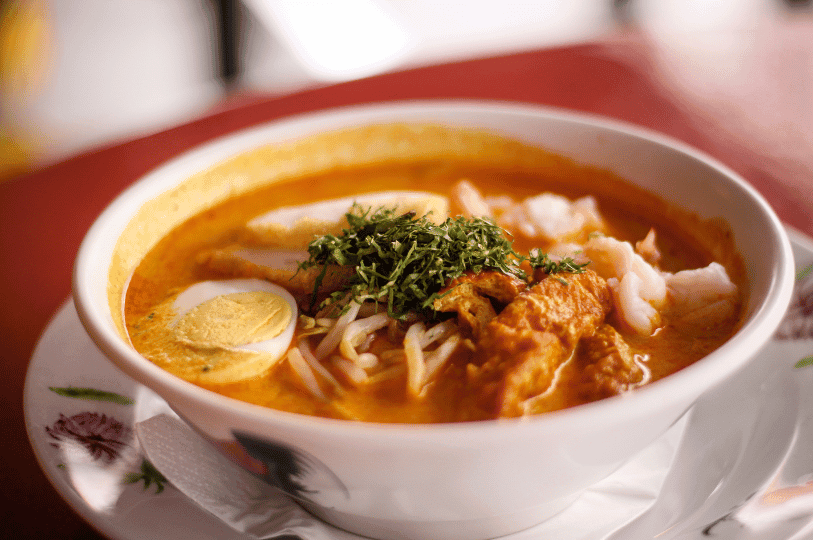
Top each bowl with half a hard boiled egg. Sprinkle a generous amount of chopped laksa leaves over the top. Serve with a wedge of lime and a spoonful of sambal on the side for extra heat if you like it spicy.
Tips, Tricks, and "Where do I find that?"
I know some of these ingredients might sound exotic if you haven't cooked much Southeast Asian food before, but don't worry. Here is how to navigate it.
The Hunt for Ingredients
You can find lemongrass, ginger, chilies, and coconut milk at almost any regular supermarket these days. For items like galangal, belacan, and laksa leaves, your best bet is a local Asian grocery store. Look in the fresh produce section for the leaves and galangal. The belacan usually comes in a block or a round disc in the pantry aisle.
Substitutions for the Real World
- Laksa Leaves: If you absolutely cannot find Vietnamese coriander, you can use a mix of regular cilantro and mint. It won't be exactly the same, but it will still be fresh and delicious.
- Belacan: If the fermented shrimp paste is too hard to find or the smell scares you, use high quality fish sauce instead. Start with a tablespoon and add more to taste.
- Galangal: In a pinch, you can use more ginger and a squeeze of lime juice, but try to find the real thing if you can. The flavor profile is distinctively different.
Shortcuts for Busy Nights
Look, I get it. Sometimes you want laksa on a Tuesday night and you don't have time to peel shallots. There are some very decent pre-made laksa pastes available in jars. Brands like Prima Taste are legendary in Singapore. If you use a jar, dress it up! Sauté the jarred paste with some fresh lemongrass and fresh garlic to wake up the flavors before adding your liquids. It makes a huge difference.
Storage and Leftovers
If you have leftovers, store the broth separately from the noodles. If you leave the noodles in the soup, they will drink up all your broth and turn into a mushy mess by the next day. The broth actually tastes even better the next day as the flavors have time to mingle. Keep it in an airtight container in the fridge for up to 3 days. When reheating, do it gently so the coconut milk doesn't split.
How to Serve and Variations
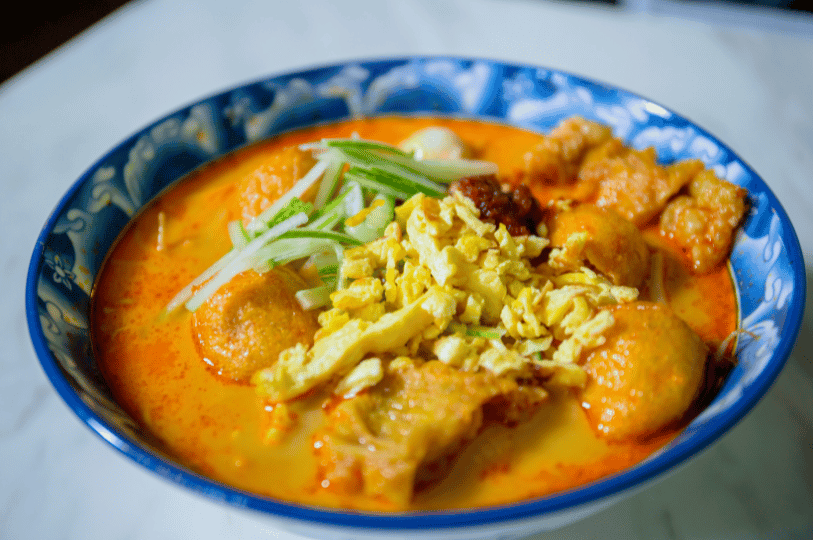
In Singapore, there are actually a few different types of laksa. What we made today is closest to Nyonya Laksa or Katong Laksa, which is the creamy coconut version.
There is also Asam Laksa, which comes from Penang. That one has no coconut milk at all. It uses a sour, tamarind based fish broth and is a completely different beast.
If you want to switch things up with your coconut laksa, try these variations:
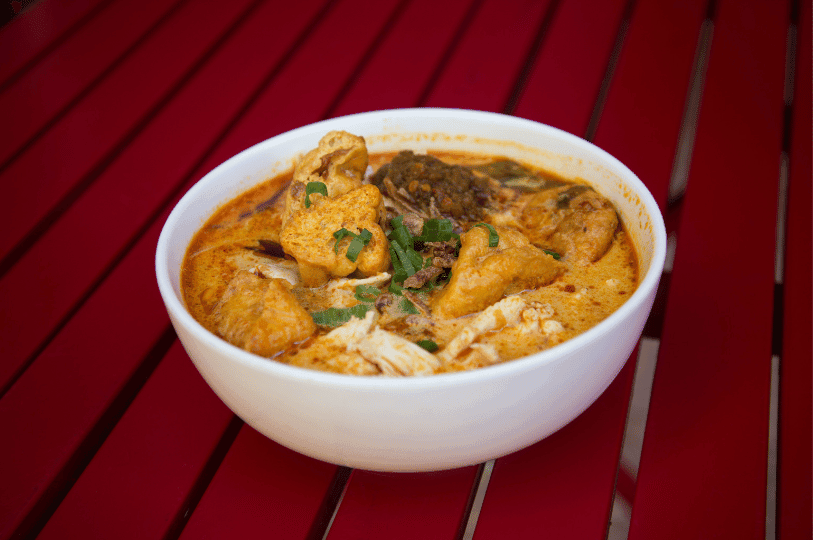
- Chicken Laksa: Swap the seafood for shredded poached chicken. This is great for people with shellfish allergies (just make sure to use a paste without dried shrimp or swap it for soy sauce).
- Vegan Laksa: Use vegetable stock, omit the dried shrimp and belacan (use miso paste or soy sauce for umami), and load it up with fried eggplant, green beans, and extra tofu.
- The "Cockle" Question: Traditional Singaporean laksa almost always includes raw blood cockles (see hum). They are thrown into the hot broth right at the end so they are barely cooked. They add a unique metallic, oceanic taste. They are hard to find fresh outside of Asia, so I left them out of the main recipe, but if you can find them and you are brave, throw them in!
Final Thoughts: Why You Need This in Your Life
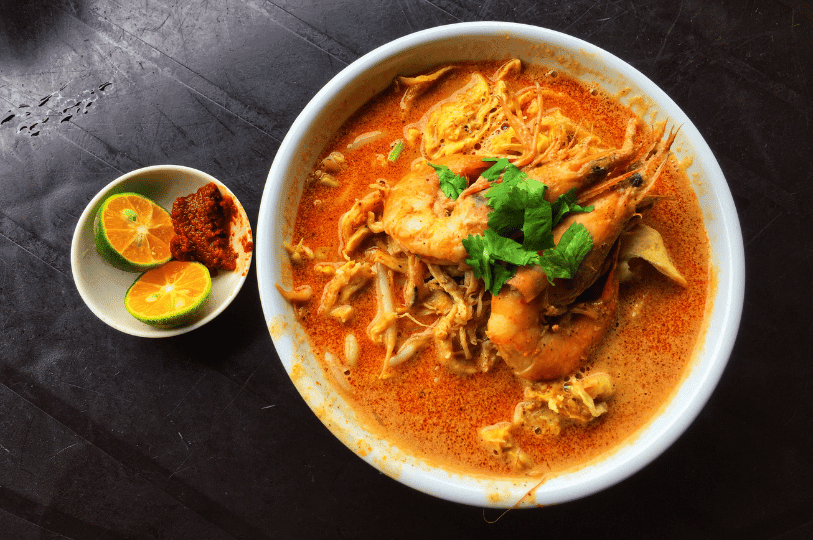
Making Singaporean Laksa is a sensory journey. From the moment you start chopping the lemongrass to the time you squeeze that lime over the finished bowl, you are engaging with a vibrant culinary history.
It is a dish that warms you from the inside out. It is rich without being heavy, spicy without being painful, and complex without being complicated. It is the kind of meal that makes you close your eyes and just say "wow" after the first bite.
So don't be intimidated by the ingredient list. Head to your local Asian grocer, explore the aisles, and grab some coconut milk. Your kitchen is about to smell better than it ever has before. And remember, the best part of cooking is sharing, so call some friends over. This recipe serves four, but I won't blame you if you keep the leftovers for yourself.
Happy cooking, and enjoy the rhythm of the kitchen.
