

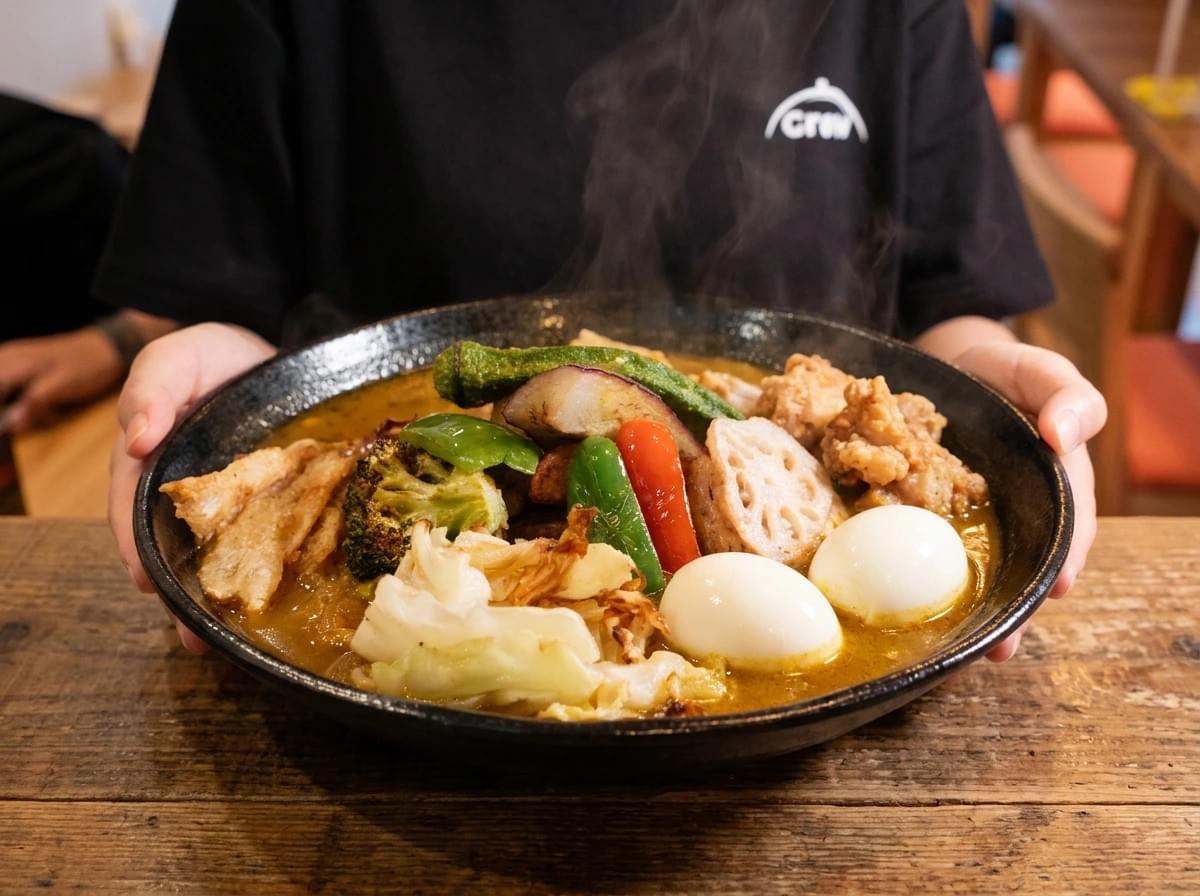
The bowl arrived, and for a moment I just looked at it.
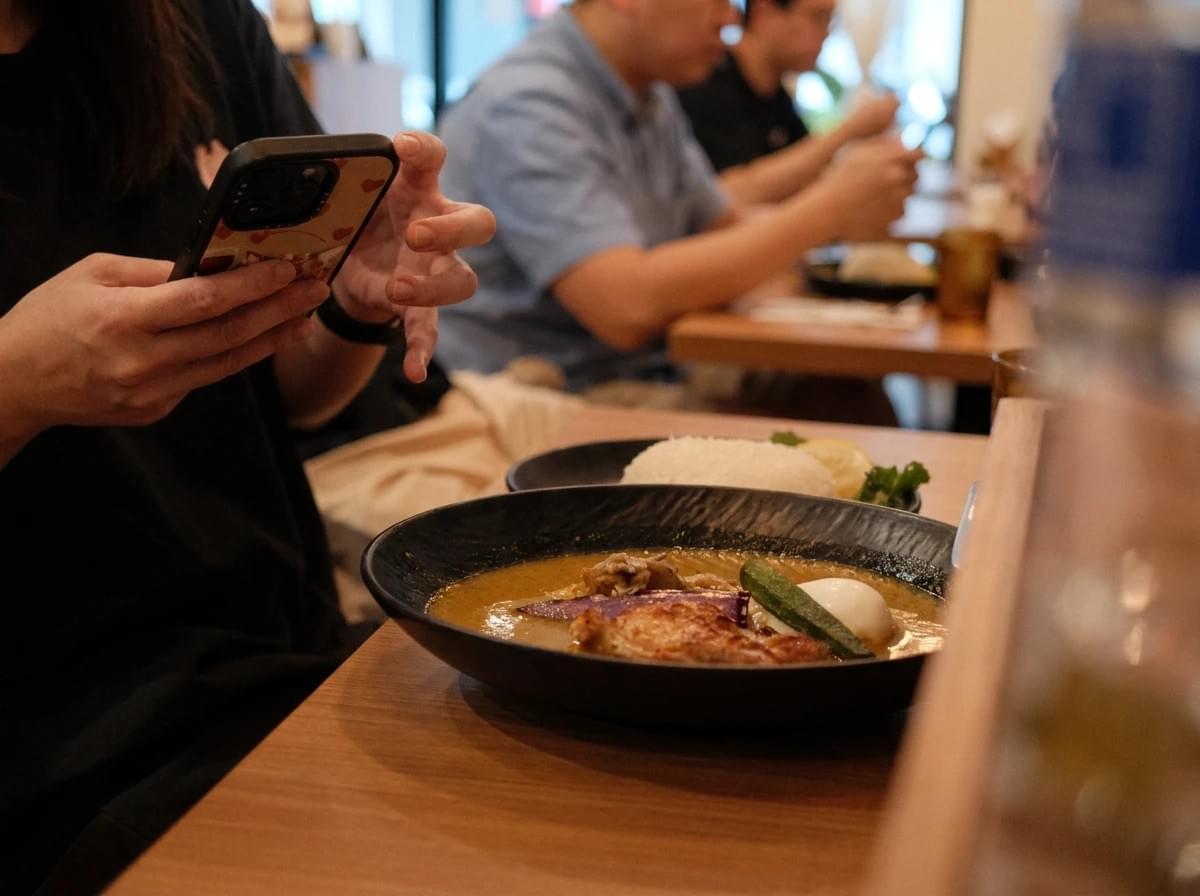
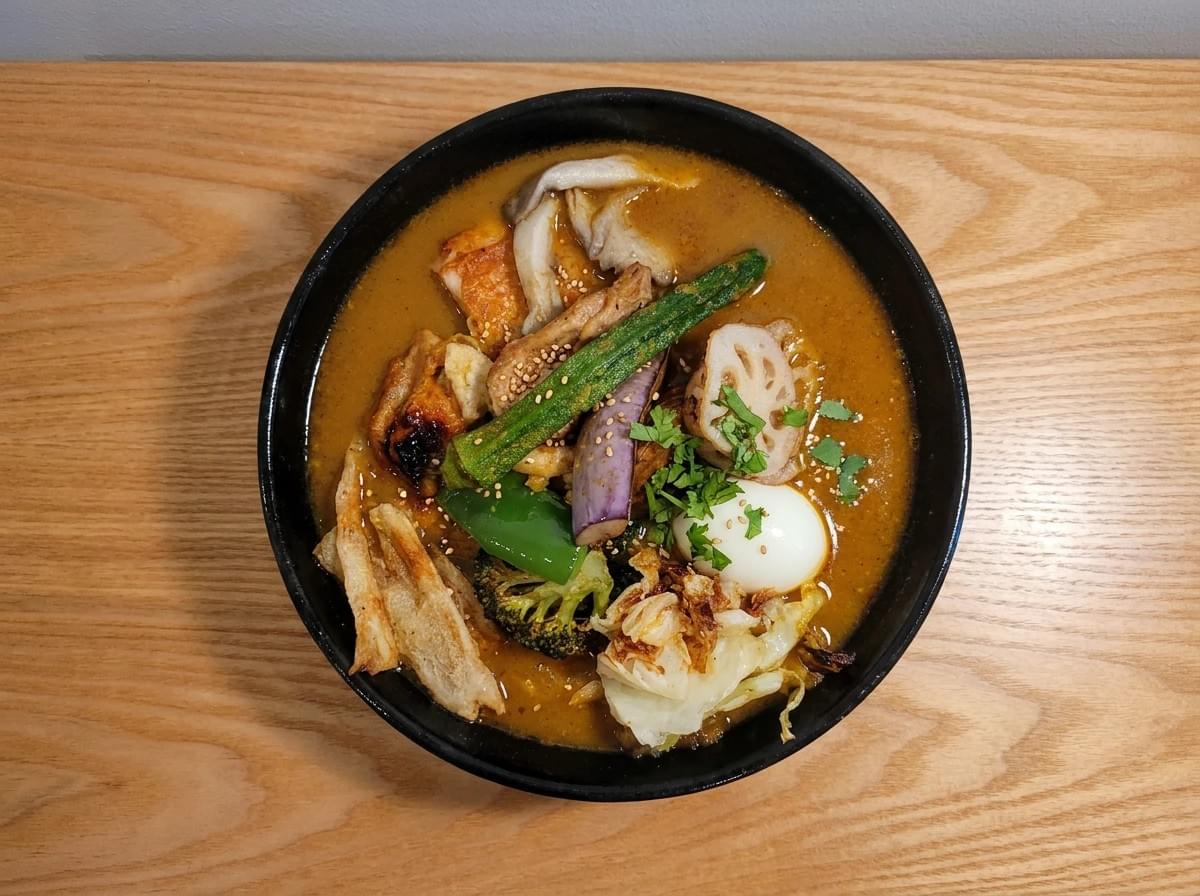
I had come expecting curry. In my head, that meant something thick and glossy, the sort of sauce that clings to rice and slowly seeps into it. What sat in front of me was different. A wide bowl of amber liquid, clearly a broth, with a chicken thigh resting inside and vegetables arranged around it like they had been placed with intention. The rice came separately, in its own small mound.
I picked up the spoon and told myself not to judge before tasting. Then I took the first sip, and my idea of curry quietly rearranged itself.
This was my introduction to Hokkaido soup curry, served at Soup Curry by Ki-setsu, a new spot at Fortune Centre Level 4 that opens on 8 October 2026. I sat down for an early tasting, curious more than anything. I left thinking about the word "curry" and how much room it actually holds.
So, What Exactly Is Hokkaido Soup Curry?
If you have grown up in Singapore, the Japanese curry you know is probably the thick, gravy-like kind. Slightly sweet, comforting, poured over rice or cutlet. It is lovely, and I have eaten plenty of it.
Hokkaido soup curry is a different animal. As the name suggests, it is broth-like rather than gravy-like. You could almost drink it. It leans aromatic and spice-led instead of sweet, and the spice is more about fragrance and warmth than pure chilli heat.
The other big difference is how the parts of the meal relate to each other. In ordinary Japanese curry rice, everything melds into one. Here, the components keep their own identities. The rice stays on its own. The chicken and vegetables sit in the broth but do not dissolve into it. You assemble each bite yourself.
If you have never eaten soup curry, expect something closer to a spiced, savoury soup with rice and substantial toppings, rather than a plate of rice smothered in sauce. It asks a little more of you as an eater, and I found that part of its charm.
The Broth Is Where This Bowl Begins
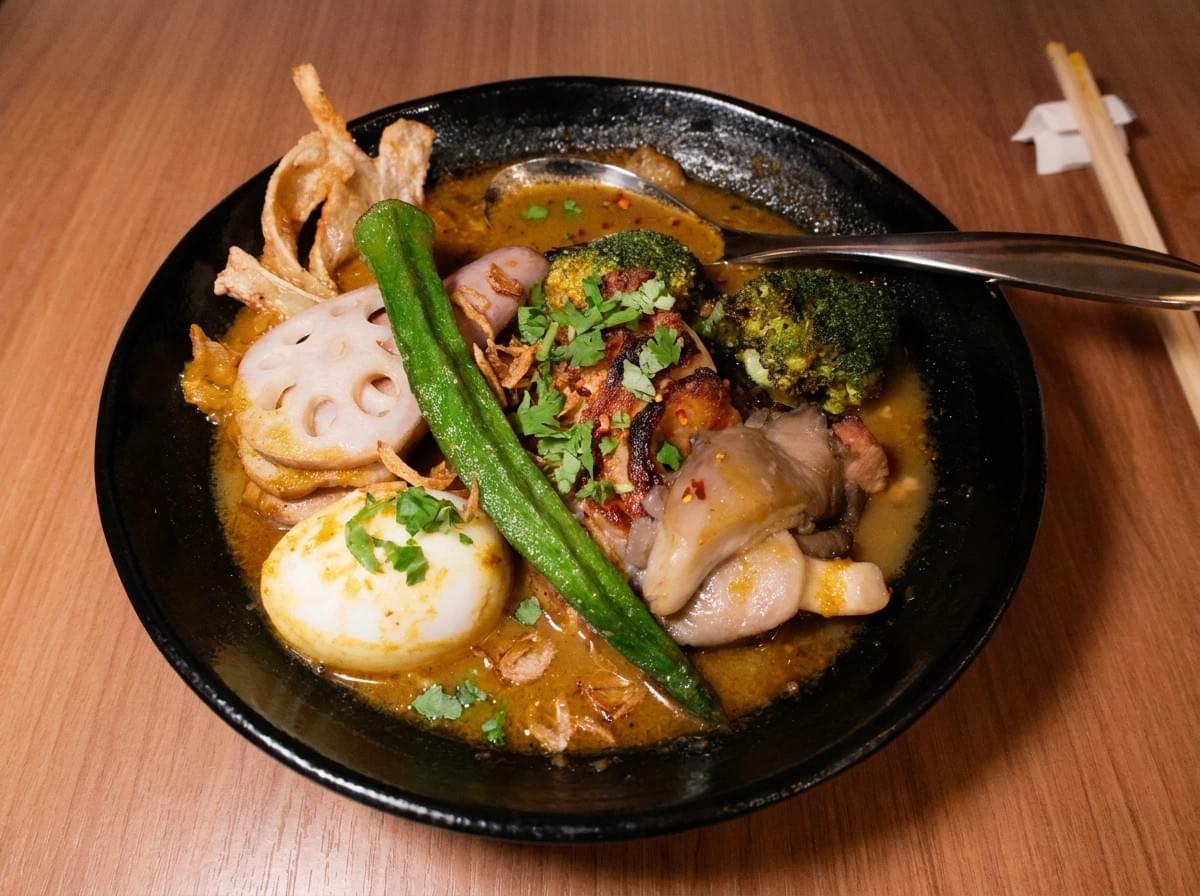
Everything in this bowl rests on the broth, so that is where I spent most of my attention.
That first proper taste stayed with me. It was clear enough to see through, yet it had a rounded, chicken-forward depth that I did not expect from something so thin. The spice built gently, layering over the savouriness rather than fighting it. When I swallowed, a soft warmth lingered at the back of my throat, and the aroma seemed to hang around a beat longer than the taste itself.
I later learned why it felt so substantial. The broth starts with chicken bones cooked for more than six hours, and only after that long simmer is Chef Masa's own spice blend brought in. I will not pretend to name the spices, because I could not pick them apart, and that felt right. They worked as one thing rather than a list of parts.
A few spoonfuls in, I stopped comparing it to Japanese curry rice altogether. The comparison had helped me arrive, but it had stopped being useful. This was simply its own kind of Japanese comfort food, and it deserved to be met on those terms.
Chicken, Vegetables, and the Best Bites in the Bowl
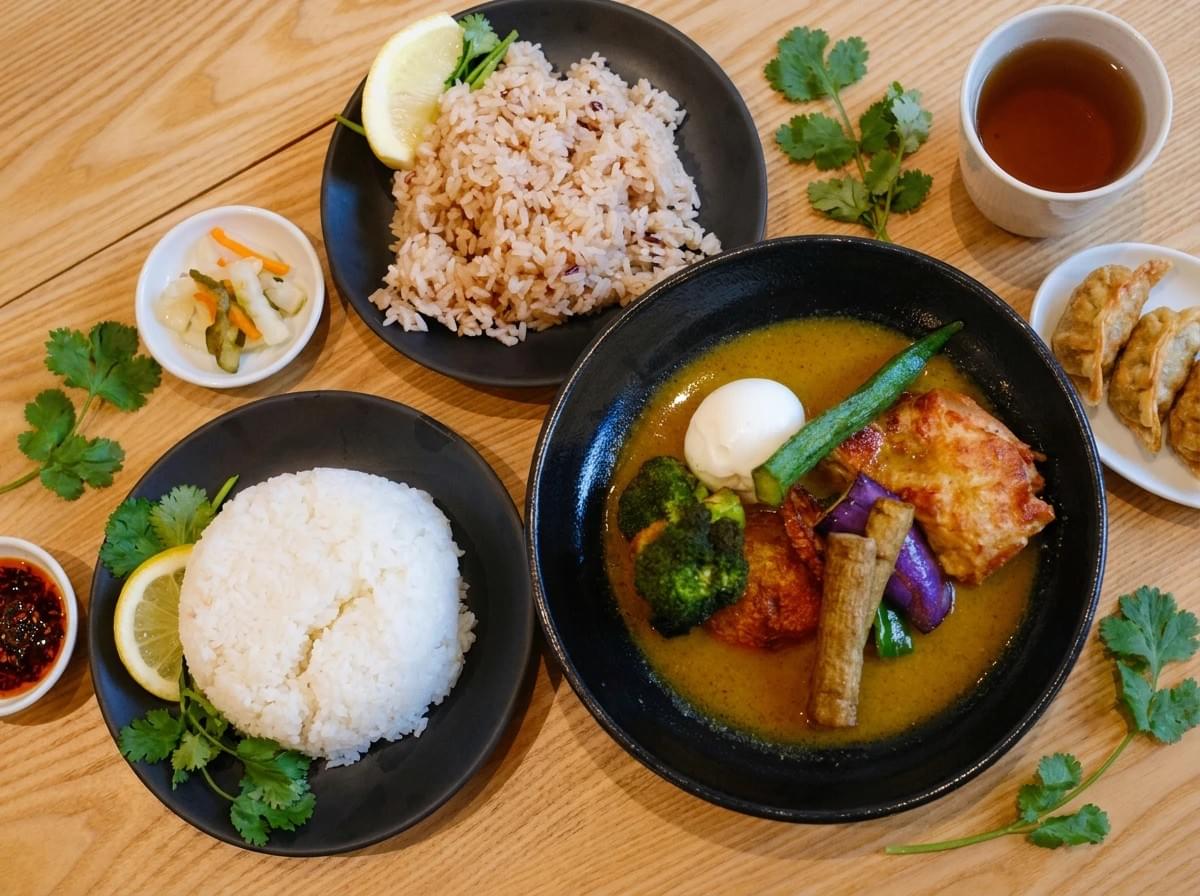
The main bowl comes with a full chicken thigh, and it is not a modest piece. It gives the bowl real presence, turning a soup into a proper meal.
There is something fitting about chicken sitting in a chicken-bone broth. They belong together. On its own, the thigh was satisfying enough. But when I spooned some broth over a piece of it and ate them together, the meat picked up the spice and warmth of the soup, and the broth in turn felt richer for having passed over the chicken. That combined bite was where the bowl started to feel complete.
Then there are the vegetables, and I want to give them their due, because they are not garnish here.
They are flash-fried rather than deep-fried, using produce sourced both locally and from overseas. That method matters. Flash-frying gives the vegetables a firmer presence and a fuller flavour than they would have if they had simply been boiled soft inside the broth.
I dipped one into the soup and ate it half-coated. It held its own. It did not surrender to the broth or turn mushy; it stayed itself while borrowing some of the spice around it. That contrast, a distinct vegetable against the smooth warmth of the soup, gave the meal texture and kept each bite interesting.
The Rice Changes the Rhythm of the Bowl
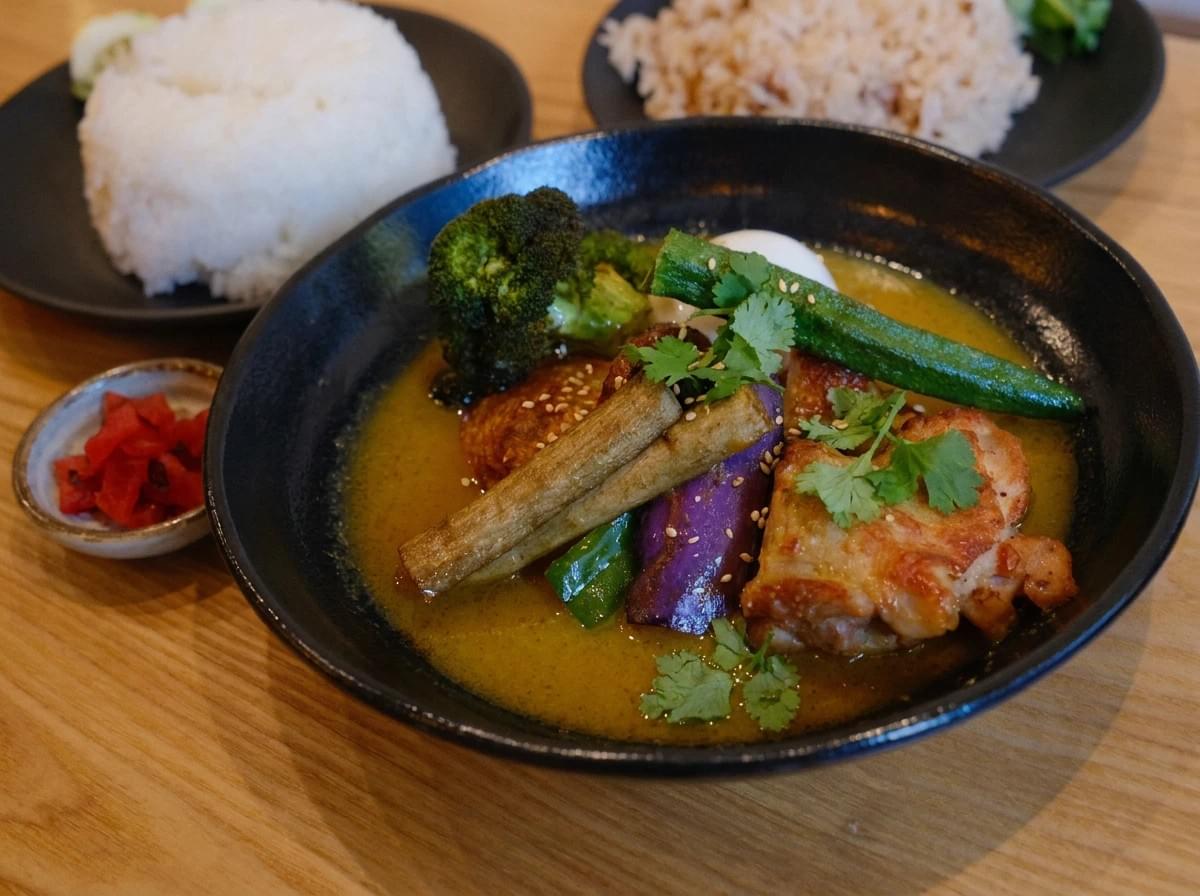
The rice arriving separately changes how you eat, and I liked that more than I expected.
With regular curry rice, the sauce and rice are already one thing. Here, you set the pace. I fell into a rhythm without meaning to: a spoon of broth, a bite of plain rice, a piece of chicken, then a vegetable, sometimes a spoonful of broth poured over the rice, sometimes rice eaten clean between sips.
Because the broth is not a thick sauce whose only job is to cling to rice, the rice keeps its own quiet flavour. You taste it. You notice the difference between a mouthful of rice and a mouthful of soup. The two stay separate enough that combining them feels like a small choice each time, rather than a given.
It slowed me down, and it made the meal feel less like eating and more like assembling something.
What I Would Order on a First Visit
If you are trying Hokkaido soup curry for the first time, order the chicken thigh bowl.
It gives you the whole picture: the chicken-bone broth, the spice blend, that generous thigh, the flash-fried vegetables, and the rice. You see how every part talks to the others, which is really the point of the dish.
On spice, I would start at the normal, default level. It is tempting to reach for the hottest option, but the default lets you understand the balance of broth and spice first. You can always turn up the heat next time, once you know what you are building on.
There is also a vegetable bowl for those who want the vegetables to lead. One honest note, though: it is not vegetarian. The soup base is still a chicken broth. If that matters to you, this is not the bowl, and I would rather you know before you sit down.
Who Will Love Hokkaido Soup Curry?
I think this bowl is for the curious eater.
If you already love Japanese curry and want to see another side of it, you will find plenty to think about here. If you are drawn to soups and broths, or if thick curry sometimes sits too heavy for you, this lighter, spice-led style might feel like a relief. And if you enjoy spice for its aroma and warmth rather than only its burn, the broth will speak your language.
Japanese food has a long history of evolving from practical traditions into the dishes we know today much like sushi, whose journey from preserved fish to modern nigiri is explored here.
I will be straight, though. If what you want is thick, sweet Japanese curry gravy, you will not find it in this bowl. That is not a flaw. It is simply a different dish, and the difference is exactly why it is worth trying.
A Different Kind of Japanese Comfort
I sat down thinking I knew what "Japanese curry" meant. I stood up with a wider definition.
What stayed with me was not novelty. It was how the slow-cooked chicken broth, the spice blend, the thigh, the vegetables, and the plain rice came together into something warming and genuinely comforting, while remaining unlike the curry most of us already know. Comfort food does not have to be familiar. Sometimes it just has to feel right.
So if you are curious, start with the chicken bowl at the normal spice level, and let the difference reveal itself one spoonful at a time. Soup Curry by Ki-setsu opens on 8 October 2026 at Fortune Centre Level 4. I would keep an eye out for it.
