

There is a distinct difference between a chocolate bar you buy at a high-end confectionary and melted chocolate that has simply been allowed to harden in the fridge. One is glossy, smooth, and snaps with a satisfying crisp sound when broken. The other is often dull, soft, or streaked with gray lines. The secret lies in a fundamental technique of the pastry kitchen known as tempering.
Tempering chocolate is often viewed as a dark art, reserved only for professional chocolatiers with marble slabs and specialized equipment. While it requires precision and patience, it is a skill that is entirely accessible to the home cook. Understanding the science behind the process demystifies the fear. Once you master tempering, you unlock the ability to create professional-quality truffles, dipped fruits, and decorative chocolate work right in your own kitchen.
What Is Tempering and Why Does It Matter?
At its core, tempering is a method of heating and cooling chocolate to stabilize it. Chocolate is composed of cocoa solids, sugar, and cocoa butter. Cocoa butter is a polymorphic fat, meaning it can crystallize in several different forms. When you melt chocolate, you break down these crystal structures. If you let it cool uncontrolled, the cocoa butter crystals will form randomly. This results in chocolate that is dull, soft to the touch, and prone to "bloom," which creates those unappealing gray streaks of separated fat on the surface.
Properly tempered chocolate, on the other hand, is stable. It has a beautiful sheen and a hard snap. It contracts slightly as it cools, which makes it easy to release from molds. Most importantly, it has a smooth mouthfeel and a higher melting point, meaning it will not melt instantly upon contact with your fingers.
The Science: Controlling Crystallization
To understand tempering, we must look at the microscopic level. Cocoa butter can form six different types of crystals, generally labeled Form I through Form VI. Each form has a different melting point and stability.
Forms I through IV are unstable. They melt at low temperatures, producing soft, crumbly chocolate. Form VI is too stable and hard to achieve through normal tempering.
The goal of tempering is to encourage the formation of Form V (Beta) crystals. These crystals are stable, shiny, and snap perfectly. They form over a specific temperature range, typically 88°F to 90°F (31°C to 32°C) for dark chocolate.
The process involves three main stages:
- Melting: We heat the chocolate to melt all crystal forms (fat memory).
- Cooling: We lower the temperature to encourage crystallization. At this stage, both good (Form V) and bad (Forms I-IV) crystals may form.
- Reheating: We gently raise the temperature again to melt away the unstable "bad" crystals, leaving only the stable Form V crystals to set the structure.
Choosing the Right Chocolate
Not all chocolate is created equal when it comes to tempering. For the best results, you must use couverture chocolate.
Couverture contains a higher percentage of cocoa butter (at least 31%) compared to standard baking chocolate or chocolate chips. This high-fat content allows it to melt smoothly and temper beautifully. Chocolate chips often contain stabilizers designed to help them hold their shape in cookies, making them difficult or impossible to temper properly.
When selecting chocolate, look for brands like Valrhona, Callebaut, or Guittard that specify they are couverture or suitable for tempering.
Essential Tools for Tempering
You do not need an industrial tempering machine, but precision is key. You will need:
- A Digital Thermometer: This is non-negotiable. An instant-read thermometer or an infrared laser thermometer is essential for accuracy.
- A Rubber Spatula: For gentle stirring and scraping.
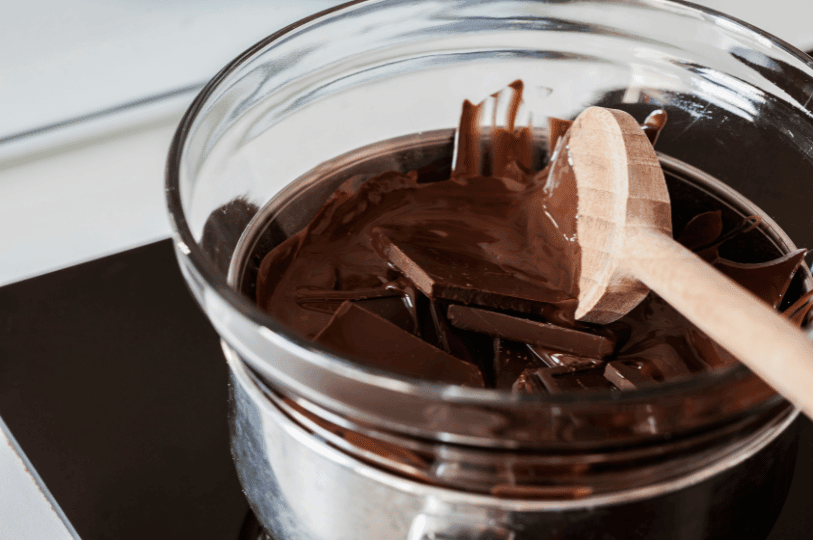
- A Double Boiler: A heatproof bowl set over a pot of barely simmering water.
- A Palette Knife or Bench Scraper: Useful if using the tabling method.
Method 1: The Seeding Method (Best for Beginners)
The seeding method is widely considered the most approachable technique for home cooks. It involves adding stable, unmelted chocolate (the "seed") to melted chocolate to encourage proper crystallization.
Step 1: Melt
Chop your chocolate (let’s use dark chocolate for this example) into small, uniform pieces. Set aside about 25% of the chocolate to use as your seed. Place the remaining 75% in a double boiler. Heat the chocolate, stirring frequently, until it reaches between 113°F and 122°F (45°C - 50°C). This ensures all crystal structures are melted.
Step 2: Seed and Cool
Remove the bowl from the heat. Wipe the bottom of the bowl to prevent any water vapor (the enemy of chocolate) from getting inside. Immediately add the reserved seed chocolate. Stir constantly and gently. As the solid chocolate melts, it will cool the mass down and introduce stable Beta crystals.
Continue stirring until the temperature drops to 88°F - 90°F (31°C - 32°C).
Step 3: Test and Maintain
Once the chocolate is at the correct temperature and most of the seed has melted, the chocolate should be tempered. If there are still lumps of seed chocolate remaining, you can remove them or gently heat the mixture for just a few seconds to melt them—but be very careful not to exceed the working temperature.
Method 2: The Microwave Method (Quick and Convenient)
This method is faster but carries a higher risk of overheating if you are not careful. It works best with smaller quantities of chocolate.
Step 1: Gentle Heat
Place your chopped chocolate in a microwave-safe plastic bowl (glass retains too much heat). Microwave on medium power for 30 seconds. Remove and stir.
Step 2: Short Bursts
Continue microwaving in 10 to 15-second intervals, stirring thoroughly after each burst. It is crucial to stir even if the chocolate looks solid, as it melts from the inside out.
Step 3: Monitor Temperature
When about 70% of the chocolate is melted, stop microwaving. Stir continuously to let the residual heat melt the remaining chunks. Check the temperature. You want to land directly in the tempered zone: 88°F - 90°F (31°C - 32°C) for dark chocolate. If you accidentally overheat it, you will need to use the seeding method to bring it back.
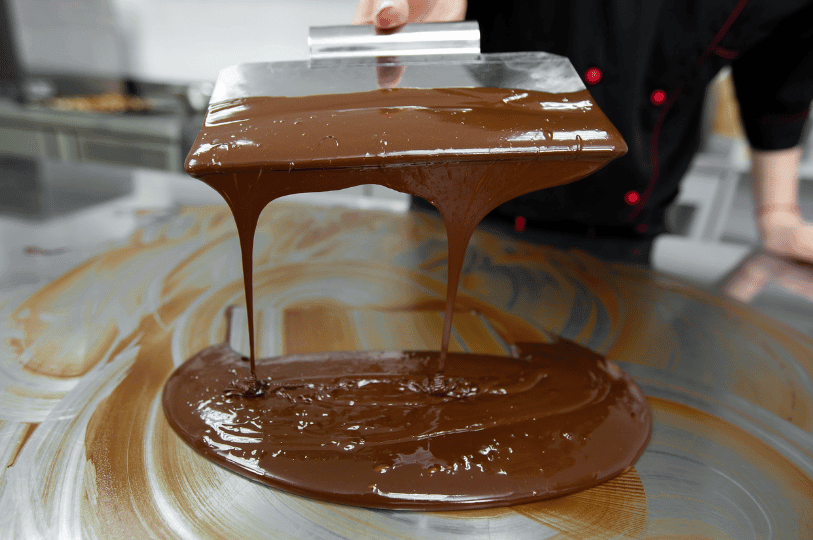
Method 3: The Tabling Method (The Professional Approach)
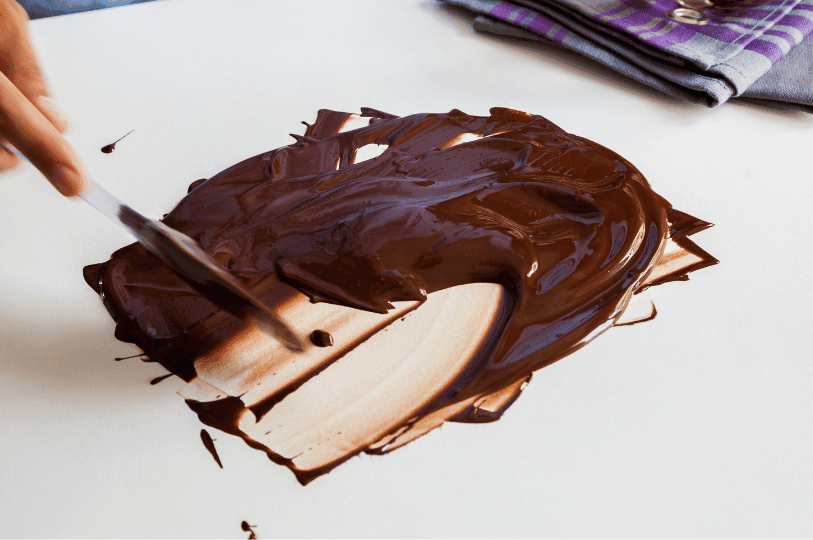
This is the traditional method you see in chocolatier windows. It requires a cool marble or granite surface. It is messy but highly effective for cooling large batches quickly.
Step 1: Melt
Melt your chocolate in a double boiler to 113°F - 122°F (45°C - 50°C).
Step 2: Pour
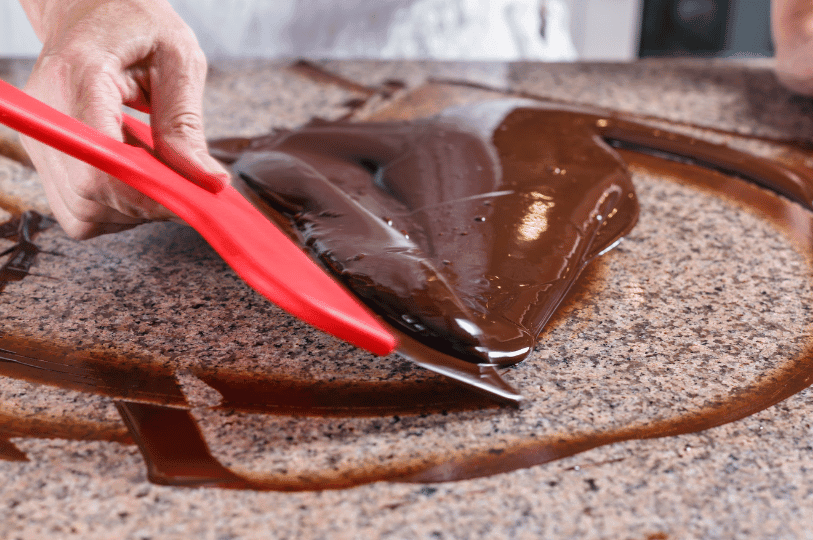
Pour about two-thirds of the melted chocolate onto your clean, cool marble slab. Keep the remaining one-third warm in the bowl.
Step 3: Agitate
Using a bench scraper and palette knife, spread the chocolate out across the stone and scrape it back into the center. Repeat this motion rhythmically. You are cooling the chocolate and creating friction to form crystals. Continue until the chocolate thickens slightly and becomes like a paste (around 80°F - 82°F / 27°C).
Step 4: Combine
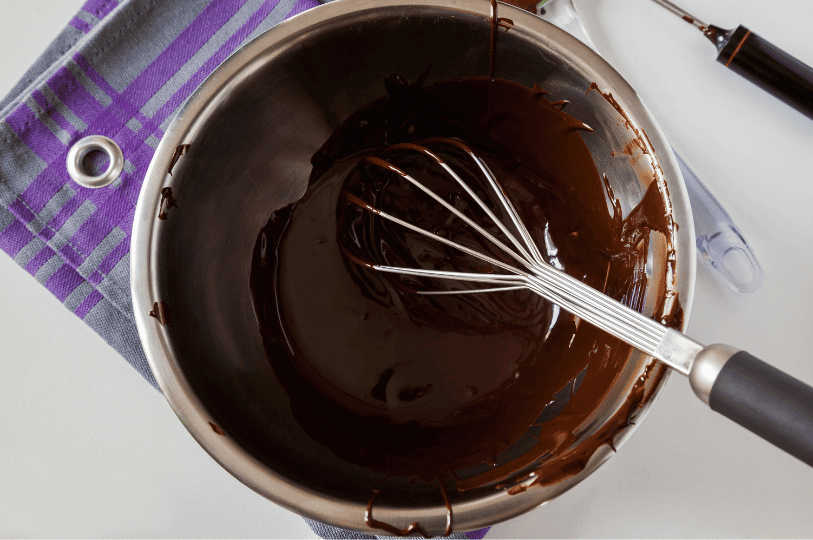
Scrape the cooled chocolate back into the bowl with the warm reserved chocolate. Stir gently to combine. The warm chocolate will melt the crystals slightly, bringing the whole mass to the perfect working temperature of 88°F - 90°F (31°C - 32°C).
Critical Temperatures Reference Guide
Different types of chocolate contain different ratios of cocoa butter, milk solids, and sugar, meaning their tempering curves vary slightly.
Dark Chocolate:
- Melt to: 113°F - 122°F (45°C - 50°C)
- Cool to: 82°F (28°C)
- Work at: 88°F - 90°F (31°C - 32°C)
Milk Chocolate:
- Melt to: 113°F (45°C)
- Cool to: 80°F (27°C)
- Work at: 84°F - 86°F (29°C - 30°C)
White Chocolate:
- Melt to: 113°F (45°C)
- Cool to: 79°F (26°C)
- Work at: 82°F - 84°F (28°C - 29°C)
How to Test Your Temper
Before you dip a single strawberry or fill a mold, you must test your chocolate.
Take a small piece of parchment paper or the tip of a knife. Dip it into the chocolate and set it down on the counter at room temperature (ideally around 68°F - 70°F).
If the chocolate is tempered, it should set within 3 to 5 minutes. It will look semi-glossy and streak-free. If it is still wet, sticky, or spotted after 5 minutes, your chocolate is not in temper. You will need to start the process again.
Troubleshooting Common Problems
Seizing
- The Issue: The chocolate suddenly becomes a thick, grainy, unworkable paste.
- The Cause: Even a tiny drop of water has entered the chocolate. Water causes the sugar in the chocolate to clump instantly.
- The Fix: Unfortunately, seized chocolate cannot be used for coating or molding. However, you can save it by adding cream or butter to turn it into a ganache or sauce.
Blooming
- The Issue: White or gray streaks or spots appear on the chocolate after it sets.
- The Cause: The chocolate was not properly tempered, or it was stored in a warm environment, causing the cocoa butter to separate and rise to the surface.
- The Fix: You must re-temper the chocolate completely. Melt it down and start the process over.
Over-Crystallization
- The Issue: The chocolate becomes thick and hard to work with, even though it is at the correct temperature.
- The Cause: You have been working with it for too long, and too many crystals have formed.
- The Fix: Gently heat the chocolate with a hair dryer for a few seconds or stir in a small amount of warm, melted chocolate to loosen the mixture without melting all the crystals.
Practical Applications
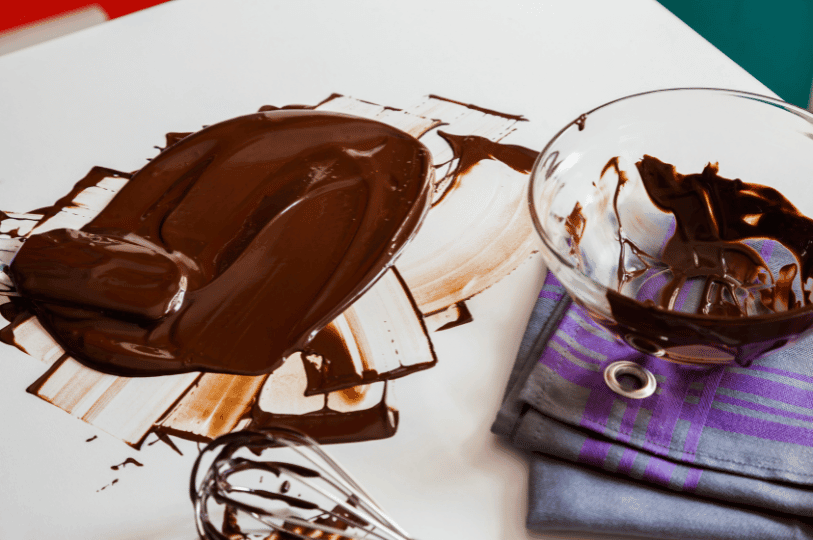
Once you have a bowl of perfectly tempered chocolate, the culinary possibilities are endless.
Dipped Confections: Dip strawberries, dried apricots, candied ginger, or pretzels. The tempered shell provides a professional finish that keeps the moisture of the fruit contained.
Molded Chocolates: Use polycarbonate molds to create shiny truffles or bonbons. The contraction of tempered chocolate ensures they pop out of the mold with a glossy shine.
Chocolate Decorations: Pipe designs onto parchment paper, create chocolate curls, or spread a thin layer on acetate to make shards for decorating cakes and pastries.
Tempering is a practice of patience and observation. Do not be discouraged if your first attempt is not perfect. Chocolate is a forgiving medium; if you fail, you can simply melt it down and try again. With practice, you will learn to read the chocolate, recognizing the glossy sheen that signals a perfect temper.
