

The afternoon heat has settled into the kitchen. The stove sits cold, and that feels right.
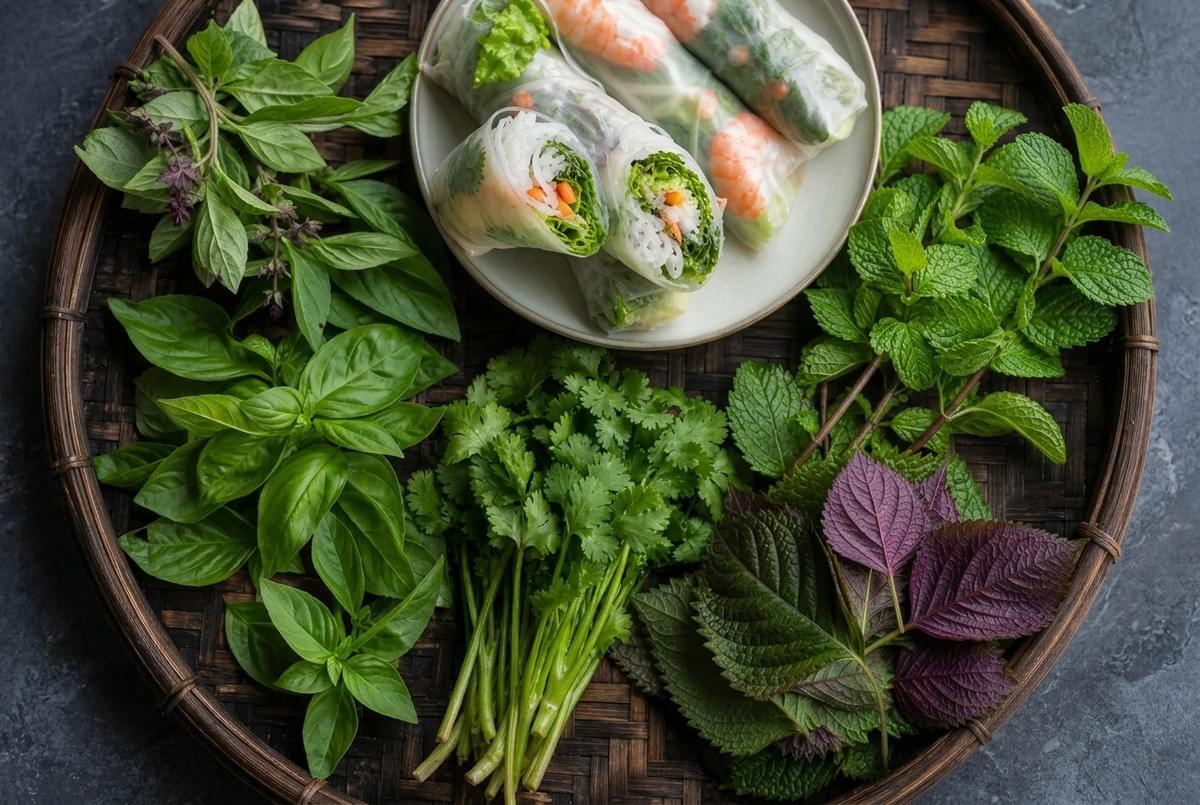
On the counter, a bunch of mint leans in a glass of water. Beside it, Thai basil with purple stems, a tangle of cilantro, and a few broad, jagged shiso leaves. Rub any one of them between your fingers and the air changes.
On days like this, herbs can carry a meal. They bring brightness, crunch, and fragrance, so the stove only has to do a little work. These three warm-weather Asian dishes are built that way: Vietnamese-style rice-paper rolls, Thai-inspired tofu larb in lettuce cups, and Japanese-style chilled soba. Each comes from a different kitchen tradition, and each lets the herbs lead.
A Quick Fresh-Herb Primer
Each herb here has its own job.
- Mint: Cool and clean. It lifts rich or salty flavors and keeps a bite feeling light.
- Thai basil: Sturdier than Italian basil, with a gentle anise and clove note. It holds up well in a roll.
- Cilantro: Bright and green, with a citrusy edge. The tender stems carry plenty of flavor, so use them too.
- Shiso: A Japanese herb in the mint family. It tastes a little minty, a little citrusy, and slightly peppery. Look for it at Japanese or Korean grocers.
Washing and drying: Swish the herbs in a large bowl of cold water, then lift them out so the grit stays behind. Dry them thoroughly in a salad spinner or roll them loosely in a clean towel. Wet herbs dilute sauces and make rice paper slippery.
Last-minute prep: Pick the leaves just before you use them. Chop or slice with a sharp knife, and avoid going over them again and again. Bruised leaves darken quickly.
About substitutions: Herbs aren't interchangeable. Swapping one for another won't ruin a dish, but it will change its character. Think of a swap as a new version, not the same one.
Vietnamese-Style Fresh Rice-Paper Rolls with Peanut-Hoisin Sauce
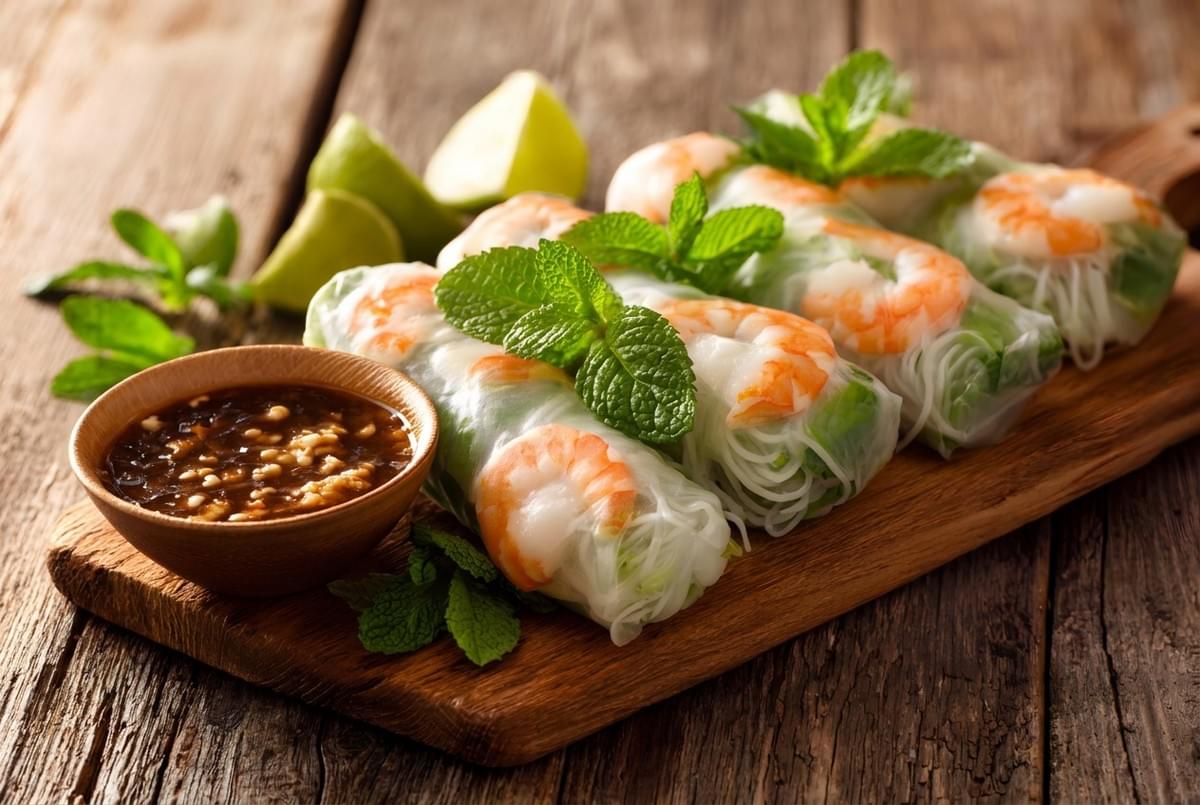
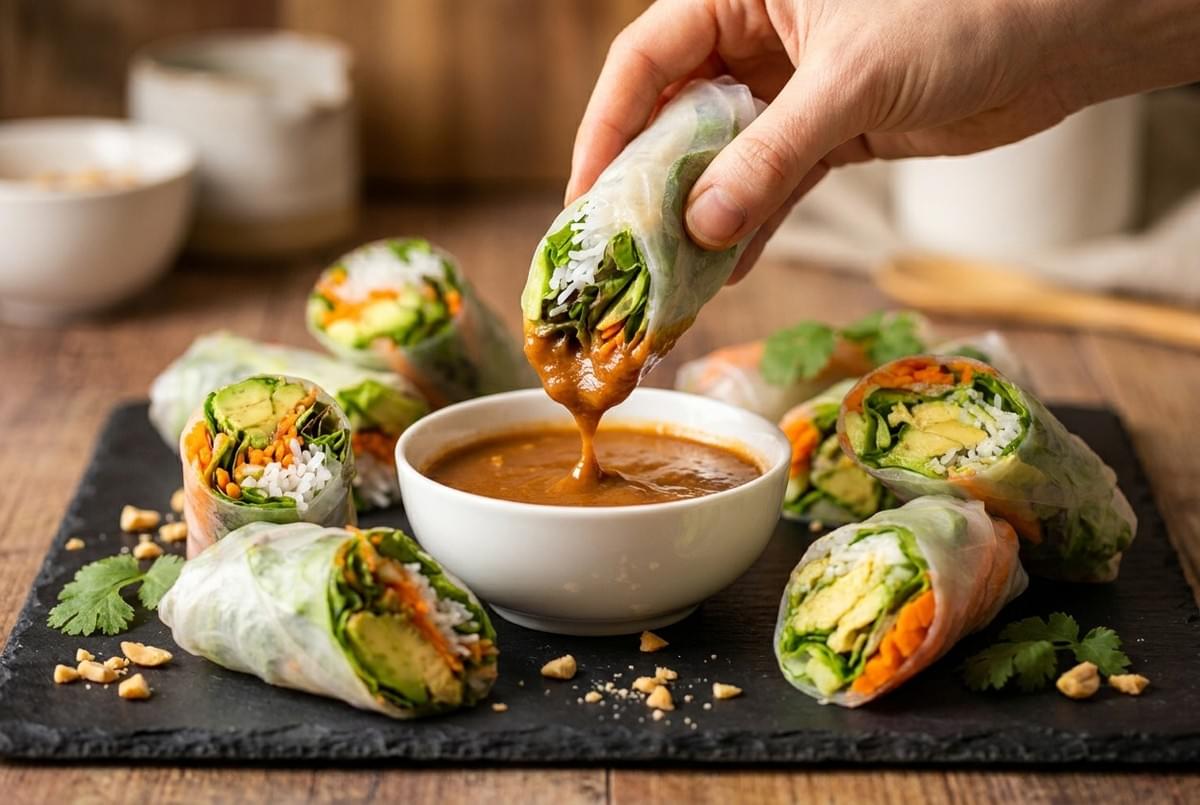
These rolls draw on Vietnamese gỏi cuốn, fresh rolls usually filled with herbs, rice noodles, and often shrimp or pork. This version stays close to that idea while keeping the cooking to a quick pot of noodles.
They work in warm weather because nearly everything is raw, cool, and crisp. The mint and Thai basil sit right under the translucent wrapper, so you smell them before you taste them.
Makes: 8 rolls (serves 4 as a starter or 2 as a light meal)
Prep time: 30 minutes
Cook time: 5 minutes
Total time: 35 minutes
Ingredients
For the rolls
- 2 oz (60 g) dried rice vermicelli
- 8 round rice-paper wrappers, about 8 1/2 inches (22 cm)
- 8 oz (225 g) cooked, peeled medium shrimp (about 16), halved lengthwise
- 8 soft lettuce leaves, such as butter lettuce, thick ribs trimmed
- 1 small cucumber, cut into thin 3-inch matchsticks
- 1 medium carrot, cut into thin 3-inch matchsticks
- 1 cup loosely packed mint leaves
- 1 cup loosely packed Thai basil leaves
For the peanut-hoisin dipping sauce
- 3 tablespoons hoisin sauce
- 2 tablespoons smooth peanut butter
- 3 to 4 tablespoons warm water
- 1 teaspoon rice vinegar
- 1 teaspoon sriracha (optional)
- 1 tablespoon chopped roasted peanuts
Instructions
- Cook the noodles. Cook the vermicelli according to the package, usually 3 to 5 minutes in boiling water. Drain, rinse under cold water, and shake well. They should feel cool and springy, not sticky.
- Make the sauce. Whisk the hoisin, peanut butter, 3 tablespoons warm water, rice vinegar, and sriracha if using. Add the last tablespoon of water if it's too thick to dip. Spoon into small bowls and top with peanuts.
- Set up your station. Arrange the lettuce, noodles, cucumber, carrot, herbs, and shrimp within reach. Fill a wide shallow dish with warm water. Lay a damp clean towel or cutting board in front of you.
- Soften one wrapper. Dip a wrapper in the water for the time on the package, often 5 to 10 seconds. Lay it flat. It should still feel slightly firm. It keeps softening as you fill it, and soon turns pliable and a little tacky.
- Fill with restraint. Place a lettuce leaf on the lower third. Add a small pinch of noodles (about 2 tablespoons), a few pieces of cucumber and carrot, and several mint and basil leaves. Place 4 shrimp halves, cut side up, in a row just above the filling.
- Roll snugly. Fold the bottom edge up over the filling and tuck it under firmly. Fold in the sides, then roll upward, keeping gentle pressure, so the shrimp shows through the wrapper.
- Repeat and serve. Set finished rolls seam side down, not touching, so they don't stick together. Serve with the sauce.
Substitution: Use 8 oz (225 g) firm tofu, patted dry and cut into thin strips, in place of the shrimp.
Troubleshooting: If wrappers tear, they've likely soaked too long or the roll is overfilled. Dip more briefly and use a little less filling. Torn ones can be wrapped in a second softened sheet.
Thai-Inspired Tofu Larb Lettuce Cups
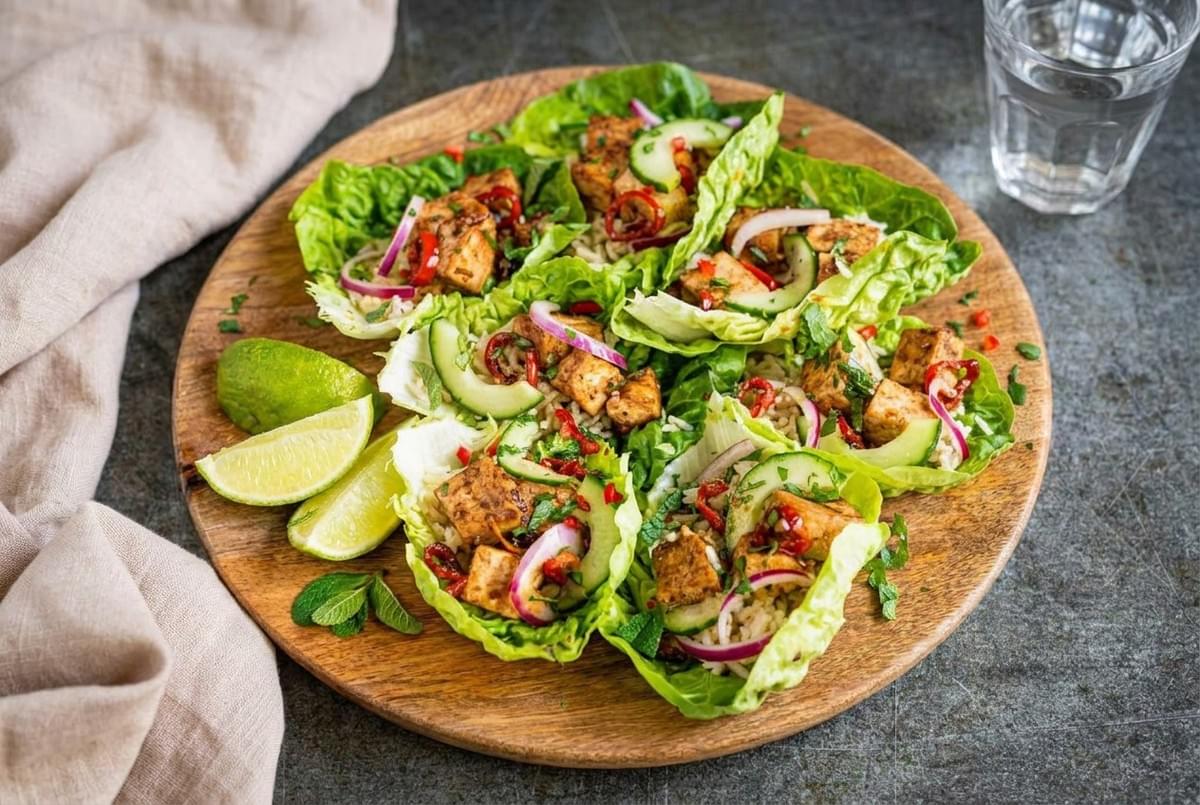
Larb is a minced meat salad from Laos and northeastern Thailand, dressed with lime, chili, and toasted rice powder, and finished with plenty of herbs. This is an adaptation, made with tofu and soy sauce rather than meat and fish sauce. It isn't meant as the definitive traditional version.
It suits hot days because the cooking is brief and the dressing is sharp and bright. Mint and cilantro go in at the very end, so they stay fresh against the warm, nutty tofu.
Serves: 4
Prep time: 20 minutes (including pressing)
Cook time: 15 minutes
Total time: 35 minutes
Ingredients
- 14 oz (400 g) extra-firm tofu
- 2 tablespoons uncooked glutinous (sticky) rice, for toasted rice powder
- 1 tablespoon neutral oil
- 2 small shallots, thinly sliced
- 3 tablespoons fresh lime juice
- 1 1/2 tablespoons soy sauce
- 1 teaspoon sugar
- 1/2 to 1 teaspoon dried chili flakes
- 3 scallions, thinly sliced
- 1/2 cup mint leaves, torn if large
- 1/2 cup chopped cilantro, leaves and tender stems
- 1 head butter lettuce or 2 little gem lettuces, leaves separated
Instructions
- Press the tofu. Wrap the tofu in a clean towel and set something heavy on top, like a pan with a few cans, for 15 minutes.
- Toast the rice. Meanwhile, toast the rice in a dry skillet over medium heat, shaking often, for 5 to 7 minutes. It's ready when the grains turn deep golden and smell like popcorn. Cool briefly, then grind into a coarse powder in a spice grinder or mortar and pestle. A little texture is good.
- Cook off the moisture. Crumble the tofu into small, uneven pieces. Heat the oil in the same skillet over medium-high. Add the tofu and cook, stirring occasionally, for 8 to 10 minutes. The pan should go quiet as the water steams off. The crumbles are ready when they feel dry and springy, with golden edges.
- Take it off the heat. Remove the pan from the stove and let it sit for 2 minutes.
- Dress it. Add the shallots, lime juice, soy sauce, sugar, and chili flakes. Toss well. The tofu will soak up the dressing.
- Add the herbs. Fold in the scallions, mint, cilantro, and most of the rice powder. Taste. It should be sour first, then salty, then warm with chili. Adjust with lime or soy.
- Serve. Spoon into lettuce leaves and sprinkle with the remaining rice powder.
Substitution: No glutinous rice? Jasmine rice toasts well too, with a slightly milder aroma.
Troubleshooting: If the larb tastes watery, the tofu wasn't dry enough before dressing. Next time, press longer and keep cooking until the crumbles feel firm. As written, this dish is vegan. Adding fish sauce makes it closer to many traditional versions, but no longer vegan.
Japanese-Style Chilled Soba with Shiso and Cucumber
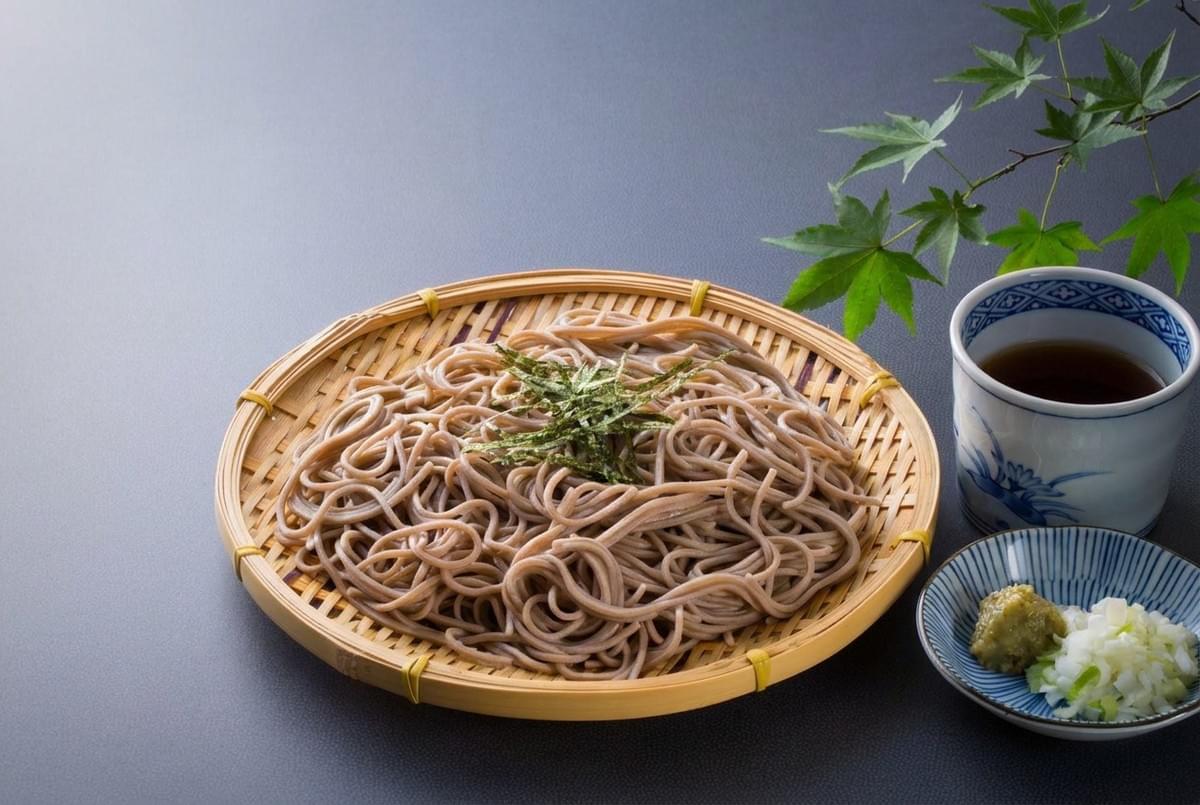
This dish draws on zaru soba, a Japanese summer staple of cold buckwheat noodles served with a separate dipping sauce. The sauce is for dipping, not tossing, so each bite stays light.
The noodles come out of the pot cold and glossy. The shiso adds a cool, almost citrusy note, and cucumber brings crunch.
Serves: 2
Prep time: 15 minutes
Cook time: 10 minutes
Chilling time: 10 minutes
Total time: 35 minutes
Ingredients
For the dipping sauce
- 3/4 cup (180 ml) dashi
- 3 tablespoons soy sauce
- 3 tablespoons mirin
For the noodles
- 7 oz (200 g) dried soba noodles
- 1 small Japanese or Persian cucumber, cut into thin matchsticks
- 6 shiso leaves
- 2 scallions, thinly sliced
- 1 teaspoon toasted sesame seeds
- 1/2 teaspoon wasabi (optional)
Instructions
- Make the sauce. Bring the dashi, soy sauce, and mirin to a gentle simmer in a small saucepan for 1 minute. Pour into a bowl set over ice water and chill for about 10 minutes, until cold.
- Cook the soba. Cook the noodles according to the package, often 4 to 5 minutes, stirring early so they don't stick. Taste a strand. It should be tender with a slight chew.
- Rinse well. Drain into a colander and rinse under cold running water, gently rubbing the noodles with your hands to wash off the surface starch. Then plunge them briefly into ice water.
- Drain thoroughly. Lift and shake the noodles until no water drips. Wet noodles thin the sauce.
- Slice the shiso last. Stack the leaves, roll them up, and slice into thin ribbons right before serving.
- Serve. Divide the noodles between two plates, topped with cucumber, shiso, and sesame seeds. Pour the sauce into two small bowls and add the scallions and wasabi, if using. Dip a small bundle of noodles into the sauce with each bite.
Substitution: If you can't find shiso, a few mint leaves with a little Thai basil gives a fresh, herbal finish. It tastes different, but still bright.
Troubleshooting: Noodles clumping or gummy? They need a more thorough rinse. The starch is what glues them together.
Make-Ahead, Storage, and Allergens
For the Best Quality
- Herbs: Wash and dry them up to a day ahead. Store wrapped in a dry paper towel in a container in the fridge.
- Rice-paper rolls: Best within a few hours. Cover with a damp towel or plastic wrap. In the fridge, the wrappers firm up and turn slightly chewy.
- Larb: Cook the tofu and grind the rice powder up to 2 days ahead. Store the powder airtight at room temperature. Dress the tofu and add herbs just before serving.
- Soba: Best cooked right before eating. The dipping sauce keeps in the fridge for up to 5 days.
For Food Safety
Refrigerate cooked tofu, noodles, shrimp, and assembled rolls promptly. In warm weather, don't leave them out for more than 2 hours, or more than 1 hour if it's above 90°F (32°C). At outdoor meals, keep dishes in the shade and set them over ice.
Allergens
These recipes include shellfish, peanuts, soy, and sesame. Many soba noodles also contain wheat, and conventional dashi is made with bonito (fish). For a fish-free version, use kombu dashi. Soba is only gluten-free if it's labeled 100% buckwheat and you use gluten-free tamari in place of soy sauce. Check your hoisin and dashi labels as well.
Start with One
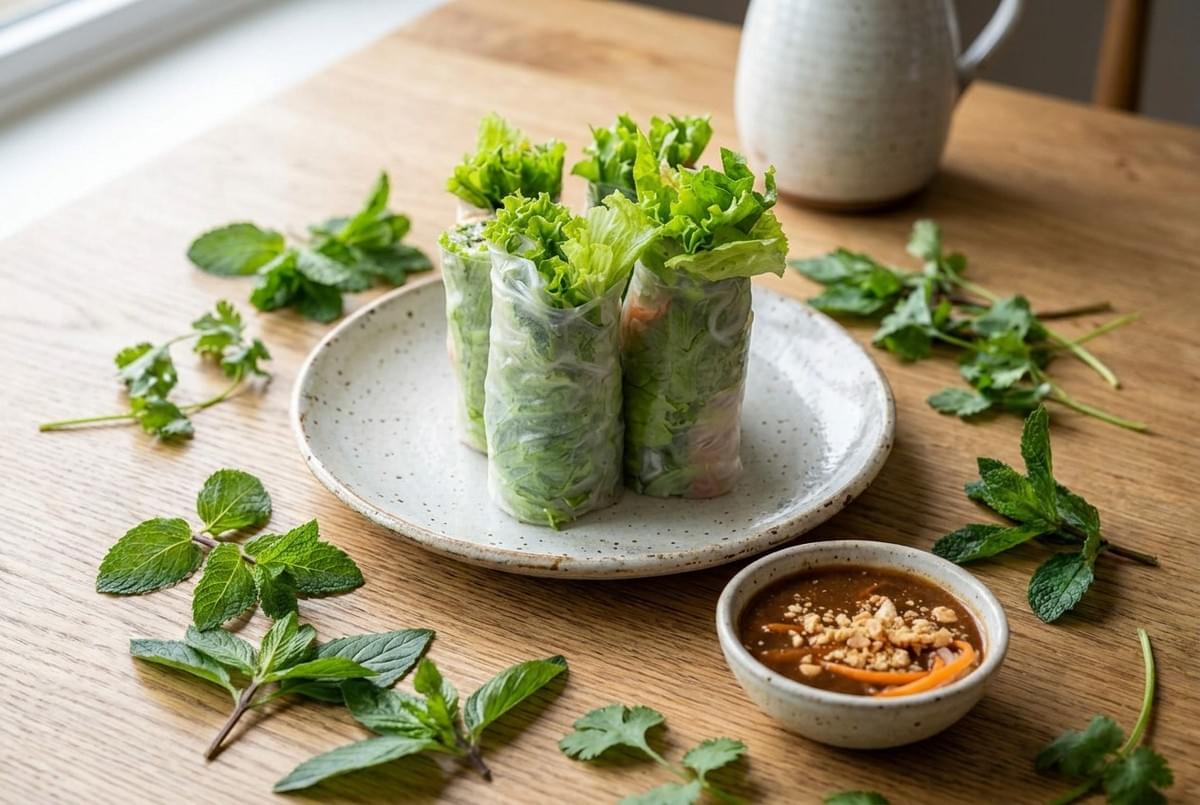
You don't need to make all three at once. Pick one, gather a few bunches of herbs, and let the kitchen stay cool.
Then adjust as you go. More mint, less cilantro, an extra ribbon of shiso. The balance belongs to you.
Which herbs do you find yourself reaching for when the days turn warm?
