

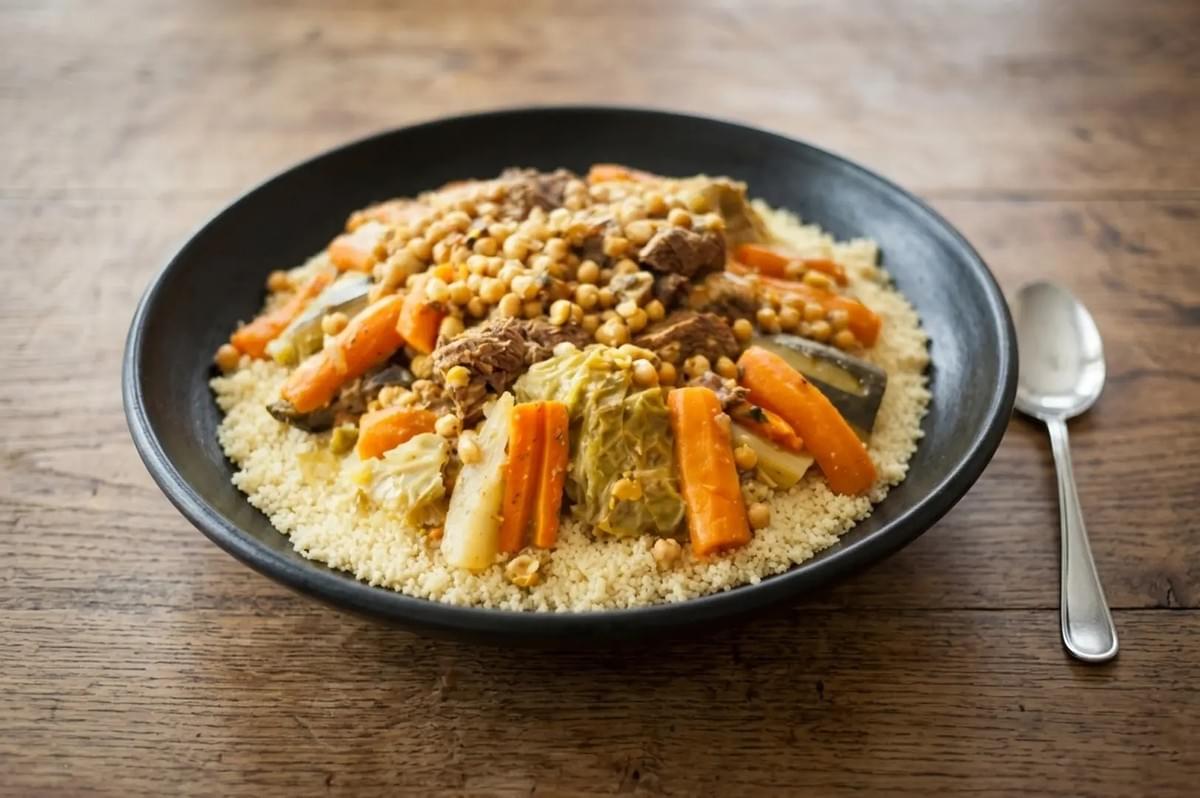
A pot on the stove, a heavenly scent, a dish to be shared wherever you went. There is something deeply comforting about a steaming platter of Algerian couscous. It is the kind of meal that brings people together around a single table. You will love this recipe because it is hearty, incredibly healthy, and packed with warm, earthy spices.
Whether you are hosting a large family gathering or just craving a nourishing weekend dinner, this vegetable-packed feast is guaranteed to impress. The broth is rich, the semolina grains are perfectly fluffy, and the vegetables are tender without being mushy. Let us explore how to bring the magic of North African cuisine into your own kitchen!
What Is Algerian Couscous with Seven Vegetables?
Couscous is the beloved staple of the Maghreb region. While many people think of couscous as a side dish, in Algeria, it is the main event. It is a labor of love, tradition, and culinary artistry.
What makes Algerian couscous special is the delicate balance of spices and the specific preparation method. Unlike instant couscous that simply sits in boiling water, traditional North African couscous is steamed multiple times over a fragrant simmering stew. This process allows the grains to absorb the aromatic vapors of the broth, resulting in an impossibly light and fluffy texture.
The "seven vegetables" variation is a cherished tradition. The number seven is often considered lucky or auspicious in many cultures. The specific vegetables can change based on the season, but the goal is always a colorful, vibrant harvest that celebrates the earth.
Ingredients You Will Need
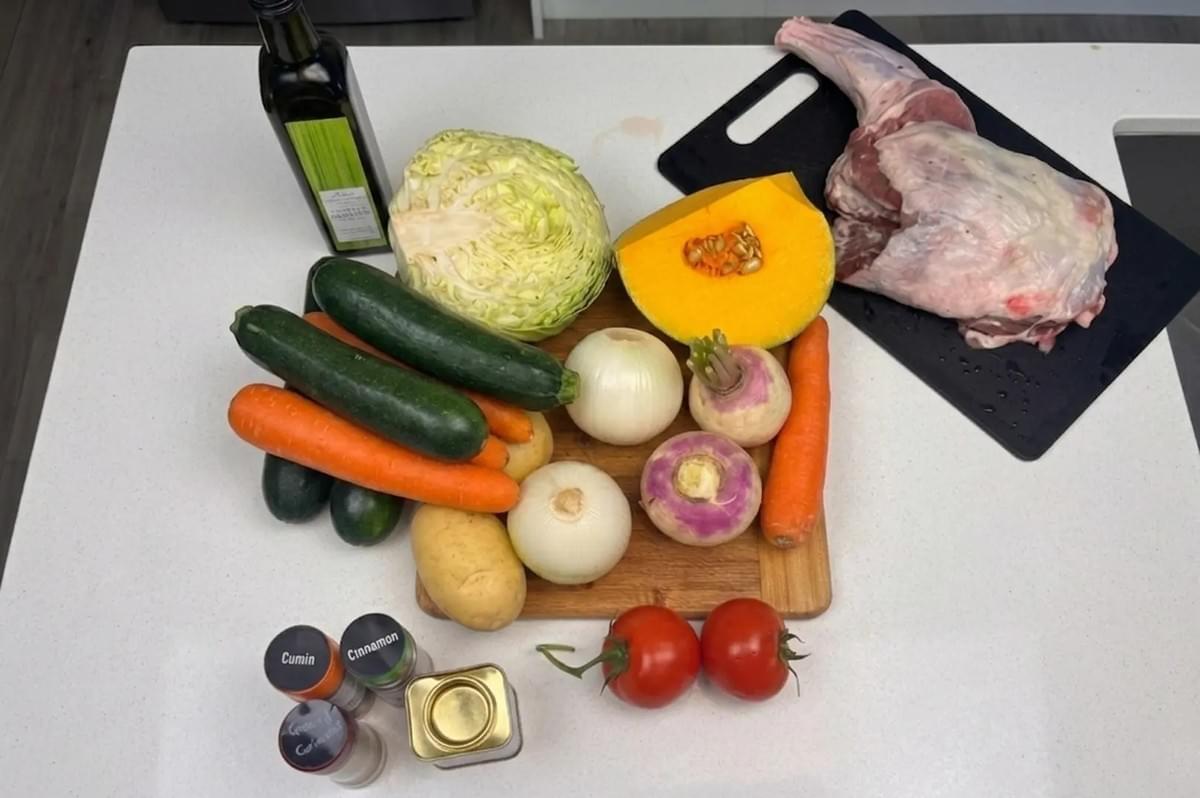
Gathering your ingredients is the first step to building incredible flavor. Here is what you need for this cozy Algerian couscous.
The Base and Broth
- 2 cups of dry, medium-grain couscous
- 1 large yellow onion, finely chopped
- 3 cloves of garlic, minced
- 2 tablespoons of olive oil
- 1 tablespoon of butter or smen (clarified butter)
- 2 tablespoons of tomato paste
- 6 cups of vegetable or chicken broth
The Seven Vegetables
You can swap these based on what is fresh at your local market, but this is a classic lineup.
- 3 medium carrots, peeled and cut into large chunks
- 2 medium turnips, peeled and quartered
- 1 small butternut squash or pumpkin, peeled and cubed
- 2 medium zucchini, cut into thick slices
- 1 small wedge of green cabbage, cut into chunks
- 2 ripe tomatoes, quartered
- 1 can (15 ounces) of chickpeas, rinsed and drained
The Spices
Quality spices make all the difference. Look for fresh, fragrant powders.
- 1 tablespoon of Ras el Hanout (a complex North African spice blend)
- 1 teaspoon of ground coriander
- 1 teaspoon of ground ginger
- 1/2 teaspoon of sweet paprika
- 1/2 teaspoon of ground cinnamon
- Salt and black pepper to taste
Tools You Will Need
You do not need a professional kitchen, but a few specific tools help tremendously.
- A couscoussier (a traditional two-part steaming pot) or a large pot with a snug-fitting metal steamer basket.
- A very large, wide mixing bowl (traditionally called a gassaa) for fluffing the grains.
- A ladle and a sturdy fork.
Step-by-Step Instructions
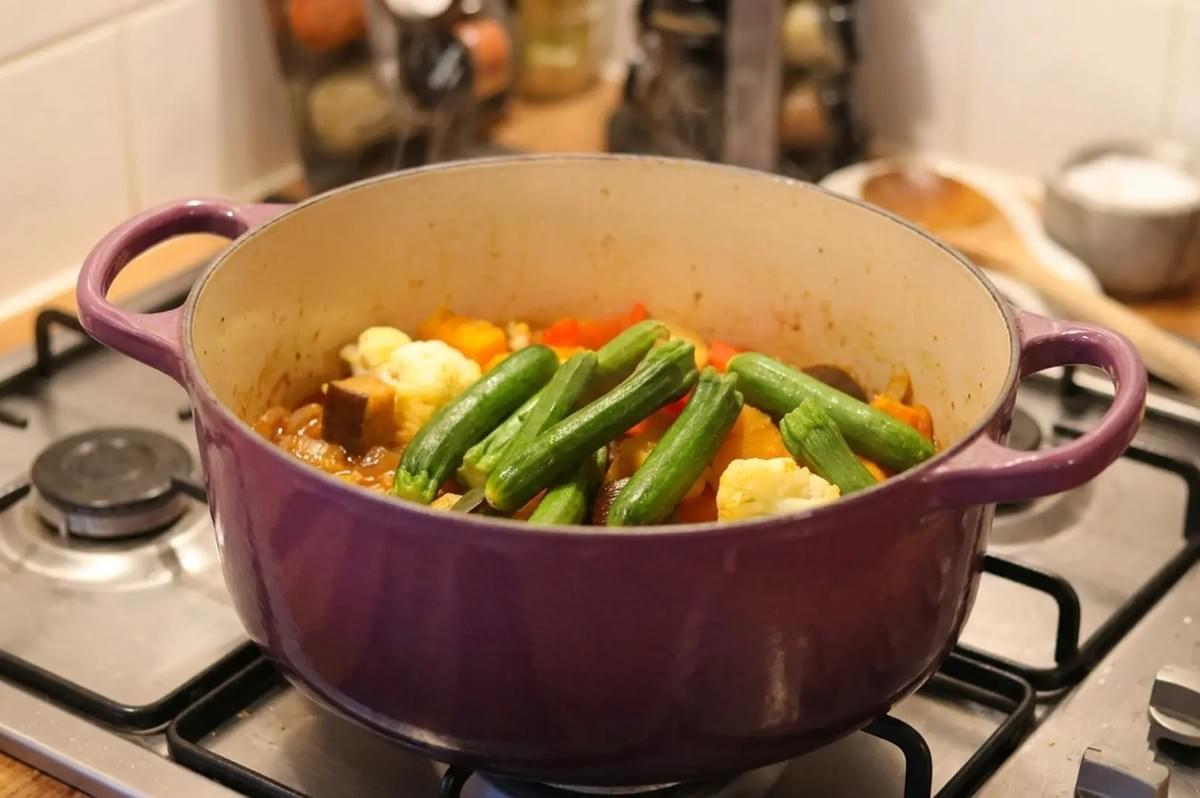
Steam it twice for a fluffy delight, add the broth so the flavor is right. Follow these steps for the perfect texture.
Step 1: Prep the Couscous
Place your dry couscous into your large, wide bowl. Drizzle it with one tablespoon of olive oil. Rub the grains between your hands until every single grain is coated in oil. This prevents clumping. Sprinkle half a cup of water over the grains, toss lightly, and let it rest for 10 minutes to absorb the moisture.
Step 2: Start the Broth
In the bottom of your couscoussier or large pot, heat the remaining olive oil and butter over medium heat. Add the chopped onion and sauté until golden brown. Stir in the minced garlic, tomato paste, and all of your spices (Ras el Hanout, coriander, ginger, paprika, cinnamon, salt, and pepper). Cook for two minutes until the spices are fragrant.
Step 3: Add the Root Vegetables and Liquid
Pour the broth into the pot. Add the dense vegetables that take the longest to cook: the carrots, turnips, and cabbage. Bring the liquid to a gentle boil, then lower the heat to a steady simmer.
Step 4: The First Steam
Transfer your hydrated couscous into the top steamer basket. Place it securely over the simmering broth. Let it steam uncovered for 15 minutes. You will know it is working when you see steam rising steadily through the grains.
Step 5: The Second Hydration
Carefully dump the hot steamed couscous back into your large wide bowl. Sprinkle it with another half cup of cold water and a pinch of salt. Use a fork to break up any clumps. Once it cools enough to touch, use your hands to gently fluff the grains. Let it rest for another 10 minutes.
Step 6: Cook the Soft Vegetables
Add the softer vegetables to your simmering broth: the butternut squash, zucchini, fresh tomatoes, and the drained chickpeas.
Step 7: The Second Steam
Return the fluffed couscous to the steamer basket and place it back over the pot. Steam for a final 15 minutes. The grains should now be incredibly tender, plump, and aromatic. The vegetables in the broth below should be fork-tender.
Serving Suggestions
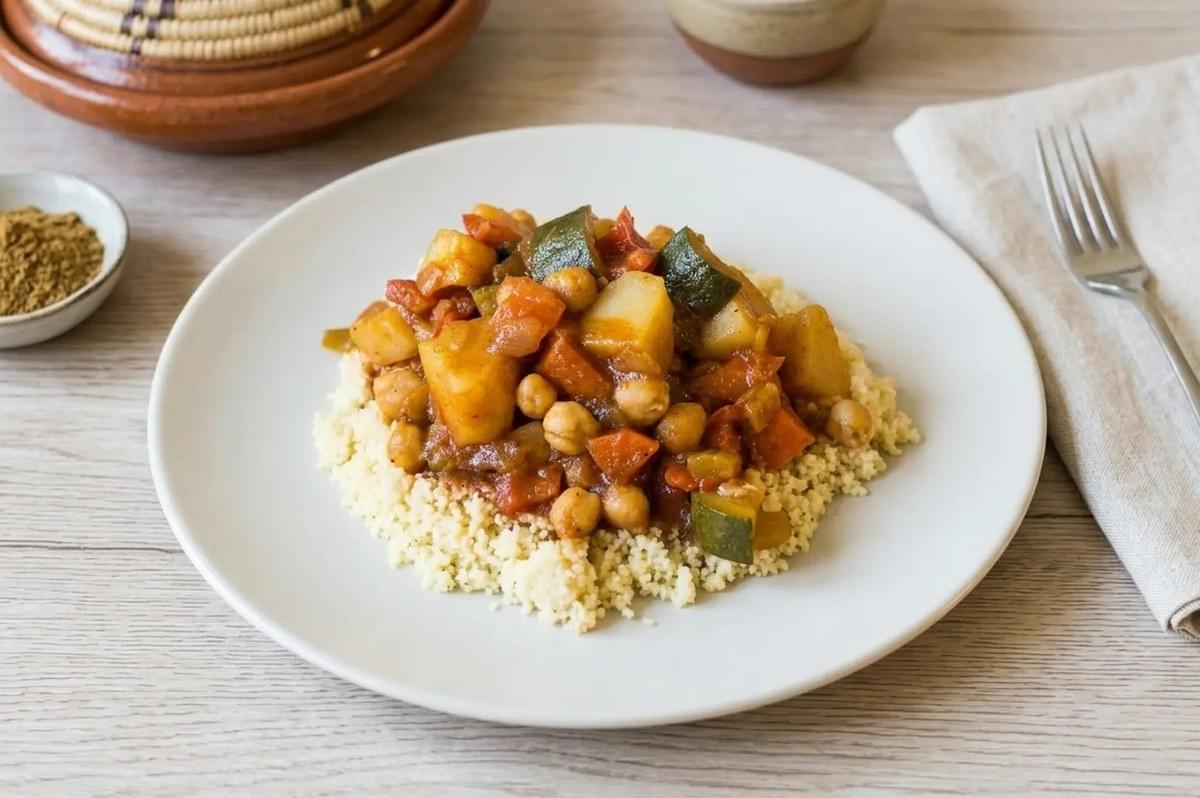
A grand display is part of the fun. To serve this properly, pile the hot, fluffy couscous into a large, deep serving platter. Form a small "well" or crater in the center of the mound.
Use a slotted spoon to carefully remove the seven vegetables and chickpeas from the pot. Arrange them beautifully in the center well and around the edges of the platter.
Pour the aromatic broth into a separate bowl or gravy boat. Serve the broth on the side so each person can ladle as much liquid as they want over their own plate. Garnish the platter with fresh cilantro or parsley and serve with a side of spicy harissa paste for those who love extra heat.
Storage and Reheating
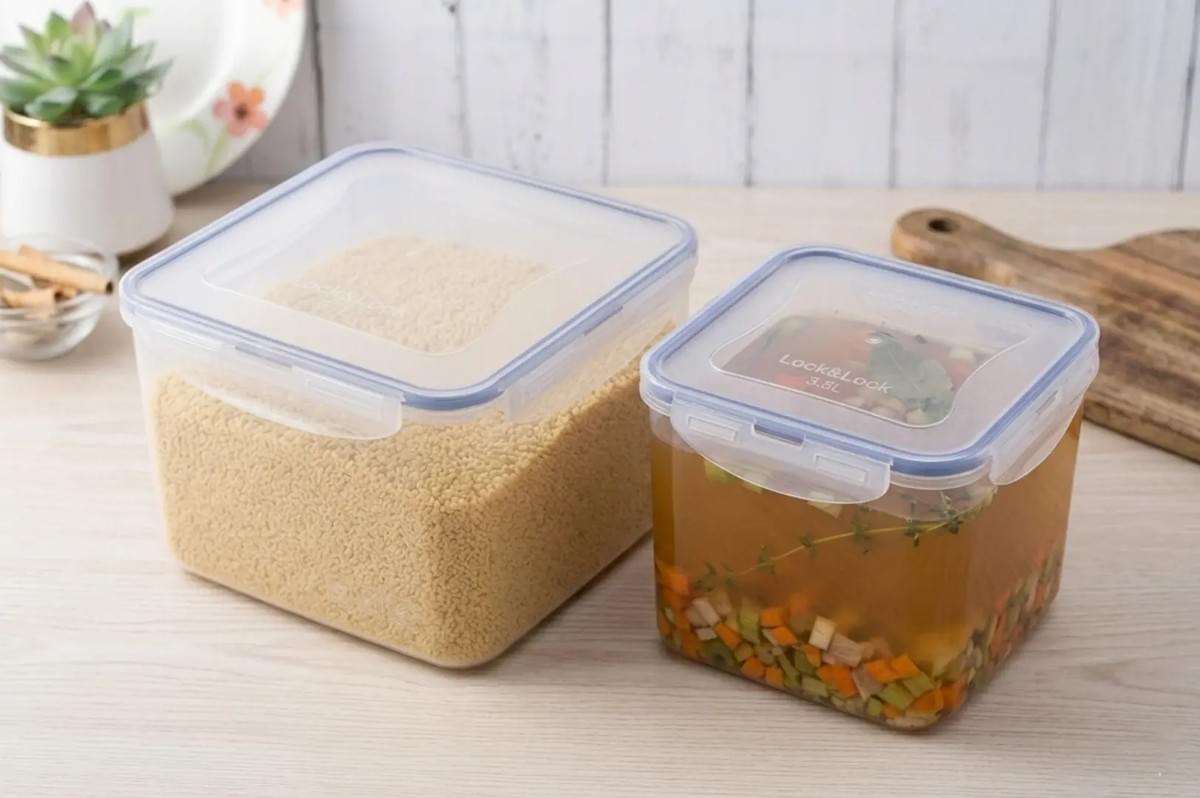
If you have leftovers, proper storage keeps everything tasting fresh.
Fridge and Freezer Guidance:
Always store the couscous and the vegetable broth in separate airtight containers. If you mix them together before storing, the grains will absorb all the liquid and turn into mush. They will keep in the fridge for up to four days. You can freeze the vegetable broth for up to three months, but it is best to make the couscous grains fresh.
The Best Way to Reheat:
To reheat without drying out the grains, place the couscous in a microwave-safe bowl. Drizzle a spoonful of water or a tiny pat of butter over the top. Cover it with a damp paper towel and microwave in 30-second bursts, fluffing with a fork in between. Reheat the vegetable broth in a small pot on the stove until simmering.
FAQ
Can I make this dish gluten-free?
Traditional couscous is made from wheat semolina, so it contains gluten. You can easily substitute quinoa or millet. Cook the gluten-free grains according to their package directions, and serve them with the vegetable broth.
Can I use instant couscous instead?
Yes, if you are short on time. Simply steep the instant couscous in hot broth instead of boiling water for extra flavor. However, you will miss out on the ultra-fluffy texture that traditional steaming provides.
Do I have to use exactly seven vegetables?
Not at all. The number seven is traditional, but you can use five, six, or eight, depending on what is in your fridge. Root vegetables and squash work best.
What is Ras el Hanout?
It is a famous North African spice blend that translates to "head of the shop." It usually contains a mix of cumin, ginger, cinnamon, coriander, cayenne, and allspice.
Can I add meat to this recipe?
Absolutely. It is very common to simmer lamb shoulder, beef, or chicken in the broth before adding the vegetables. Cook the meat until tender, then proceed with the vegetable steps.
Key Takeaway and Conclusion:
Always keep your broth at a gentle simmer, not a rolling boil, so the steam gently cooks the grains above it. Adjust the salt in the broth right before serving.
