

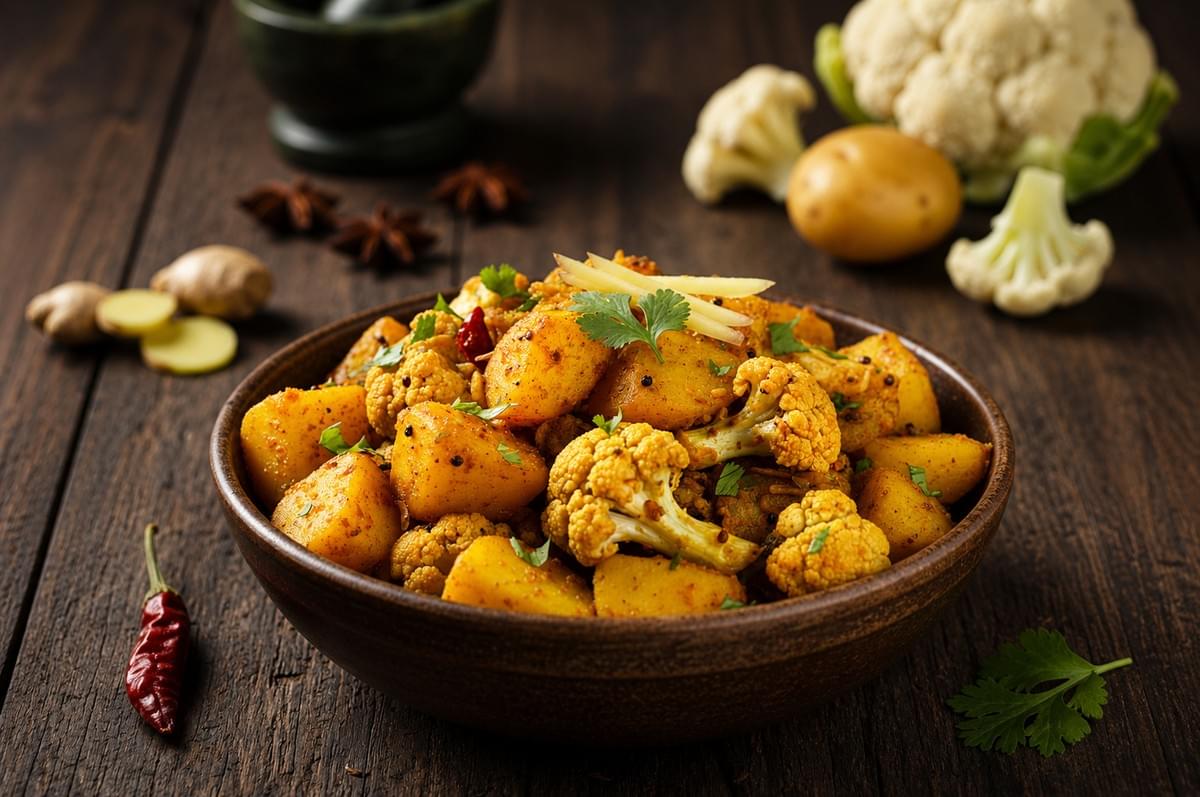
The smell arrives before the food does.
Cumin hits the hot oil and starts to crackle. A minute later, turmeric turns everything gold, and the kitchen fills with something warm and grounding. If you have ever stood over a pan like this, waiting for the spices to bloom, you know the feeling. It is the smell of dinner deciding to be good to you.
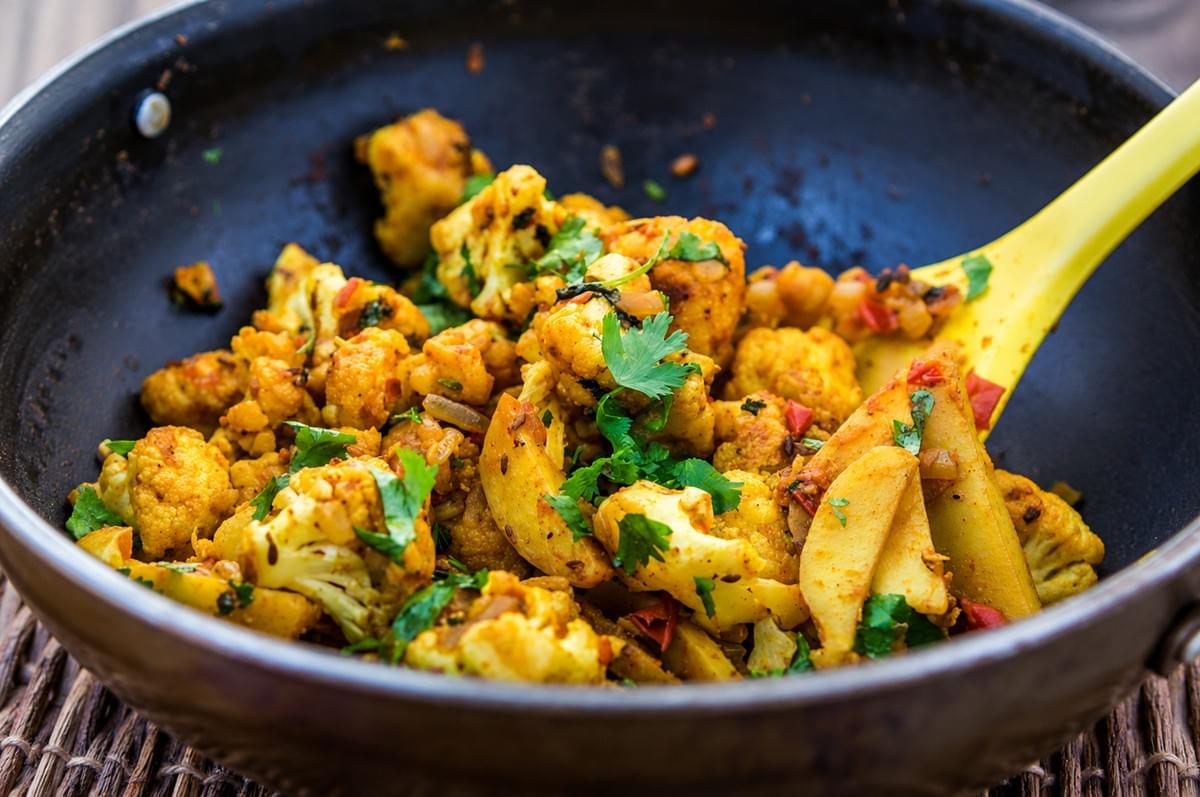
That is aloo gobi. Potatoes and cauliflower, cooked slow in a handful of spices until they soak up all that warmth. Nothing fancy. Just honest food that comes together in one pan and asks very little of you.
Let me cook it with you.
What Is Aloo Gobi?
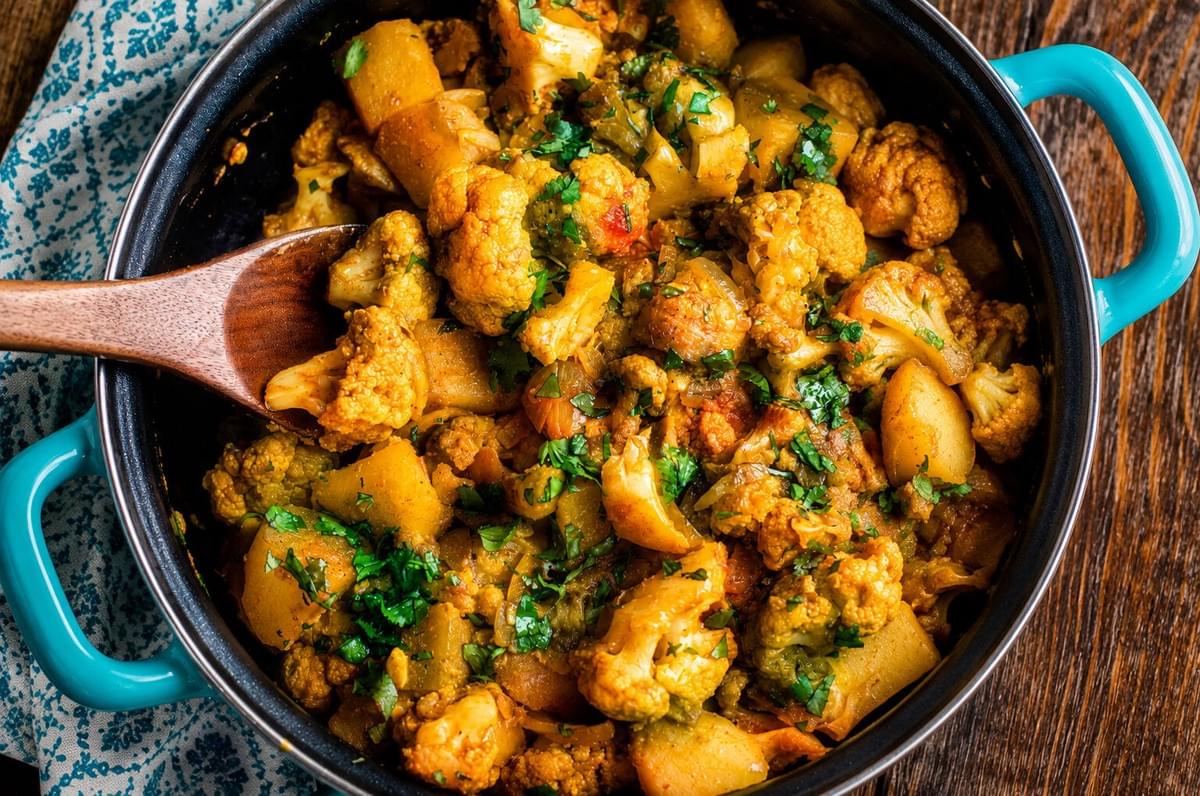
Aloo gobi is a North Indian dish, and the name says it plainly. Aloo means potato, gobi means cauliflower. Put them together with spices and you have a dish that shows up on weeknight tables, at family gatherings, and in the quiet corners of home kitchens all over.
The flavor comes from a small, familiar cast of spices. Turmeric for color and earthiness. Cumin for that toasty backbone. Coriander for a gentle citrus warmth. Garam masala to round it out at the end, and a little chili for heat if you want it.
It is not a saucy curry. This is a drier dish, where the vegetables catch a little color and the spices cling close to each other. Every version is a bit different. This one is friendly for beginners, and easy to make your own.
Why You'll Love This Recipe
- It is a one-pan comfort meal, so cleanup stays simple.
- It comes together on a busy weeknight without much fuss.
- The ingredients are humble and budget-friendly.
- It is naturally vegetarian, an easy vegetarian dinner that satisfies.
- Leftovers keep well and taste even better the next day.
- Once you know the rhythm, you can bend it to whatever is in your fridge.
Ingredients
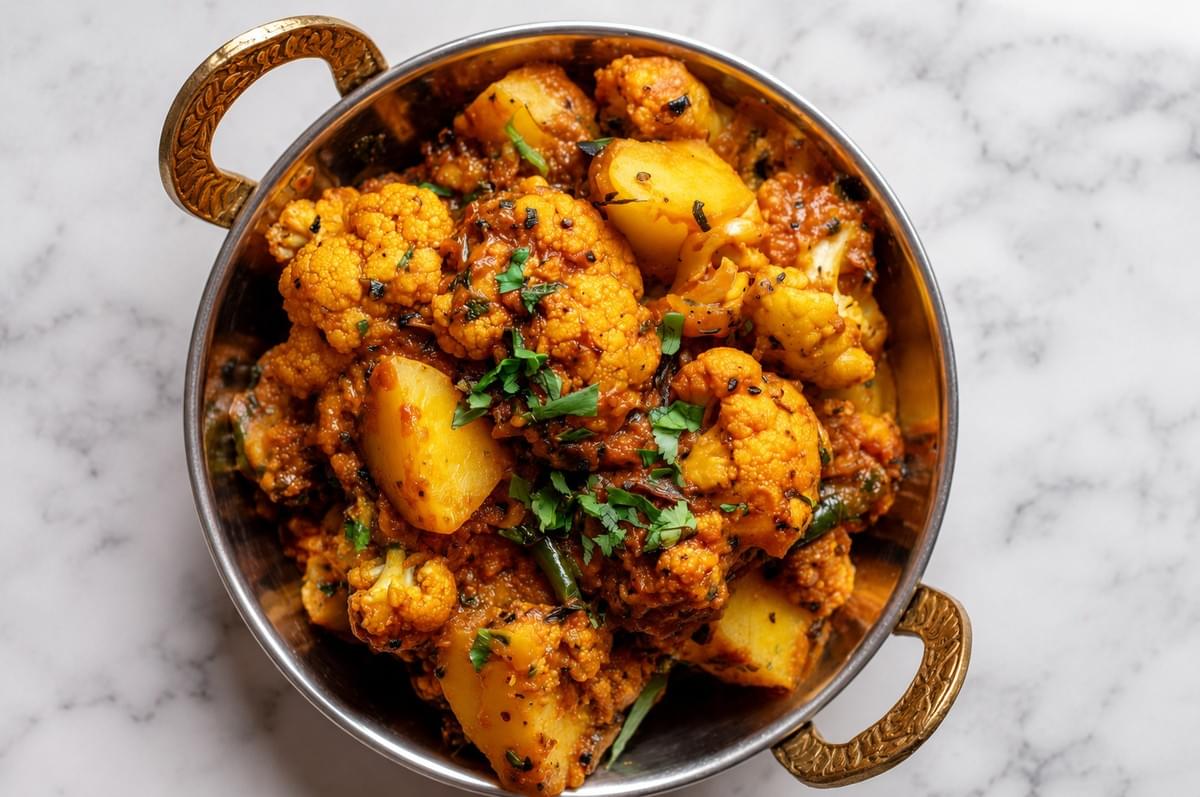
This makes enough for 4 servings.
The vegetables
- 3 medium potatoes (about 1 pound), peeled and cut into 1-inch chunks
- 1 medium cauliflower (about 1.5 pounds), broken into bite-size florets
A note on potatoes: Waxy potatoes (like Yukon Gold or red potatoes) hold their shape best and stay creamy inside. Russets work too, but handle them gently near the end so they do not fall apart.
A note on cauliflower: Aim for florets roughly the same size as your potato chunks. Even pieces cook evenly, and that keeps you from ending up with some mushy bits and some crunchy ones.
The spices and aromatics
- 3 tablespoons oil (neutral oil or ghee)
- 1 teaspoon cumin seeds
- 1 medium onion, finely chopped
- 3 cloves garlic, minced
- 1 teaspoon grated fresh ginger (optional, but lovely)
- 1 teaspoon ground turmeric
- 1.5 teaspoons ground coriander
- 1/2 teaspoon chili powder (more or less, to taste)
- 1 teaspoon salt, plus more to taste
- 1/2 teaspoon garam masala
- Fresh cilantro, chopped, to finish
Spice swaps: No ground coriander? A little extra cumin will carry the dish. No garam masala? A pinch each of cinnamon and cumin gives you a close cousin. For milder heat, skip the chili powder and add a squeeze of lemon at the end instead.
Optional add-ins
- A handful of green peas, tossed in near the end
- 1 chopped tomato, added with the onions for a softer, saucier finish
- A few handfuls of spinach, stirred in to wilt at the very end
Step-by-Step Instructions
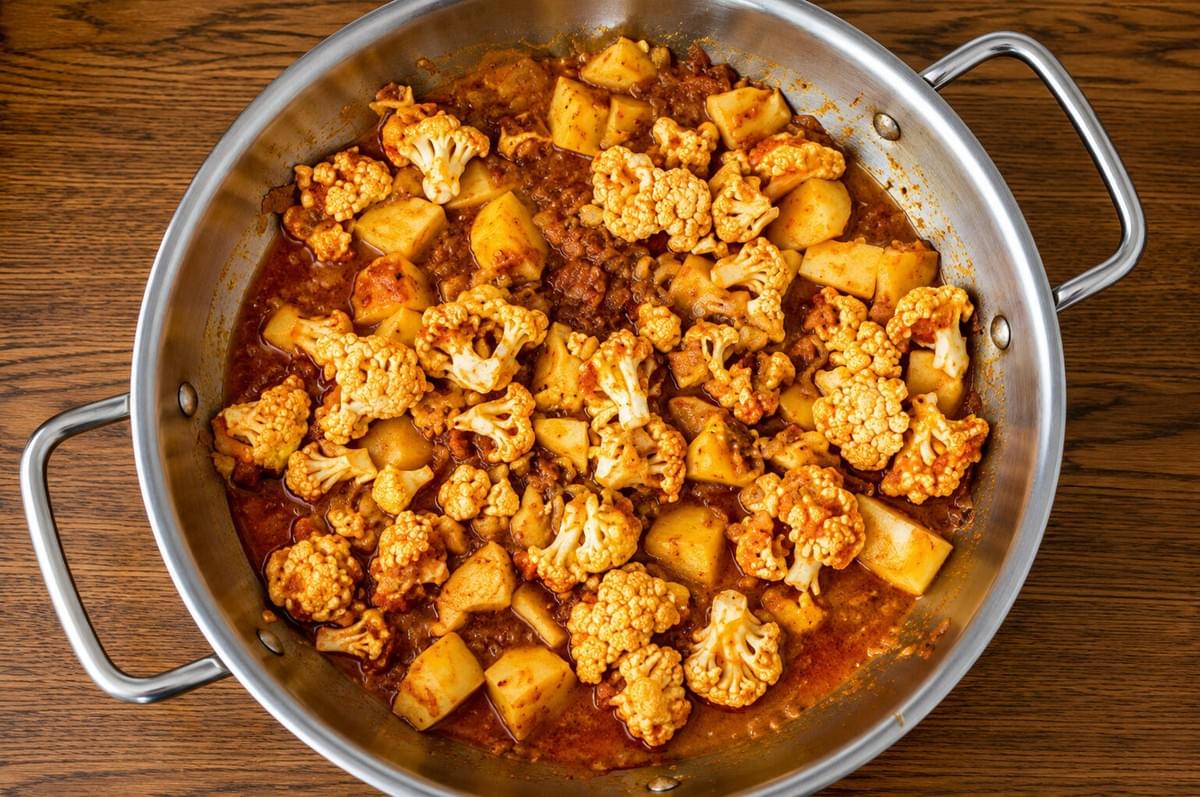
Read through once before you start. The flow is easy: toast the spices, build the base, add the vegetables, then let them cook low and slow. You've got this.
- Toast the cumin. Heat the oil in a large pan over medium heat. When it shimmers, add the cumin seeds. Wait for them to sizzle and turn fragrant, about 30 seconds. This is the moment the whole dish begins. Do not walk away, since they can go from golden to burnt quickly.
- Soften the onion. Add the chopped onion and cook, stirring now and then, until soft and lightly golden, about 5 to 6 minutes. Stir in the garlic and ginger and cook another minute, just until you can smell them.
- Bloom the ground spices. Lower the heat a touch. Add the turmeric, coriander, chili powder, and salt. Stir for about 30 seconds so the spices wake up in the oil. If the pan feels dry, add a splash of water so nothing scorches. You want fragrant, not smoky.
- Add the potatoes first. Tip in the potato chunks and stir to coat them in that golden spice mix. Let them cook for about 5 minutes, stirring occasionally, so they take on a little color.
- Add the cauliflower. Fold in the florets gently. Toss everything together so the cauliflower gets a coating of spice too. Here is the trick to keep it from going mushy: stir less. Turn the pieces only now and then, so they hold their shape and catch a bit of browning.
- Cover and cook low. Add 3 tablespoons of water, then cover the pan and lower the heat. Let it cook for 15 to 20 minutes, lifting the lid to stir gently every 5 minutes or so. The steam softens the vegetables while the spices settle in.
- Check the potatoes. They are done when a fork slides in easily with no resistance. The cauliflower should be tender but still holding together, not falling to pieces. If things look dry along the way, add a small splash more water.
- Finish it. Uncover, turn the heat up slightly, and cook for a final 2 to 3 minutes to drive off extra moisture and let the edges brown a little. Sprinkle in the garam masala, add any peas or spinach now, and give it one last gentle stir. Taste, add salt if it needs it, and scatter cilantro over the top.
Taste and Texture Notes
When it is right, aloo gobi is soft but not soggy. The potatoes turn creamy inside, the cauliflower stays just tender enough to hold its shape, and the edges of both catch little golden spots of color.
The flavor is warm and earthy, layered rather than sharp. Turmeric grounds it, cumin gives it that toasted depth, and the garam masala at the end lifts everything with a gentle fragrance. It should smell like a kitchen that has been cooking something good, slowly, for a little while.
Here's the takeaway: this potato cauliflower curry is about warmth and comfort, not fireworks. It is the kind of Indian spiced cauliflower dish you go back to on quiet evenings.
Serving Suggestions
Aloo gobi is generous. It plays well with almost anything on the table.
- Basmati rice. Fluffy and fragrant, it soaks up all those spices.
- Roti or naan. Tear off a piece and scoop. This is how I like it best.
- Yogurt or raita. A cool, creamy spoonful balances the warm spices beautifully.
- A dab of chutney or pickle. For a sharp, tangy contrast.
- Cucumber salad. Crisp and fresh alongside the soft, spiced vegetables.
- Lemon wedges. A squeeze at the end brightens the whole plate.
Want to make it a fuller meal? Add a bowl of dal on the side and a stack of warm roti. Suddenly it is a spread worth lingering over, with people reaching across the table and no one in a hurry to leave.
Storage and Reheating
Aloo gobi is one of those dishes that rewards you the next day, once the spices have had time to settle in.
- Fridge: Store cooled leftovers in an airtight container for up to 4 days.
- Freezer: It freezes for up to 2 months, though the cauliflower will soften a little on thawing. Thaw overnight in the fridge before reheating.
To reheat, warm it gently in a pan over low heat with a small splash of water to loosen things up. Stir carefully so you do not mash the potatoes. The microwave works fine too, in short bursts, with a stir in between. A pan brings back a little of that fresh-cooked texture.
Come Cook With Us

Some dishes do not need to impress anyone. They just need to be warm, honest, and waiting for you at the end of a long day. Aloo gobi is one of those.
So toast your cumin, be patient with the cauliflower, and let the spices do their quiet work. When you make this aloo gobi recipe your own, I would love to hear about it. Come find more recipes to cook slow and eat well over at ourfoodrhythms.com. Happy cooking, friends.
