

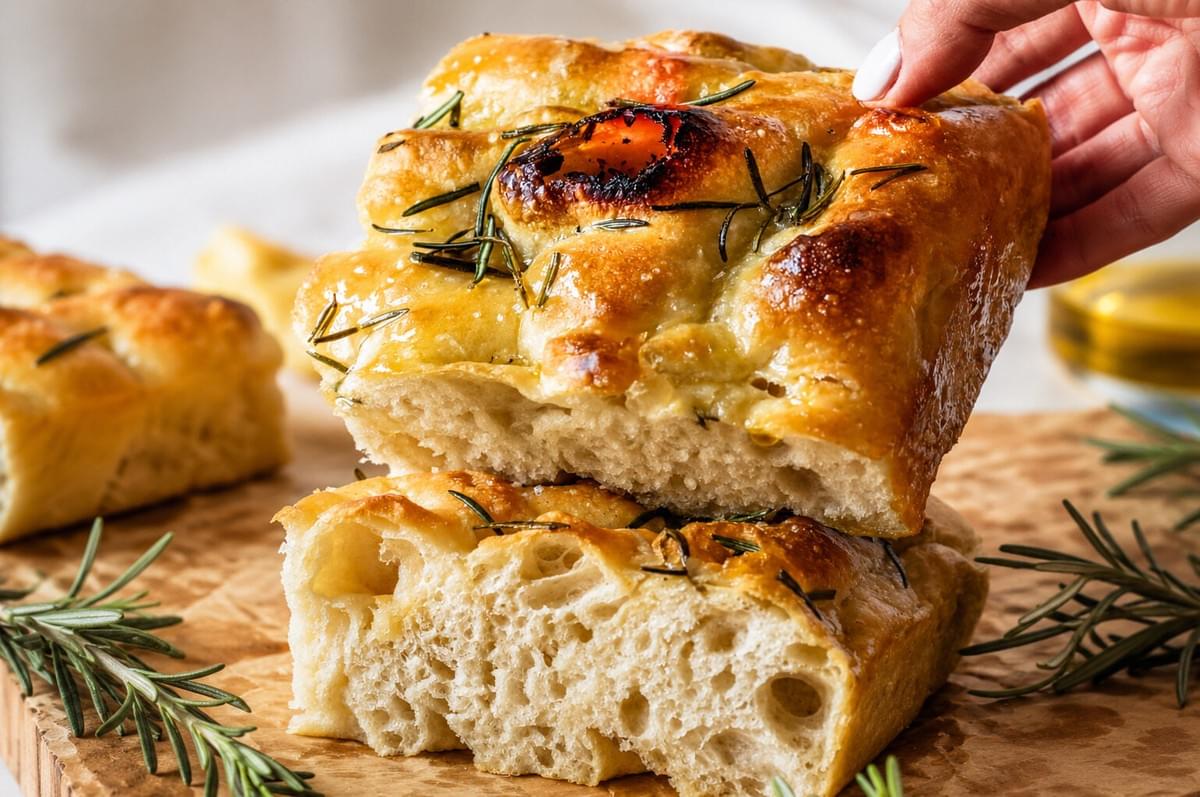
The first time I met focaccia dolce, I wasn't looking for it.
I had gone in for the savory kind, the salty one dimpled with olive oil and rosemary. But there, on the far end of the counter, sat something paler and softer, dusted with sugar instead of salt. One bite and I understood. This was focaccia, yes, but gentler. Lightly sweet, a little citrusy, pillowy in a way that made me slow down.
That is what focaccia dolce is. Sweet focaccia. A close cousin to the bread you know, only turned toward dessert. It is soft and fluffy, faintly perfumed with olive oil and citrus zest, and just sweet enough to feel like a treat without tipping into cake.
Here is the good news for anyone nervous about yeast: this is an easy yeast bread. It asks for a little time, mostly hands-off, and rewards you with something that smells like a sunny Italian kitchen. A couple of hours, most of it waiting, and you have a warm dessert bread worth sharing.
Let me bake it with you.
A Quick Word on Sweet Focaccia
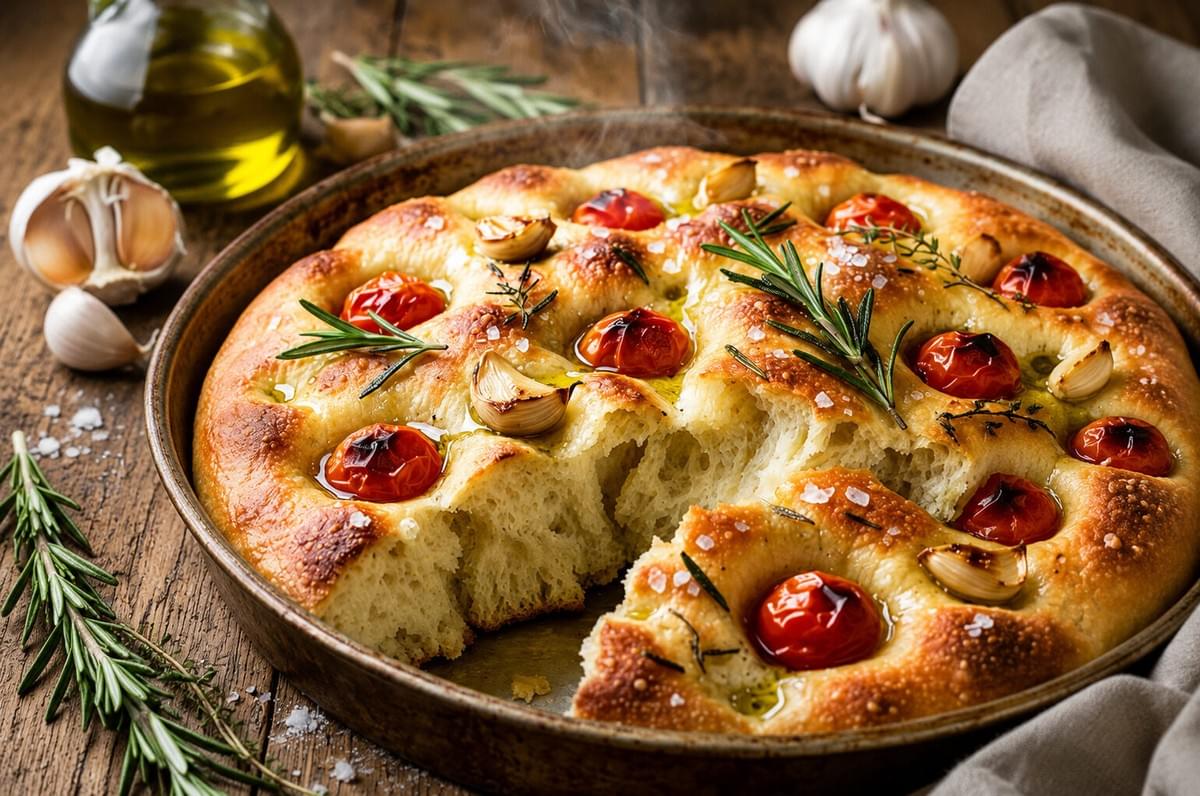
Focaccia is one of Italy's oldest breads, and nearly every region has its own version. Most of us know the savory Ligurian style, glossy with oil and salt. But sweet focaccia has quietly lived alongside it for a long time.
In parts of northern Italy, especially around Veneto and Emilia, bakers have long made sweeter enriched breads for holidays and Sundays. Some versions lean rich, closer to a celebration loaf. Others stay simple, just a soft dough finished with sugar and whatever fruit was in season.
This focaccia dolce recipe keeps to the humble side. No fuss, no special occasion required. Just a soft, lightly sweet bread that fits a slow morning or a quiet afternoon.
Ingredients and Why They Matter

Here is what you'll need, in US and metric.
For the dough
- 2 1/2 cups (315 g) all-purpose flour, plus a little more for dusting
- 2 1/4 teaspoons (7 g) instant yeast (one standard packet)
- 3 tablespoons (40 g) sugar
- 3/4 teaspoon (4 g) salt
- 3/4 cup (180 ml) warm milk
- 1 large egg
- 3 tablespoons (45 ml) olive oil, plus more for the pan
- Zest of 1 lemon or 1 small orange
- 1 teaspoon vanilla extract
For the top
- 2 tablespoons (30 ml) olive oil
- 2 tablespoons (25 g) sugar (coarse or regular)
A few notes on the players here.
Yeast gives you the rise and that soft crumb. Instant yeast is easy because you mix it right into the flour. If you only have active dry yeast, dissolve it in the warm milk first and wait five minutes for it to foam.
Flour. All-purpose works beautifully and keeps things tender. For a slightly chewier bite, you can swap up to half with bread flour.
Sugar stays gentle on purpose. This is bread, not cake. If you want it sweeter, add another tablespoon, but I'd taste it first.
Olive oil is the soul of any focaccia. Use one you actually enjoy the taste of, since it comes through.
Citrus zest and vanilla are where the aroma lives. Lemon keeps it bright, orange makes it cozier.
Substitutions. For a dairy-free version, use warm water or a plant milk in place of the milk. The egg adds softness, but you can replace it with 3 tablespoons of plant milk if needed. The crumb will be a touch less rich, still lovely.
Equipment
- A large mixing bowl
- A 9-inch (23 cm) round or square pan
- A clean kitchen towel
- A kitchen scale (optional, but nice for accuracy)
- A stand mixer (optional, hands work just fine)
Nothing fancy. If you have baked bread before, you already have what you need.
Step-by-Step Method
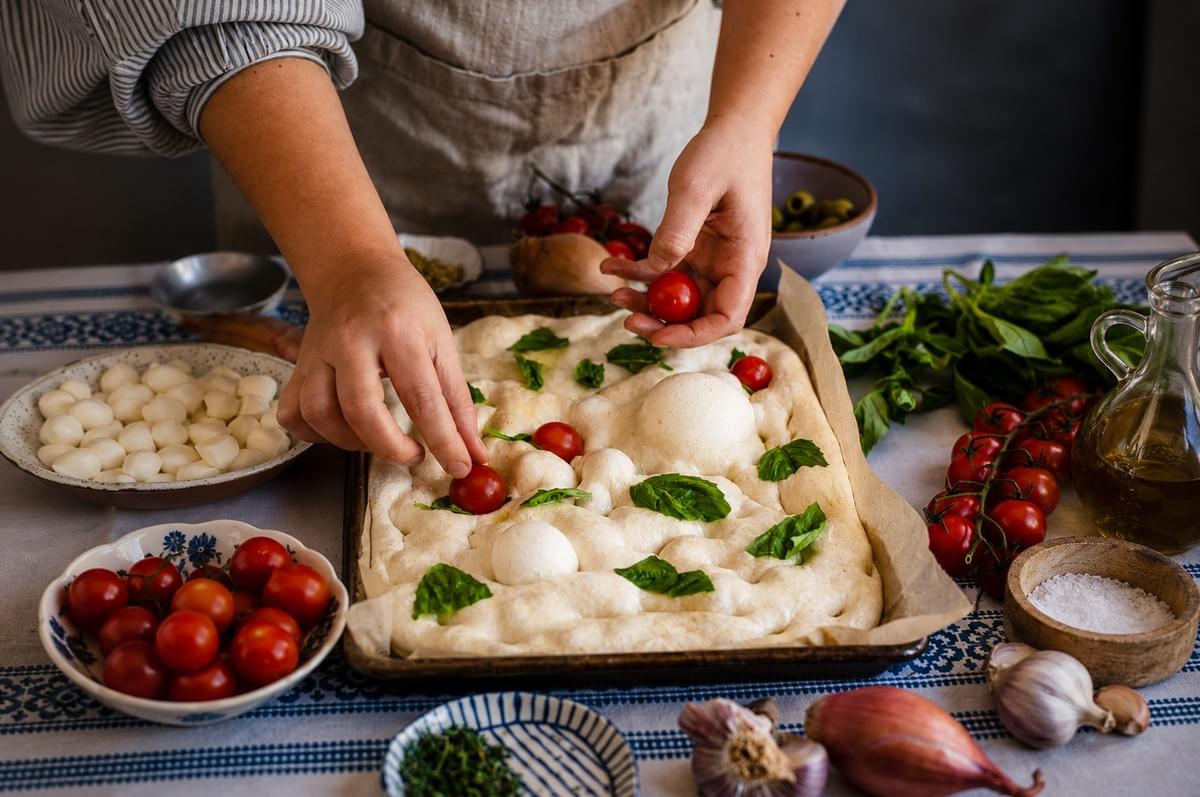
Read through once before you start. The rhythm is simple: mix, rise, shape, rise again, bake.
- Wake up the dough. In a large bowl, whisk together the flour, instant yeast, sugar, and salt. Make a well in the center and pour in the warm milk, egg, olive oil, citrus zest, and vanilla. The milk should feel warm to the touch, not hot, about like a comfortable bath.
- Bring it together. Stir with a spoon until it forms a shaggy, sticky dough. Then turn it onto a lightly floured surface and knead for about 8 to 10 minutes, until smooth and springy. The dough will stay a little tacky, and that is exactly right. Resist adding too much flour. (A stand mixer with a dough hook does this in 5 to 6 minutes.)
- First rise. Shape the dough into a ball and set it in an oiled bowl. Cover with a towel and let it rise somewhere warm until doubled, about 1 to 1 1/2 hours. It is ready when a gentle poke leaves a dent that fills back slowly.
- Shape it. Oil your pan generously. Tip the dough in and press it out gently with oiled fingers until it fills the pan. If it springs back and won't stretch, let it rest 5 minutes, then try again. No need to be perfect here.
- Second rise. Cover and let it puff again for 30 to 40 minutes, until soft and pillowy. Meanwhile, heat your oven to 375°F (190°C).
- Dimple and dress. Drizzle the top with the 2 tablespoons of olive oil, then press your fingertips all over the surface to make those signature dimples. Go right down, but gently. Scatter the sugar evenly over the top.
- Bake. Bake for 22 to 28 minutes, until the top is golden and the edges pull slightly from the pan. Your kitchen will smell like warm citrus and toasted sugar. That is your cue.
- Cool, a little. Let it rest in the pan for 10 minutes, then move it to a rack. It is wonderful warm, but give it a few minutes so the crumb sets.
Serving Suggestions
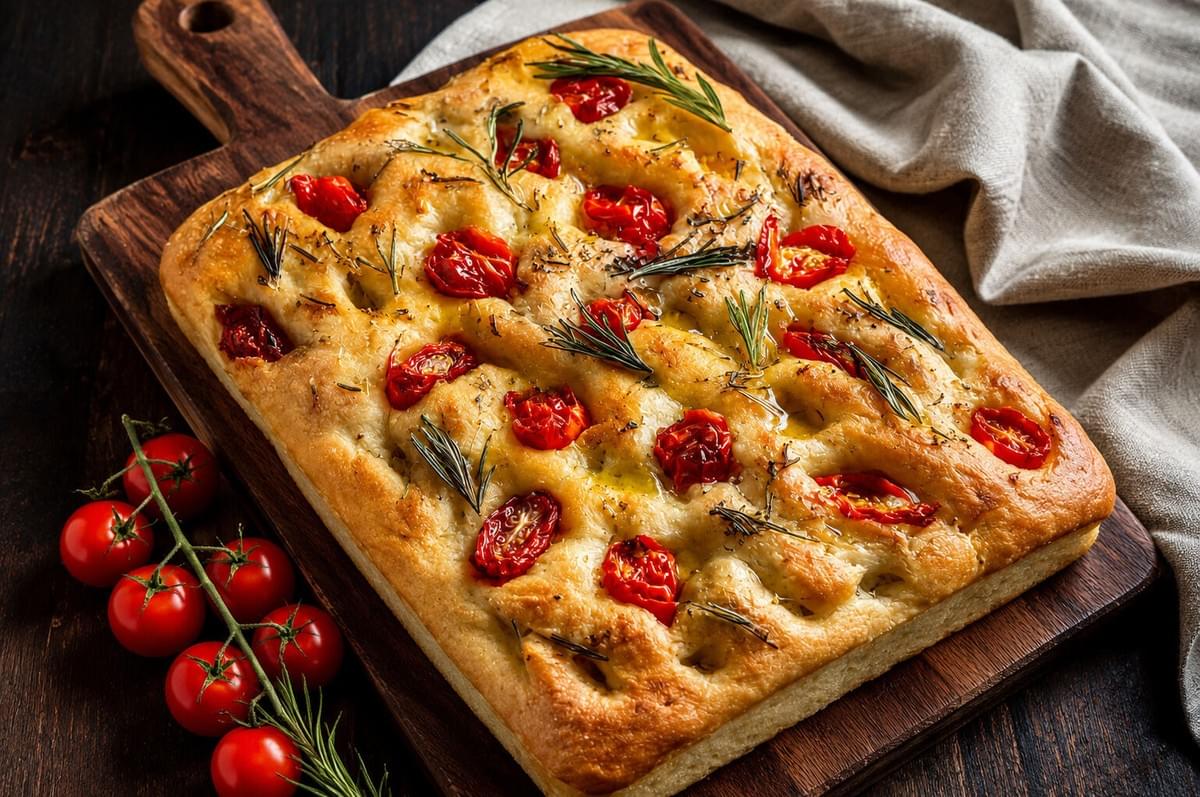
Focaccia dolce loves company, but it needs very little.
For breakfast, tear off a piece and have it with strong coffee or a cup of tea. The soft crumb and gentle sweetness make it feel like a treat without weighing you down.
In the afternoon, it shines beside fresh fruit, a spoon of mascarpone, or a little jam. Warm, with a scoop of gelato melting into the dimples, it turns into an easy dessert.
It is also a beautiful thing to set out at brunch. People pull pieces off with their hands, and somehow that makes the table feel warmer.
Storage and Make-Ahead
Keep the bread wrapped or in an airtight container at room temperature for up to 2 days. It stays softest on the first day, as most fresh bread does.
To bring back that just-baked feel, warm slices in a 300°F (150°C) oven for a few minutes. Skip the microwave if you can, since it tends to toughen the crumb.
For make-ahead, you can mix the dough the night before and let it rise slowly in the fridge overnight. Bring it back to room temperature, shape, do the second rise, and bake fresh in the morning.
Focaccia dolce freezes well too. Cool it completely, wrap tightly, and freeze for up to 2 months. Thaw at room temperature and warm briefly before serving.
One Last Slice
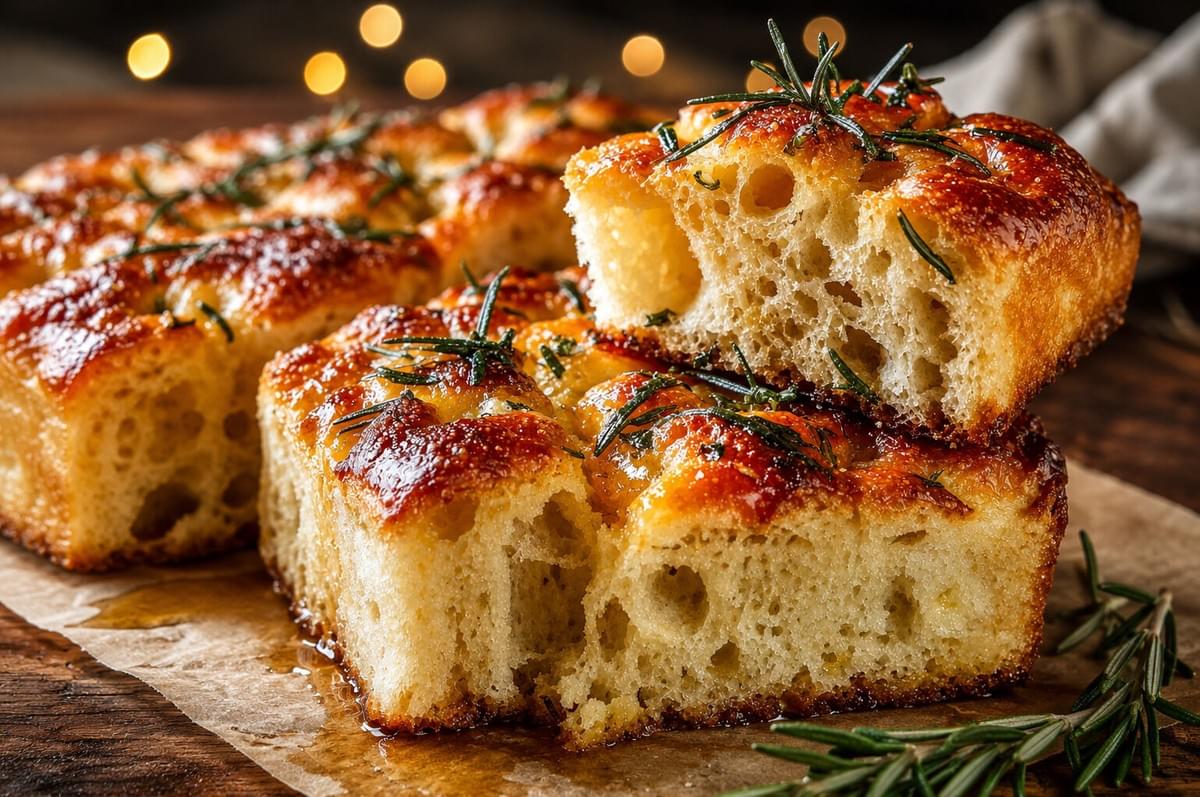
Some breads announce themselves. This one just waits quietly on the counter, soft and golden, until someone tears off a corner.
That is the charm of focaccia dolce. It does not need to be fancy. It only needs a little time, a good glug of olive oil, and someone to share it with.
So warm your kitchen, let the dough rise slow, and give this Italian sweet bread a try. Happy baking, friends.
For more recipes that celebrate the joy of cooking from every corner of the world, visit us at Our Food Rhythms.
