

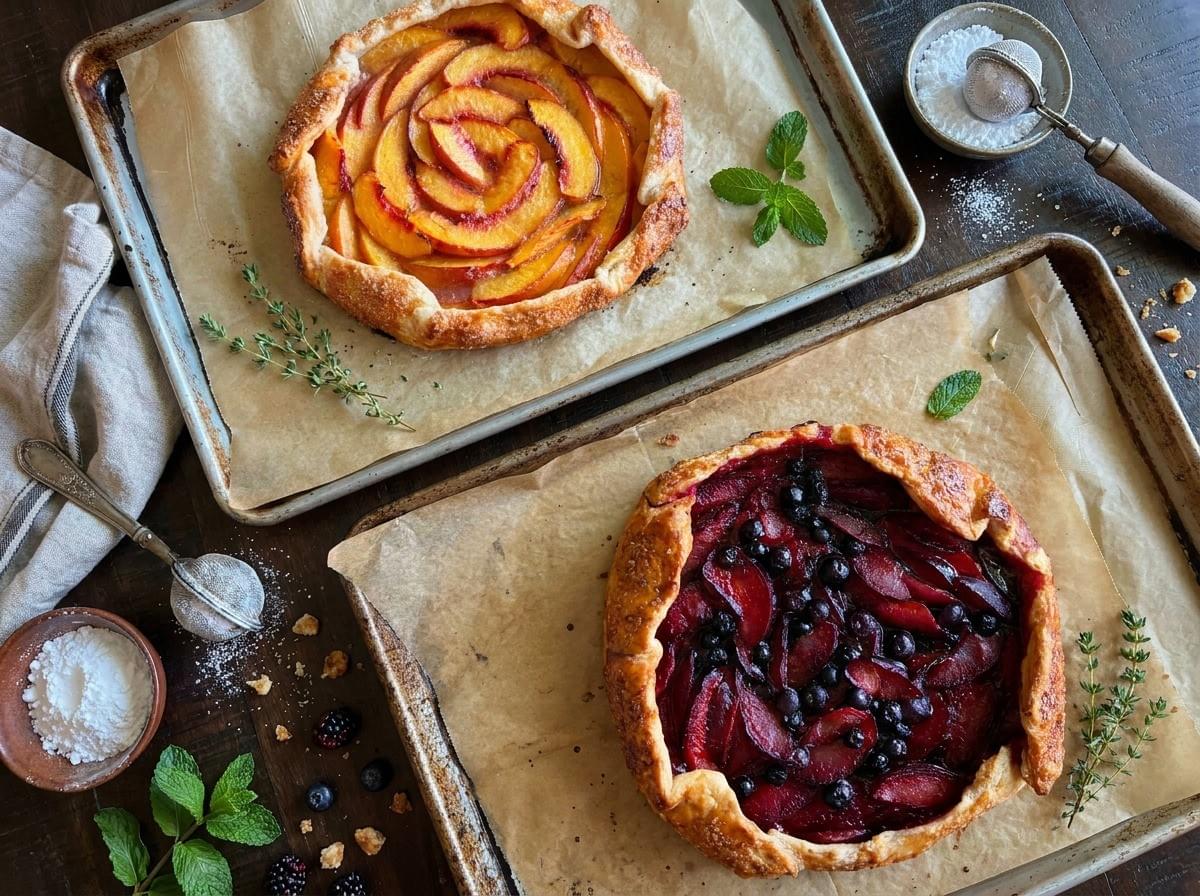
A Pie That Forgives You
If pie feels like a high-pressure project (perfect crimps, lattice tops, pans that betray you), let me introduce you to the dessert that exhales. A galette is a free-form fruit tart, baked flat on a sheet pan, with edges folded loosely over the filling. No pan, no crimping, no stress.
Here is my pastry-chef confession: in professional kitchens, galettes were the dessert we reached for when we wanted big flavor with little fuss. They are wonderfully forgiving. A crack in the crust? Patch it. A wobbly shape? We call that "rustic" and mean it as a compliment. The lumpier ones often taste the best, because all that exposed fruit caramelizes against the heat. Charming and delicious, all at once.
By the end of this post, you will know how to make a flaky folded crust, build a juicy filling that does not leak everywhere, and bake a golden tart that looks like it came from a bakery window. Let's go.
What Is a Galette, Anyway?
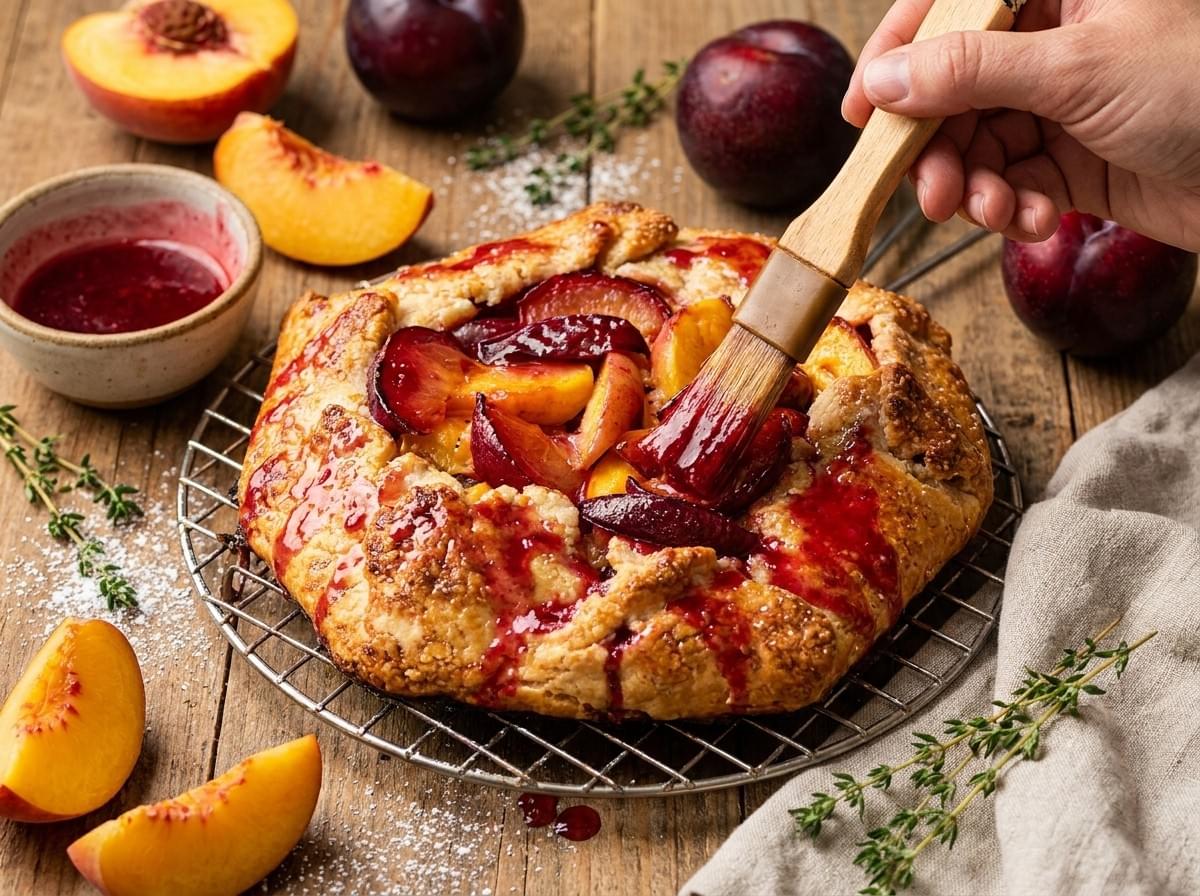
A galette (say it "gah-LET") is a French term for a round, flat, free-form pastry. In dessert form, it is essentially an open-faced fruit tart with the dough folded up and over the edges of the filling.
Think of it as a pie that skipped pastry school and turned out just fine. There is no pie plate, so you do not have to fuss with fitting dough into corners or fluting a rim. You simply roll the dough into a rough circle, pile fruit in the center, and fold the borders inward.
Why It Is Easier Than Pie
- No special pan required. A sheet pan and parchment do all the work.
- No top crust. Less rolling, less fitting, less stress.
- Imperfection is the goal. Uneven edges look intentional, because they are.
- Faster assembly. You can go from dough to oven in minutes once your crust is chilled.
What Makes the Folded Crust Special
The folded border does two clever things. First, it creates a little wall to hold the fruit and its juices. Second, those overlapping flaps bake into crisp, buttery, slightly chewy layers that everyone fights over. The contrast of crackly crust and soft jammy fruit is the whole magic.
Key Success Tips From a Pastry-Chef Brain
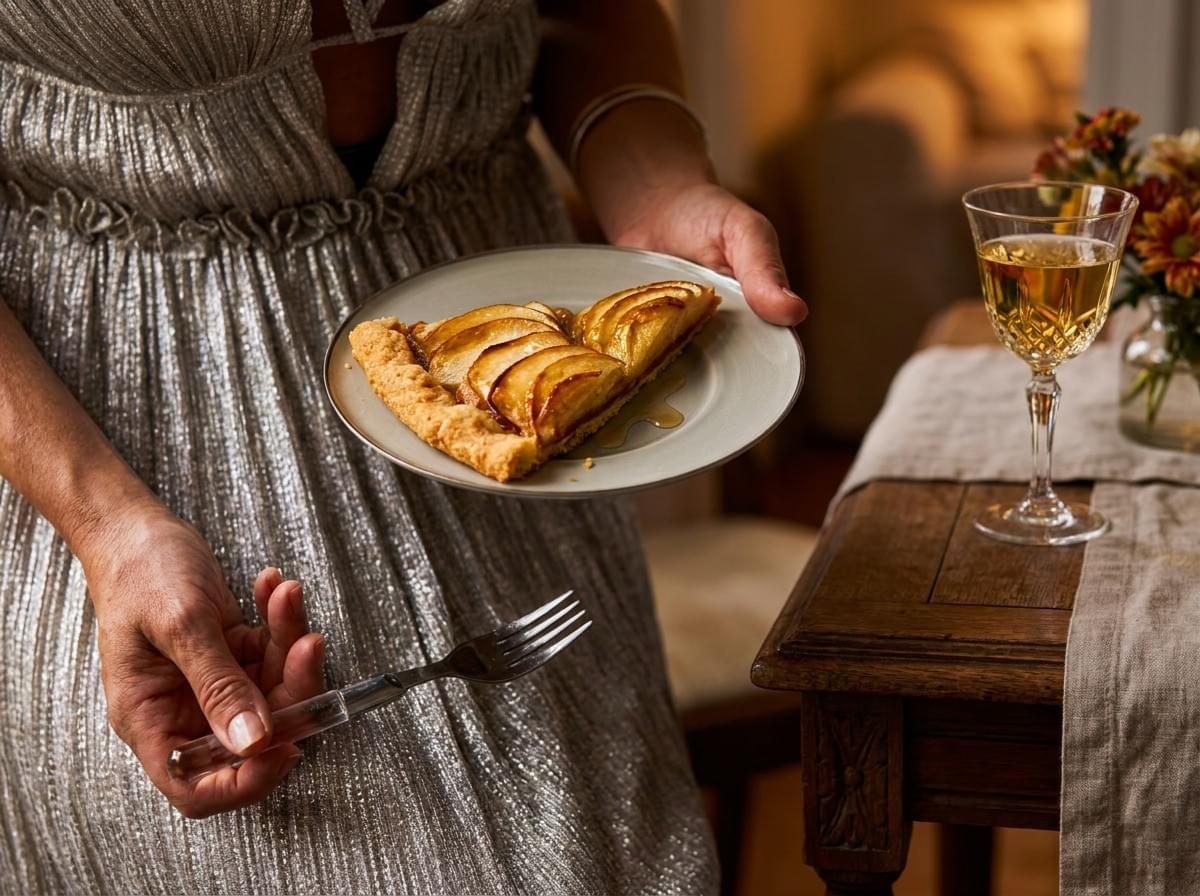
Master these three ideas and your galette will turn out beautifully every time.
Keep the Crust Flaky
Flakiness comes from cold butter staying in distinct pieces. As it bakes, those butter pockets release steam and create flaky layers.
- Use cold butter. Cube it, then chill it again before mixing. Cold is non-negotiable.
- Leave visible butter pieces. Aim for chunks the size of small peas. Do not blend it smooth.
- Handle the dough as little as possible. Overworking warms the butter and builds gluten, which leads to a tough crust.
- Chill, chill, chill. Rest the dough in the fridge before rolling, and again after shaping. Cold dough holds its layers and keeps its shape in the oven.
Prevent a Soggy Bottom
A leaky, mushy base is the most common galette heartbreak. Here is how to avoid it.
- Use a thickener. Cornstarch, tapioca starch, or flour absorbs fruit juices as they cook. Tapioca gives the glossiest result, cornstarch is reliable, and flour works in a pinch.
- Bake hot. A high starting temperature sets the crust quickly before juices can soak in.
- Chill before baking. A cold galette holds its structure and bakes up crisper.
- Manage fruit moisture. For very juicy fruit, toss it with the thickener and let it sit for a few minutes, then drain off excess liquid before filling.
- Pro move: Sprinkle a thin layer of ground nuts, breadcrumbs, or a teaspoon of starch directly on the dough before adding fruit. It acts like a tiny moisture sponge.
Boost the Flavor
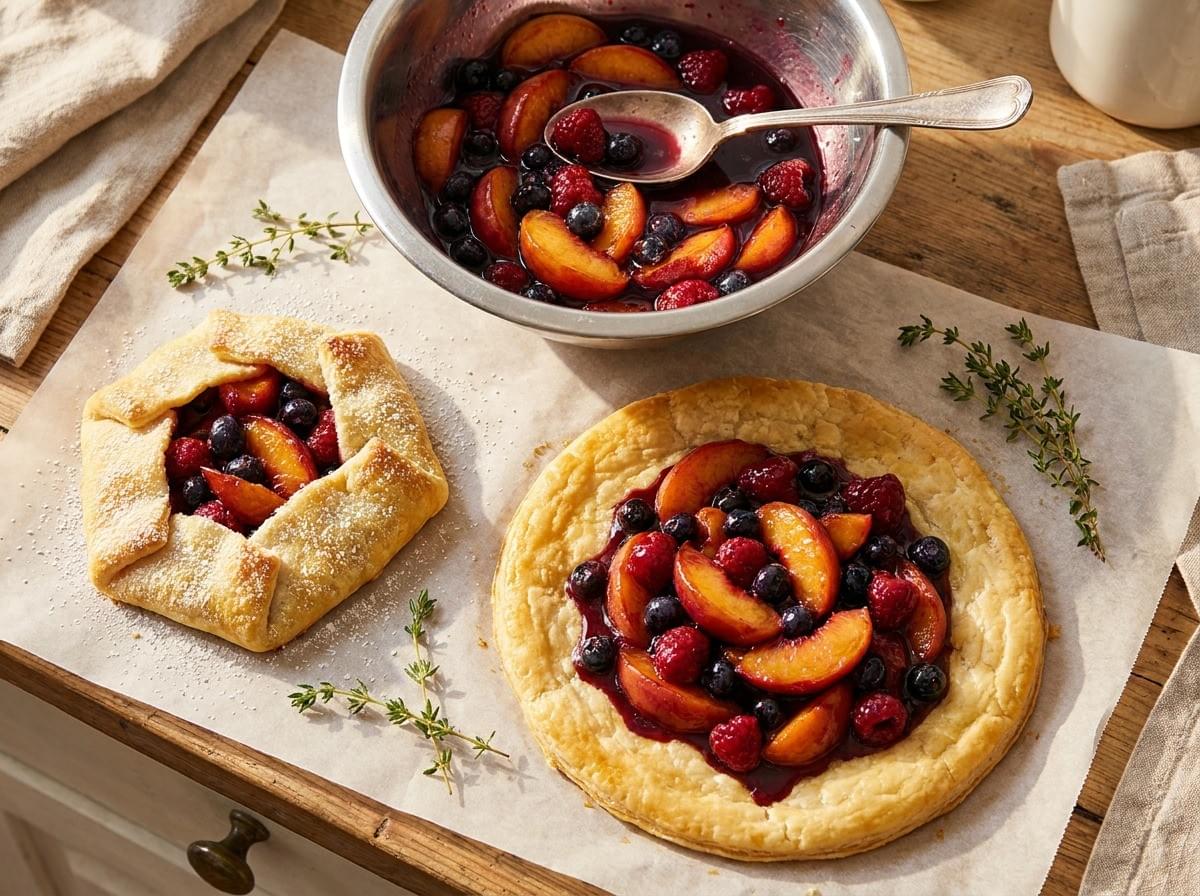
A little seasoning turns "nice" into "wow."
- Citrus zest brightens any fruit. Lemon with berries, orange with stone fruit.
- Vanilla rounds out sweetness and adds warmth.
- Spices like cinnamon, cardamom, or ginger pair beautifully with apples and pears.
- Fresh herbs such as thyme or rosemary add a quiet, grown-up depth.
- A pinch of salt in both the dough and the filling makes everything taste more like itself.
Ingredients
Flaky Galette Dough
- 1 1/4 cups (160 g) all-purpose flour
- 1 tablespoon granulated sugar
- 1/2 teaspoon salt
- 1/2 cup (113 g) cold unsalted butter, cubed
- 3 to 5 tablespoons ice water
Fruit Filling (Flexible + Seasonal)
- 3 to 4 cups fruit (see combos below)
- 1/4 cup (50 g) granulated sugar, adjust to fruit sweetness
- 1 tablespoon cornstarch or tapioca starch
- 1 teaspoon lemon juice
- 1/2 teaspoon vanilla extract
- Pinch of salt
- Optional: 1/2 teaspoon cinnamon or zest of 1 lemon
Fruit combos to try:
- Berry: mixed strawberries, blueberries, and raspberries
- Stone fruit: sliced peaches, plums, or apricots
- Apple: thinly sliced apples with cinnamon (classic and cozy)
Egg Wash + Finishing Touches
- 1 egg, beaten with 1 teaspoon water
- 1 to 2 tablespoons turbinado sugar, for sparkle and crunch
- Optional: sliced almonds, a brush of warm jam, or a honey drizzle after baking
Substitution Notes
- Plant-based butter: Works well. Choose a firm, block-style version and keep it very cold.
- Gluten-free flour: A 1:1 gluten-free baking blend works. The dough is more delicate, so chill it well and patch any cracks.
- Cornstarch vs tapioca: Cornstarch is easy and dependable. Tapioca starch gives a clearer, glossier filling. Use the same amount either way.
Tools You'll Need
- Baking sheet
- Parchment paper
- Rolling pin
- Mixing bowl
- Pastry cutter or just your fingertips
- Optional: bench scraper for moving the dough
Step-by-Step Instructions
1. Make the Dough
In a bowl, whisk together the flour, sugar, and salt. Add the cold cubed butter. Using a pastry cutter or your fingertips, work the butter into the flour until you have a mixture with pea-size butter pieces. Some bigger flakes are good. That is where the flakiness lives.
Drizzle in the ice water one tablespoon at a time, tossing gently, until the dough just holds together when pressed. Do not overmix.
2. Chill the Dough
Shape the dough into a flat disk, wrap it, and refrigerate for at least 1 hour. This relaxes the gluten and firms the butter, both essential for a tender, flaky crust.
3. Prep the Filling
While the dough chills, prepare your fruit. Slice larger fruit into even pieces so it cooks at the same rate. In a bowl, toss the fruit with sugar, starch, lemon juice, vanilla, salt, and any spice or zest. Let it sit a few minutes, then drain off excess liquid if the fruit is very juicy.
4. Roll It Out
On a piece of parchment, roll the chilled dough into a rough circle about 12 inches wide and 1/8 inch thick. Perfect circles are not required. Rustic is the point.
5. Fill and Fold
Pile the fruit in the center, leaving a 2-inch border all around. If you like, sprinkle a teaspoon of starch or some ground nuts on the dough first as moisture insurance. Fold the border up and over the fruit, pleating as you go. The center stays open.
6. Chill Again
Slide the parchment and galette onto your baking sheet and chill for 20 to 30 minutes. Cold dough bakes up crisper and holds its folds. While it chills, preheat your oven to 400°F (205°C).
7. Egg Wash and Sugar
Brush the folded crust with egg wash, then sprinkle generously with turbinado sugar. This gives you that golden, sparkly finish.
8. Bake
Bake for 35 to 45 minutes. You want a deep golden crust (not pale) and fruit juices bubbling thickly in the center. The bubbling is your cue that the thickener has activated. If the crust browns too fast, tent it loosely with foil.
9. Cool and Serve
Let the galette cool on the pan for at least 20 minutes. This lets the filling set so your slices hold together. Slice and serve warm or at room temperature.
Serving Ideas
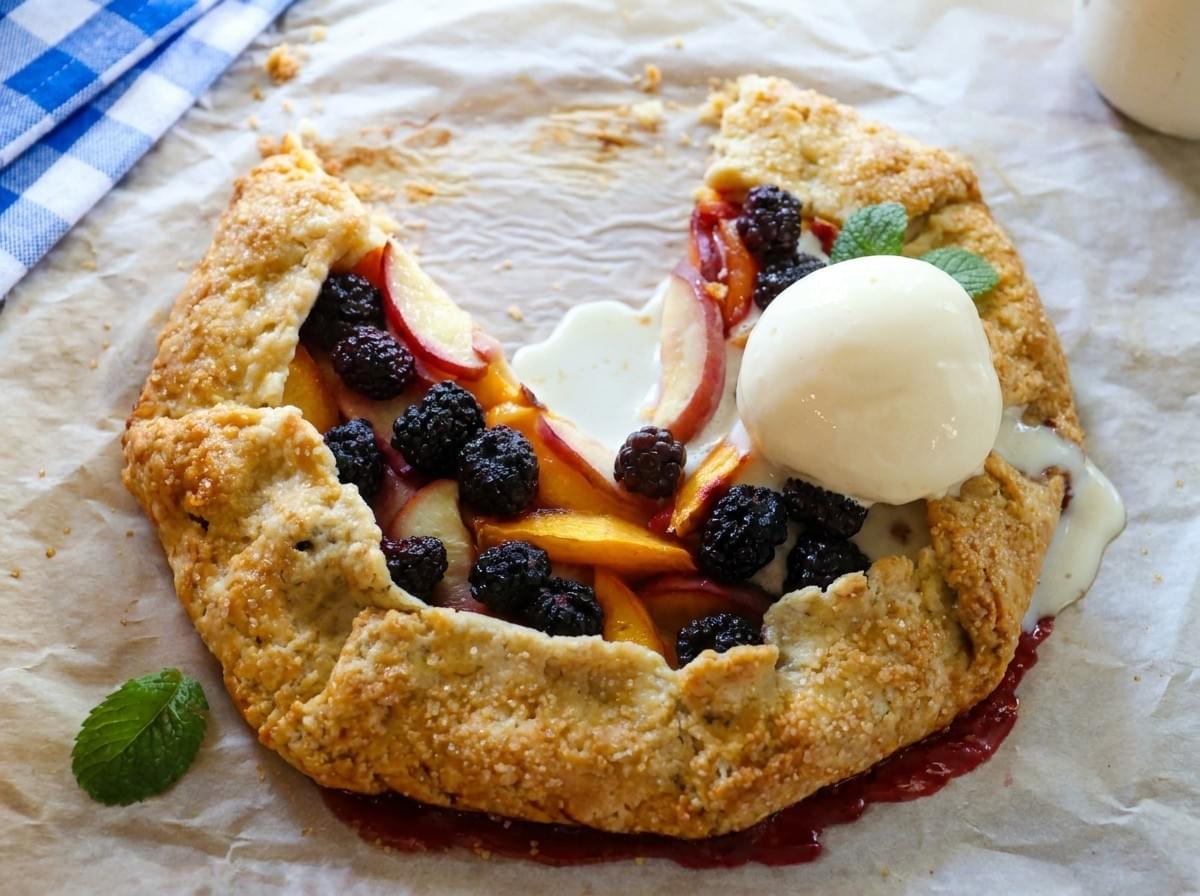
A galette is lovely on its own, but a topping never hurts.A scoop of vanilla ice cream melting into warm fruit
- A dollop of lightly sweetened whipped cream
- A spoonful of tangy crème fraîche
- A swirl of Greek yogurt for a brunch-friendly twist
- A drizzle of honey and a few toasted nuts
Storage + Make-Ahead
- Room temperature: Keep loosely covered for up to 2 days.
- Refrigerator: Store for up to 4 days. The crust softens slightly over time.
- Re-crisp: Warm slices in a 325°F (160°C) oven for 8 to 10 minutes to bring back the crunch. Skip the microwave, which softens the crust.
- Freezing: Freeze the unbaked, shaped galette on its parchment until solid, then wrap well. Bake from frozen, adding a few extra minutes. You can also freeze baked slices for up to 1 month.
- Make-ahead dough: The dough disk keeps in the fridge for 2 days or in the freezer for 1 month. Thaw in the fridge before rolling.
Make It Your Own
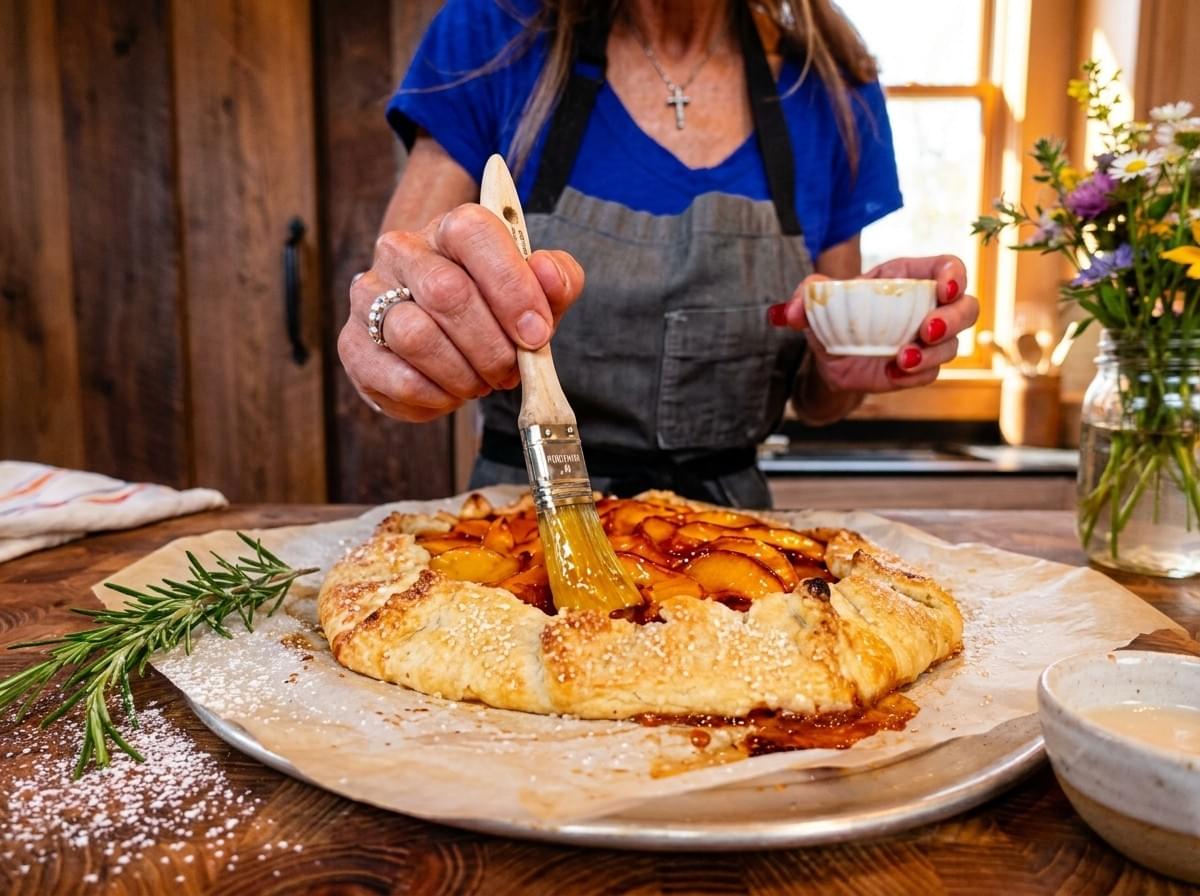
The best thing about a galette is that it bends to whatever fruit is having a good week. Berries in summer, peaches and plums in late season, apples and pears when the air turns cool. Once you know the method, you can riff forever.
So pick your fruit, keep your butter cold, and embrace the rustic edges. Your galette does not need to be perfect to be wonderful. Bake one this weekend, then come back and tell me which fruit combo won your heart. Happy baking, friends
For more dessert recipes to explore, be sure to visit and click Ourfoodrhythms.com.
