

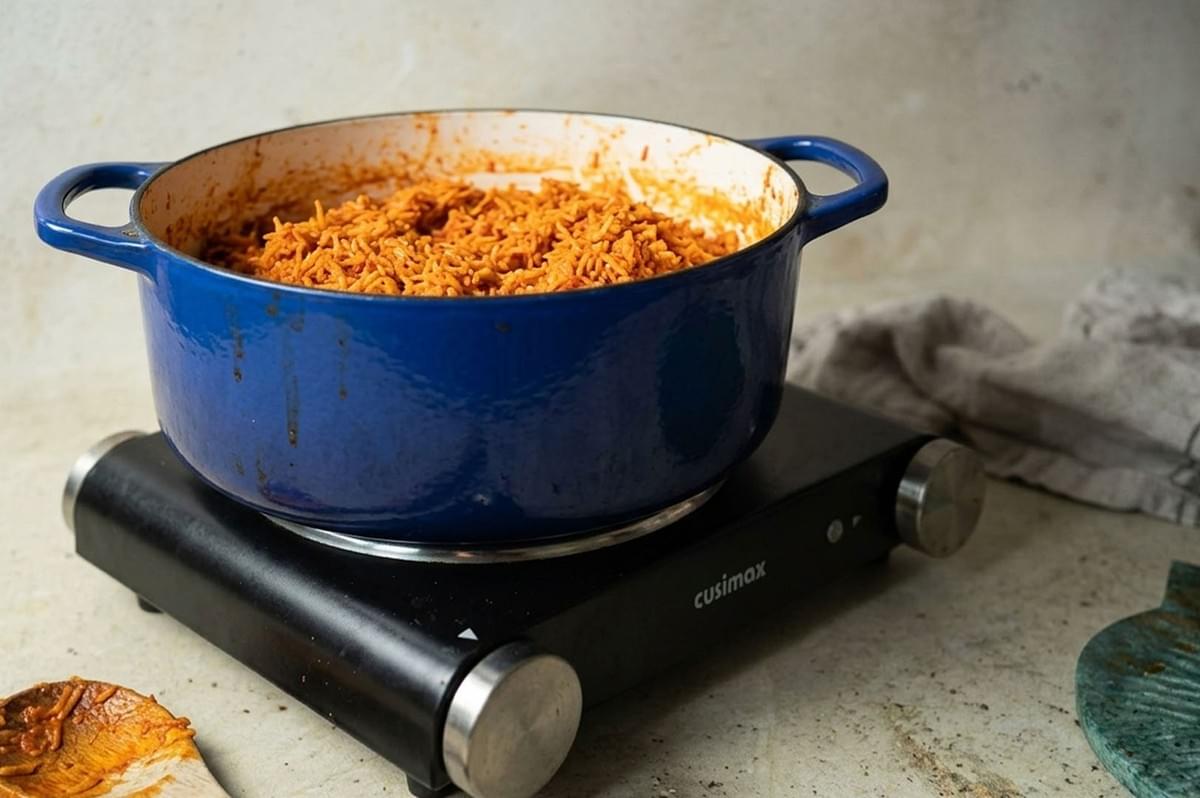
Picture this. You lift the lid off a heavy pot, and a cloud of aromatic, spiced steam fills your kitchen. The scent of sweet tomatoes, savory onions, and a deeply toasted base hits your nose all at once. Your mouth waters instantly. This is the magic of Ghanaian jollof rice.
Jollof rice is not just a side dish. It is an event. It is the centerpiece of weddings, Sunday family dinners, and late-night cravings. If you have ever been intimidated by the thought of cooking this iconic dish at home, take a deep breath. You are in the right place.
As a baker and a cook, I know that getting the perfect texture in any recipe can feel scary. But I promise that with a few simple techniques and a little bit of patience, you will be making spectacular jollof in no time. Grab your favorite wooden spoon, put on a great playlist, and let us get cooking.
A Quick Background on Ghanaian Jollof
Jollof rice is a beloved staple across West Africa. Its origins trace back to the Wolof empire in the Senegambian region. Over centuries, the dish traveled and evolved, with each country adding its own unique signature.
If you spend any time on the internet, you have probably heard of the legendary "jollof wars." This is a deeply passionate but friendly rivalry, mostly between Ghana and Nigeria, over who makes the best version. While I am not here to start any internet fights, I will say that Ghanaian jollof is distinct and utterly incredible.
What sets the Ghanaian version apart is the use of aromatic jasmine or long-grain rice, a very rich tomato-based stew, and a deeply savory flavor profile that leans slightly less on red bell peppers than its Nigerian cousin.
What This Ghanaian Jollof Rice Tastes Like
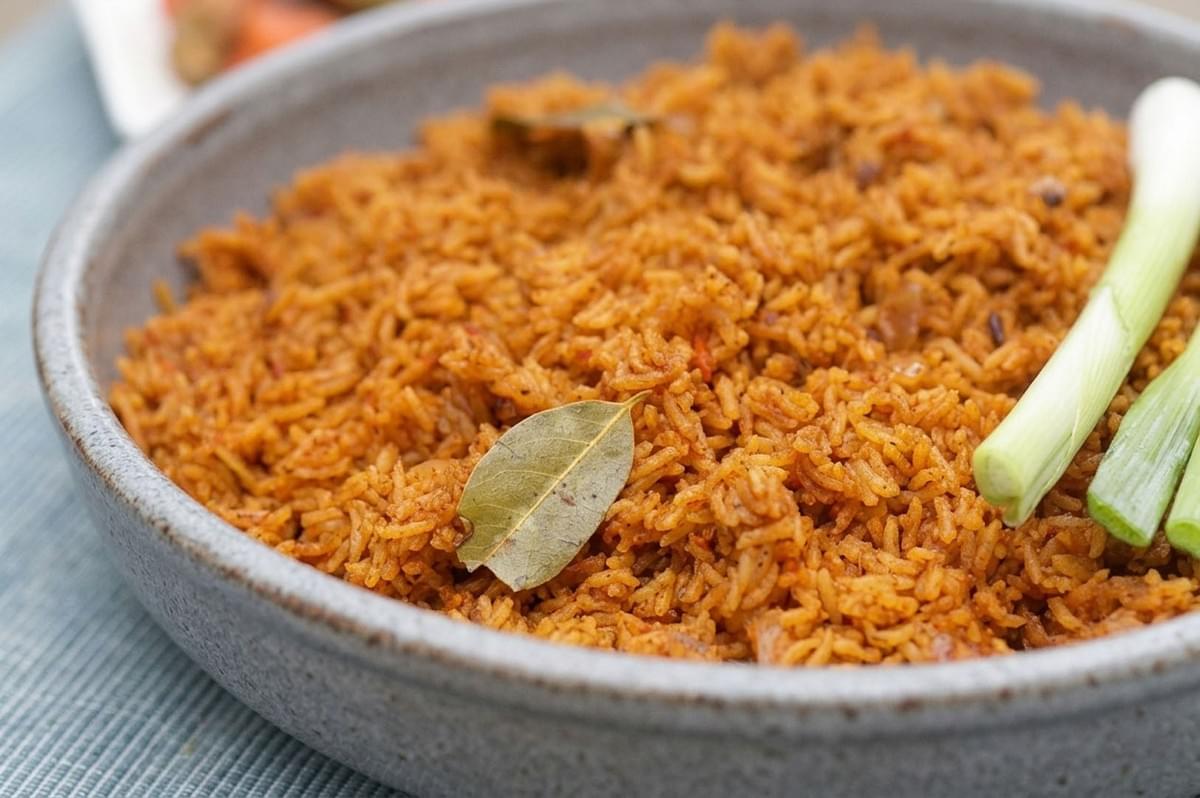
Imagine the most flavorful tomato rice recipe you have ever eaten, then multiply that depth by ten.
The texture of a perfect jollof is fluffy and distinct. The grains should never be mushy or stuck together. Flavor-wise, it is an incredible balancing act. You get the concentrated sweetness of reduced tomatoes and onions, grounded by earthy thyme and bay leaves. Then, a slow, building heat from the Scotch bonnet peppers wraps around your palate.
Finally, there is that signature "party rice" smokiness. Authentic jollof is cooked outdoors over firewood, which imparts a subtle, smoky char to the rice at the bottom of the pot. We are going to recreate that exact vibe in your kitchen.
Key Ingredients (and Easy Swaps)
Great jollof is built in layers. Here is what you need to make it happen.
- Rice: You want jasmine rice or a high-quality long-grain white rice. (Rinsing your rice is absolutely non-negotiable! Rinsing removes excess surface starch, which is the main culprit behind mushy rice.)
- Tomatoes: A mix of fresh Roma tomatoes and canned tomato paste. The paste gives the dish its rich red color and deep umami flavor.
- Red Bell Peppers & Onions: These blend with the tomatoes to create the foundational stew.
- Scotch Bonnet or Habanero Peppers: This brings the heat. For heat control, leave the pepper whole while cooking, or remove the seeds before blending.
- Aromatics & Spices: Fresh ginger, garlic, thyme, curry powder, and a couple of bay leaves.
- Stock or Water: Chicken or beef stock adds incredible depth. If using water, you will want to rely on a good quality bouillon cube for extra savory flavor.
- Oil: A neutral cooking oil is best. You need enough to properly fry the tomato paste.
- Optional Add-ins: You can fold in mixed vegetables (like peas and carrots) at the very end, or serve it with fried chicken, beef, goat, or sardines.
Substitution note: If you cannot find a Scotch bonnet, a habanero pepper is an exact match for heat and fruity flavor. If you cannot tolerate spice at all, substitute a pinch of mild paprika.
Tools You Will Need
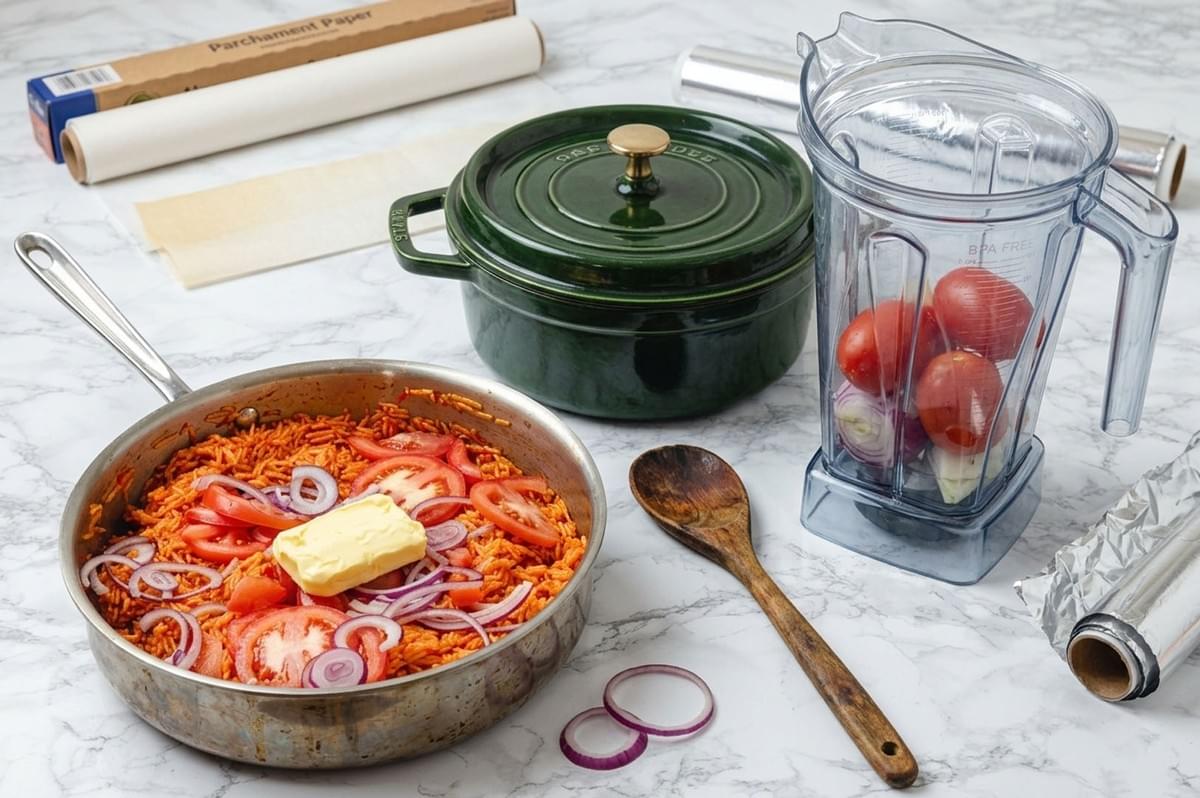
You do not need a professional kitchen for this. Just gather:
- A heavy-bottomed pot with a tight-fitting lid (a Dutch oven is perfect).
- A blender or food processor.
- A sturdy wooden spoon for scraping the bottom of the pot.
- Foil or parchment paper to seal the pot.
Step-by-Step Recipe Instructions
Follow these steps, trust your senses, and you will have a perfect pot of West African jollof.
Step 1: Blend the base
In your blender, combine the fresh tomatoes, red bell peppers, half of your onions, the ginger, garlic, and the Scotch bonnet pepper. Blend until completely smooth.
Step 2: Fry the onions and tomato paste
Heat your oil in the heavy-bottomed pot over medium heat. Dice the remaining onions and fry them until translucent. Add the tomato paste. Fry the paste for 5 to 7 minutes, stirring frequently.
Visual cue: The paste should change from bright red to a deep, dark rust color. The oil will separate slightly and turn red. This step removes the raw, sour tomato taste.
Step 3: Reduce the stew
Pour your blended tomato mixture into the fried paste. Add your thyme, curry powder, bay leaves, and bouillon. Stir well, turn the heat down to medium-low, and let it simmer for 20 to 30 minutes.
Visual cue: The sauce should thicken significantly and coat the back of your spoon without sliding right off.
Step 4: Wash the rice
While the stew reduces, wash your jasmine rice in a bowl of cold water. Swish it around, drain the cloudy water, and repeat 3 or 4 times until the water runs clear.
Step 5: Combine and cook
Add the washed rice to the thickened stew. Stir it very well so every single grain is coated in the red sauce. Pour in your stock. The liquid should sit just barely above the level of the rice. Bring it to a gentle boil, then immediately drop the heat to the lowest possible setting.
Step 6: Seal and steam
Place a sheet of aluminum foil or parchment paper directly over the top of the pot, then press the lid on tightly. This traps the steam, which cooks the rice gently without turning it to mush. Let it cook undisturbed for 25 to 30 minutes.
Step 7: Fluff and serve
Turn off the heat. Remove the lid and foil. Use a fork to gently fluff the rice from the edges inward.
Don't Panic Checkpoints
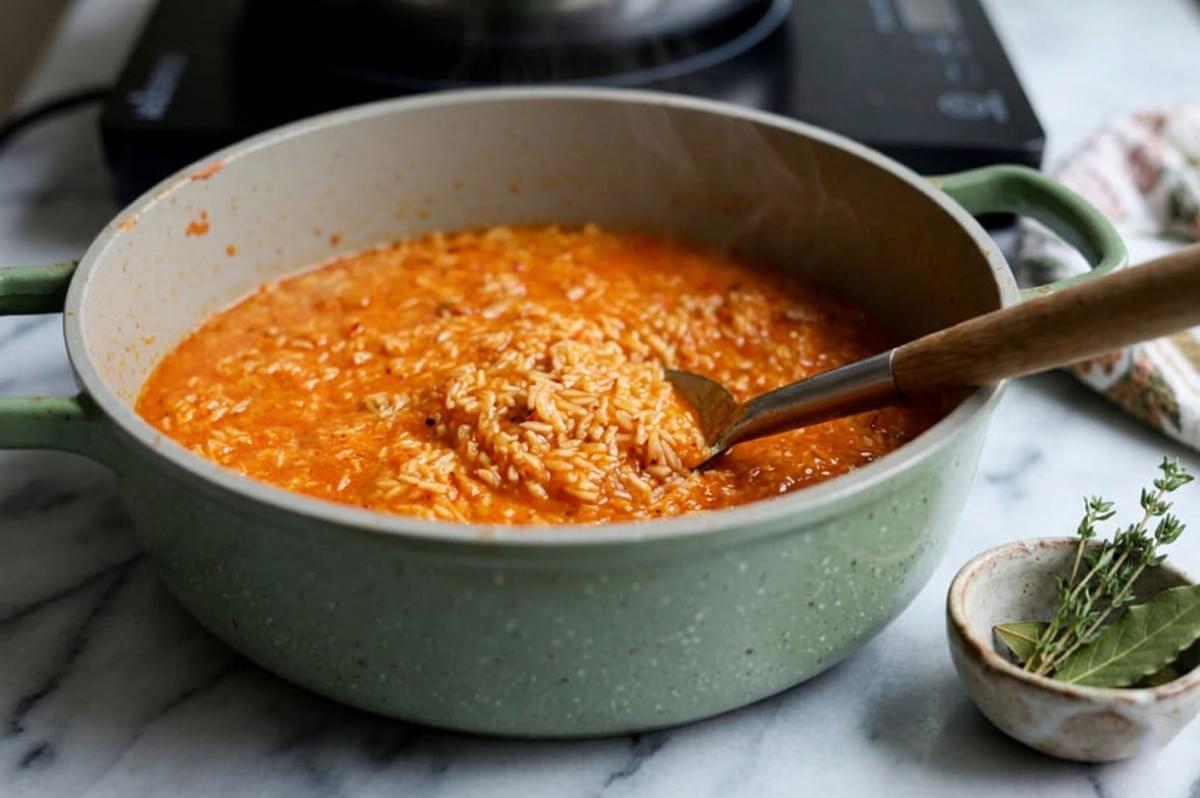
- Don't panic if it's too wet: If the rice is cooked but there is still liquid bubbling at the bottom, take the lid off. Turn the heat up to medium for just 2 to 3 minutes to evaporate the extra moisture, then remove from heat completely.
- Don't panic if it's too dry: If the rice is still crunchy and the pot is bone dry, sprinkle 1/4 cup of warm water over the top. Seal it back up tightly with the foil and lid, and let it steam on low for another 10 minutes.
- Don't panic if it's too spicy: If you accidentally added too much heat, serve the finished jollof with a side of cool, creamy coleslaw or thick slices of sweet, fried plantain to balance the burn.
How to Get That Signature Smoky Flavor
The secret to "party rice" is controlled scorching. We actually want the rice at the very bottom of the pot to burn slightly.
Once your rice is fully cooked and fluffy, turn the heat up slightly for the last 3 to 5 minutes of cooking. You will hear a crackling, sizzling sound from the bottom of the pot. Let it toast! Do not stir it. You want the bottom layer to catch and lightly burn, which sends a wonderful smoky aroma up through the rest of the fluffy rice. When serving, simply scoop the good rice from the top and leave the scorched layer behind.
Serving Ideas
Ghanaian jollof rice is rarely eaten entirely on its own. To make it a complete feast, serve it alongside:
- Kelewele: Spicy, deep-fried plantain cubes.
- Proteins: Crispy fried chicken thighs, baked fish, or tender braised goat meat.
- Fresh sides: A simple side salad of shredded cabbage, carrots, and a light mayonnaise dressing adds a perfect, cooling crunch.
Storage and Reheating
Jollof rice is notorious for tasting even better the next day! The spices have time to settle and deepen.
- Fridge: Store leftovers in an airtight container in the refrigerator for up to 4 days.
- Freezer: You can freeze cooked jollof in freezer-safe bags for up to 2 months.
- Reheating: To reheat without drying it out, place a portion in a microwave-safe bowl. Drape a damp paper towel over the top and microwave in 1-minute bursts until steaming hot. The damp towel acts like a mini steamer to rehydrate the grains.
A West African Feast in Your Kitchen
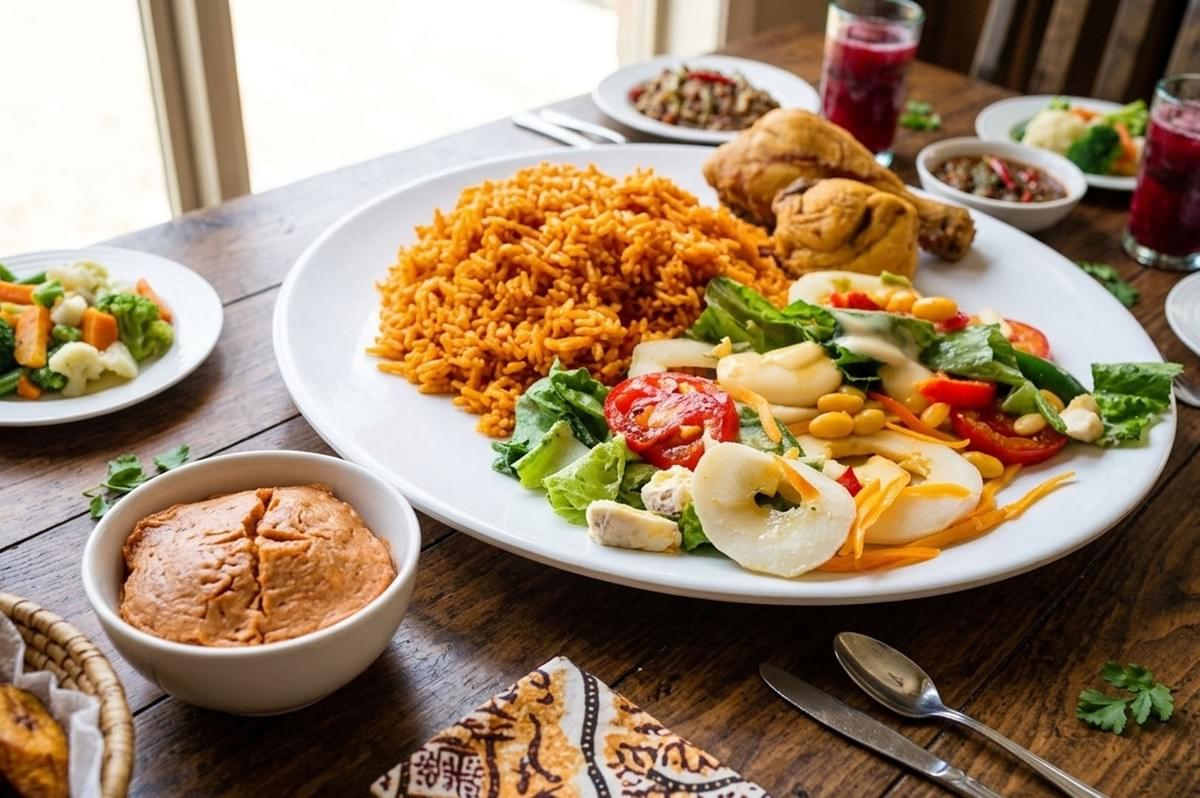
There you have it. You are now officially equipped to tackle one of the greatest dishes on the planet. I hope you embrace the process, enjoy the incredible aromas filling your home, and share this masterpiece with people you love.
Do not be afraid of the heat, trust your rice-washing skills, and definitely let that bottom layer get a little toasty! If you try this recipe, please leave a comment below or tag us in your photos. Happy cooking, and enjoy the rhythm of your kitchen!
