

A paper bag of figs sits on the counter. One has split at the base, and a bead of syrup has gathered there, dark and slow.
The almonds are already in a dry pan. Give them a minute and the kitchen begins to smell of toast and something sweeter underneath.
Outside, the light comes in at a lower angle. It is that time of year.
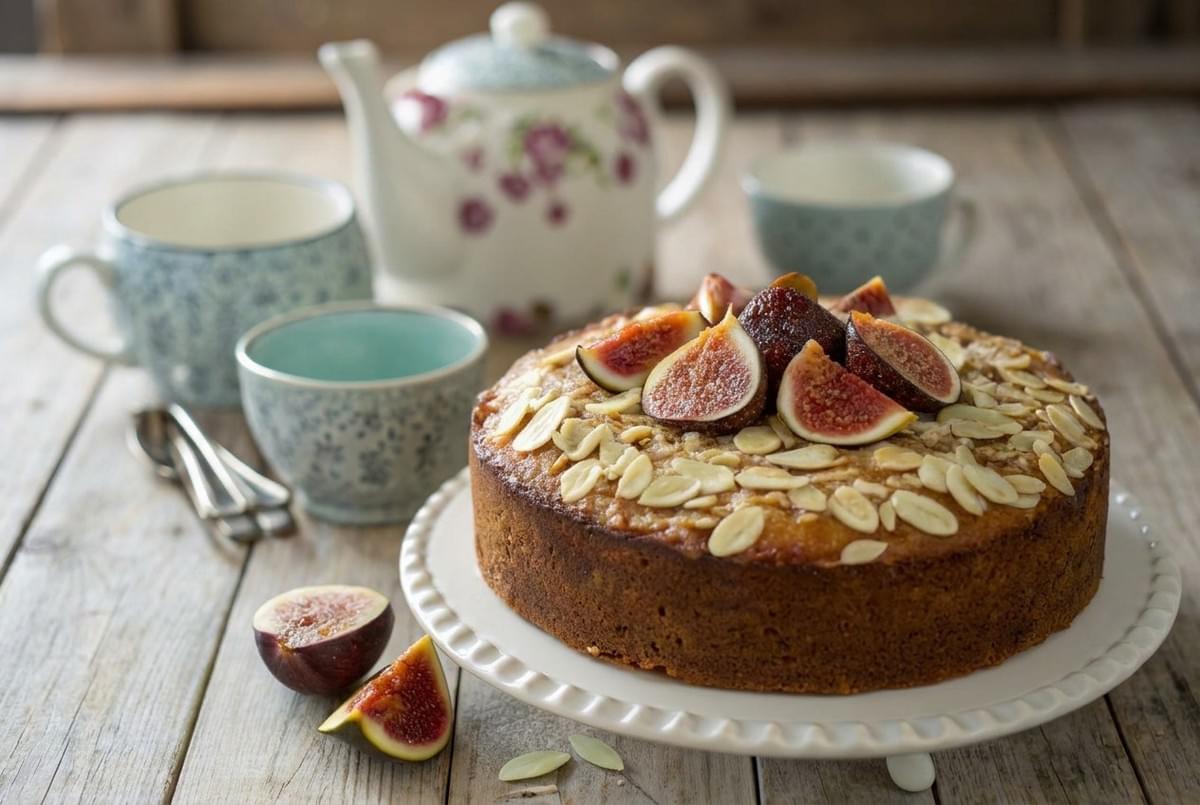
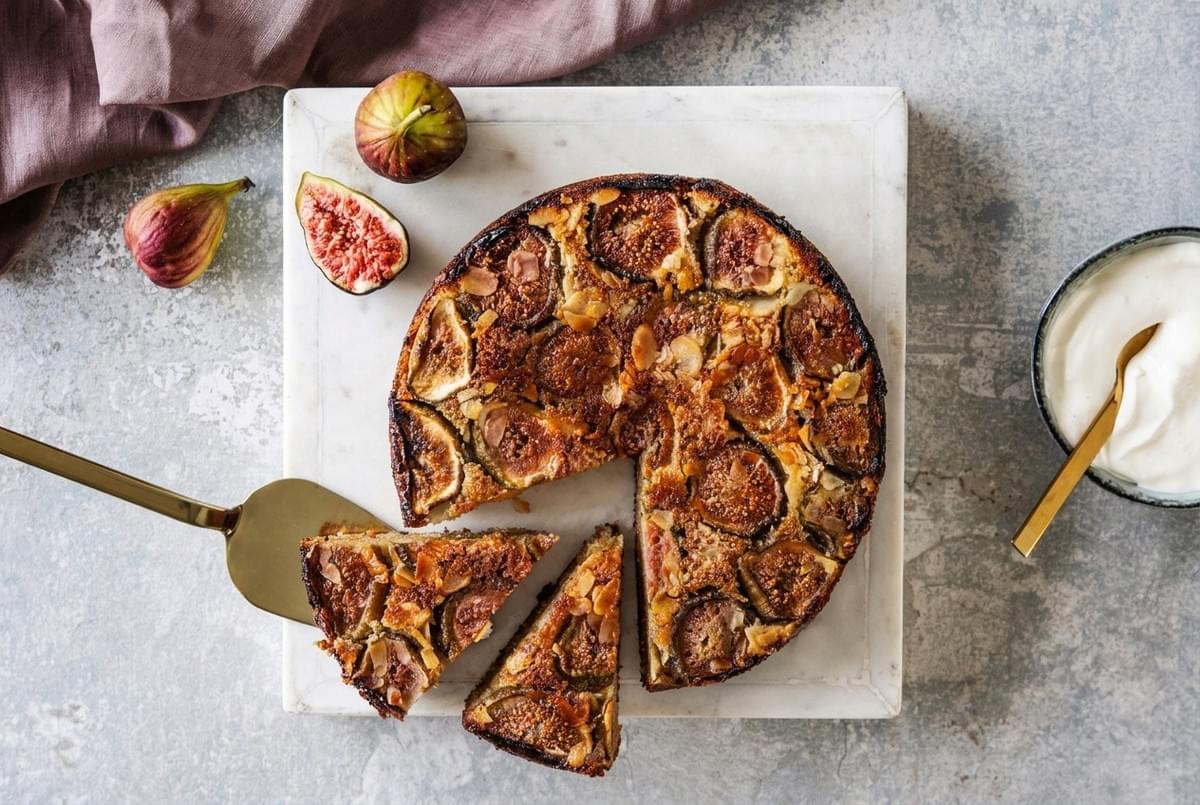
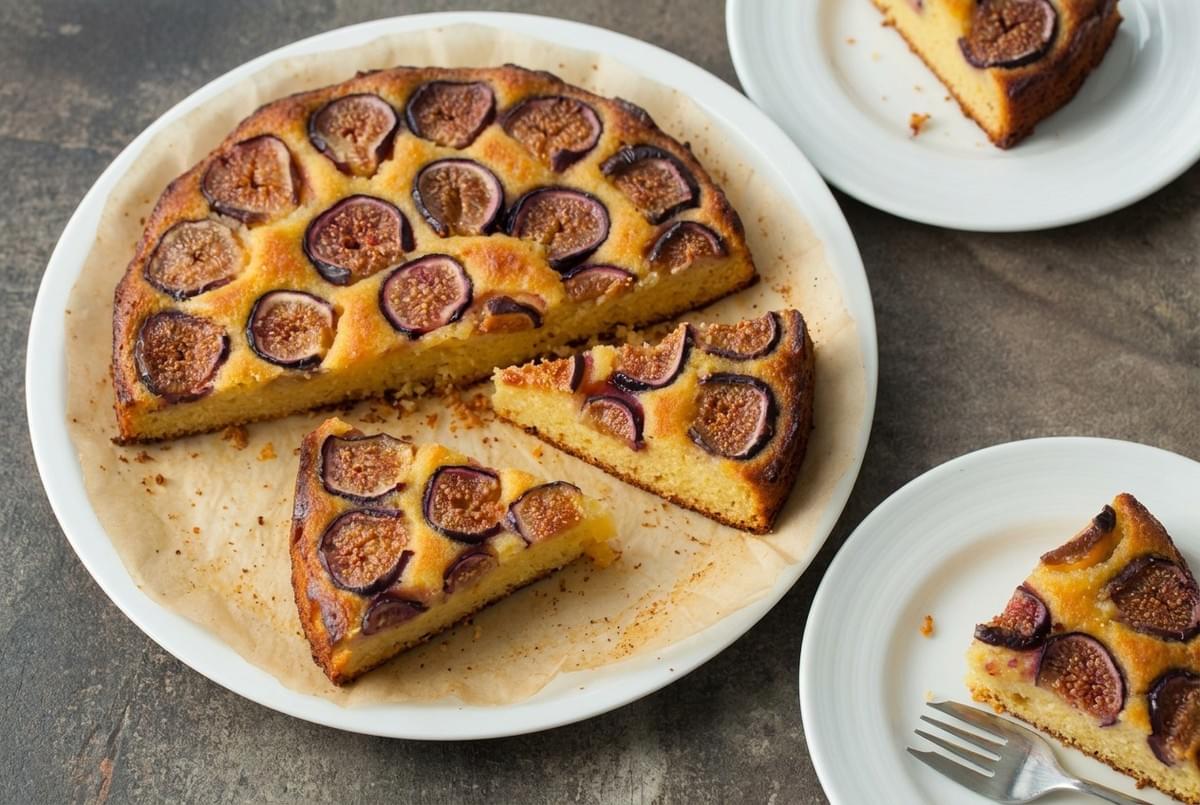
This Italian Fig Almond Cake is a simple, quiet bake. A tender, golden crumb made with ground almonds. Ripe figs pressed into the top, their cut sides softening into jam as they bake. Sliced almonds scattered over everything, turning crisp at the edges.
It is not a showpiece. It is a cake for a weekday afternoon, a pot of coffee, and someone across the table to share it with.
A Little Background on Figs and Almonds
Figs and almonds have both been grown across the Mediterranean for a very long time, and both have a place in Italian kitchens, particularly in the south and on the islands.
Almonds appear in many Italian sweets, from crisp amaretti biscuits to the almond paste used in Sicilian pastry. Simple almond cakes, often called torta di mandorle, are made in different ways from region to region and from home to home.
Figs are eaten fresh in season, dried for the colder months, and paired with nuts, honey, and cheese.
This recipe brings those two ingredients together in one pan. It is Italian-inspired, not a documented traditional regional dish. Think of it as a home bake that borrows a familiar pairing and lets it speak plainly.
Why You'll Love This Cake
- A soft, moist crumb: Ground almonds keep the cake tender and lightly nutty.
- Figs that turn jammy: As they bake, the fruit softens and sweetens right on top of the cake.
- A little crunch: Sliced almonds and a sprinkle of sugar give the top a delicate crispness.
- One bowl and a mixer: No layers, no frosting, no fuss.
- Flexible with the season: Fresh figs are ideal, but you'll find notes for using dried ones too.
Recipe Overview
- Yield: One 9-inch (23 cm) cake, 8 to 10 slices
- Pan size: 9-inch (23 cm) springform pan or round cake pan, at least 2 inches (5 cm) deep
- Prep time: 20 minutes
- Bake time: 40 to 50 minutes
- Cooling time: about 1 hour 15 minutes
- Total time: about 2 hours 15 minutes
Equipment
- 9-inch (23 cm) springform pan or round cake pan
- Parchment paper
- Large mixing bowl and medium bowl
- Electric hand mixer or stand mixer
- Whisk and silicone spatula
- Measuring cups and spoons, or a kitchen scale
- Small knife and cutting board
- Wooden skewer or toothpick
- Wire rack
- Aluminum foil (for tenting, if needed)
Ingredients
For the Cake
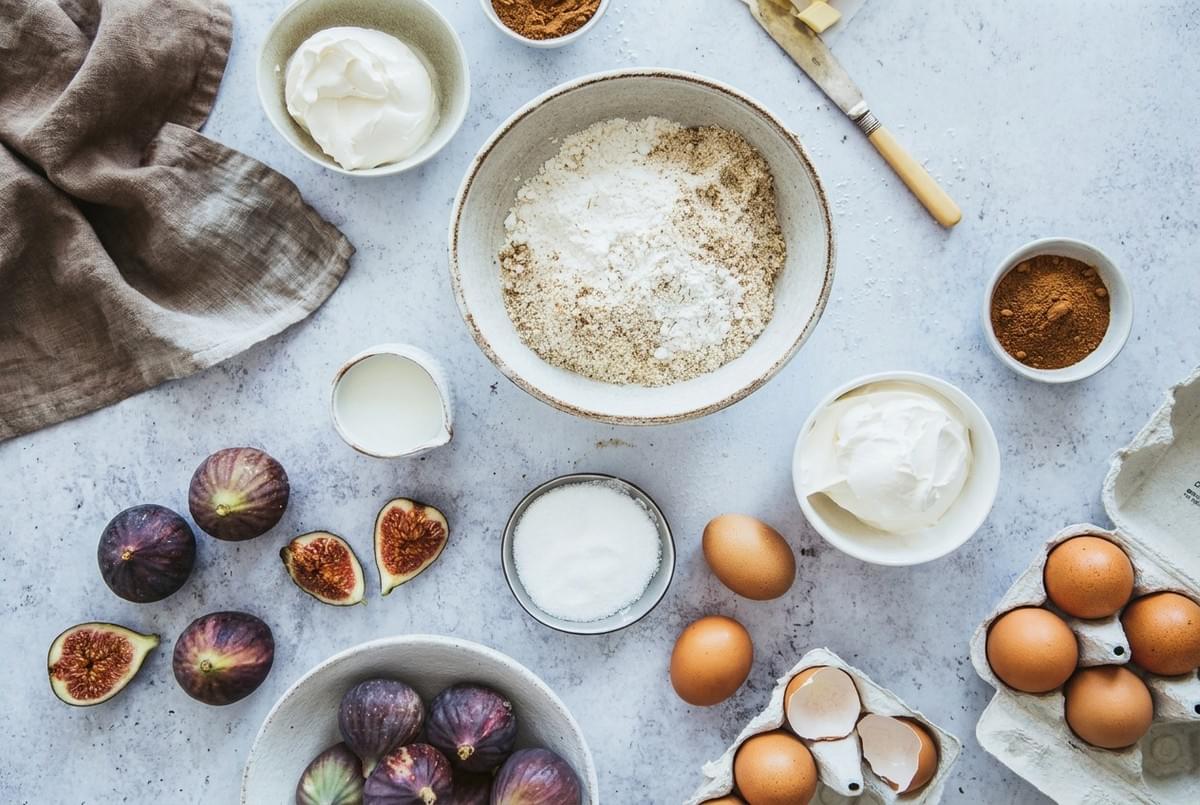
- 1 cup (100 g) fine blanched almond flour
- 3/4 cup (95 g) all-purpose flour
- 1 1/2 teaspoons baking powder
- 1/4 teaspoon fine salt
- 1/2 cup (113 g) unsalted butter, softened, plus a little for the pan
- 2/3 cup (135 g) granulated sugar
- 2 large eggs, at room temperature
- 1 teaspoon vanilla extract
- 1/4 teaspoon almond extract (optional)
- 1 teaspoon finely grated lemon zest (optional)
- 1/2 cup (120 ml) whole milk, at room temperature
For the Topping
- 8 to 10 ripe fresh figs (about 12 oz / 340 g), stems trimmed and halved
- 1/3 cup (30 g) sliced almonds
- 1 tablespoon (12 g) turbinado sugar (or granulated sugar)
To Finish (Optional)
- 1 tablespoon (21 g) honey, warmed
- Powdered sugar, for dusting
Ingredient Notes
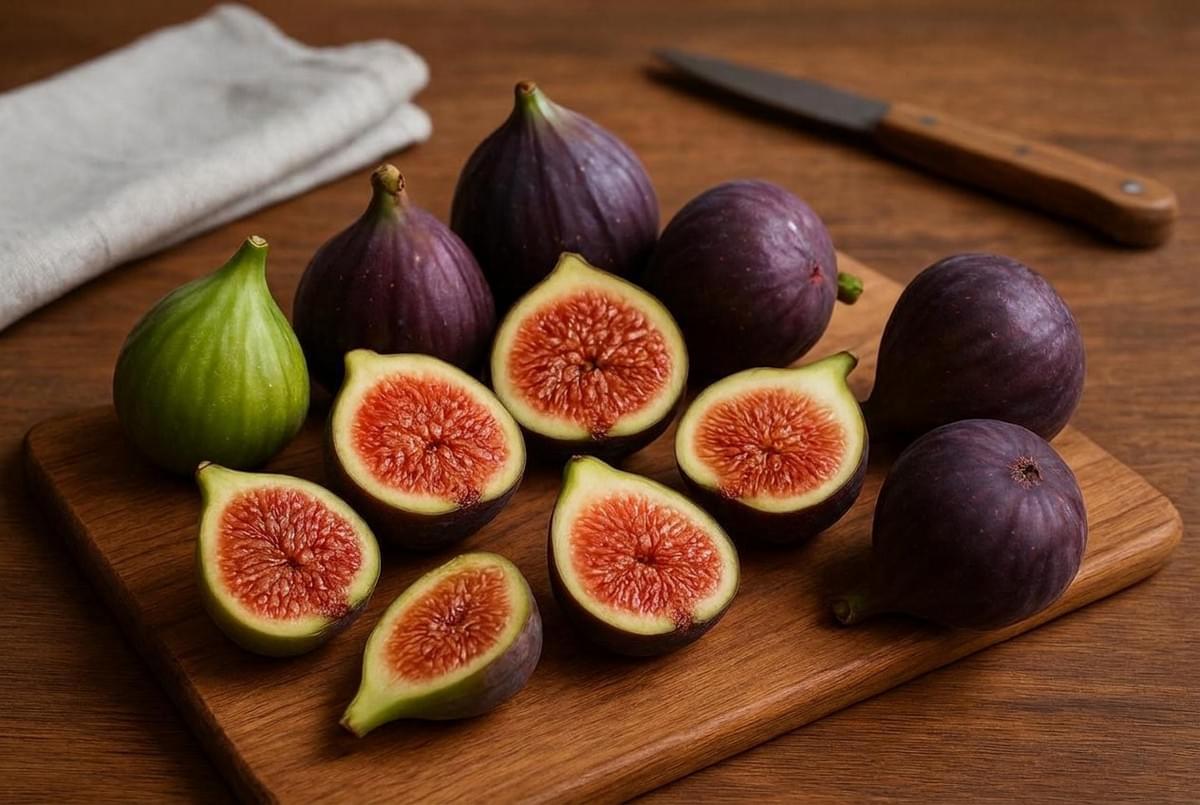
Choosing figs. Look for figs that feel soft and give slightly when pressed, with a sweet smell and intact stems. Small cracks in the skin are a good sign of ripeness. Avoid figs that smell sour or show any mold. Black Mission, Brown Turkey, and green varieties all work.
When figs are in season. Fig seasons depend on where you live and the variety grown. In many places, the main harvest falls from late summer into autumn, and some trees produce a smaller early crop too. Check a local market or grower first. If fresh figs aren't available near you, see the FAQ for dried figs, or try one of the fruit variations below.
Preparing figs. Rinse them gently and pat them completely dry. Trim the hard tip of the stem, then halve them from stem to base. Very large figs can be quartered.
Almond flour vs. almond meal. Fine blanched almond flour is made from skinned almonds and gives the lightest, most even crumb. Almond meal, which includes the skins, is coarser. It makes a darker, more rustic cake with a slightly denser texture. Both work. Weighing gives the most reliable result, since almond flour packs easily.
Butter and eggs. Room-temperature butter and eggs blend more smoothly, which helps the cake rise evenly.
How to Make Italian Fig Almond Cake
- Heat the oven. Set the oven to 350°F (175°C) with a rack in the center.
- Prepare the pan. Lightly butter the pan. Line the bottom with a circle of parchment, then butter the parchment too. This helps the cake release cleanly, even where fig juices bubble at the edges.
- Whisk the dry ingredients. In the medium bowl, whisk the almond flour, all-purpose flour, baking powder, and salt. Break up any small clumps of almond flour.
- Cream the butter and sugar. In the large bowl, beat the butter and granulated sugar on medium speed for 3 to 4 minutes, until pale, fluffy, and noticeably lighter in color. This step traps air that helps the cake rise.
- Add the eggs and flavorings. Beat in the eggs one at a time, mixing well after each. Add the vanilla, almond extract, and lemon zest, if using. If the mixture looks slightly curdled, that's fine. It will come together.
- Combine gently. With the mixer on low, add half the dry ingredients, then the milk, then the rest of the dry ingredients. Mix only until no dry streaks remain. Finish with a few folds of the spatula.
- Fill the pan. Spread the batter evenly into the pan. It will be thick, more like soft frosting than pourable batter.
- Add the figs. Arrange the fig halves cut side up over the batter, pressing each one in very lightly. Leave a little space between them so the batter can rise around the fruit.
- Top it. Scatter the sliced almonds over the cake, then sprinkle the turbinado sugar evenly over everything.
- Bake. Bake for 40 to 50 minutes. Check at 30 minutes. If the almonds are browning quickly, lay a loose sheet of foil over the top.
- Check for doneness. The cake is ready when the top is deep golden, the edges pull slightly away from the pan, and the center springs back when touched lightly. Insert a skewer into the cake between the figs. It should come out clean or with a few moist crumbs, but no wet batter.
- Cool. Let the cake rest in the pan on a wire rack for 15 minutes. Run a thin knife around the edge, then release the springform ring or turn the cake out. Cool for about 1 hour more, until barely warm.
- Finish and serve. Brush the warm honey over the figs for a soft shine, or dust with powdered sugar, if you like. Slice with a sharp knife, wiping it between cuts.
Food Rhymes Tips and Troubleshooting
Too much moisture. Wet figs release juice into the batter, which can leave soft, sticky patches. Dry them well and keep them cut side up. Don't crowd the top. Too much fruit can weigh down the center.
Overbrowning. Almond flour and sugar both brown faster than plain flour. If the top darkens before the center is set, tent loosely with foil and keep baking. An oven thermometer helps if your oven runs hot.
A dense crumb. This usually comes from cold butter, short creaming, or overmixing after the flour goes in. Soften the butter well, beat it until pale, then mix gently once the dry ingredients are added. Check that your baking powder is fresh.
A sunken middle. The cake likely needed a few more minutes. Trust the skewer test, not the clock alone.
Testing near the fruit. A skewer through a fig will always come out sticky. Test the cake itself, between the fruit.
Serving Ideas
This cake is good just as it is, slightly warm or at room temperature.
- A spoonful of lightly sweetened whipped cream or mascarpone
- A dollop of plain Greek yogurt with a drizzle of honey
- Alongside espresso, black coffee, or a cup of tea
- A small wedge with a sharp, hard cheese for a less sweet afternoon plate
Variations
- Orange and fig: Swap the lemon zest for 1 teaspoon orange zest. No other changes needed.
- Olive oil cake: Replace the butter with 1/2 cup (120 ml) mild extra-virgin olive oil. Whisk it with the sugar and eggs for 1 minute instead of creaming. The crumb will be slightly moister and more open.
- Other autumn fruit: Use thin slices of ripe pear or plum in place of figs. Plums release more juice, so add 5 minutes to the bake and check carefully.
- Spiced: Whisk 1/2 teaspoon ground cinnamon into the dry ingredients for a warmer flavor.
Storage, Make-Ahead, and Freezing
- Room temperature: Cover loosely and keep for up to 1 day. The fresh fruit stays soft and the crumb stays tender.
- Refrigerator: For longer storage, wrap the cake and refrigerate for up to 3 days more. Let slices sit at room temperature for 20 minutes before eating, since the crumb firms when chilled.
- Make-ahead: Bake the cake up to 1 day ahead. Add the honey glaze or powdered sugar just before serving.
- Freezing: Wrap cooled slices or the whole cake tightly in plastic wrap, then foil, and freeze for up to 1 month. Thaw overnight in the fridge. The figs will be softer after thawing, though the flavor holds.
FAQs
Can I use dried figs instead of fresh?
Yes, with changes. Chop 6 ounces (170 g) dried figs, cover with hot water for 15 minutes, then drain and pat dry. Fold them into the batter instead of arranging them on top, since dried figs can scorch. The cake will taste sweeter and more concentrated, with a slightly denser texture. Bake for the same time, but check at 35 minutes.
How do I know when the cake is baked?
Look for a deep golden top, edges pulling away from the pan, and a center that springs back. A skewer inserted between the figs should come out clean or with a few moist crumbs.
Can I make it gluten-free?
Replace the all-purpose flour with a 1:1 gluten-free baking blend. Expect a slightly more delicate crumb. Check the label on your baking powder and almond flour.
Can I use a different pan?
An 8-inch (20 cm) pan works but makes a taller cake that may need 5 to 10 minutes more. Avoid pans shallower than 2 inches (5 cm), since the batter rises around the fruit.
Does this cake contain allergens?
Yes. It contains tree nuts (almonds), wheat, eggs, and dairy.
A Slice Left on the Plate
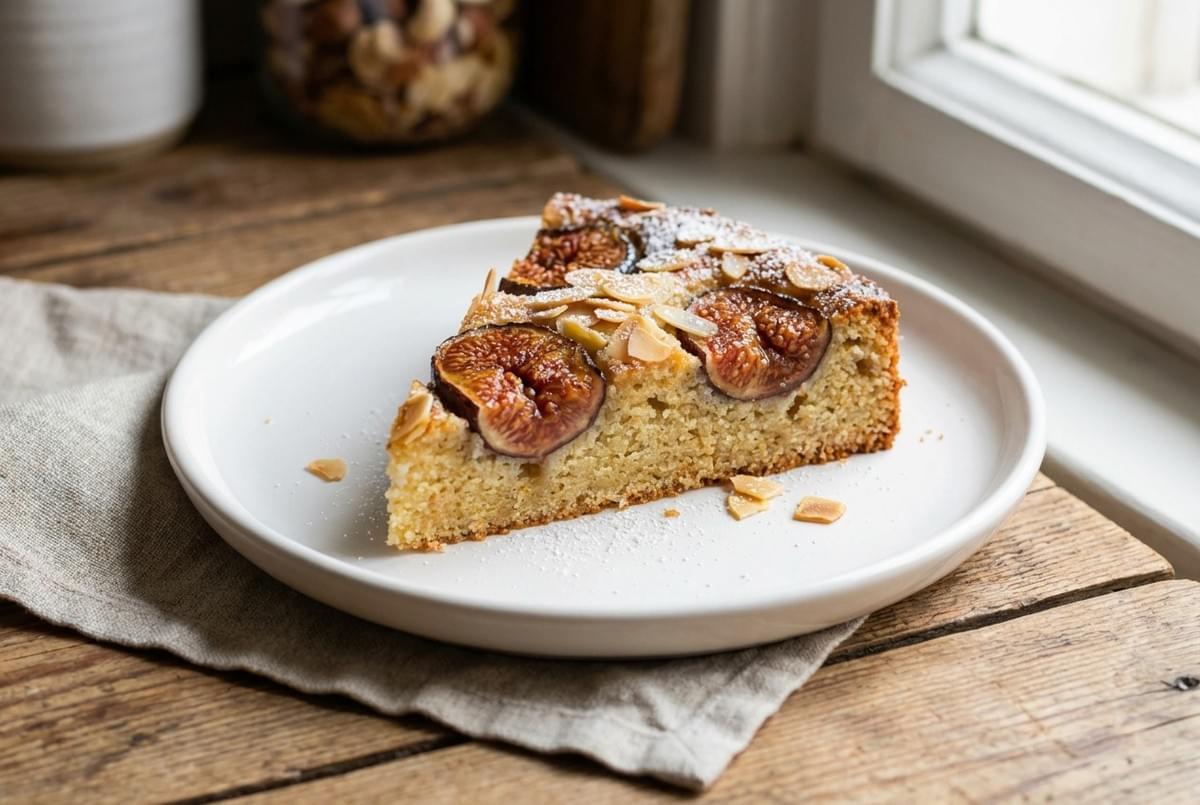
The pan cools on the rack. A little fig syrup has caramelized at the edge, dark and sticky, and someone will reach for it with a fingertip.
That is how it goes with a cake like this. No ceremony. Just a knife, a few plates, and figs from wherever you happen to be.
If you bake it, tell us how it turned out. Which figs you found, what you served alongside, and who you shared the first slice with.
