

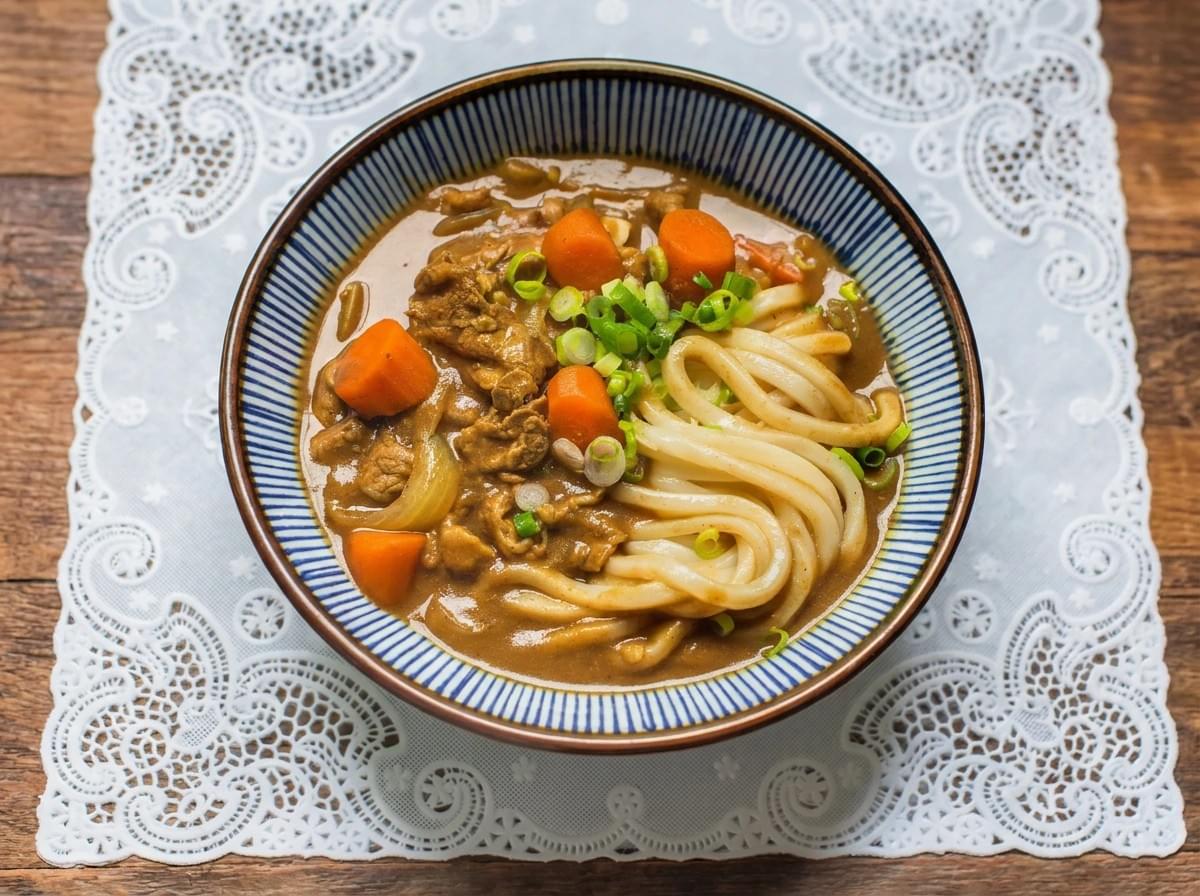
Rain on the window. A pot going quiet on the stove. That is the mood this bowl was made for.
Curry udon is thick, chewy noodles swimming in a savory curry broth that is gently sweet and cozy around the edges. It is the kind of dinner that warms your hands through the bowl before it even reaches your mouth.
Here is the good news: it is easy, it bends to whatever you have on hand, and it fits neatly into a busy weeknight. Let's make some.
What Is Curry Udon?
Curry udon is a beloved comfort dish in Japan, born when Japanese curry met a bowl of fat, springy udon noodles. Somewhere along the way, someone thinned the curry into a soup, dropped in the noodles, and never looked back.
Japanese curry sits apart from Indian or Thai curries. It is milder, thicker, and rounder in flavor, more soothing than fiery. Most of that comes from curry roux blocks, which carry a soft blend of spices, sweetness, and a little savory depth all in one tidy package.
For curry udon, that curry gets loosened with dashi or stock into a glossy, slurpable broth. Comfort in a bowl, plain and simple.
Why You'll Love This Recipe
- It comes together on a weeknight, no fuss required.
- It is filling and warming, a proper meal in one bowl.
- It bends to your fridge: any protein, any veg.
- The curry roux does most of the heavy lifting.
- Kids and grown-ups both go quiet when it hits the table.
- Leftovers reheat into an easy lunch.
Ingredients You'll Need

Here is the lineup, with notes to help you shop and swap.
- Udon noodles (about 400 g / 14 oz): Fresh, frozen, or dried all work. Frozen udon has the best chew, in my book. Find them in the freezer aisle of an Asian market.
- Japanese curry roux blocks (3 to 4 cubes): The heart of the dish. Look for boxes in the international aisle or an Asian grocery. Mild or medium is a friendly starting point.
- Aromatics: 1 onion (thinly sliced), 2 garlic cloves, and a thumb of ginger, both grated. These build the base.
- Protein (your pick): 1 chicken thigh (sliced), firm tofu, a handful of shrimp, or none at all. All are welcome here.
- Vegetables: 1 carrot (sliced), a few mushrooms, a handful of spinach, and green onion to finish. Swap in whatever needs using up.
- Dashi or stock (about 4 cups / 960 ml): Dashi gives the most authentic depth, but chicken or vegetable stock works beautifully too.
- Soy sauce (1 tablespoon): For a little savory backbone.
- Mirin (1 tablespoon, optional): Adds a soft sweetness and shine.
- Sesame oil (1 teaspoon, optional): A few drops at the end for warmth and aroma.
A quick note on thickness: the roux does the thickening for you. No cornstarch, no fuss.
Equipment
- A medium pot for the broth
- A separate pot for the noodles
- A ladle
- A knife and cutting board
- Optional: a fine mesh strainer and a microplane (lovely for the ginger and garlic)
Step-by-Step Instructions
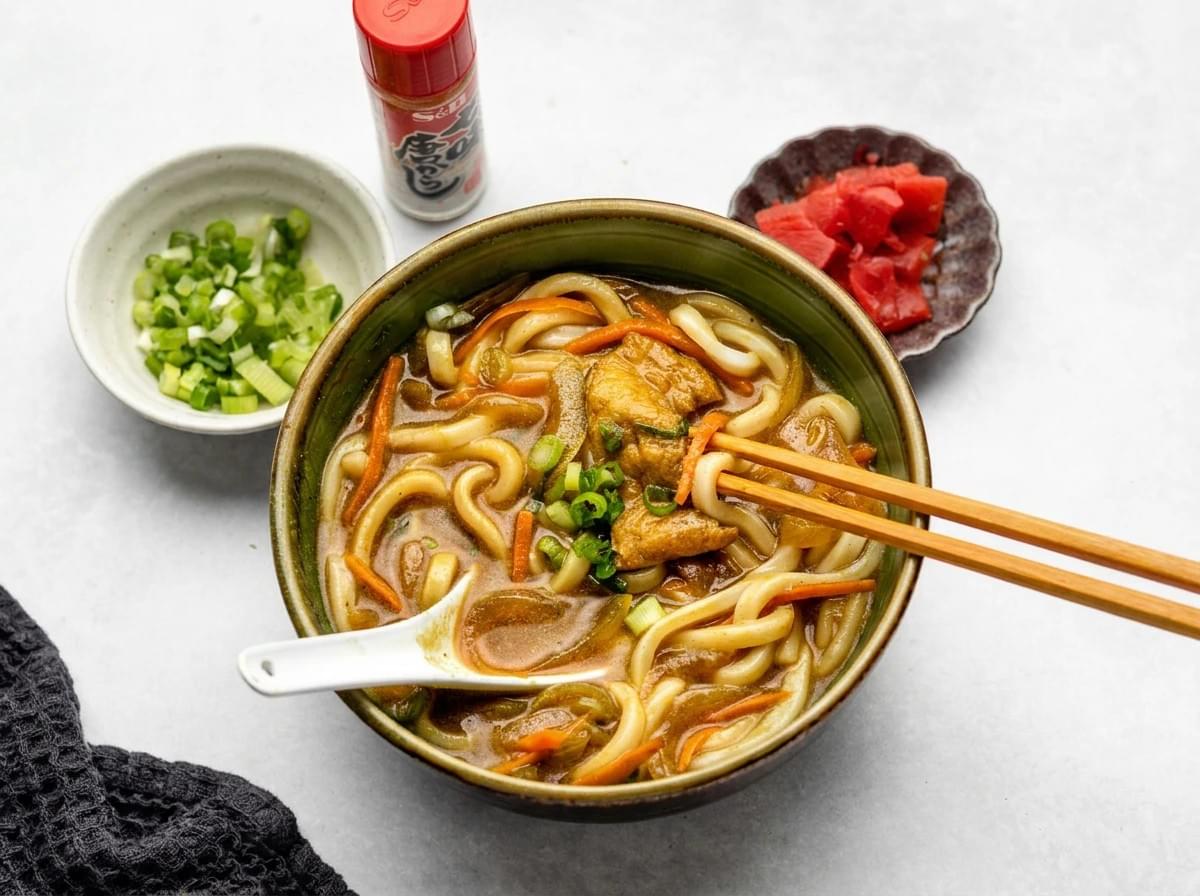
Read through once, then let's cook.
- Prep everything first. Slice the onion, carrot, and mushrooms. Grate the garlic and ginger. Portion your protein. Curry udon moves quickly once the pot is hot, so have it all ready.
- Sauté the aromatics. Warm a little oil in your pot over medium heat. Add the onion and cook until soft and just golden, about 5 minutes. Stir in the garlic and ginger and cook for a minute, until the kitchen smells warm and fragrant.
- Cook the protein (if using). Add your chicken, tofu, or shrimp and cook until nearly done. Chicken should lose its pink, shrimp should just turn opaque.
- Add broth and vegetables. Pour in the dashi or stock, then add the carrot and mushrooms. Bring it to a gentle simmer and cook until the vegetables are tender, about 8 to 10 minutes. A knife should slide through the carrot easily.
- Melt in the curry roux. Turn off the heat first. This matters. Break the roux blocks into pieces, drop them into a ladle of the hot broth, and stir until they dissolve. Then stir that smooth mixture back into the pot. No lumps, no drama.
- Adjust and season. Turn the heat back to low. Stir in the soy sauce and mirin, then let it warm through until glossy and thick enough to coat a spoon. Too thick? Add a splash of stock. Too thin? Melt in a little more roux the same gentle way.
- Cook the udon separately. Boil the noodles in their own pot according to the package, then drain. Cooking them apart keeps the broth clean and the noodles from turning gummy.
- Build the bowls. Divide the udon into bowls, ladle the curry broth generously over the top, and finish with spinach, green onion, and a few drops of sesame oil. Serve steaming hot.
Tips for the Best Thick, Silky Curry Broth
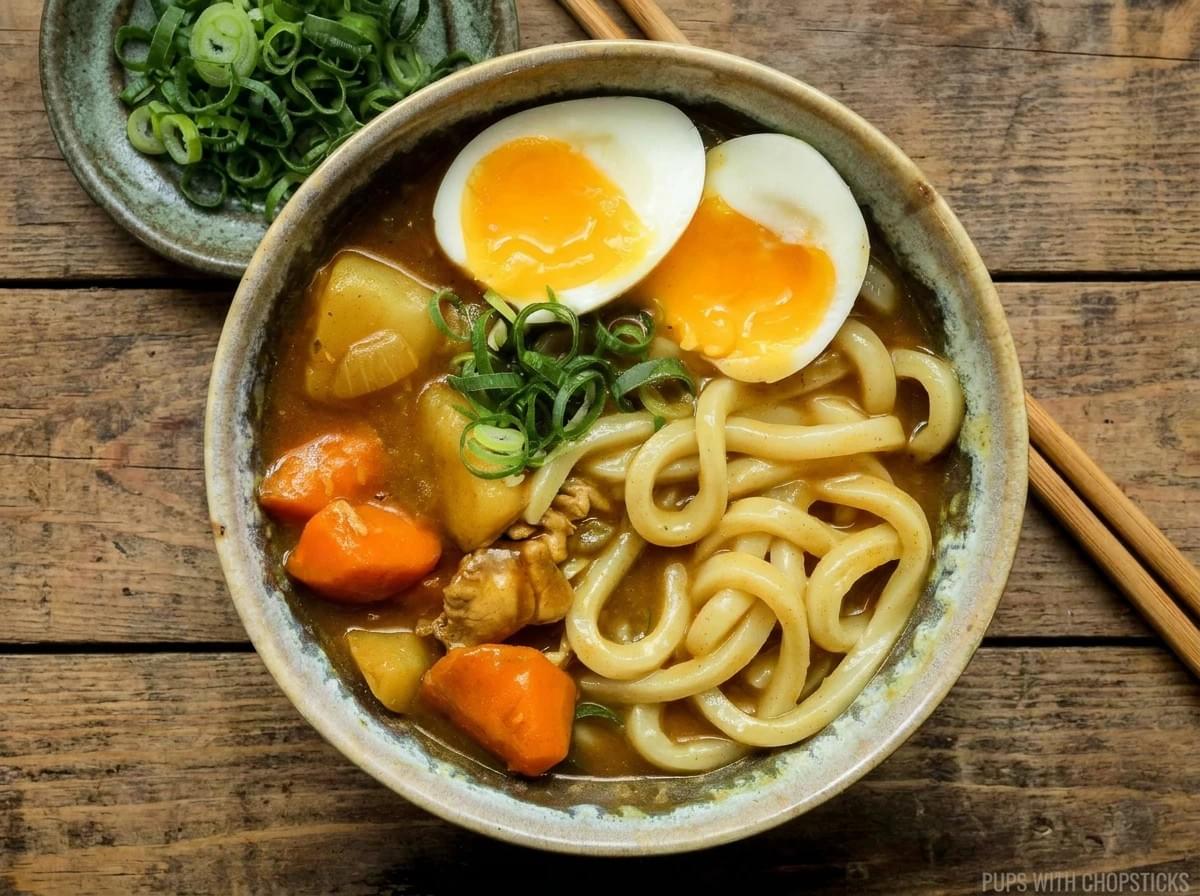
- Always dissolve the roux off the heat. Melting it in a ladle of hot broth first is the surest way to avoid lumps.
- Control the thickness with liquid. More stock loosens, more roux thickens. Adjust in small steps.
- Do not boil hard after the roux goes in. A gentle simmer keeps the broth smooth and glossy. A rolling boil can turn it grainy.
- Cook the noodles in their own pot. Starchy noodle water muddies the broth and softens the chew you want.
Variations
- Katsu-style: Top your bowl with a store-bought crispy pork or chicken cutlet, sliced. Comfort layered on comfort.
- Extra veggie: Load in bell peppers, cabbage, sweet potato, or peas. Curry loves vegetables.
- Spicy: Sprinkle ichimi togarashi over the top, or reach for a hotter grade of curry roux.
- Creamy: Stir in a small splash of milk or coconut milk at the end for a softer, rounder broth.
- Seafood: Simmer shrimp, squid, or clams into the broth for a briny twist.
- Vegan: Use vegetable stock, firm tofu, and a vegan curry roux. Still deeply satisfying.
What to Serve With Curry Udon
Keep the sides light and let the bowl lead.
- A crisp cucumber salad
- A little dish of edamame
- Japanese pickles for a bright, sharp bite
- A pot of green tea alongside
Storage and Reheating
Store the broth and noodles separately when you can. The noodles drink up broth as they sit, and you want them chewy, not mushy.
Both keep in airtight containers in the fridge for 2 to 3 days. Reheat the broth gently on the stove, adding a splash of stock or water to loosen it back to that glossy pour. Warm the noodles briefly, then combine just before eating.
Freezing is not ideal here. The udon loses its lovely texture, so this one is best fresh.
FAQs
Can I use regular curry powder instead of roux blocks?
You can, but the result will be thinner and less rounded. If you go this route, you will need to add fat and a little flour to build body. The roux blocks are worth seeking out.
Is curry udon spicy?
Not by default. Japanese curry is mild and comforting. Add ichimi togarashi or a hotter roux grade if you want heat.
Fresh, frozen, or dried udon: which is best?
Frozen udon has the best chew and reheats well. Fresh is lovely too. Dried works in a pinch, just cook it carefully so it stays springy.
How do I make the broth thicker or thinner?
Melt in a little more roux to thicken, or stir in more stock to loosen. Always adjust slowly, off a hard boil.
Can I freeze curry udon?
The broth freezes fine on its own. The noodles do not, so freeze only the broth and cook fresh udon when you are ready.
What protein works best?
Chicken thigh is a classic for its juiciness. Tofu, shrimp, and thinly sliced pork are all excellent. A veggie-only bowl holds its own too.
Why did my broth turn lumpy?
The roux likely went straight into the pot. Next time, dissolve it in a ladle of hot broth first, then stir it back in.
Recipe Card
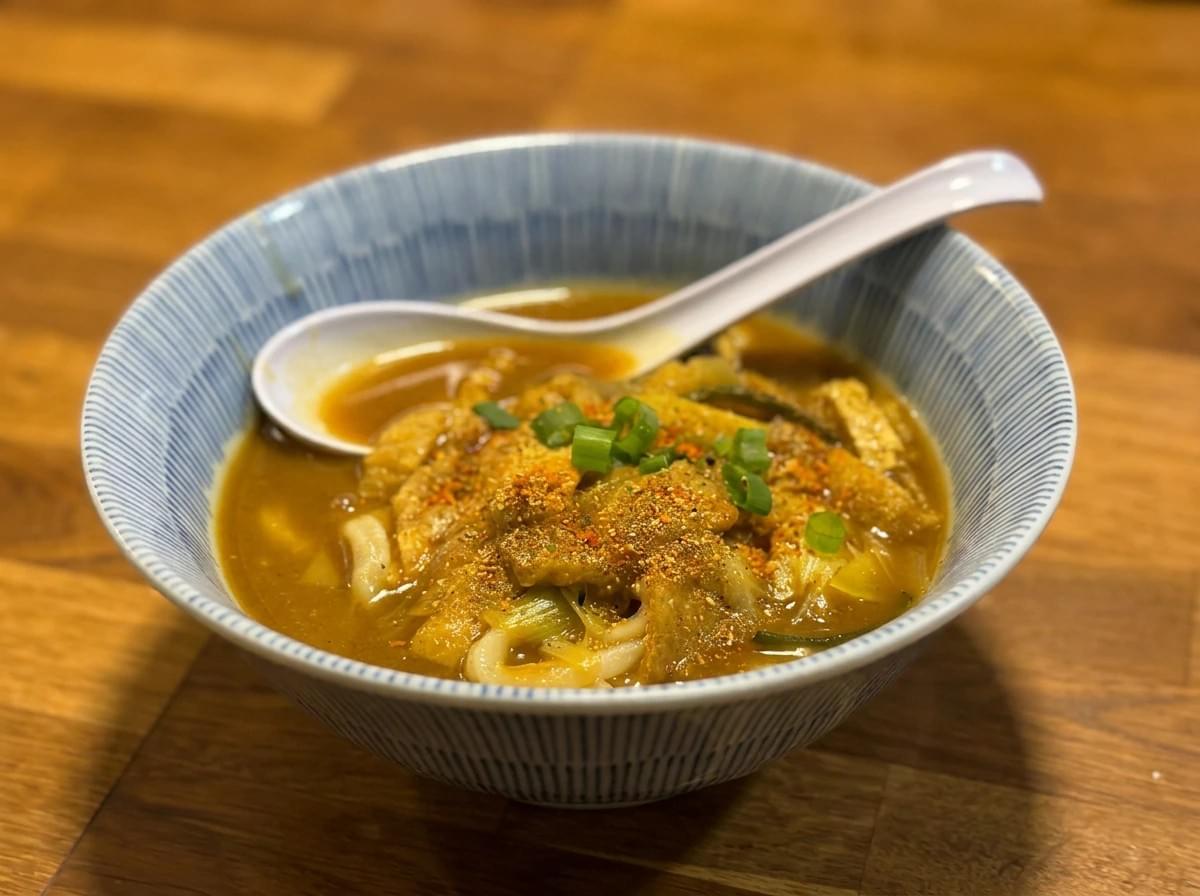
Japanese Curry Udon
- Prep time: 15 minutes
- Cook time: 20 minutes
- Total time: 35 minutes
- Servings: 4
Ingredients
- 400 g (14 oz) udon noodles (fresh, frozen, or dried)
- 3 to 4 Japanese curry roux blocks
- 1 onion, thinly sliced
- 2 garlic cloves, grated
- 1 thumb ginger, grated
- 1 chicken thigh, sliced (or tofu, shrimp, or none)
- 1 carrot, sliced
- A few mushrooms, sliced
- A handful of spinach
- 2 green onions, sliced
- 4 cups (960 ml) dashi or stock
- 1 tablespoon soy sauce
- 1 tablespoon mirin (optional)
- 1 teaspoon sesame oil (optional)
- A little oil, for cooking
Instructions
- Prep all ingredients before you start.
- Sauté the onion in oil until soft, then add garlic and ginger and cook until fragrant.
- Add the protein and cook until nearly done.
- Pour in the stock, add the carrot and mushrooms, and simmer until tender.
- Turn off the heat. Dissolve the roux in a ladle of hot broth, then stir it back into the pot.
- Warm gently over low heat, stir in soy sauce and mirin, and adjust thickness with more stock or roux.
- Cook the udon separately, then drain.
- Divide noodles into bowls, ladle the broth over, and finish with spinach, green onion, and sesame oil.
Notes
- Always dissolve the roux off the heat to avoid lumps.
- Do not boil hard after adding the roux.
- Store broth and noodles separately, and use within 2 to 3 days.
- Adjust spice with ichimi togarashi or a hotter roux grade.
- Nutrition information is an estimate only and will vary with ingredients and portion size.
One Last Slurp

Some dinners are made for a crowd. This one is made for a quiet night in, when the weather turns and you want something warm to hold.
Curry udon does not ask much of you. A little chopping, a gentle simmer, and the patience to melt that roux the right way. In return, you get a bowl that steams, comforts, and disappears fast.
Make a pot this week, then come tell us how it went over at Our Food Rhythms. We would love to know which protein you reached for and how much heat your table could handle. If you are still in a cozy mood after this, our Japanese miso soup is a lovely, gentle place to go next.
