

The first time I ate pad see ew, it was raining.
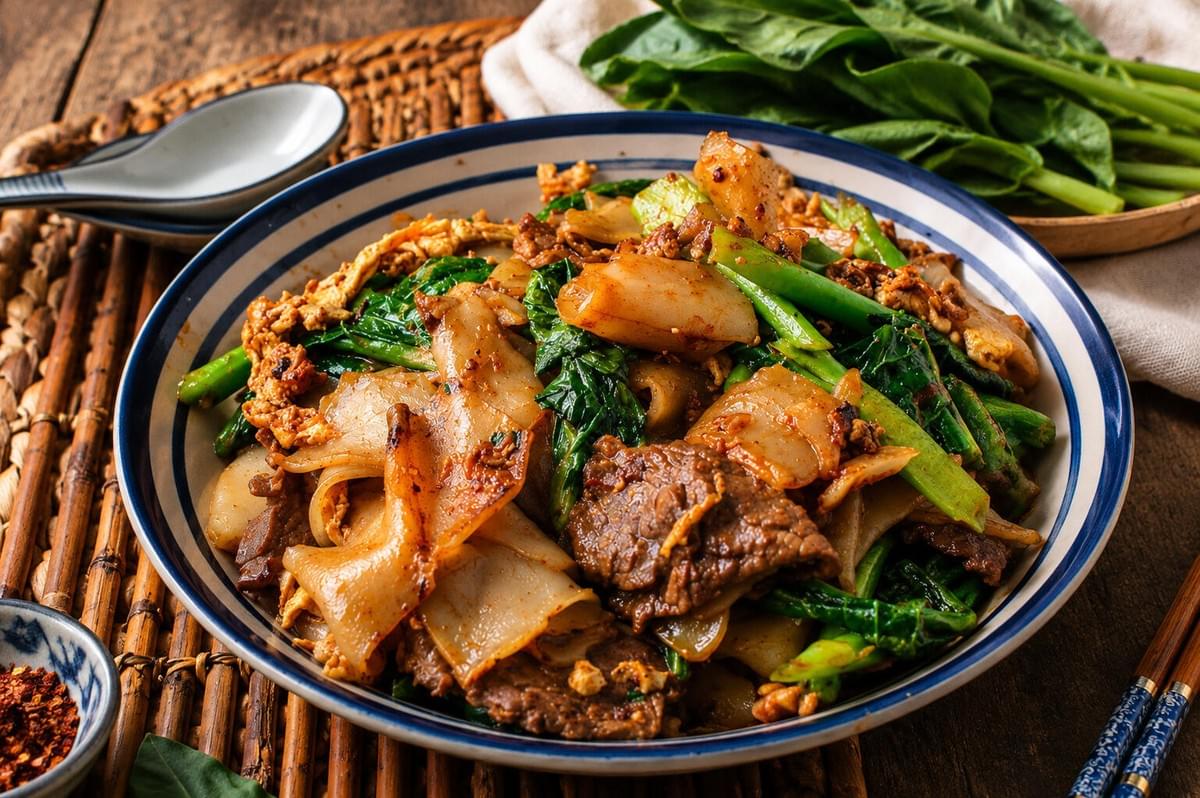
Not a gentle rain, the kind that sends you running under an awning where a woman is already standing over a wok. She waved her spatula at a plastic stool, so I sat. A few minutes later she set down a plate of wide noodles, glossy and dark, the edges just barely burnt.
I still remember the smell before the taste. Smoke, soy, something sweet underneath. The noodles were soft but held together, folded around bits of egg and greens. I ate the whole plate and did not once reach for my phone.
That plate is what I chase when I make pad see ew at home. It is simpler than you think. A hot pan, a few sauces, and the nerve to let things char a little.
Let me show you.
What Is Pad See Ew?
The name tells you the heart of it. "Pad" means stir-fried, and "see ew" means soy sauce. So, stir-fried soy sauce noodles. Plain-spoken and honest, the way the dish itself is.
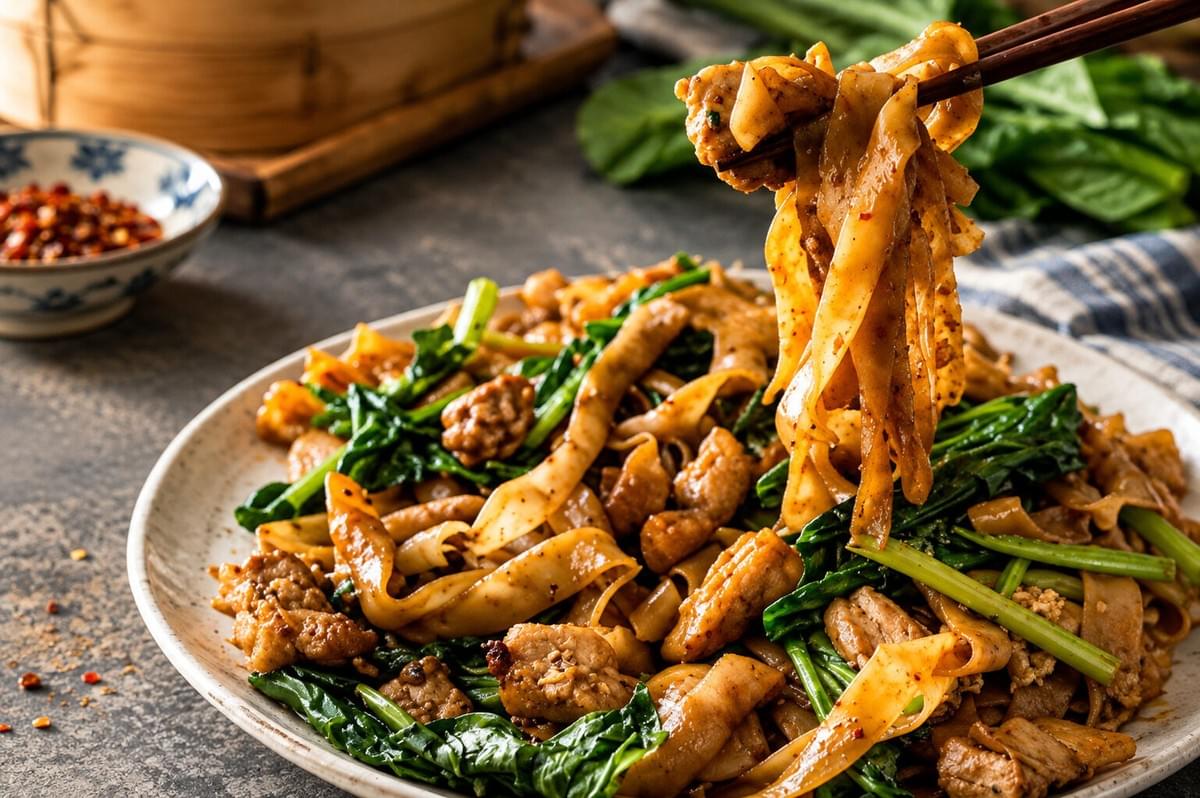
Pad see ew is a Thai street classic, usually made with wide rice noodles, Chinese broccoli, a protein, and egg, all tossed in a soy-based sauce over screaming-hot heat.
What sets it apart is the char (wok hei), the faint smokiness that comes when noodles hit a very hot surface and catch just slightly at the edges. That, plus the balance of dark soy sauce (color and depth) and a touch of sugar (a soft sweetness), is the whole story.
It is comforting food. Quick, filling, a little sweet, a little smoky. The kind of plate you make on a tired evening and finish feeling looked after.
Ingredients You'll Need
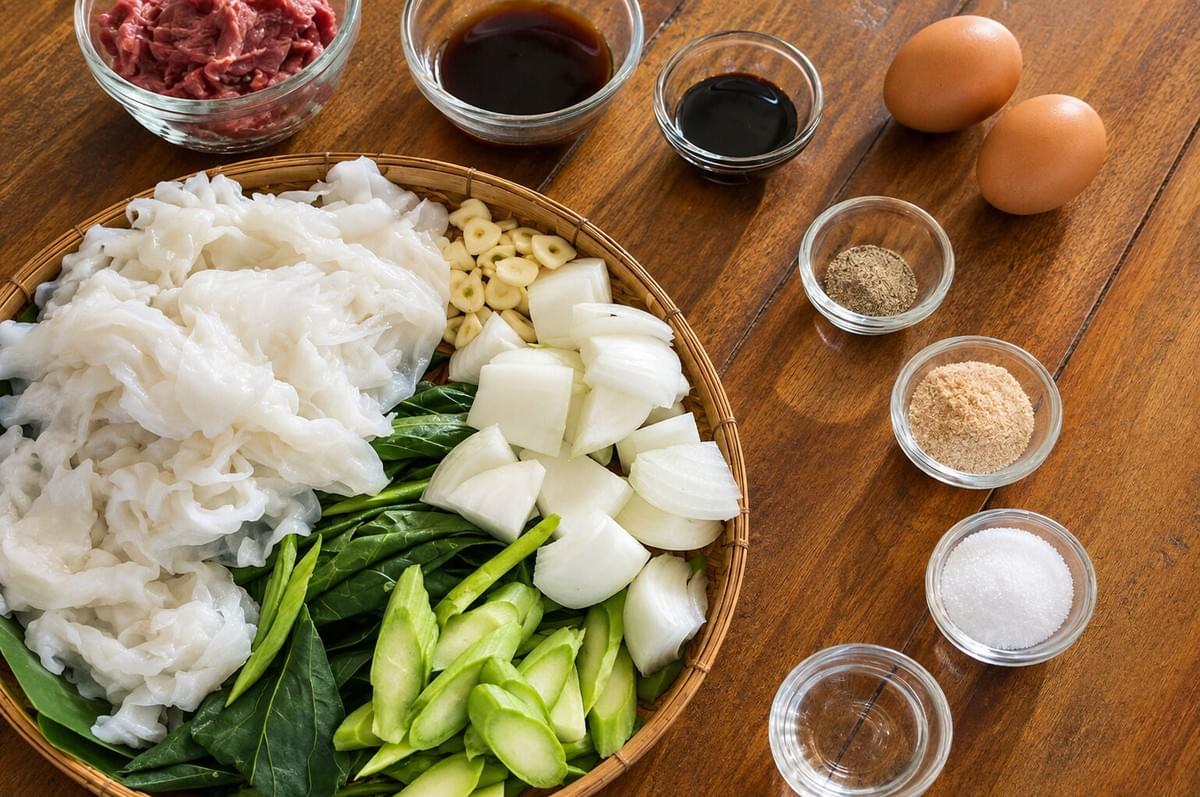
Nothing here is fussy. A few notes to help you shop and swap.
The noodles
- Wide rice noodles (sen yai). Fresh ones are ideal, soft and chewy. If you find them fresh at an Asian grocery, gently loosen the strands by hand before cooking. If they are cold and stiff, a quick warm-water soak or short microwave helps them separate without tearing.
- Dried wide rice noodles work too. Soak them in warm water until pliable but not fully soft, then finish them in the pan. They keep cooking as they fry, so stop while they still have some bite.
The sauces
- Dark soy sauce. Thick, deep, and a little molasses-like. This gives pad see ew its brown color and rich flavor. Do not swap it for regular soy, or your noodles will look pale and taste flat.
- Light soy sauce. Thinner and saltier, for seasoning. This is your everyday soy sauce.
- Oyster sauce. Savory and slightly sweet, it rounds everything out. No oyster sauce? A vegetarian mushroom "oyster" sauce works beautifully.
- Sugar. A teaspoon or two, to balance the salt and coax out that gentle sweetness.
The greens
- Chinese broccoli (gai lan). The traditional choice, with crisp stems and slightly bitter leaves. Slice the stems thin so they cook through.
- Swaps: regular broccoli or broccolini, thinly sliced bok choy, or even kale stems. Each brings its own texture, and all of them work.
The protein
- Chicken: thinly sliced, cooks fast.
- Beef: slice against the grain, nice and thin.
- Shrimp: quick to cook, so add it a little later.
- Tofu: firm or extra-firm, pressed and pan-crisped first.
Pick one. Any of them slots into the same method.
The rest
- Eggs. Two, cracked into the hot pan and scrambled right there. They catch the sauce and add softness.
- Neutral oil with a high smoke point (vegetable, canola).
- Garlic, a few cloves, chopped.
- Optional: chili flakes or fresh Thai chilies for heat, a pinch of white pepper, and a small splash of vinegar or lime at the table for brightness.
Equipment and Prep Tips
You want a wok if you have one, but a large, heavy skillet will do. The goal is a wide, very hot surface.
A few things that make or break this dish:
- Mix your sauce first. Once the pan is hot, there is no time to measure. Have it ready in a small bowl.
- Prep everything before you turn on the heat. Slice the protein, chop the garlic, cut the greens, loosen the noodles. This cooks fast.
- Do not overcrowd. If you are making two servings, that is about the limit for one pan. Too much at once means steaming, not searing.
- Handle noodles gently. Fresh wide noodles tear if you stir them hard. Use a folding motion, not aggressive tossing.
How to Make Pad See Ew
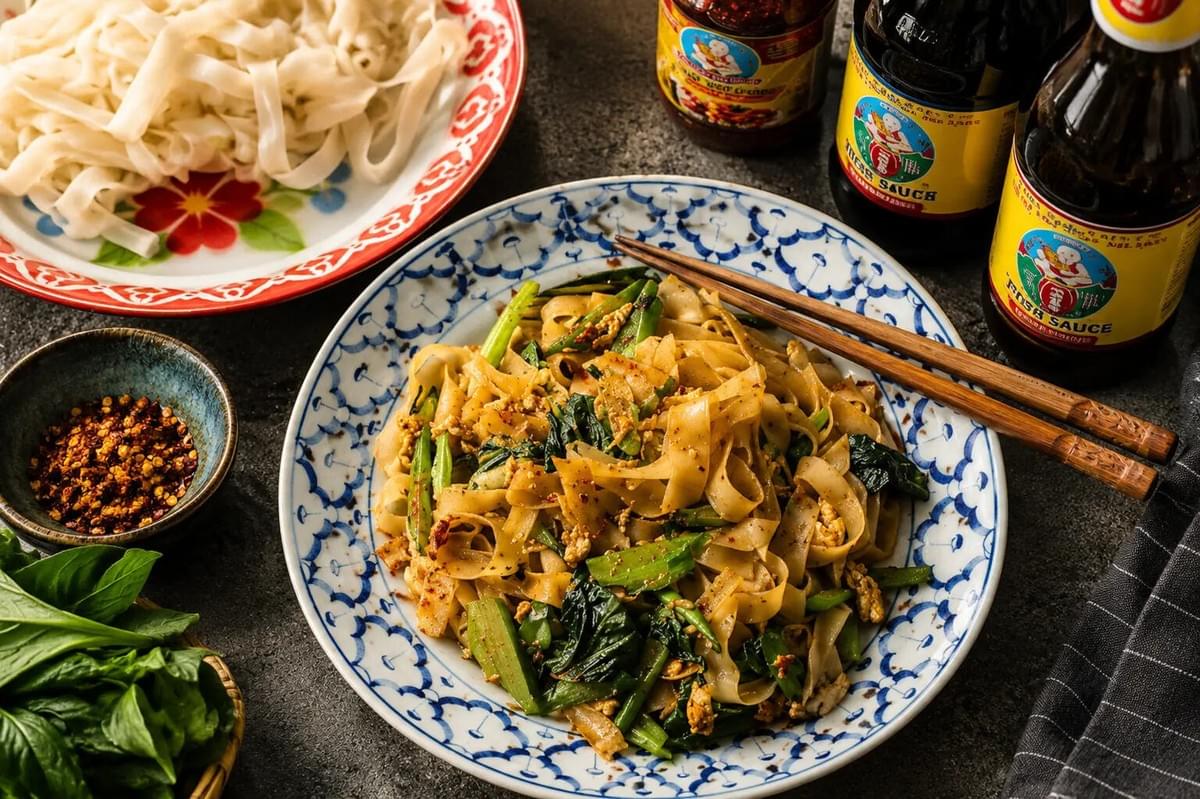
Read through once, then go. From here it moves quickly, so keep everything within arm's reach.
1. Mix the sauce
In a small bowl, stir together 2 tablespoons dark soy sauce, 1 tablespoon light soy sauce, 1 tablespoon oyster sauce, and 1 to 2 teaspoons sugar. Set it right next to the stove.
2. Prep the noodles
If using fresh noodles, gently separate the strands. If using dried, soak them in warm water until bendy but still firm, then drain well. You want them pliable, not soft, since they finish cooking in the pan.
3. Sear the protein
Heat a tablespoon of oil in your wok over high heat until it shimmers. Add your protein in a single layer and let it sit for a moment before stirring. Cook until just done, then push it to one side or scoop it out.
4. Garlic and greens
Add a little more oil if the pan looks dry. Toss in the garlic and cook for a few seconds, just until fragrant. Add the Chinese broccoli stems first, then the leaves, and stir-fry for about a minute until crisp-tender and bright green.
5. Scramble the egg
Push everything to one side. Crack the eggs into the empty space, let them set for a few seconds, then scramble loosely. Do not fully break them up. Soft folds are what you want.
6. Add the noodles and sauce
Add the noodles, then pour the sauce over the top. Fold everything together gently, coating the noodles until they turn glossy and deep brown. Bring the protein back in if you set it aside.
7. Chase the char
Here is the good part. Spread the noodles flat against the hot pan and let them sit, untouched, for 20 to 30 seconds. You are listening for a soft sizzle and watching for edges that darken and catch. Fold, spread again, and repeat once more. That is your wok char.
8. Taste and serve
Taste a noodle. Too flat? A touch more light soy. Not sweet enough? A pinch of sugar. Serve it right away, while the char is still smoky and the noodles are hot.
So what? That resting-against-the-pan step is the difference between plain soy noodles and real pad see ew. Do not skip it.
Troubleshooting
A few honest fixes for the usual bumps.
- Noodles clumping or tearing? They were too cold or handled too roughly. Loosen fresh noodles before cooking, and fold gently instead of stirring hard.
- Too salty? Add a small pinch of sugar and a squeeze of lime to balance it. Next time, ease back on the light soy.
- Too sweet? A splash of light soy or a little vinegar brings it back.
- Sauce too dry? Add a small splash of water and a touch more sauce, folding to coat.
- No wok char? Your pan was not hot enough, or you stirred too much. Let the noodles sit still against the heat.
- Greens gone limp? They overcooked. Add them later next time, and pull the pan sooner.
Variations
Once you know the base, it bends easily.
- Vegetarian or vegan: Use tofu, mushroom "oyster" sauce, and skip or replace the egg. Still smoky, still satisfying.
- Spicy: Add fresh sliced Thai chilies with the garlic, or a spoon of chili flakes. Many people finish it with chili vinegar at the table.
- Extra veg: Fold in sliced carrots, mushrooms, or napa cabbage along with the greens.
- Different proteins: Swap freely between chicken, beef, shrimp, or a mix. Adjust cooking time to suit.
- Lighter on soy: Use tamari and check your oyster sauce label for a gluten-conscious version. Rice noodles themselves are naturally gluten-free, though sauces vary, so read carefully.
Serving and Storage
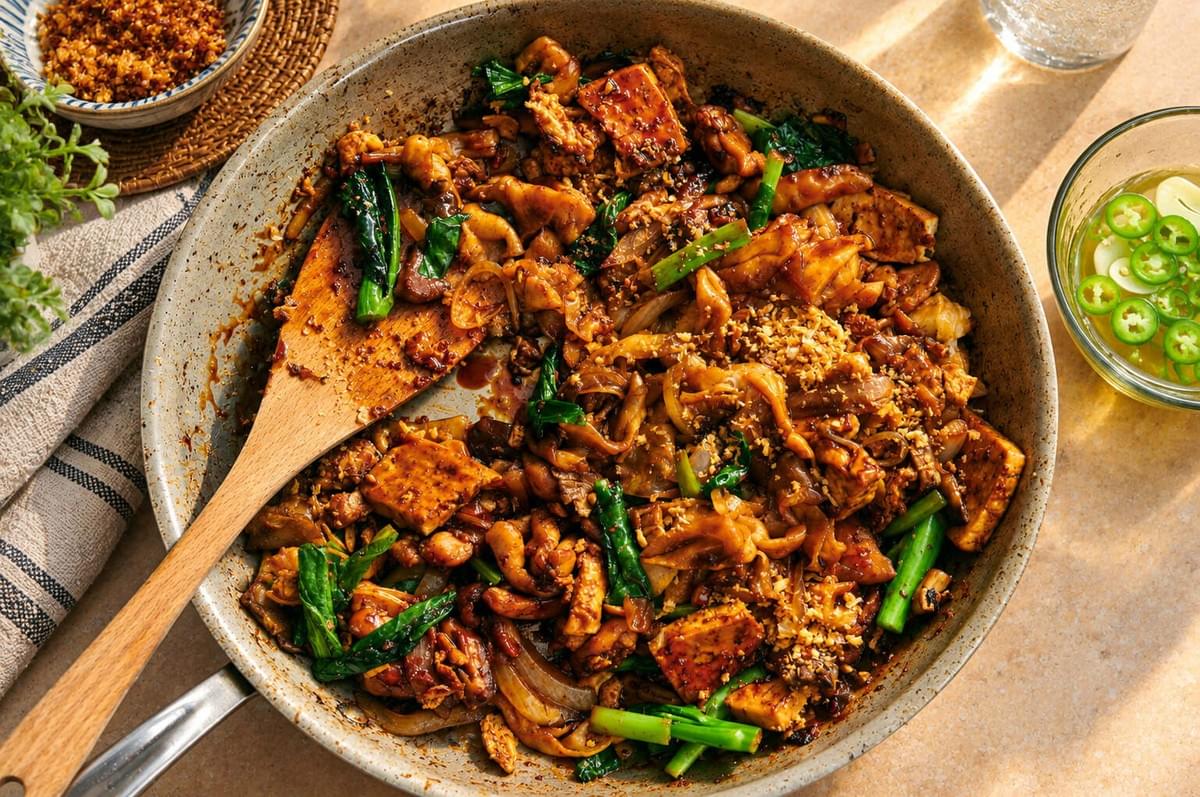
Pad see ew is happiest the moment it leaves the pan, smoky and glossy and hot.
Serve it plain, or with a small dish of chili flakes, fish sauce, sugar, and vinegar on the side, the classic Thai table condiments. Let each person season their own plate.
Leftovers keep in the fridge for a day or two, though the noodles firm up as they cool. To revive them, add a splash of water and toss quickly in a hot pan until loose and warm again. Skip the microwave if you can, since it tends to make the noodles gummy.
FAQ
What noodles are best for pad see ew?
Fresh wide rice noodles (sen yai) are ideal. If you can only find dried, soak them until bendy but still firm, then finish cooking them in the pan.
Can I use regular broccoli instead of gai lan?
Yes. Regular broccoli, broccolini, or bok choy all work. Slice thick stems thin so they cook through in time.
What is dark soy sauce, and can I skip it?
Dark soy sauce is thicker and deeper than regular soy, and it gives the dish its brown color and rich flavor. It is worth seeking out, but in a pinch you can use more regular soy with a little extra sugar. The color and depth will be lighter.
Why don't my noodles get that smoky flavor?
Wok char needs high heat and stillness. Get the pan very hot, spread the noodles flat, and let them sit without stirring so the edges can catch.
Can I make it ahead?
It is best fresh. You can prep the sauce, protein, and vegetables ahead, then cook it all in minutes when you are ready.
How do I keep it from tasting too sweet or too salty?
Taste before serving. Balance salt with a pinch of sugar or a squeeze of lime, and balance sweetness with a splash of light soy or vinegar.
Is pad see ew spicy?
Not on its own. It is sweet and savory. Heat comes from chilies added while cooking or at the table.
Recipe Card
Thai Pad See Ew
- Prep time: 15 minutes
- Cook time: 10 minutes
- Total time: 25 minutes
- Servings: 2
Ingredients
- 14 oz (400 g) fresh wide rice noodles (or 7 oz / 200 g dried, soaked)
- 2 tablespoons dark soy sauce
- 1 tablespoon light soy sauce
- 1 tablespoon oyster sauce
- 1 to 2 teaspoons sugar
- 2 tablespoons neutral oil
- 3 garlic cloves, chopped
- 8 oz (225 g) protein of choice (chicken, beef, shrimp, or tofu)
- 1 bunch Chinese broccoli (gai lan), stems and leaves separated, sliced
- 2 large eggs
- Optional: chili flakes or Thai chilies, white pepper, lime or vinegar to finish
Instructions
- Stir the dark soy, light soy, oyster sauce, and sugar together in a small bowl.
- Loosen fresh noodles by hand, or soak dried noodles until bendy, then drain.
- Heat oil in a wok over high heat and sear the protein until just cooked. Set aside if needed.
- Add the garlic, then the broccoli stems and leaves, and stir-fry until crisp-tender.
- Push everything aside, scramble the eggs loosely in the empty space.
- Add the noodles and sauce, folding gently until glossy and deep brown.
- Spread the noodles flat and let them sit 20 to 30 seconds to catch a little char. Fold and repeat once.
- Taste, adjust, and serve immediately.
Notes
- Do not swap out the dark soy sauce, it gives the dish its color and depth.
- Fold gently so the noodles do not tear.
- For heat, add chilies while cooking or at the table.
- For a vegetarian version, use tofu, mushroom oyster sauce, and adjust the egg.
One Last Plate
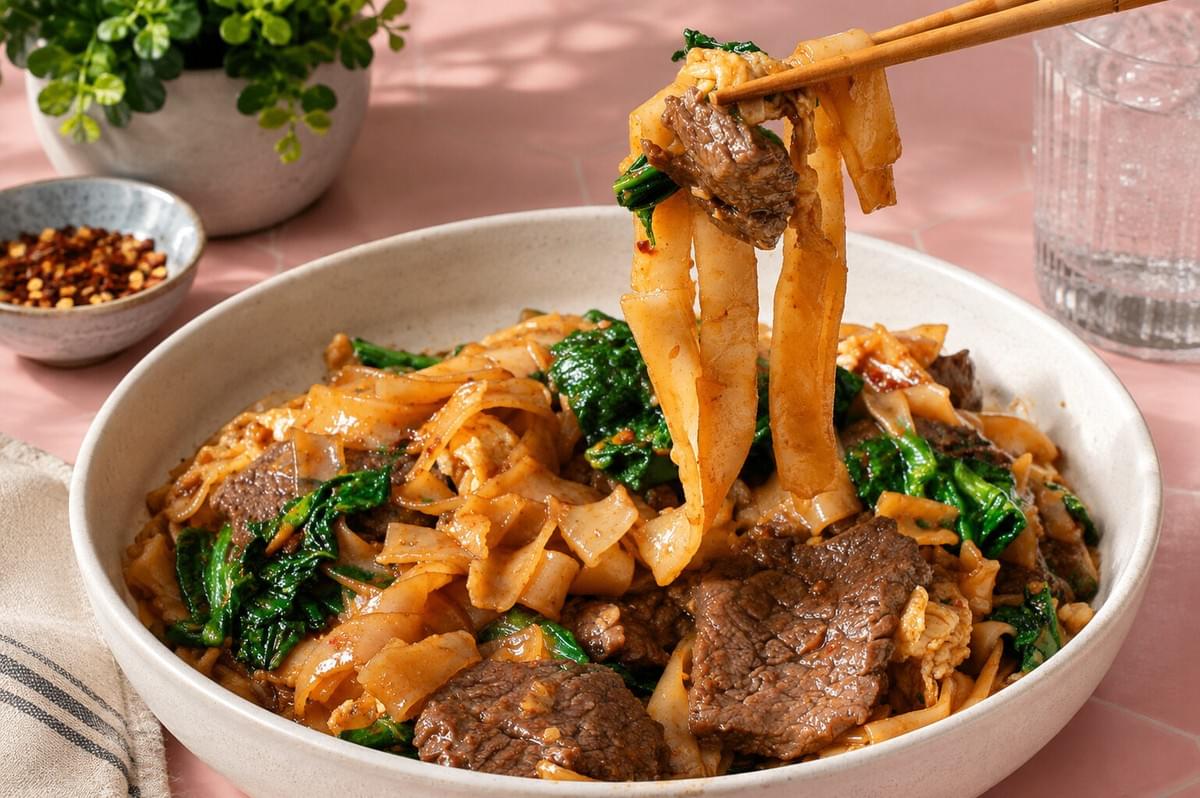
Some meals you cook to impress. This one you cook to feel better.
Pad see ew does not ask for much. A hot pan, a few honest sauces, and the patience to let the noodles sit still long enough to catch a little smoke. In return, you get a plate that tastes like a rainy afternoon under an awning, somewhere you did not plan to stop but were glad you did.
Make it once, and it stops being a recipe. It becomes something you just know.
If you cook it, we would love to hear what you folded in, and whether you chased the char.
