

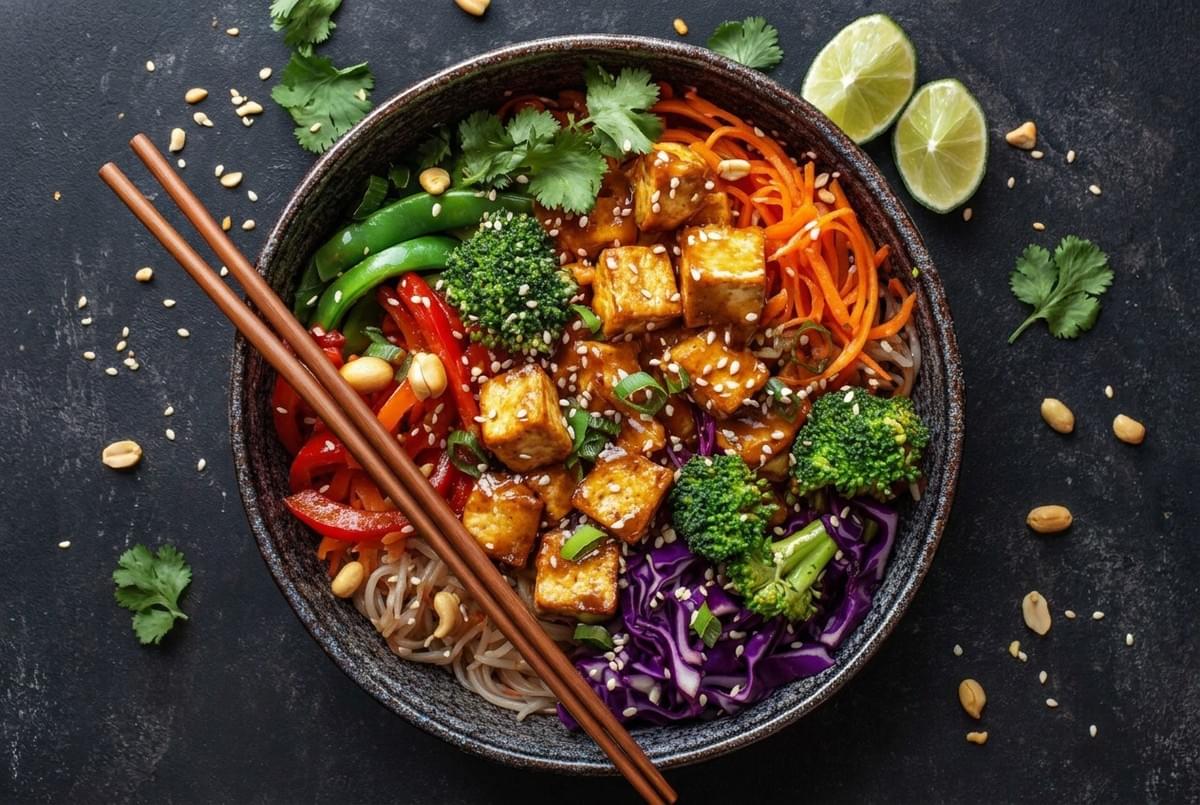
The tofu goes into the pan and goes quiet for a moment. Then the oil finds it, and the edges start to crackle.
You leave it alone. That's the hard part. A few minutes later, you turn one cube with tongs and the underside is golden and firm, like the crust on good bread.
On the counter, a bowl of peanut sauce waits. It started thick and stubborn. Now, with a little warm water, it pours slowly from the whisk. It smells of toasted peanuts, lime, and fresh ginger, with a low hum of garlic underneath.
Thai peanut tofu noodles come together from these few simple things. Soft, slippery rice noodles. Crisp tofu. Bright strips of red pepper and carrot. All of it coated in a sauce that is salty, a little sweet, sour from lime, and gently hot.
It is a weeknight bowl. Nothing fancy. Just the kind of dinner that disappears quietly.
A Little Background on the Flavors
Thai cooking is known for balance. Many dishes bring together salty, sweet, sour, and spicy in a single bite, often through ingredients like lime, chili, garlic, and palm sugar.
Peanuts have their place there too. They are often scattered over noodle dishes like pad thai, and peanut sauce is a familiar partner to satay, the grilled skewers found across Thailand, Malaysia, and Indonesia.
Noodles tossed in a creamy peanut sauce, though, are more common in Western kitchens and restaurants than in Thailand itself. This recipe is not a traditional Thai dish. It's a home-kitchen bowl that borrows Thai-inspired flavors and builds a simple dinner around them.
Why This Recipe Works
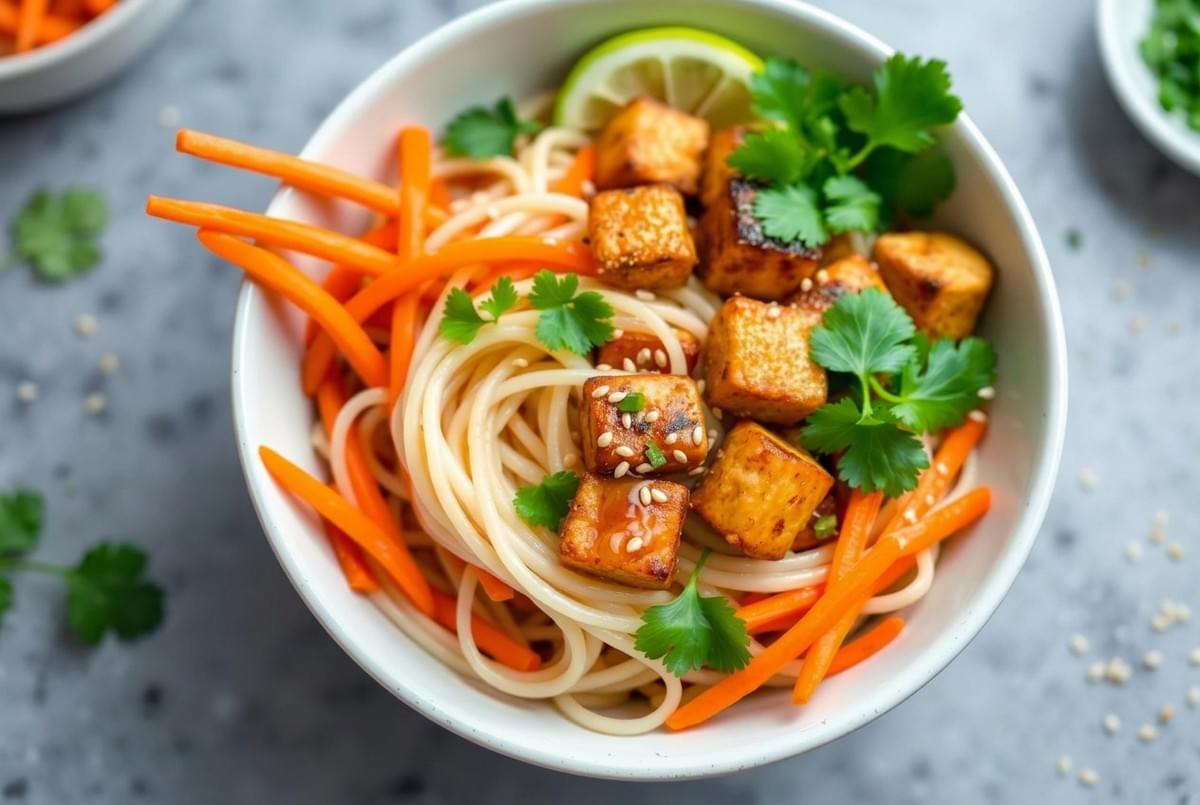
- Contrast in every bite: Crisp tofu, soft noodles, and crunchy vegetables keep the bowl interesting.
- A balanced sauce: Peanut butter brings richness. Lime and soy keep it from feeling heavy. A little chili adds warmth.
- Pantry-friendly: Most of the sauce comes from jars and bottles you may already have.
- One pan for the cooking: The tofu and vegetables share a skillet, and the noodles cook in a pot alongside.
- Plant-based and filling: Tofu and peanuts give the bowl real substance.
Ingredients and Helpful Notes
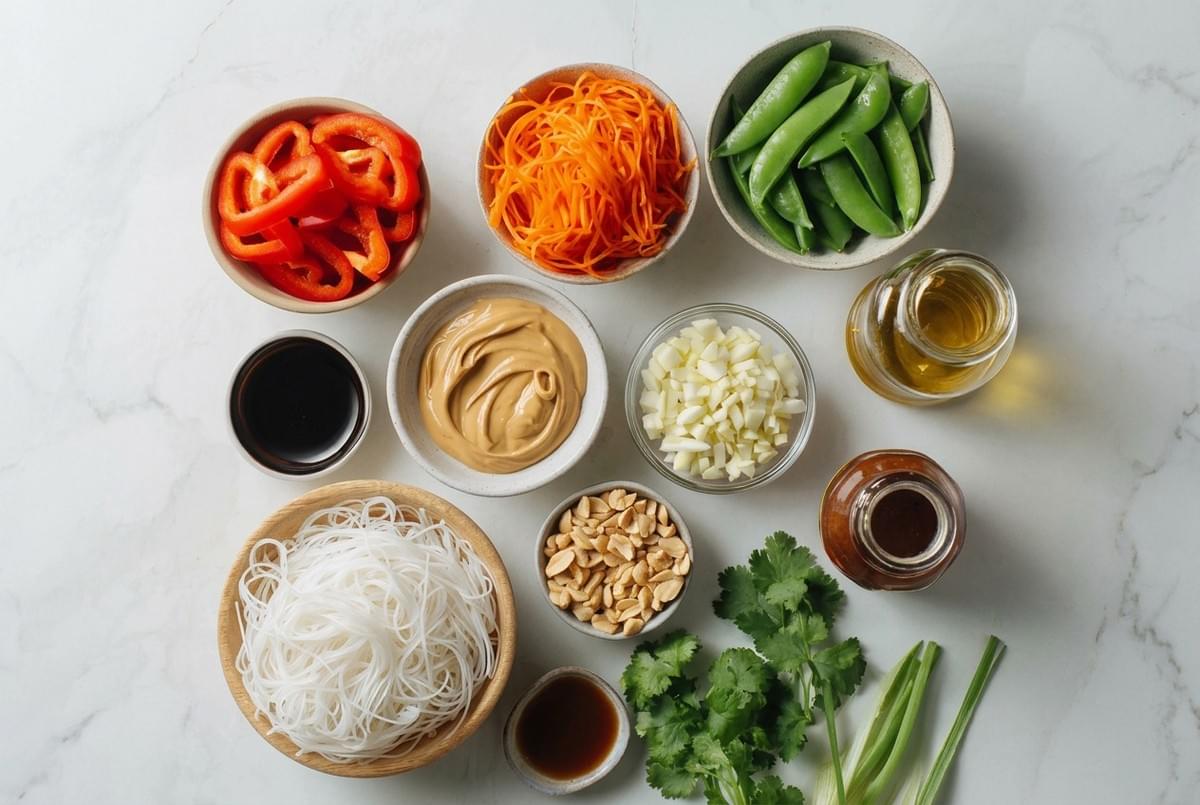
Tofu. Use extra-firm tofu. It holds its shape in the pan and crisps well. Pressing out some of the water first helps it brown instead of steam. Firm tofu works too, though it will be a little softer. Silken tofu is too delicate here.
Noodles. Flat dried rice noodles, about 1/4 inch (6 mm) wide (often sold for pad thai), soak up the sauce nicely and stay tender. Thinner rice vermicelli works but can clump more. Wheat noodles like linguine or udon are fine swaps, though they make the dish chewier and no longer gluten-free.
Peanut butter. Creamy, unsweetened natural peanut butter gives the cleanest flavor. Sweetened brands work, but cut back slightly on the maple syrup. Crunchy peanut butter adds texture but makes a less smooth sauce.
Soy sauce or tamari. This brings salt and depth. Use tamari labeled gluten-free if you need a gluten-free dish. Coconut aminos are milder and sweeter, so you may want a pinch of salt.
Lime, maple syrup, and chili. Fresh lime juice adds the sour note that lifts the sauce. Maple syrup balances the salt. Brown sugar works in its place. Sriracha or sambal oelek adds heat, so start small.
Garlic, ginger, and sesame oil. Fresh garlic and ginger keep the sauce bright. Toasted sesame oil adds a nutty finish.
Vegetables and garnishes. Red bell pepper and carrot add color and crunch. Snap peas, broccoli, or shredded cabbage also suit the sauce. Chopped peanuts, cilantro, and lime wedges finish each bowl.
Recipe: Thai Peanut Tofu Noodles
- Servings: 4
- Prep time: 25 minutes (including 15 minutes to press the tofu)
- Cook time: 20 minutes
- Total time: about 45 minutes
Equipment
- 12-inch (30 cm) nonstick skillet or wok
- Large pot, for the noodles
- Colander
- Clean kitchen towel or paper towels, plus a heavy pan or book for pressing
- Medium bowl and whisk
- Cutting board and sharp knife
- Microplane or fine grater
- Tongs
Ingredients
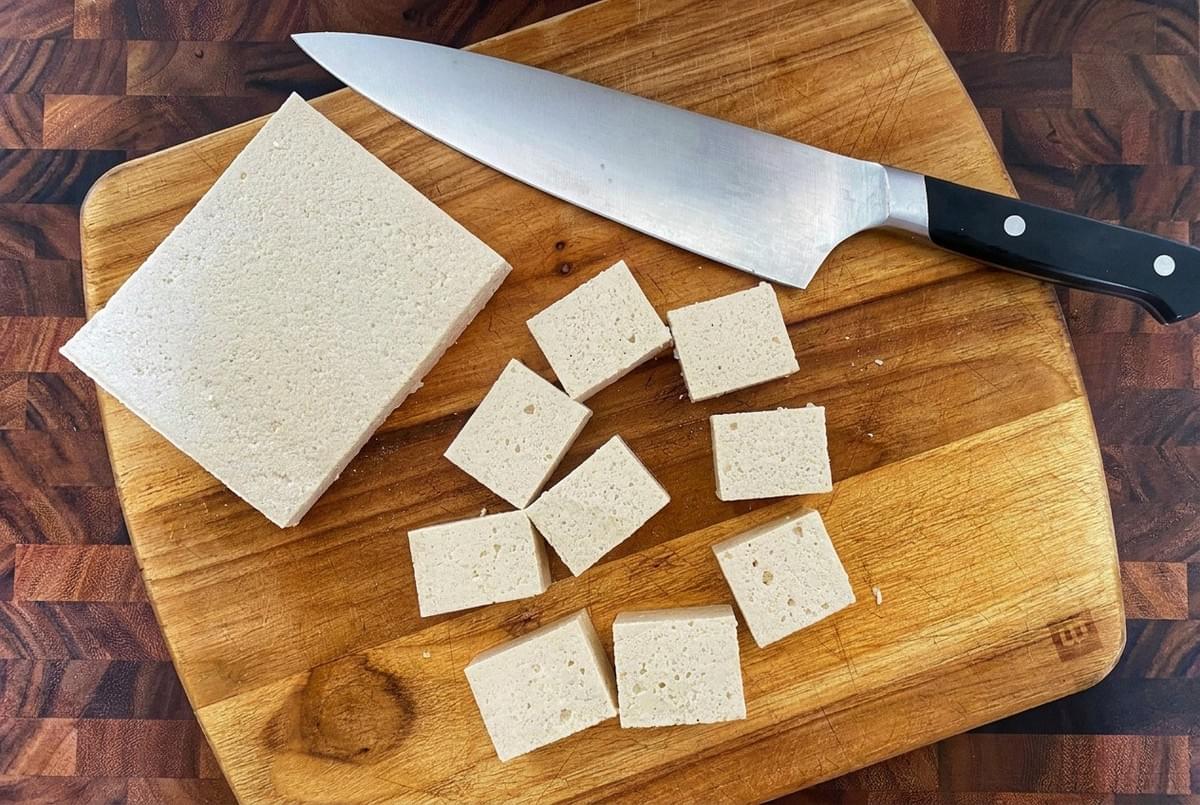
For the tofu
- 1 block (14 oz / 400 g) extra-firm tofu
- 1 tablespoon (15 ml) soy sauce or tamari
- 1 tablespoon (8 g) cornstarch
- 2 tablespoons (30 ml) neutral oil, such as canola or vegetable
For the peanut sauce
- 1/3 cup (85 g) creamy natural peanut butter
- 3 tablespoons (45 ml) soy sauce or tamari
- 2 tablespoons (30 ml) fresh lime juice (about 1 lime)
- 1 tablespoon (15 ml) maple syrup
- 1 teaspoon (5 ml) toasted sesame oil
- 1 to 2 teaspoons sriracha or sambal oelek
- 2 garlic cloves, finely grated
- 1 teaspoon fresh ginger, finely grated
- 1/4 to 1/3 cup (60 to 80 ml) warm water
For the noodles and vegetables
- 8 ounces (225 g) dried flat rice noodles
- 1 teaspoon (5 ml) toasted sesame oil
- 1 tablespoon (15 ml) neutral oil
- 1 red bell pepper, thinly sliced
- 1 medium carrot, cut into thin matchsticks
- 4 scallions, sliced, whites and greens kept separate
To finish
- 1/4 cup (35 g) roasted peanuts, roughly chopped
- 1/4 cup (10 g) fresh cilantro leaves
- 1 lime, cut into wedges
Instructions
- Press the tofu. Drain the tofu and wrap it in a clean towel or several paper towels. Set it on a plate and place a heavy pan on top. Press for 15 minutes. Use this time for the next three steps.
- Make the sauce. In a medium bowl, whisk the peanut butter, 3 tablespoons soy sauce, lime juice, maple syrup, 1 teaspoon sesame oil, sriracha, garlic, and ginger. It will look thick and pasty at first. Whisk in warm water a spoonful at a time until the sauce is smooth and pours like heavy cream.
- Prep the vegetables. Slice the pepper, cut the carrot, and slice the scallions, keeping the whites and greens apart.
- Boil the water. Bring a large pot of water to a boil over high heat.
- Coat the tofu. Unwrap the pressed tofu and cut it into 3/4-inch (2 cm) cubes. Toss gently with 1 tablespoon soy sauce, then sprinkle with the cornstarch and toss again until each cube looks dry and lightly dusted.
- Crisp the tofu. Heat 2 tablespoons oil in the skillet over medium-high heat until it shimmers. Add the tofu in a single layer. Cook without moving for 3 minutes, then turn the cubes every 2 minutes. After 10 to 12 minutes, most sides should be golden and crisp. Move the tofu to a plate.
- Cook the noodles. While the tofu cooks, add the noodles to the boiling water. Cook for 1 minute less than the package says, usually 4 to 6 minutes, until tender but still slightly chewy. Drain, rinse under cold water for 30 seconds, and toss with 1 teaspoon sesame oil.
- Cook the vegetables. Lower the skillet heat to medium. Add 1 tablespoon oil, the bell pepper, carrot, and scallion whites. Stir-fry for 2 to 3 minutes, until the pepper is bright and just softened at the edges.
- Combine. Turn the heat to low. Add the noodles and pour in the sauce. Toss with tongs for 1 to 2 minutes, until every strand is glossy and coated. If the sauce looks thick or sticky, add 1 to 2 tablespoons warm water.
- Return the tofu. Add the tofu and fold it in gently so it stays crisp.
- Serve. Divide among 4 bowls. Top with the scallion greens, chopped peanuts, and cilantro. Add a lime wedge to each.
Tips and Variations
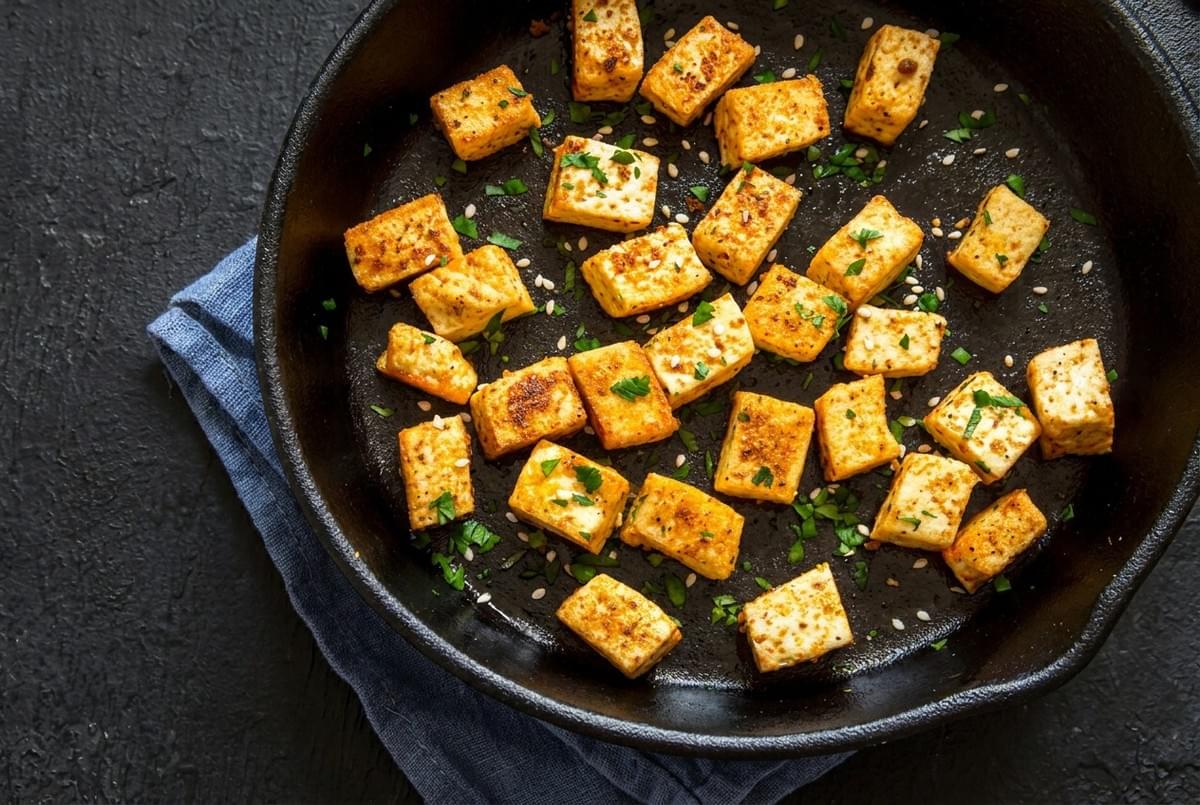
For flavorful tofu: Pressing matters. Less water means better browning, and better browning means more flavor. Give the cubes space in the pan. Crowded tofu steams.
For noodles that don't clump: Rinse them in cold water to wash away surface starch, then toss with sesame oil. Add them to the sauce soon after cooking.
For a smooth, balanced sauce: Use warm water, not cold, so the peanut butter loosens easily. Taste before tossing. Flat? Add soy sauce. Heavy? Add lime. Sharp? Add a little maple syrup.
Variations:
- Vegetables: Swap in snap peas, broccoli florets, or shredded red cabbage. Broccoli needs 4 to 5 minutes in the pan.
- Heat level: Leave out the chili for a mild bowl, or add chili crisp or sliced fresh Thai chilies on top.
- Noodles: Use 8 ounces (225 g) of udon, soba, or linguine. Cook according to the package, then rinse as above.
- Protein: Shelled edamame (thawed from frozen) can join or replace the tofu. Add it with the vegetables.
Serving, Storage, and Reheating
These noodles are a full meal on their own. For something cool alongside, try sliced cucumber with a splash of rice vinegar. Steamed bok choy or a simple green salad also fit.
Storing: Cool leftovers and refrigerate within 2 hours of cooking, or within 1 hour if the room is above 90°F (32°C). Store in airtight containers at 40°F (4°C) or below, and eat within 3 to 4 days. Keep peanuts and herbs separate if you can, so they stay fresh.
Reheating: The sauce thickens as it chills. Add 1 to 2 tablespoons water per serving, then warm in a skillet over medium-low heat for 3 to 4 minutes, tossing often. Or microwave, covered, in 1-minute bursts, stirring between each, until steaming hot throughout. The tofu will soften, but the flavor holds. Leftovers are good cold too.
Freezing: Not recommended. Rice noodles turn brittle and grainy after thawing.
Allergen and Dietary Notes
This dish contains peanuts. It also contains soy (tofu and soy sauce) and sesame (sesame oil). Regular soy sauce contains wheat.
As written, the recipe is vegan. With tamari labeled gluten-free, it can be gluten-free. Always check labels on soy sauce, sriracha, and noodles, since ingredients vary by brand.
FAQs
Which tofu works best?
Extra-firm tofu, pressed for 15 minutes. It holds together and crisps well. Firm tofu works but browns less.
Can I make it ahead?
Yes. Make the sauce up to 4 days ahead and keep it in the fridge. Loosen it with warm water before using. You can cook the tofu a day ahead, then crisp it again in a hot pan for 2 to 3 minutes.
How do I adjust the spice?
Start with 1 teaspoon sriracha and taste. Add more a little at a time. For a milder bowl, skip it and serve chili sauce on the side.
Can I bake the tofu instead?
Yes. Toss the coated cubes with the oil and bake on a parchment-lined sheet at 425°F (220°C) for 25 to 30 minutes, flipping halfway, until golden. Add about 10 minutes to the total time.
A Bowl at the End of the Day
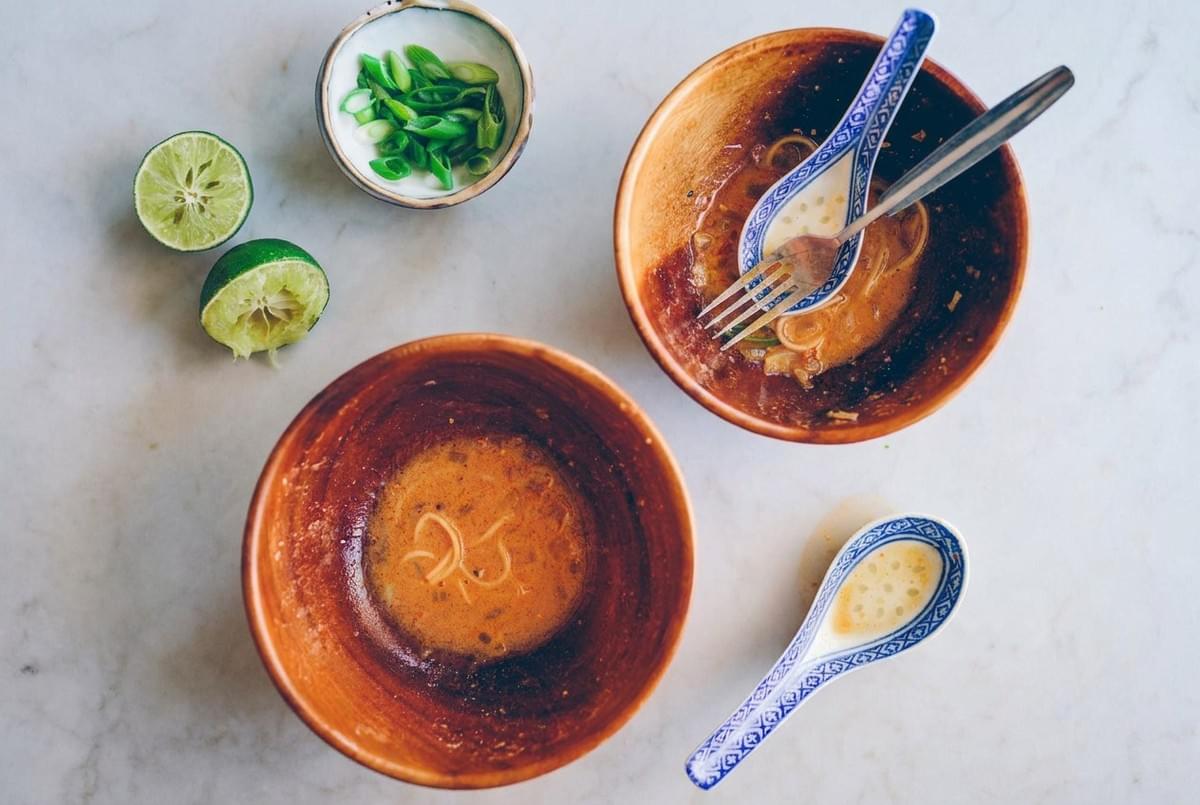
The skillet rests on the stove. A few crushed peanuts sit in the bottom of an empty bowl, next to a squeezed lime.
That's usually where this dish ends. Quietly. Nothing left but a smear of sauce and a clean fork.
Make these Thai peanut tofu noodles some evening this week. Change the vegetables, add more chili, pick a different noodle. Then come back and tell us how you made them your own.
