

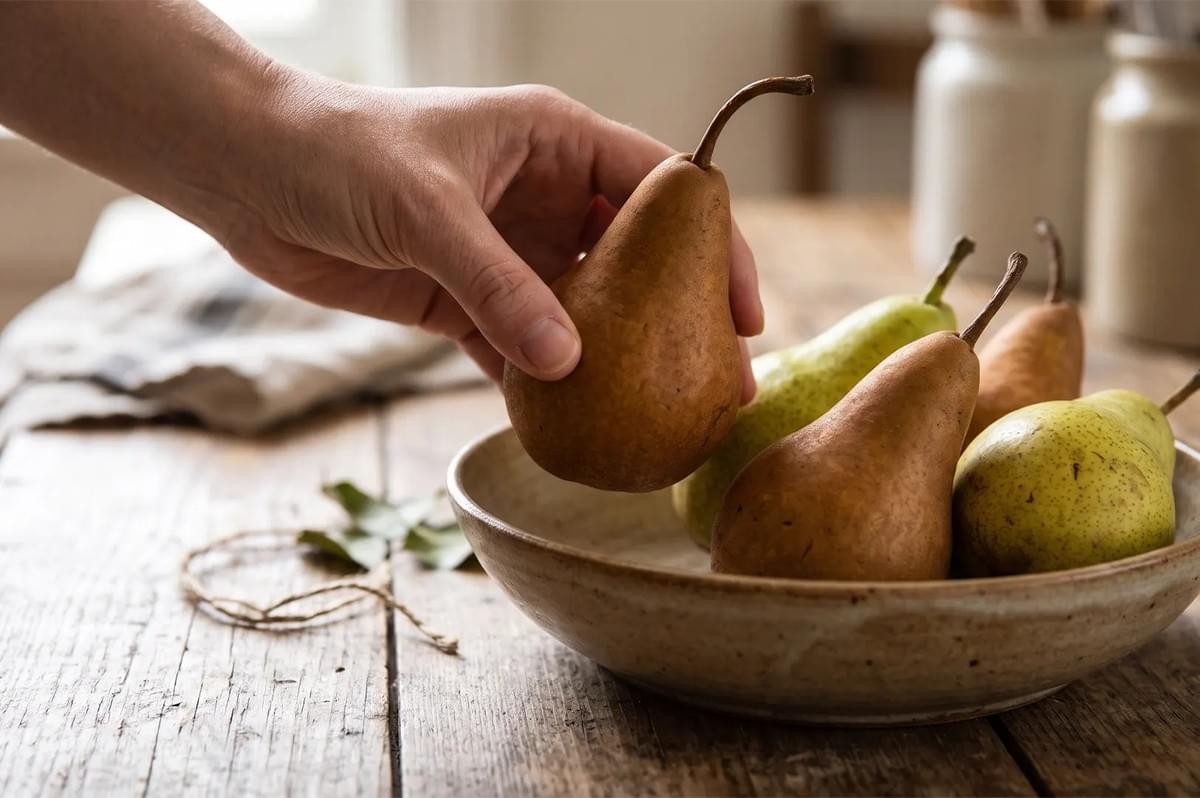
A bowl of pears sits on the counter. Most mornings, nothing seems to change. Then one afternoon the kitchen smells faintly sweet, and the pear closest to the window gives a little when you press near the stem.
That's the quiet thing about pears. They don't call out for attention the way apples do in autumn, piled high in crates and baked into everything. Pears wait. And when they're ready, they're soft, floral, and honeyed in a way that feels made for cooler days.
This post gives them the spotlight. You'll find a little about why pears suit autumn baking, how to choose and ripen them, and one easy pear tart: puff pastry, a thin layer of almond cream, and fanned pear slices baked until golden at the edges. It's simple enough for a weeknight and pretty enough for a table full of guests.
Why Pears Belong to Autumn
Pears are an autumn fruit, and they behave a little differently from most.
Many common varieties are harvested from late summer into fall. They're picked when mature but still firm, then left to ripen off the tree. That's why the pears you bring home are often hard. They aren't faulty. They just need a few days.
Flavor That Deepens With Heat
A ripe pear tastes gentle and sweet, sometimes with notes of honey or flowers. In the oven, that flavor softens and concentrates. The edges of each slice catch a little color, and the juices thicken into something close to syrup.
Pears also pair easily with autumn flavors: almond, vanilla, cinnamon, ginger, and brown butter. None of them overpower the fruit. They frame it.
Texture Is Everything
From a pastry point of view, texture is where pears ask for care. Some varieties turn silky and hold their shape when baked. Others release so much juice they slump into a puddle.
For a tart, you want slices that stay whole, turn tender, and keep their fan shape in the oven. That makes choosing the right pear the most important step, before you even turn on the oven.
Choosing the Right Pears for Baking
A good tart starts at the market, so here's what to look for.
- Bosc: Long neck, russet-brown skin, dense flesh. It holds its shape well and tastes honeyed when baked. A reliable choice for this tart.
- Anjou (green or red): Mild, juicy, and widely available. Use it when ripe but still firm.
- Bartlett: Very fragrant and soft when fully ripe, which can make it watery in a tart. Choose slightly underripe ones if this is what you have.
- Comice: Buttery and delicate. It's lovely eaten fresh with cheese but can be too soft for baking.
How to Tell When a Pear Is Ready
Pears ripen from the inside out, so the body can still feel firm when the center is ready. Instead, check the neck. Press gently near the stem with your thumb. If it yields slightly, the pear is ripe.
For this tart, aim for ripe but firm: a little give at the neck, but not soft through the body. To speed things up, keep hard pears in a paper bag at room temperature for a day or two.
Easy Pear and Almond Tart
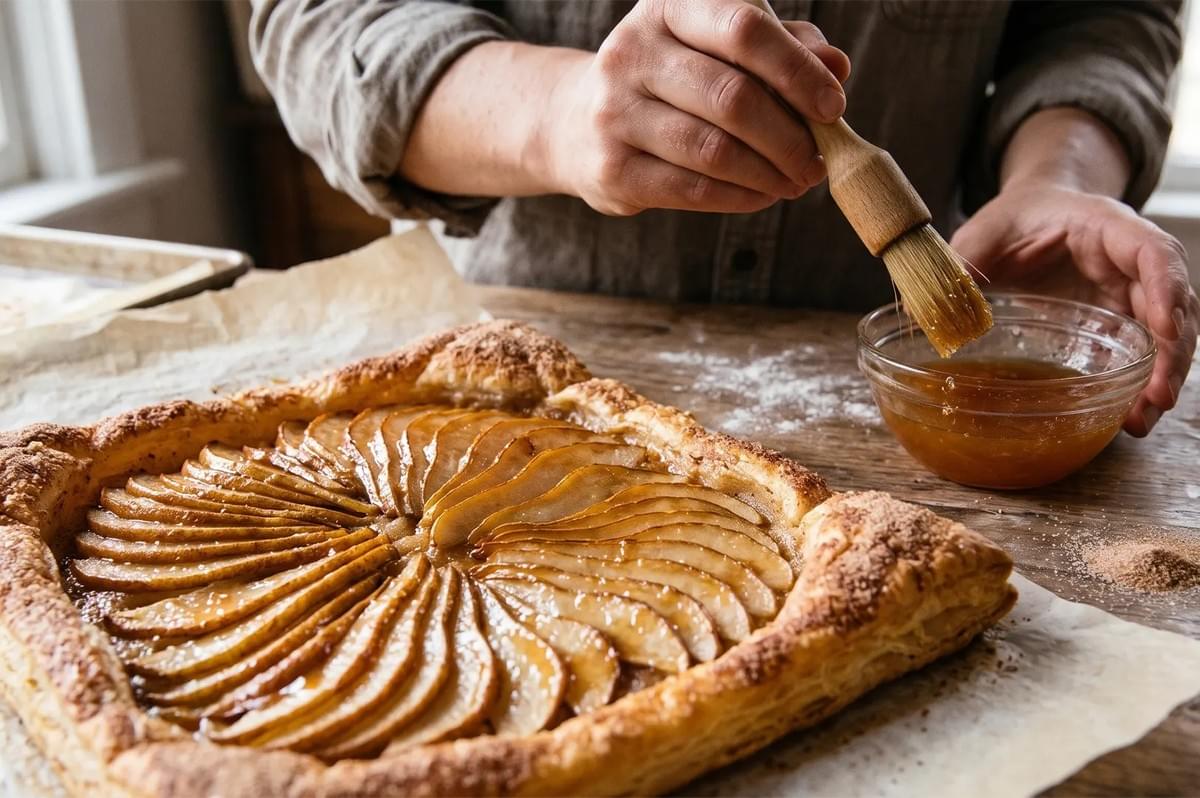
This tart leans on store-bought puff pastry, which does the hard work for you. The almond cream bakes into a soft, nutty layer that catches the pear juices and keeps the pastry from turning soggy.
- Servings: 8
- Prep time: 25 minutes
- Bake time: 30 to 35 minutes
- Cooling time: 15 minutes
- Total time: about 1 hour 15 minutes (plus thawing the pastry)
Ingredients
For the tart base
- 1 sheet frozen puff pastry (about 9 x 10 inches), thawed according to the package
- 1 large egg beaten with 1 tablespoon milk, for egg wash
For the almond cream
- 4 tablespoons (57 g) unsalted butter, softened
- 1/3 cup (67 g) granulated sugar
- 1 large egg, at room temperature
- 3/4 cup (75 g) almond flour
- 1 tablespoon all-purpose flour
- 1/2 teaspoon vanilla extract
- Pinch of salt
For the pears
- 3 medium ripe-but-firm Bosc or Anjou pears (about 1 1/2 lb / 680 g)
- 1 tablespoon lemon juice
- 1 tablespoon granulated sugar
- 1/4 teaspoon ground cinnamon
For the glaze
- 2 tablespoons apricot jam
- 1 teaspoon water
Instructions
- Heat the oven. Set it to 400°F (200°C) with a rack in the center. Line a large baking sheet with parchment paper.
- Prepare the pastry. Unfold the thawed puff pastry onto the lined sheet. With a sharp knife, score a line about 3/4 inch in from each edge to form a border. Cut only partway through the pastry. Prick the center all over with a fork, but leave the border alone so it can puff. If the pastry feels soft or sticky, chill the whole sheet for 10 minutes.
- Make the almond cream. In a medium bowl, beat the butter and sugar with a spoon or hand mixer until smooth and creamy, about 1 minute. Beat in the egg. The mixture may look a little curdled at first; that's fine. Stir in the almond flour, all-purpose flour, vanilla, and salt until you have a thick, spreadable paste.
- Spread the cream. Spoon the almond cream into the center of the pastry and spread it evenly inside the scored border. Keep the layer thin and even, so it bakes through at the same rate.
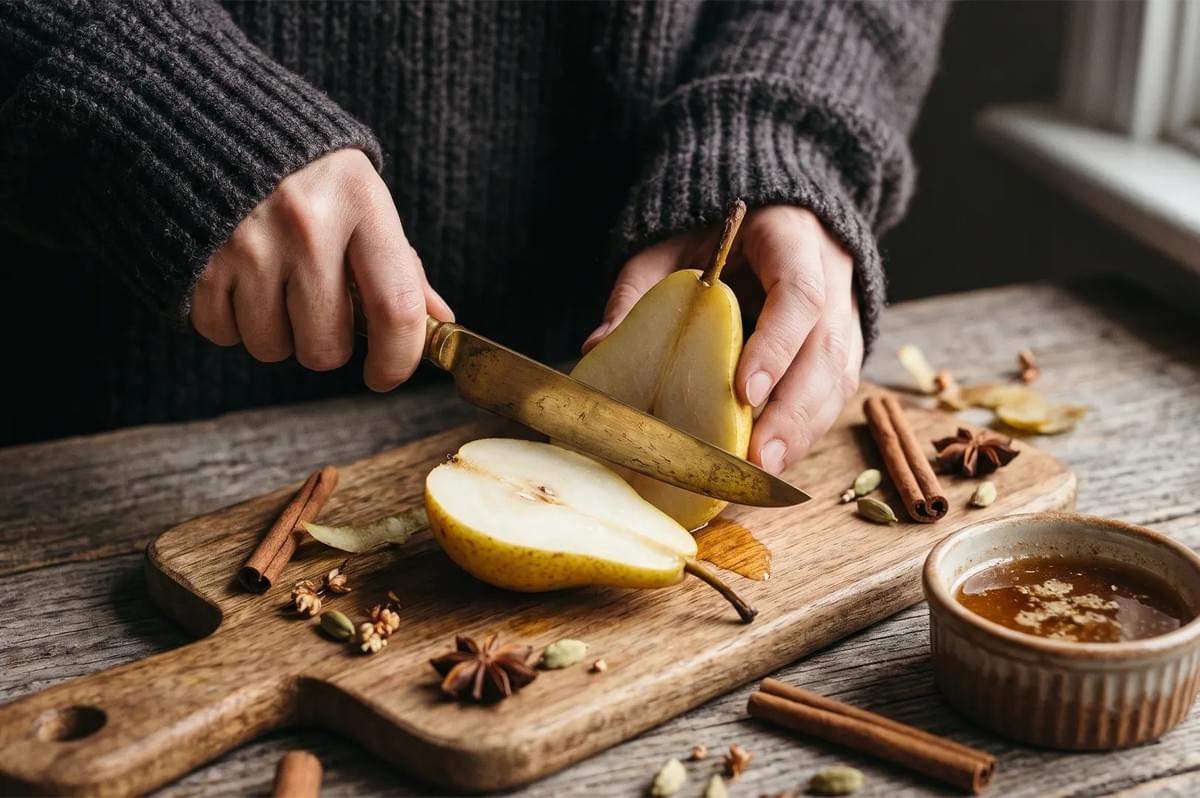
- Slice the pears. Peel the pears, cut them in half lengthwise, and scoop out the cores with a small spoon. Lay each half flat and slice it crosswise into 1/4-inch slices, keeping the slices together. Toss gently with the lemon juice to keep them from browning.
- Arrange the fruit. Press each sliced pear half lightly so the slices fan out. Lift them with a spatula and set them over the almond cream in neat rows. Slight overlaps are fine. Leave the border clear.
- Finish the top. Mix the 1 tablespoon sugar with the cinnamon and sprinkle it over the pears. Brush the border with the egg wash, taking care not to let it drip down the sides. Drips glue the layers together and keep them from rising.
- Bake. Bake for 30 to 35 minutes. The tart is ready when the border is puffed and deep golden, the almond cream looks set and lightly browned between the slices, and a knife slides easily into the pears. Lift one corner with a spatula: the underside should be golden, not pale.
- Glaze and cool. Warm the apricot jam and water in a small pan or the microwave until loose, then strain if lumpy. Brush it gently over the warm pears for a soft shine. Let the tart cool on the sheet for at least 15 minutes before slicing.
Baking Tips From the Pastry Side
A few small details make a noticeable difference.
Keep the pastry cold. Puff pastry rises because cold butter turns to steam in the oven. If it warms up while you work, chill it again. A few minutes in the fridge is time well spent.
Don't overload the center. Too much almond cream or fruit can weigh down the pastry and leave it damp underneath. A thin layer is enough.
Trust the color. Pale pastry often means underbaked pastry, even if the top looks done. Deep golden brown is what you want.
Slice evenly. Even slices bake evenly. If some are thick and some thin, you'll end up with a mix of mushy and firm fruit.
Substitutions and Variations
The core recipe stands on its own. These changes are optional.
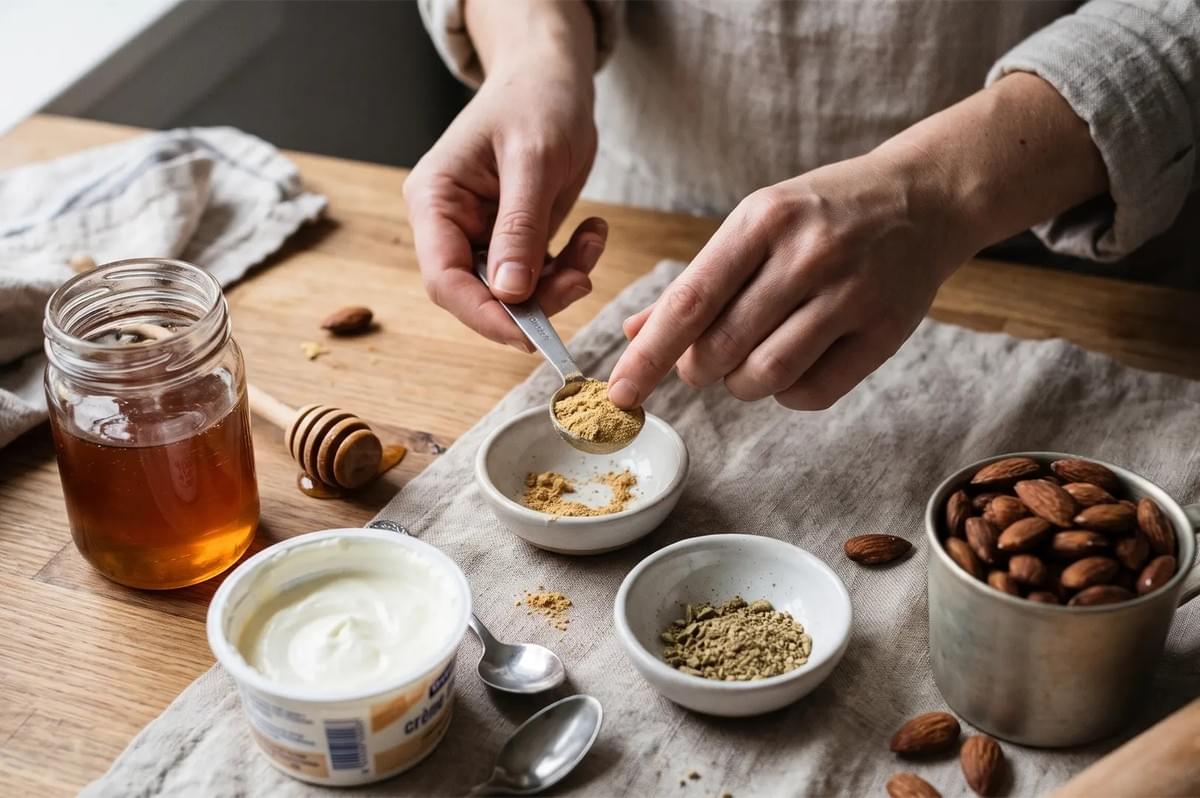
- Spice: Swap the cinnamon for ground ginger or cardamom. Each gives the pears a different kind of warmth.
- Glaze: Honey thinned with a little warm water works in place of apricot jam, though it tastes sweeter.
- Nut-free: The almond cream contains tree nuts. For a nut-free version, skip it and spread 2 tablespoons of softened butter mixed with 2 tablespoons of brown sugar over the pastry instead. The base will be thinner and more caramel-like.
- Pastry: A homemade or store-bought pie crust can stand in for puff pastry. It bakes up flaky rather than puffed, and may need a few extra minutes.
Serving Ideas
This tart is good on its own, still slightly warm, cut into squares.
If you'd like a little more, add a spoonful of lightly sweetened whipped cream, crème fraîche, or vanilla ice cream. The cool, creamy side softens the sweetness of the glaze. A cup of black tea or coffee sits nicely beside it, too.
For a gathering, bake it an hour or two ahead and let it rest at room temperature. It slices more cleanly once fully cool.
Storing Leftovers
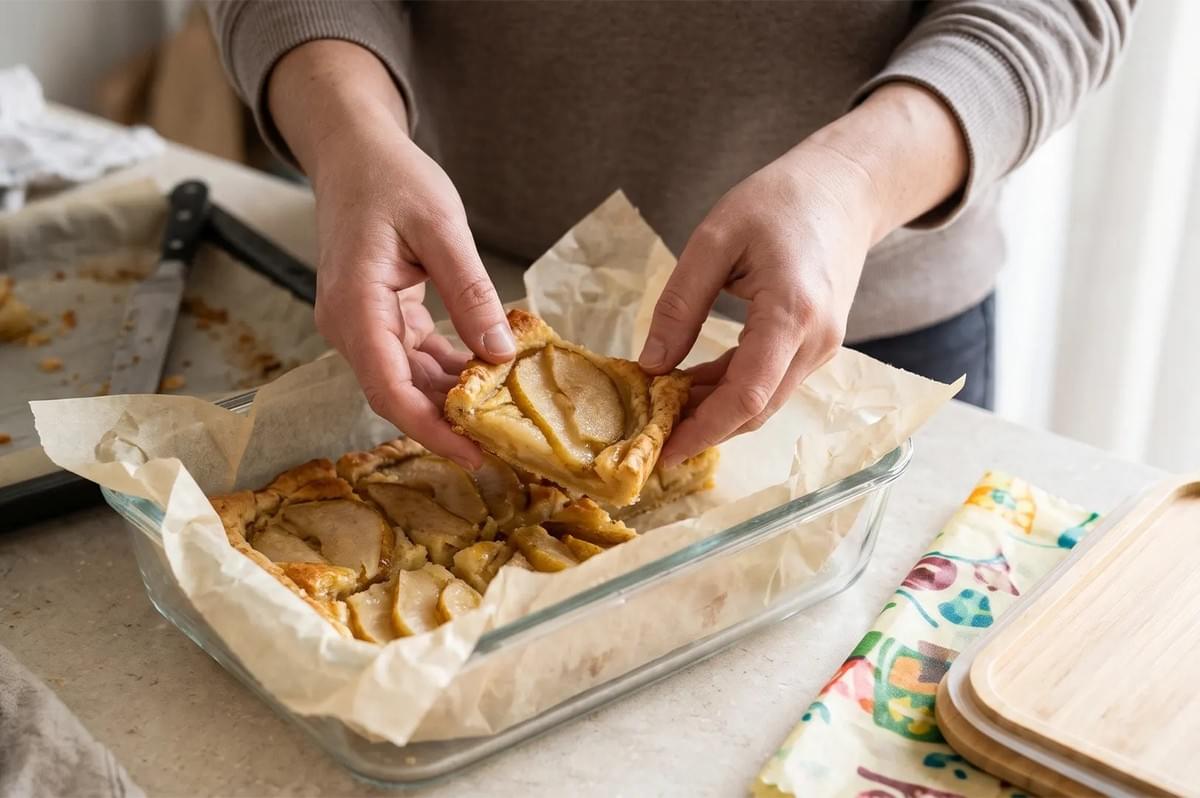
The almond cream contains egg and butter, so treat leftovers like any baked dessert with a dairy-rich filling.
- Same day: Keep it at room temperature, loosely covered, for a few hours.
- Refrigerator: Cover and refrigerate within 2 hours of baking. It keeps for up to 3 days.
- Reheating: The pastry softens in the fridge. Warm slices on a baking sheet at 350°F (175°C) for 8 to 10 minutes to bring back some crispness.
Freezing isn't recommended. The pears turn watery as they thaw, and the pastry loses its layers.
A Pear, Waiting
Somewhere on your counter, or at the market this week, there's a pear that's almost ready.
Give it a day or two. Press gently near the stem. Then slice it thin, lay it over almond cream, and let the oven do the rest. The kitchen will smell of butter and fruit long before the timer goes off.
Bake this tart on an unhurried autumn afternoon, and let us know which pears you chose and how you served yours.
