


Some dishes are just food, and some dishes are a national obsession. In Myanmar, that dish is Mohinga. It is more than just a soup; it is the unofficial national dish, the breakfast of champions, a beloved street food staple, and a hug in a bowl all rolled into one. If you have ever walked the bustling streets of Yangon in the morning, you have heard the calls of the Mohinga vendors and smelled the incredible aroma of lemongrass, fish, and spices wafting through the air.
Mohinga is a fragrant fish noodle soup that is savory, slightly sweet, and endlessly comforting. The broth is the star of the show, a rich and complex soup thickened with toasted rice powder and chickpea flour, built on a base of fresh catfish and aromatics. It is ladled over a nest of slippery rice noodles and then piled high with a dizzying array of toppings.
Now, I know "fish soup for breakfast" might sound a little unusual to some, but trust me on this. The flavors are so perfectly balanced that it just works. It is hearty enough to keep you going all day, yet light enough that it does not weigh you down. Making Mohinga at home might seem like a huge project, but it is a fun, rewarding process. It is the kind of recipe you make on a slow weekend, letting the soup simmer away while your kitchen fills with the most incredible smells. Let’s bring this Burmese classic into your home kitchen!
The Building Blocks of Mohinga
Before we dive into the recipe, let's talk about the key players. Understanding what goes into this soup will make the process much less intimidating, especially when you head to the Asian grocery store.
The Fish:
Traditionally, Mohinga is made with fresh catfish. Its mild, slightly sweet flavor is perfect for the broth. If you cannot find fresh catfish, do not worry! Frozen catfish fillets work wonderfully. In a pinch, you could also use another firm, white fish like tilapia or cod, but catfish really gives it that authentic taste.
The Aromatics:
This is where the magic happens. The broth gets its signature fragrance from a powerful trio: lemongrass, ginger, and garlic. These are pounded or blended into a paste and fried until they release their incredible aromas.
The Thickeners:
What gives Mohinga its unique, hearty texture are two key thickeners. First is toasted rice powder. You can buy this pre-made, or easily make it yourself by toasting uncooked rice in a dry pan until golden and grinding it into a powder. The second is chickpea flour (also called gram flour or besan), which adds a subtle nutty flavor and silky body to the soup.
The Noodles:
Mohinga is always served with thin, round rice noodles, often called rice vermicelli. They are the perfect vehicle for soaking up all that delicious broth.
The Toppings:
This is where you can really have fun and customize your bowl. The toppings add texture, freshness, and extra layers of flavor. Essentials include hard-boiled eggs, crispy fried shallots, fresh cilantro, and a squeeze of lime. But the real star is the crispy fritters, like split pea fritters (pe kyaw) or bottle gourd fritters (bu thee kyaw).
Ingredients You Will Need
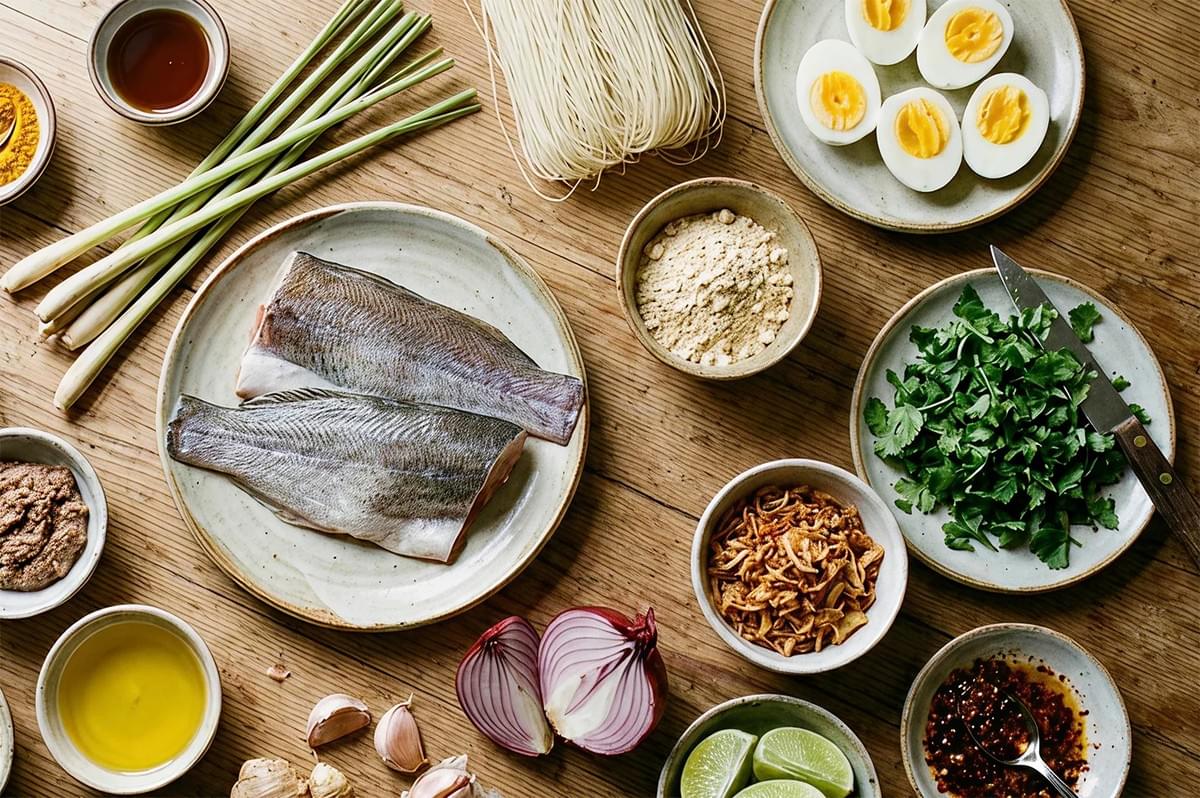
This recipe makes a generous pot of soup, serving about 4-6 people.
For the Broth:
- 500g (1.1 lbs) catfish fillets, fresh or frozen
- 2 liters (8 cups) water
- 4 stalks of lemongrass, tough outer layers removed
- 2-inch piece of ginger, peeled
- 4 cloves of garlic, peeled
- 1 large onion, peeled and quartered
- 1 teaspoon turmeric powder
- 1 tablespoon fish sauce
- 1 teaspoon shrimp paste (optional, but recommended for depth)
- 3 tablespoons vegetable oil
For Thickening and Finishing:
- 3 tablespoons toasted rice powder
- 3 tablespoons chickpea flour
- Salt and black pepper to taste
- 1 teaspoon paprika (for color)
For Serving:
- 400g (14 oz) dried rice vermicelli noodles
- 4 hard-boiled eggs, peeled and halved
- 1/2 cup fresh cilantro, chopped
- 1/2 cup crispy fried shallots (store-bought is great)
- Lime wedges
- Chili flakes or chili oil
- Crispy fritters, like split pea fritters (optional, but amazing)
Step-by-Step Cooking Instructions
Ready to build some flavor? Let’s get started.
Part 1: Making the Fish Broth
- Prepare the Aromatics: Roughly chop 3 of the lemongrass stalks, the ginger, and the garlic. The fourth lemongrass stalk should be bruised with the back of your knife and left whole.
- Boil the Fish: In a large stockpot, combine the water, catfish fillets, the whole bruised lemongrass stalk, the quartered onion, and a teaspoon of salt. Bring to a boil, then reduce the heat and let it simmer for about 20 minutes, or until the fish is cooked through and flakes easily.
- Flake the Fish: Carefully remove the cooked fish from the pot and set it on a plate to cool slightly. Leave the broth simmering on low heat. Once the fish is cool enough to handle, use a fork to flake it into small pieces, making sure to remove any bones. Set the flaked fish aside. Discard the onion and whole lemongrass stalk from the pot.
Part 2: Building the Flavor Base
- Create the Fragrant Paste: In a blender or food processor, combine the chopped lemongrass, ginger, and garlic. Blend until you have a coarse paste. You can also do this the traditional way with a mortar and pestle.
- Fry the Paste: Heat the vegetable oil in a separate large pot or Dutch oven over medium heat. Add the aromatic paste and fry for about 5-7 minutes, stirring frequently, until it is fragrant and starting to turn golden.
- Add the Spices: Stir in the turmeric, paprika, and shrimp paste (if using). Cook for another minute until the spices are toasted and fragrant.
- Incorporate the Fish: Add the flaked fish to the pot with the aromatic paste. Stir gently to coat the fish with all the spices and fry for about 2-3 minutes.
Part 3: Bringing It All Together
- Combine and Simmer: Carefully pour the simmering fish broth into the pot with the fish and spice mixture. Add the fish sauce. Bring the soup back to a gentle simmer.
- Thicken the Soup: In a small bowl, whisk the toasted rice powder and chickpea flour with about a cup of cold water until you have a smooth, lump-free slurry. Slowly pour this slurry into the simmering soup, whisking constantly to prevent clumps from forming.
- The Final Simmer: Let the soup simmer on low for at least 30 more minutes. The longer it simmers, the more the flavors will meld. The soup should thicken to a consistency slightly thicker than water but not as thick as a gravy. Season with salt and pepper to your liking.
Part 4: Preparing for Serving
- Cook the Noodles: While the soup is simmering, cook the rice vermicelli according to the package directions. Drain well and rinse with cold water to stop the cooking process.
- Get Your Toppings Ready: Halve your hard-boiled eggs, chop your cilantro, and set out your fried shallots, lime wedges, and chili flakes in small bowls. This allows everyone to customize their own bowl.
How to Serve Your Mohinga

Serving Mohinga is a fun, interactive process.Start by placing a generous portion of cooked rice noodles in the bottom of a deep bowl. Ladle the hot, fragrant broth over the noodles, making sure to get plenty of the flaked fish.
Now for the toppings! Add a halved hard-boiled egg. Sprinkle liberally with fresh cilantro and crispy fried shallots. If you have crispy fritters, break them up and scatter them over the top for an amazing crunch. Finish with a big squeeze of lime juice and a pinch of chili flakes if you like it spicy. Give everything a gentle mix with your spoon and chopsticks, and dive in.
Variations and Substitutions
Mohinga is a very regional dish, and every family has their own version. Feel free to play around with it!
- No Catfish? Tilapia, cod, or even canned tuna (drained well) can work as a substitute, though the flavor will be different.
- The Banana Stem: A very traditional ingredient is the tender inner core of the banana stem, which is sliced and added to the soup for a unique texture. If you can find it at a Southeast Asian market, it is a fantastic addition.
- Extra Veggies: While not traditional, you could add some sliced mushrooms or bamboo shoots to the broth for extra texture.
- Making Toasted Rice Powder: If you can't find it pre-made, simply toast a few tablespoons of uncooked jasmine or short-grain rice in a dry skillet over medium heat until it is golden and smells nutty. Let it cool, then grind it into a powder using a spice grinder or blender.
Storage Recommendations
Leftover Mohinga broth is a treasure! It actually tastes even better the next day. Store the broth and the noodles separately in airtight containers in the refrigerator. The noodles will get mushy if left in the broth. The broth will keep for up to 3 days. Reheat it gently on the stovetop. Cook fresh noodles or reheat your leftover noodles just before serving.
A Bowl Full of History and Heart
Making Mohinga is about more than just following a recipe. It is about participating in a culinary tradition that has brought comfort and joy to millions of people for generations. It is a dish that is deeply woven into the fabric of daily life in Myanmar.
So take your time, enjoy the process, and get ready to fall in love with this incredible fish noodle soup. It is a taste of Myanmar that is sure to become a new favorite in your comfort food rotation.
