

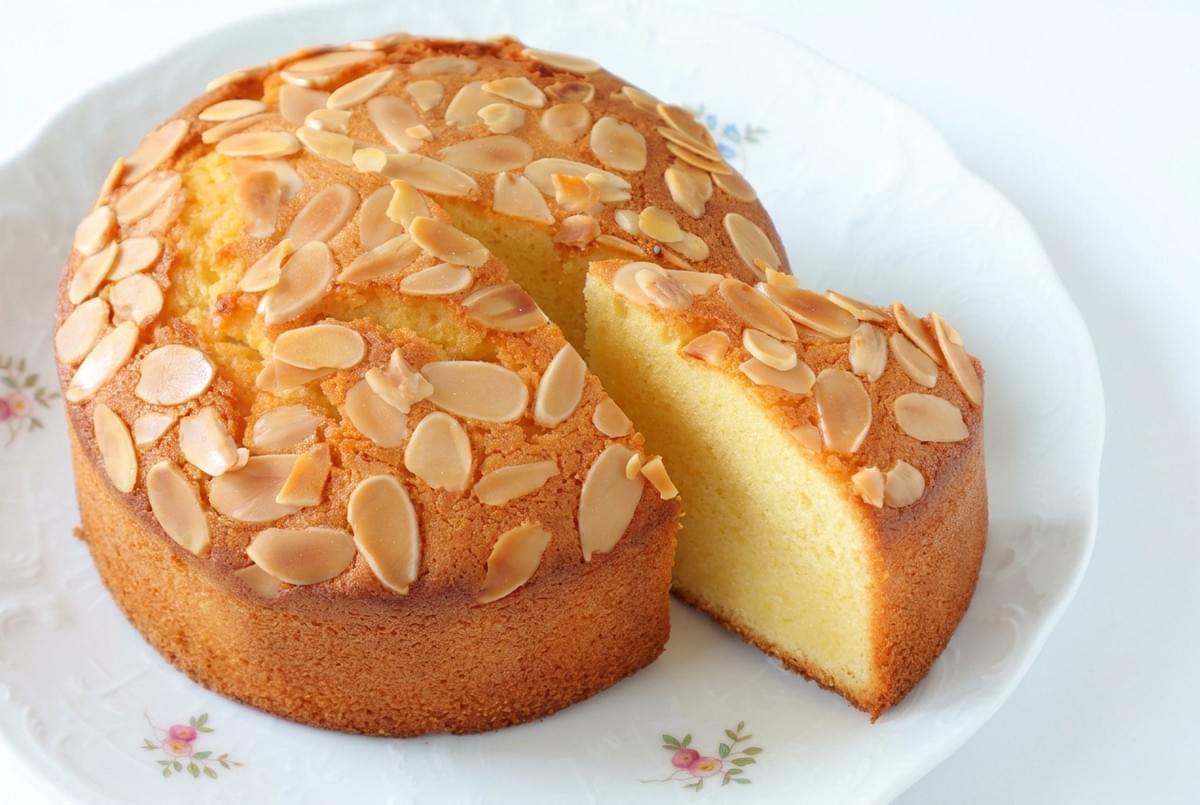
The eggs go pale before you notice it happening.
At first they are yellow and loose, sliding around the bowl. Then the mixer hums for a few minutes and they rise and thicken. Soon they look like soft, pale clouds. Lift the whisk and a ribbon falls back and sits on the surface for a moment before it sinks.
Later the oven door opens, and the kitchen smells of warm butter and toasted almonds.
This Chinese almond sponge cake is light, gently sweet, and quiet in the best way. The crumb is soft and springy, with tiny even bubbles. The almond flavor stays in the background, and a scattering of sliced almonds turns golden and crisp on top.
It is a cake for an afternoon pot of tea. Cut it into wedges and pass it around the table.
A Little Background
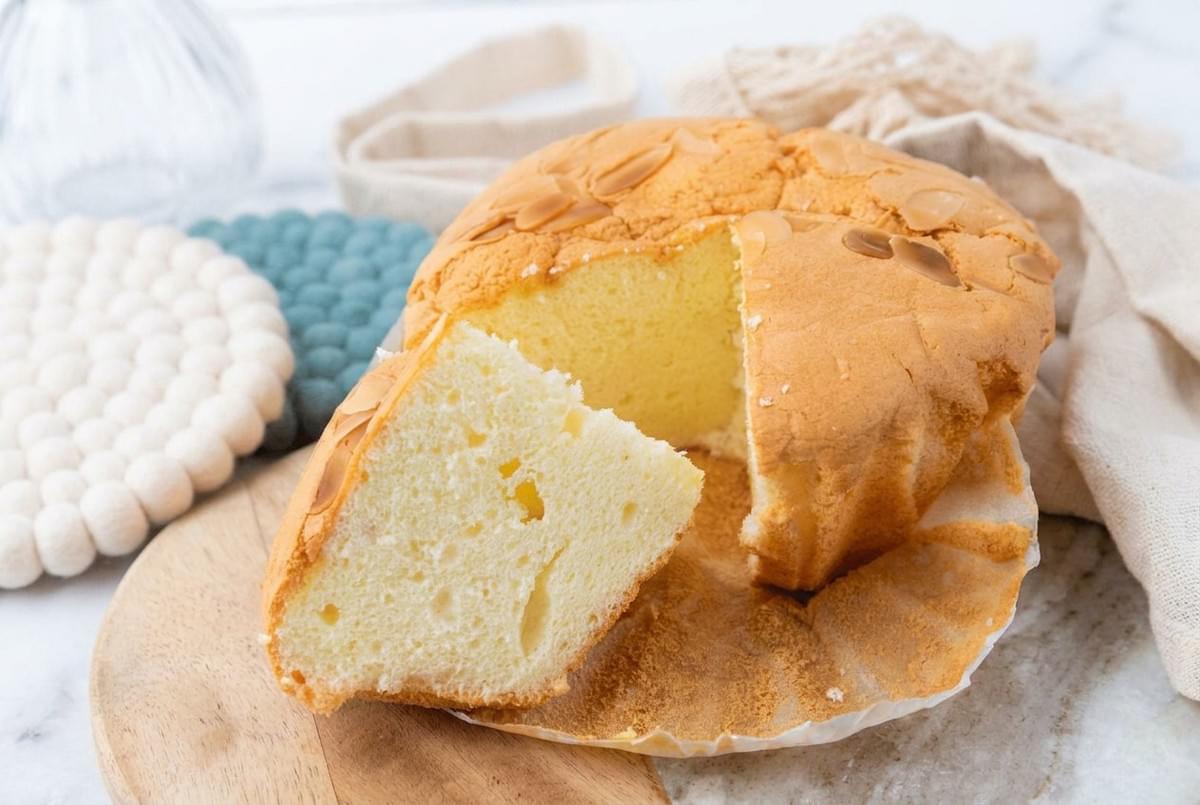
Across many Chinese communities, light egg sponges are a familiar sight. They sit in bakery windows and get wrapped in paper for the walk home. They show up in tall rounds, small paper cups, and steamed squares. Many are called ji dan gao, which simply means "egg cake." That name says a lot. Eggs, not butter or baking powder, do most of the work.
These sponges tend to be less sweet and less rich than many Western layer cakes. They taste of egg and a little sugar, and they are soft enough to eat plain.
Almond flavor has its own place in Chinese desserts. Treats like almond tofu and almond soup are traditionally made with apricot kernels, which have a similar sweet, nutty fragrance. Almond cookies are a familiar bakery item too.
This recipe is not a specific traditional cake. It is a home-kitchen sponge inspired by those bakery cakes, with ground almonds and almond extract folded in. Think of it as a small nod to a familiar flavor, baked in a plain round pan.
Why You'll Love This Cake
- A soft, springy crumb: Whipped whole eggs give the cake its lift, so it feels light without being dry.
- Gentle almond flavor: Ground almonds add a little richness, and the extract adds fragrance without taking over.
- Not too sweet: It pairs easily with tea, fruit, or a spoonful of cream.
- No separating eggs: The whole-egg method is simpler for beginners than whipping whites and yolks apart.
- Clear signs at every stage: The ribbon, the fold, the spring-back. You can see when each step is done.
Ingredients
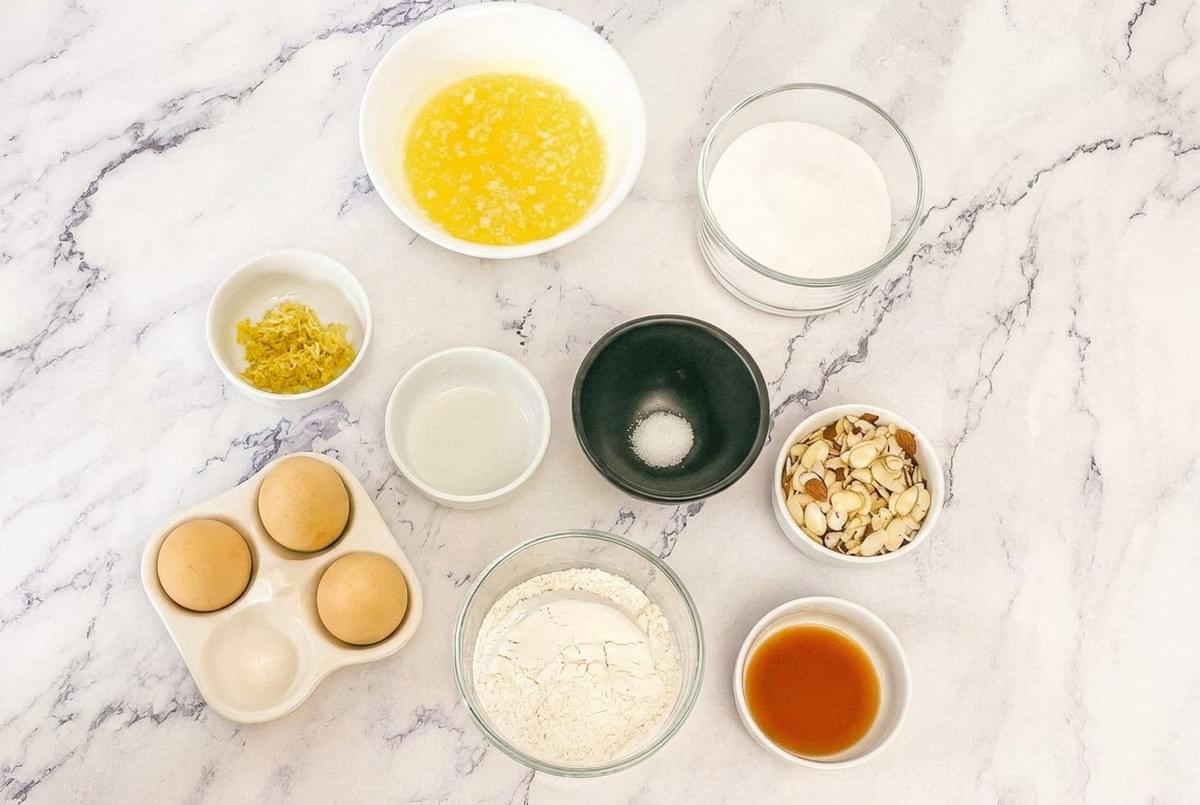
For the Sponge
- 5 large eggs, at room temperature
- 2/3 cup (130 g) granulated sugar
- 3/4 cup (90 g) cake flour
- 1/3 cup (30 g) finely ground blanched almond flour
- 1/4 teaspoon fine salt
- 3 tablespoons (45 ml) whole milk
- 3 tablespoons (42 g) unsalted butter
- 1/2 teaspoon almond extract
- 1/2 teaspoon vanilla extract
To Finish
- 1/4 cup (20 g) sliced almonds
- 1 to 2 teaspoons powdered sugar, for dusting (optional)
What Each Ingredient Does
Eggs are the structure. Whipping traps air in them, and that air expands in the oven to lift the cake. Room-temperature eggs whip higher and faster than cold ones.
Cake flour has less protein than all-purpose flour, so the crumb stays tender. If you don't have it, measure 3/4 cup (90 g) all-purpose flour, remove 1 1/2 tablespoons, and replace it with 1 1/2 tablespoons cornstarch.
Almond flour adds a soft nuttiness and a little moisture. Use the fine, blanched kind. Coarse almond meal is heavier and can weigh down the foam. To skip it, use 1 cup (120 g) cake flour total. The cake will be a little lighter and less nutty.
Almond extract carries most of the almond fragrance. It is strong, so measure carefully. Too much can taste bitter.
Sliced almonds add crunch and a toasted top. You can leave them off if you prefer a smooth surface.
Butter and milk keep the sponge moist. You can swap the butter for 3 tablespoons (45 ml) neutral oil. The cake will taste a little less rich but stay just as soft.
Recipe Overview
- Yield: 1 round cake, 8 to 10 slices
- Pan size: 8-inch (20 cm) round, at least 3 inches (7.5 cm) deep
- Prep time: 25 minutes
- Bake time: 30 to 35 minutes
- Cooling time: about 1 hour 10 minutes
- Total time: about 2 hours 10 minutes
Equipment
- 8-inch (20 cm) round cake pan, 3 inches (7.5 cm) deep (a springform pan works too)
- Parchment paper
- Stand mixer with whisk attachment, or a hand mixer and a large bowl
- Heatproof bowl and a small saucepan, for warming the eggs
- Fine-mesh sieve
- Large silicone spatula
- Small saucepan or microwave-safe cup, for the butter and milk
- Wooden skewer or toothpick
- Wire rack and a thin knife
- Instant-read thermometer (optional)
How to Make Chinese Almond Sponge Cake
- Prepare the pan and oven. Heat the oven to 350°F (175°C) with a rack in the center. Line only the bottom of the pan with a parchment circle. Don't grease the sides. The batter needs to grip them as it climbs.
- Sift the dry ingredients. Sift the cake flour, almond flour, and salt together into a bowl. If a few almond bits won't pass through, stir them back in. Set aside.
- Warm the butter and milk. Heat the butter and milk together until the butter melts, then stir in the almond and vanilla extracts. Keep the mixture warm, about the temperature of a bath.
- Warm the eggs and sugar. Whisk the eggs and sugar in a heatproof bowl set over a pan of barely simmering water. Don't let the bowl touch the water. Whisk for 3 to 4 minutes, until the mixture feels warm to your fingertip, about 105°F (40°C), and the sugar no longer feels gritty. Warm eggs whip into a fuller, steadier foam.
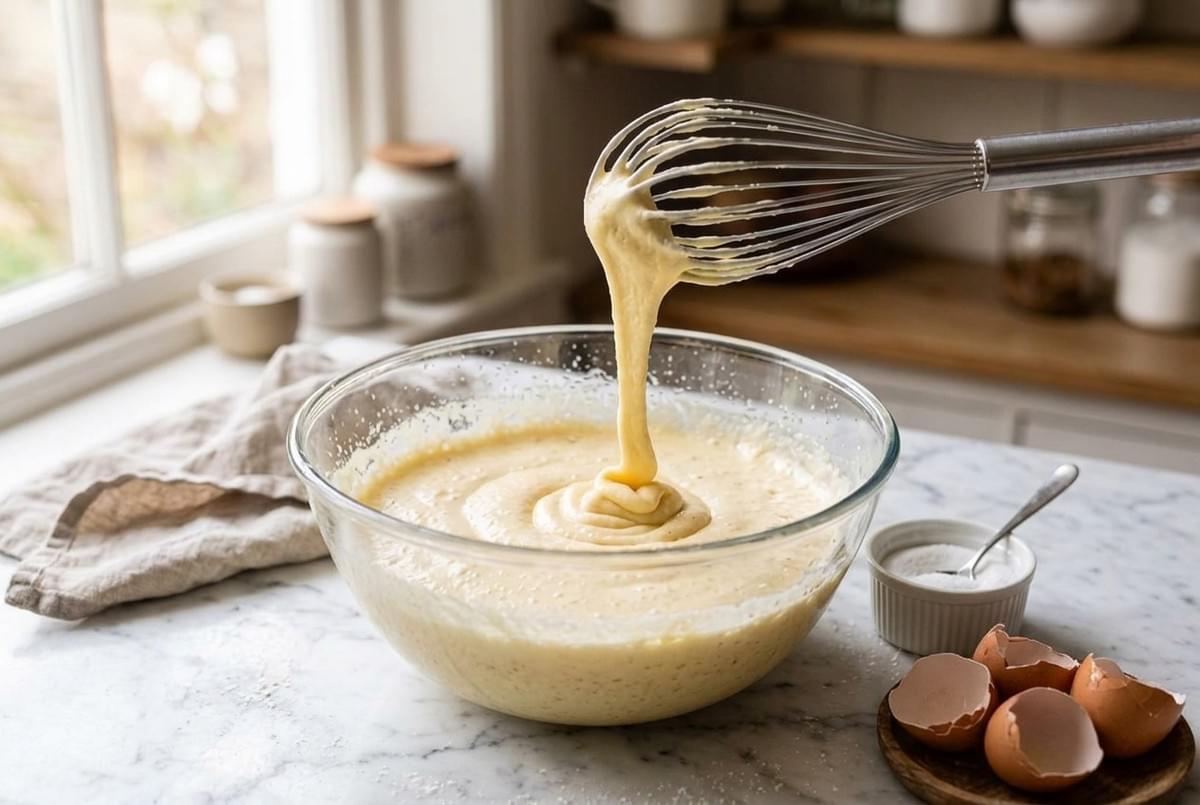
- Whip to the ribbon stage. Move the eggs to the mixer and whip on high for 6 to 8 minutes. They will triple in volume and turn pale and thick. Lift the whisk and draw a figure eight. If the trail holds on the surface for 3 to 5 seconds, it's ready.
- Steady the bubbles. Lower the speed to medium-low and whip for 1 more minute. This breaks large bubbles into smaller ones, which gives you a finer crumb.
- Fold in the flour. Sift one third of the dry mixture over the eggs. Fold it in with the spatula. Cut down through the center, sweep along the bottom, and lift up the side while turning the bowl a quarter turn. Repeat until no dry streaks remain, then add the next third. Fold gently and stop as soon as it's mixed.
- Add the butter mixture. Stir a large spoonful of batter into the warm butter mixture until smooth. Pour it back over the batter and fold until just combined. Butter is heavier than foam, and lightening it first keeps it from sinking to the bottom.
- Fill the pan. Pour the batter into the pan. Run the spatula through it once to pop large bubbles, then tap the pan lightly on the counter one time. Scatter the sliced almonds evenly over the top.
- Bake. Bake for 30 to 35 minutes, without opening the door for the first 25. The cake is done when the top is golden, springs back when pressed lightly, and a skewer comes out clean. The edges will just start to pull away from the pan.
- Release the steam. Lift the pan about 6 inches (15 cm) above the counter and drop it once, flat. This pushes out hot steam and helps keep the cake from shrinking as it cools.
- Cool and unmold. Let the cake rest in the pan for 10 minutes. Run a thin knife around the edge, turn it out, peel off the parchment, and set it upright on a wire rack. Cool for about 1 hour before slicing. Dust with powdered sugar just before serving, if you like.
Food Rhymes Tips and Troubleshooting
Know your ribbon. Underwhipped eggs look glossy and runny, and the trail vanishes right away. Well-whipped eggs look matte and thick, and the trail rests on top before fading.
Fold, don't stir. Stirring knocks the air out. Use long, slow strokes from the bottom up, and turn the bowl as you go. A few small flecks of flour are better than a flat batter.
Check for doneness with your fingers, not just the clock. Press the center lightly. If it springs back, it's ready. If the dent stays, give it 3 to 5 minutes more.
If the cake is dense: The eggs were underwhipped, or the batter was overmixed. The butter mixture may also have gone in all at once and sunk. Whip to a full ribbon, fold gently, and always lighten the butter with batter first.
If the center sinks: The cake was likely underbaked, or the oven door opened too early. Bake until the center springs back, and keep the door closed for the first 25 minutes. Releasing the steam with a single drop also helps.
If the sponge is dry: It probably baked too long, or the flour was overmeasured. Weigh the flour if you can, and start checking at 30 minutes. Wrap the cake once it's cool so it doesn't dry out on the counter.
Serving Ideas and Variations
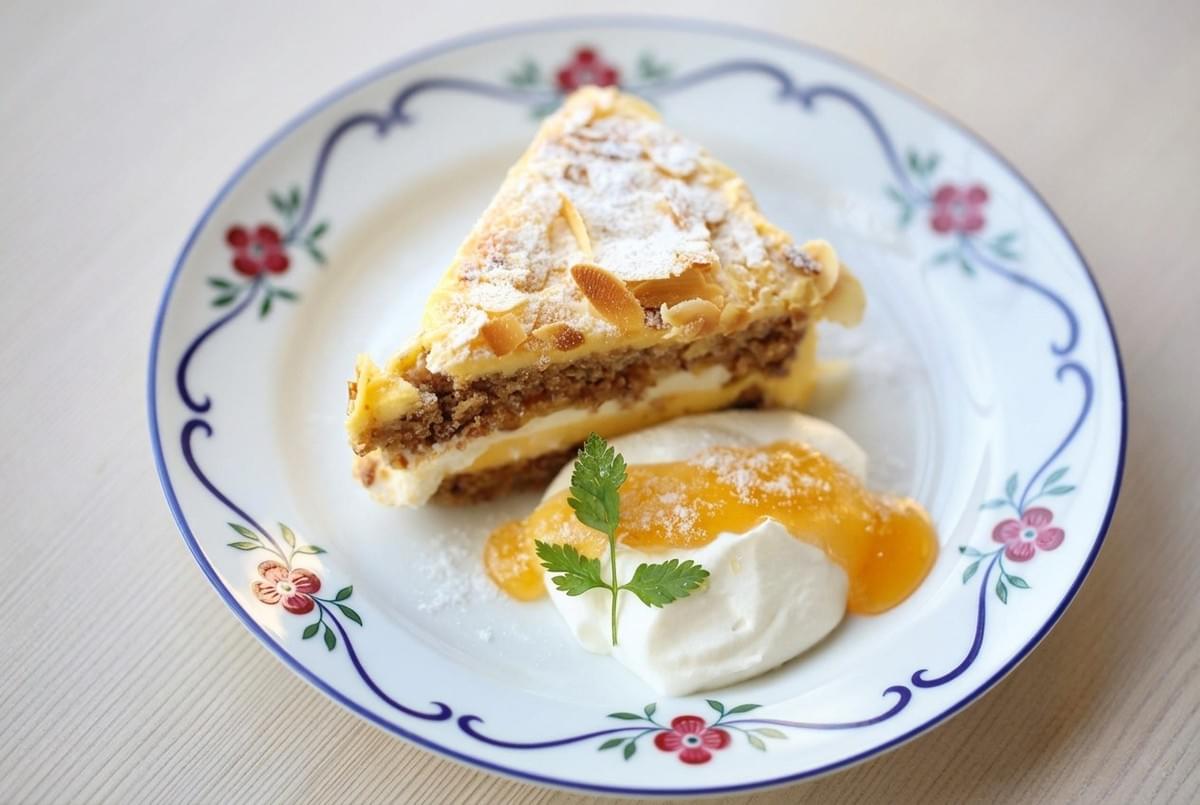
This cake asks for very little.
Serve it plain with jasmine tea, oolong, or a glass of warm soy milk. Fresh mango, lychee, or sliced peaches sit well beside it. A spoonful of lightly sweetened whipped cream adds softness without hiding the almond.
- Citrus almond: Rub the finely grated zest of 1 orange into the sugar before warming it with the eggs.
- Honey glaze: Warm 2 tablespoons honey with 1 teaspoon water and brush it over the cooled top for a soft shine.
- Osmanthus syrup: Drizzle a little osmanthus syrup over each slice for a floral note.
- Cream-filled: Split the cooled cake in half crosswise and fill it with 1 cup (240 ml) heavy cream whipped with 1 tablespoon sugar. Refrigerate any cream-filled cake.
Storage and Make-Ahead
- Room temperature: Keep the plain cake wrapped or in an airtight container for up to 2 days.
- Refrigerator: The fridge dries sponge, so chill it only if it holds cream. Wrap it well and eat within 3 days, letting slices sit out for 20 minutes before serving.
- Freezer: Wrap the plain, cooled cake tightly in plastic wrap and then foil. Freeze for up to 1 month. Thaw it, still wrapped, at room temperature for about 2 hours. The sliced almonds may soften slightly.
- Make-ahead: Bake it the day before you need it. Add powdered sugar, glaze, or cream just before serving.
A Slice Left on the Plate
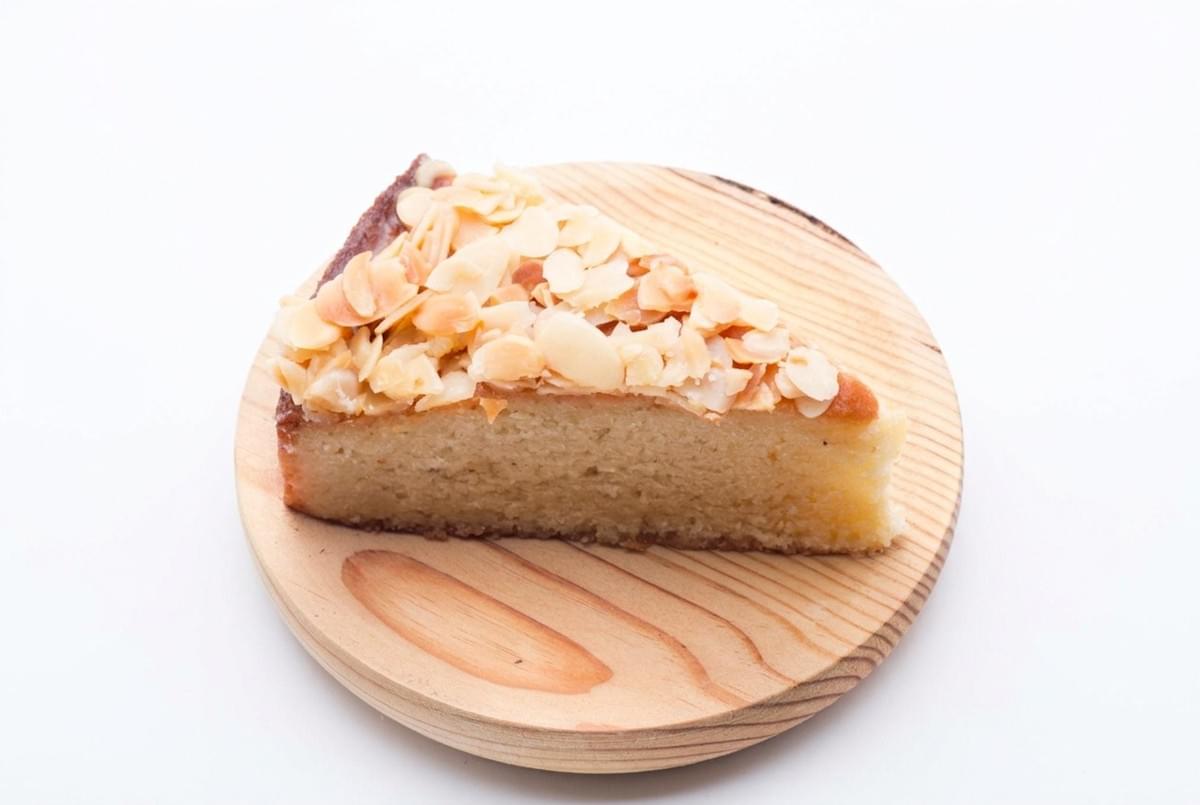
The cake cools on the rack, almonds catching the light. The bowl sits in the sink with a pale streak of batter still on its side.
Then someone cuts a wedge, and the crumb gives under the knife.
If you bake this sponge, come back and tell us how it rose, what you poured beside it, and who reached for the second slice.
