

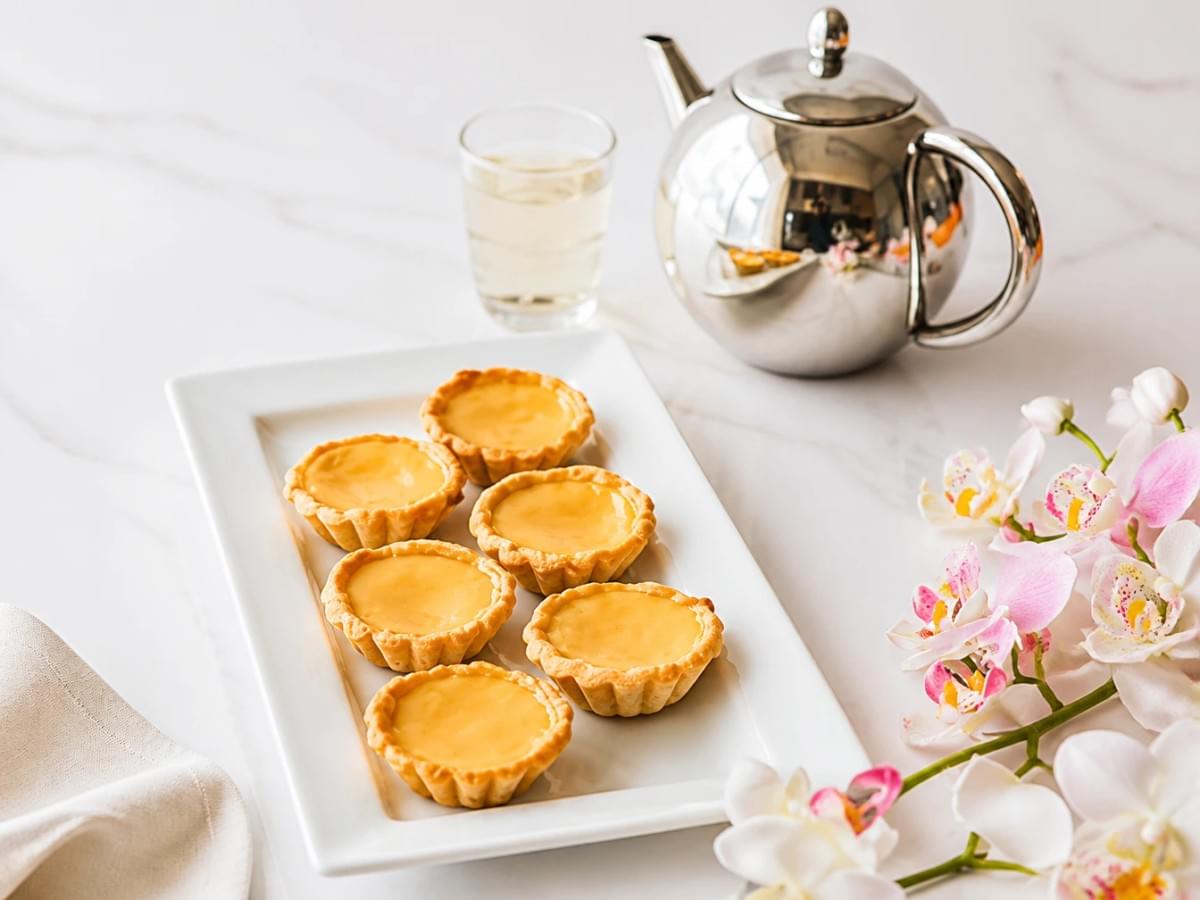
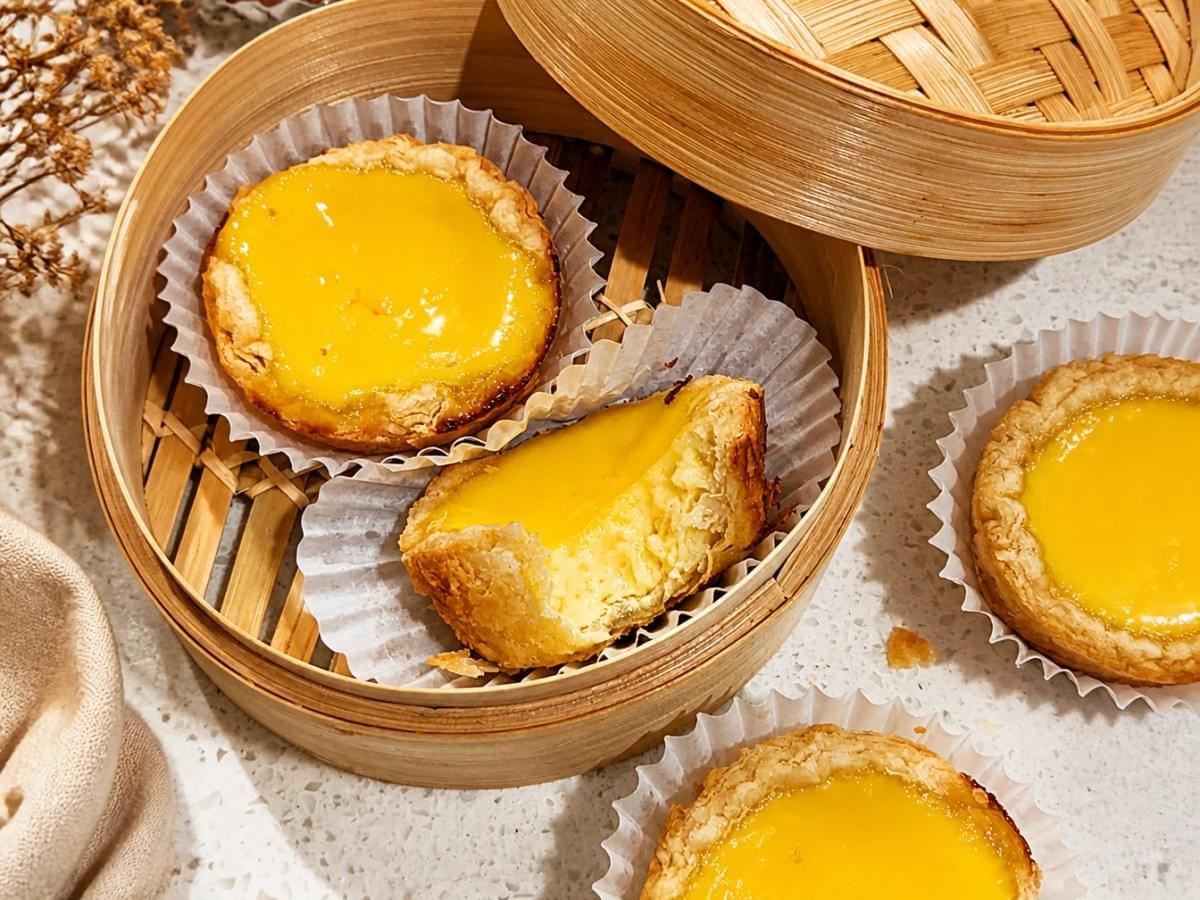
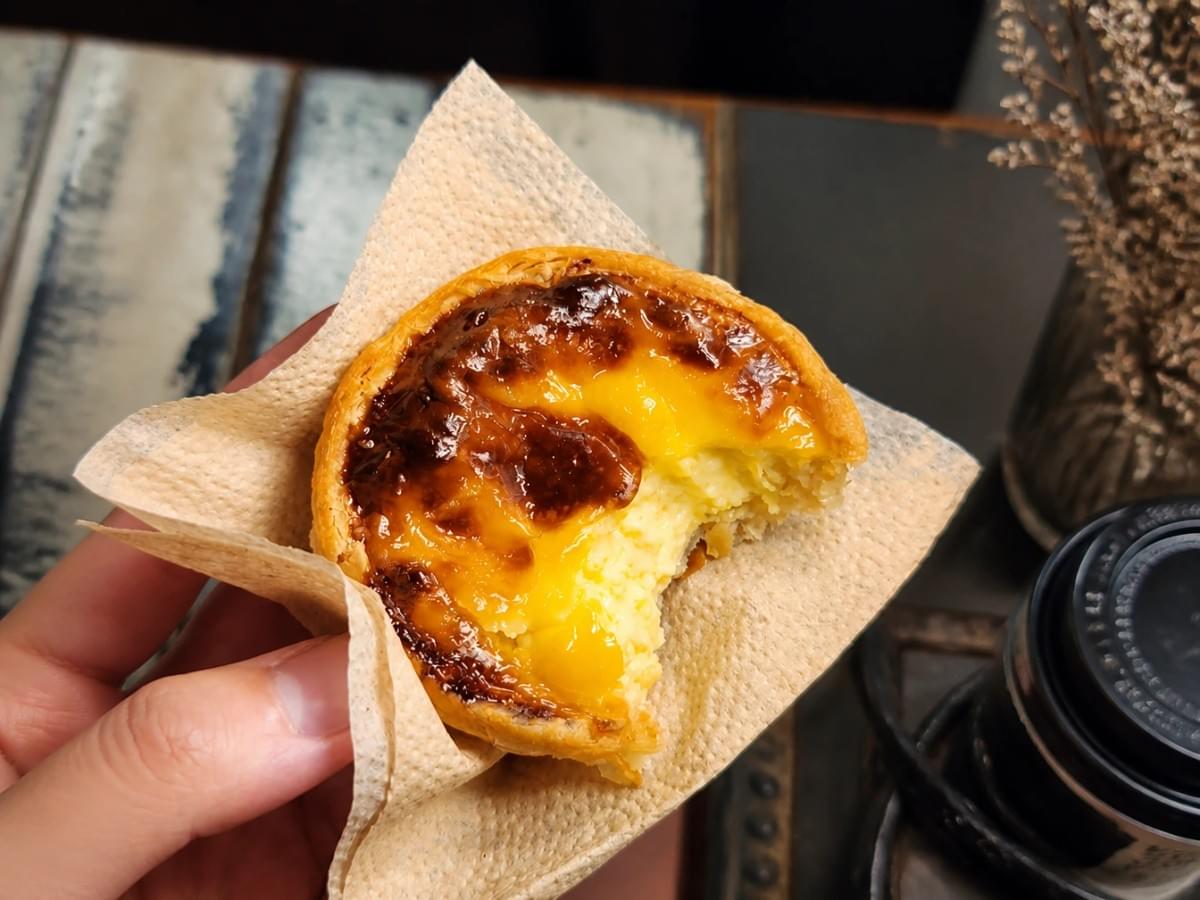
There is a moment, right when the tart cools just enough to hold, when the pastry still shatters at the edges and the custard wobbles in the middle like it might spill a secret.
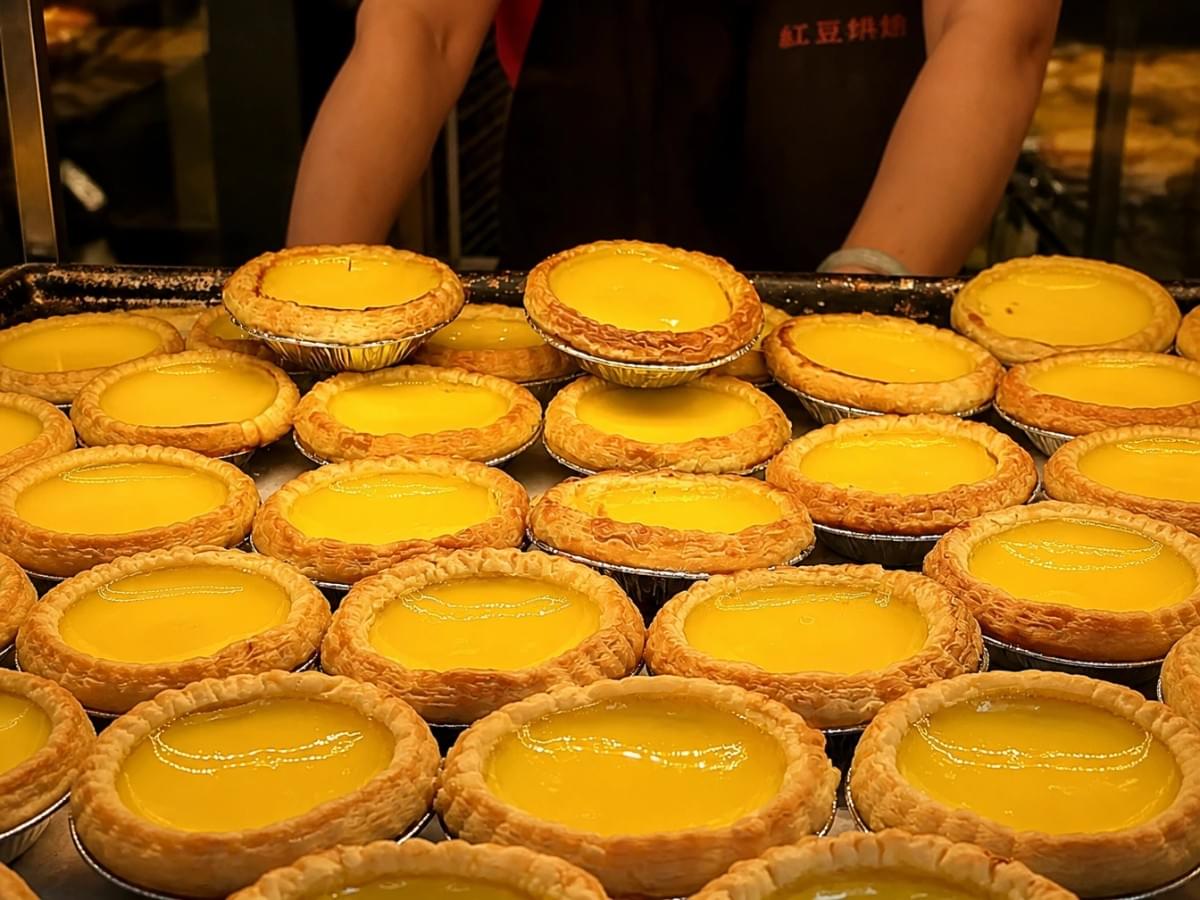
I first learned to love these in a Hong Kong bakery, standing at the counter while trays came out warm. The auntie behind the glass didn't say much. She just slid one onto a square of thin paper, still trembling, and pointed to a stool by the window. Outside, the street was loud. Inside, that first bite was quiet.
Chinese egg tarts, or dan tat, have been a bakery favorite for generations. Hong Kong egg tarts grew out of that cha chaan teng culture, where East and West met over milk tea and buttered toast. Some say they trace back to English custard tarts, reworked and softened for local taste. Either way, they became their own thing. Humble, golden, and beloved.
This recipe leans on a flaky, cookie-style pastry (the kind you find most often) and a smooth, gently sweet filling. Nothing fussy. Just good technique and a little patience, and you'll pull silky custard from your own oven.
Quick Recipe Snapshot
- Prep time: 30 minutes
- Chill time: 30 minutes
- Cook time: 20 minutes
- Total time: about 1 hour 20 minutes
- Yield: 12 tarts
- Difficulty: Beginner-friendly, with a little care
What you get: Flaky, buttery pastry cradling a soft, silky custard. The tops turn a pale gold, kissed with just a hint of caramel color. Sweet, but not too sweet. Warm from the oven, they're hard to beat.
Ingredients
For the flaky pastry
- 1 1/2 cups (190 g) all-purpose flour. The structure. Spoon it into the cup so you don't pack too much.
- 1/2 cup (115 g) unsalted butter, softened. The heart of that flaky pastry. Soft, not melted.
- 1/4 cup (30 g) powdered sugar. Keeps the crust tender and fine.
- 1 egg yolk. Adds richness and helps it hold together.
- 1 tablespoon cold water, if needed, to bring the dough together.
For the silky custard
- 3 large eggs, at room temperature. They set the custard, so gentle handling keeps it smooth.
- 1/2 cup (100 g) granulated sugar. Dissolved into warm water first, so no grainy bits.
- 1/2 cup (120 ml) hot water, to melt the sugar into a simple syrup.
- 1/3 cup (80 ml) evaporated milk. This is the trick to that classic flavor and creamy body. It's richer than regular milk, without being heavy.
- 1/2 teaspoon vanilla extract, optional, for a soft warmth.
A quick note on the eggs: they do the setting, so don't overbeat them. Too much air means a puffy, bubbly custard instead of a smooth one.
Equipment Needed
- A 12-cup muffin tin (or individual tart molds)
- A mixing bowl
- A whisk
- A fine sieve or strainer
- A rolling pin
- A round cutter or a glass, to shape the pastry
Step-by-Step Instructions
Read through once, then let's bake. You've got this.
1. Make the pastry
- In a bowl, beat the softened butter and powdered sugar together until smooth and pale, about 1 to 2 minutes.
- Mix in the egg yolk until combined.
- Add the flour and fold gently until it comes together into a soft dough. If it feels dry, add the cold water a little at a time.
- Don't overwork it. Once it holds, stop. Wrap the dough and chill it for 30 minutes so it firms up and relaxes.
2. Mix the custard (gently)
- Stir the granulated sugar into the hot water until fully dissolved. Let it cool to just warm, not hot, or it will cook the eggs.
- In a separate bowl, whisk the eggs lightly. You want them combined, not frothy.
- Slowly pour in the cooled sugar water, then the evaporated milk and vanilla. Stir gently, keeping bubbles to a minimum.
- Strain the custard through a fine sieve into a clean bowl (or a spouted jug for easy pouring). This is the step that gives you truly silky custard, catching any stray bits and foam.
3. Shape the shells
- Heat your oven to 375°F (190°C).
- Roll out the chilled dough on a lightly floured surface, about 1/8 inch thick.
- Cut rounds slightly larger than your muffin cups. Press each one gently into the tin, easing it up the sides so it sits like a little cup.
- Prick the bottoms lightly with a fork. This helps them stay flat.
4. Fill and bake
- Pour the strained custard into each shell, filling about 80 percent full. Leave a little room, since it puffs slightly as it bakes.
- Bake for 15 to 20 minutes. Watch closely near the end.
- The jiggle test: they're done when the pastry is golden and the custard is set around the edges but still wobbles gently in the center when you nudge the pan. A toothpick stood upright should hold on its own.
- Cool in the tin for a few minutes, then lift them out carefully. Best eaten warm.
Pro Tips for Flaky Pastry and Silky Custard
- Keep the custard low. Bake gently. Too hot, and the custard bubbles, puffs, and cracks. A moderate oven gives you that smooth, tender set.
- Always strain. I know it feels like an extra step. Do it anyway. It's the difference between rustic and bakery-smooth.
- Watch for soggy bottoms. Chilling the dough and pricking the base both help. If your oven runs cool, you can pop the empty shells in for 5 minutes before filling.
- Know your hot spots. Most ovens bake unevenly. Rotate the pan halfway through so every tart colors the same.
- Timing is flexible. Ovens vary. Trust the wobble and the golden edge over the clock.
One Last Bite
Some things you bake to impress. These, you bake to remember.
Chinese egg tarts don't need a fancy plate or a perfect photo. They need a warm kitchen, a little quiet, and someone to share the first one with while it's still too hot to hold properly.
Make a tray this weekend. Let the pastry shatter, let the custard wobble, and taste why these have stayed loved for so long.
When you do, come tell us how yours turned out over at Our Food Rhythms. Did you like yours more jiggly, or more set? We'd love to know.
