

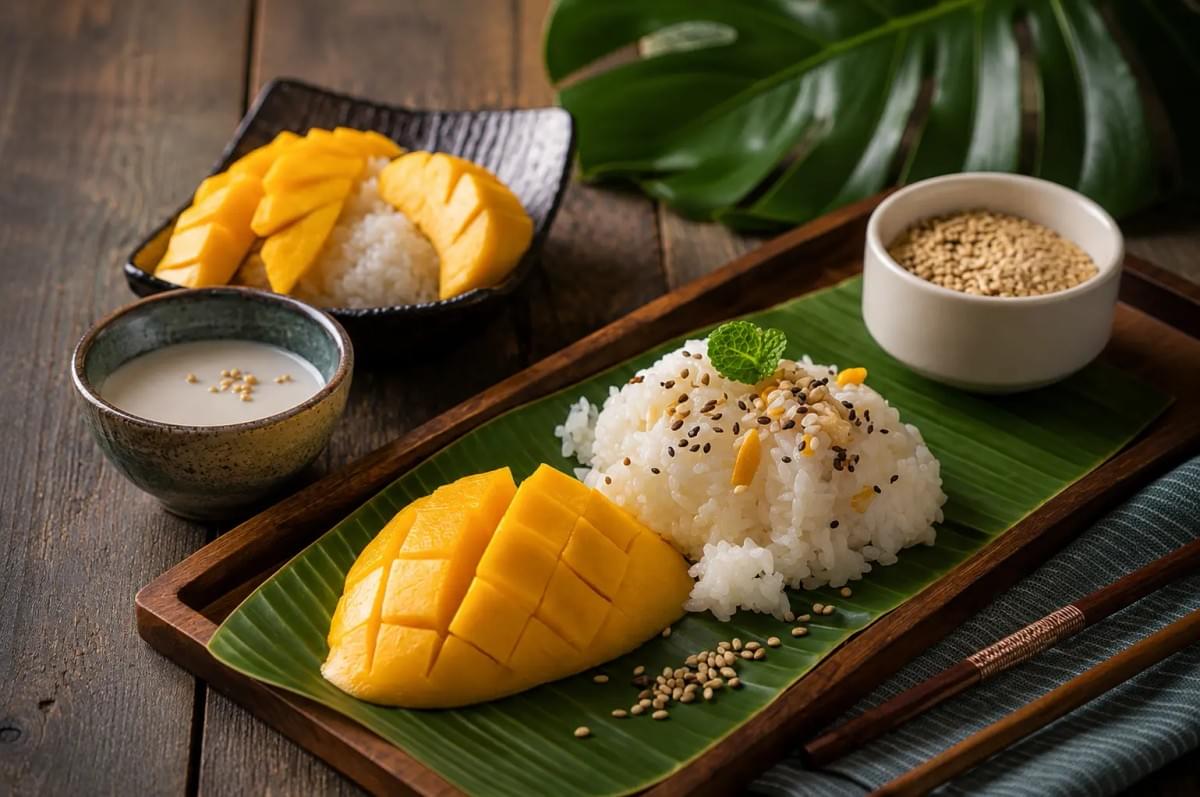
The first time I had it, the mango was still warm from the sun.
Someone had cut it into thick slices on a plastic plate, next to a little mound of rice glistening with coconut. No fork, just a spoon. I remember thinking it looked like nothing much. Then I took a bite, and the whole thing made sense at once. Sweet fruit, salty-sweet rice, and soft coconut richness pulling it all together.
That is Thai mango sticky rice. Simple, humble, and quietly perfect. Let's make it together.
Why This Dessert Is So Loved
In Thailand, this dish goes by the name khao niaow ma muang ("sticky rice mango"). It shows up most during mango season, when the fruit is at its ripest and sweetest, sold from carts and market stalls and family kitchens alike.
Part of its charm is how little it needs: sticky rice, coconut milk, sugar, salt, and a good mango. That is nearly the whole story. There is no oven, no fancy technique, no long list of steps.
But the magic is in the balance. The rice is rich and lightly salted. The mango is bright and honey-sweet. Together they hit that sweet-salty note that keeps you coming back for another spoonful.
A Quick Word on Glutinous Rice
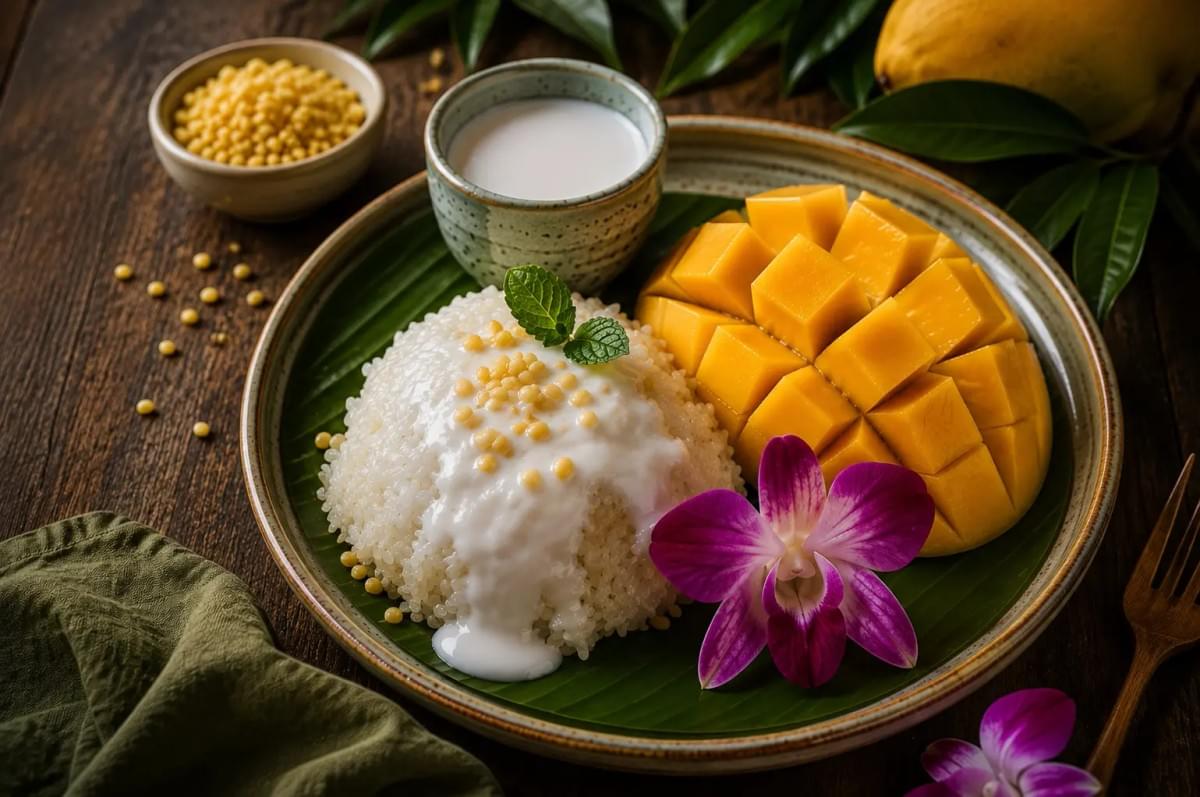
Here is the thing that trips people up: this dessert does not use jasmine rice. It uses glutinous rice (sticky rice / sweet rice).
Despite the name, it has no gluten. The word "glutinous" just describes how the grains cling together into a soft, chewy, slightly sticky mass when cooked. That texture is the whole point. Regular rice will not give you the same result.
You will find glutinous rice at most Asian grocers, sometimes labeled "sweet rice." It looks chalky and opaque compared to jasmine rice.
Why rinsing and soaking matter
Do not skip these steps. They make or break your sticky rice dessert.
- Rinsing washes away loose surface starch, so the finished rice is not gummy or pasty.
- Soaking softens the grains all the way through. Without it, the rice cooks unevenly, chewy in some spots and hard in others.
A good long soak (at least 4 hours, or overnight) is the single best thing you can do for the texture.
Recipe Snapshot
- Prep time: 15 minutes (plus soaking)
- Soak time: 4 hours or overnight
- Cook time: 30 minutes
- Total time: about 45 minutes active
- Servings: 4
Ingredients You'll Need
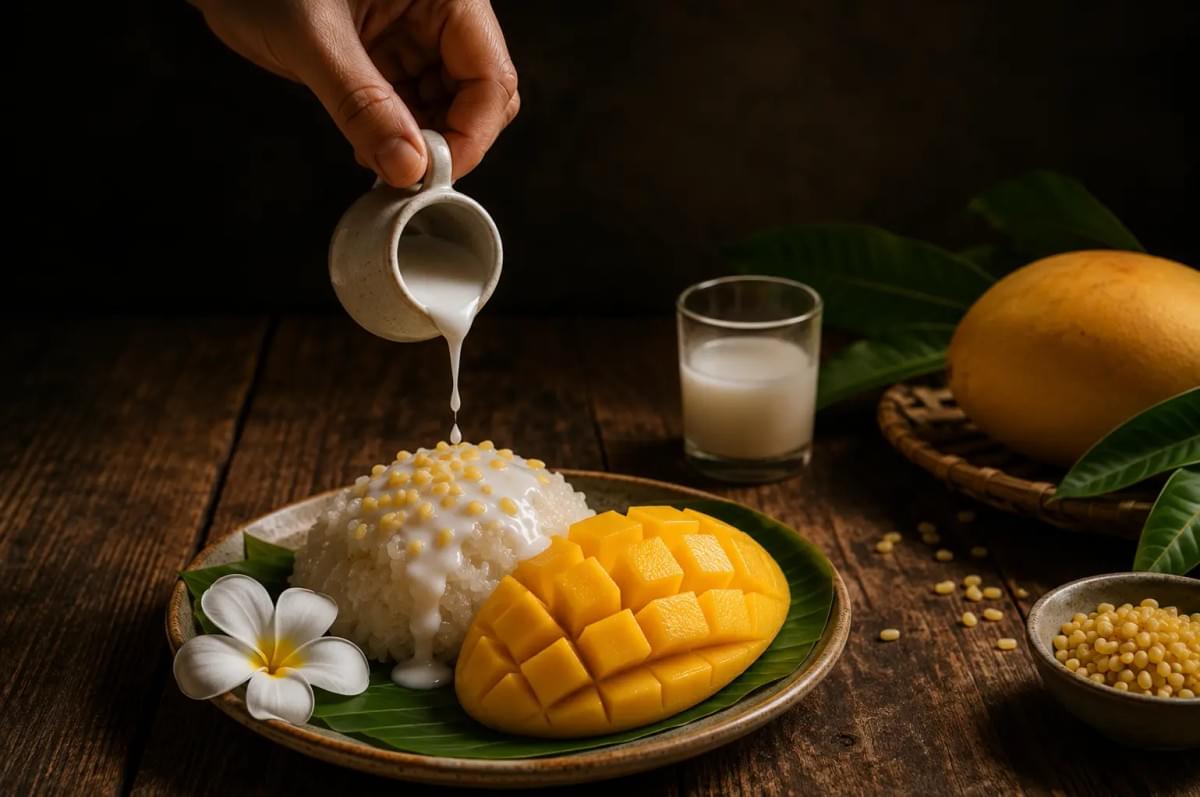
For the sticky rice
- 1 cup (200 g) glutinous rice (sweet rice), soaked
- Water, for soaking and steaming
For the coconut sauce
- 1 cup (240 ml) coconut milk (full-fat for the creamiest result)
- 1/4 cup (50 g) sugar
- 1/2 teaspoon salt
- 1 pandan leaf, knotted (optional, for fragrance)
For the topping (optional but lovely)
- 2 tablespoons coconut milk, reserved
- 1/4 teaspoon salt
- 1 teaspoon toasted sesame seeds or split mung beans
To serve
- 2 ripe mangoes, peeled and sliced
How to Choose Your Mango
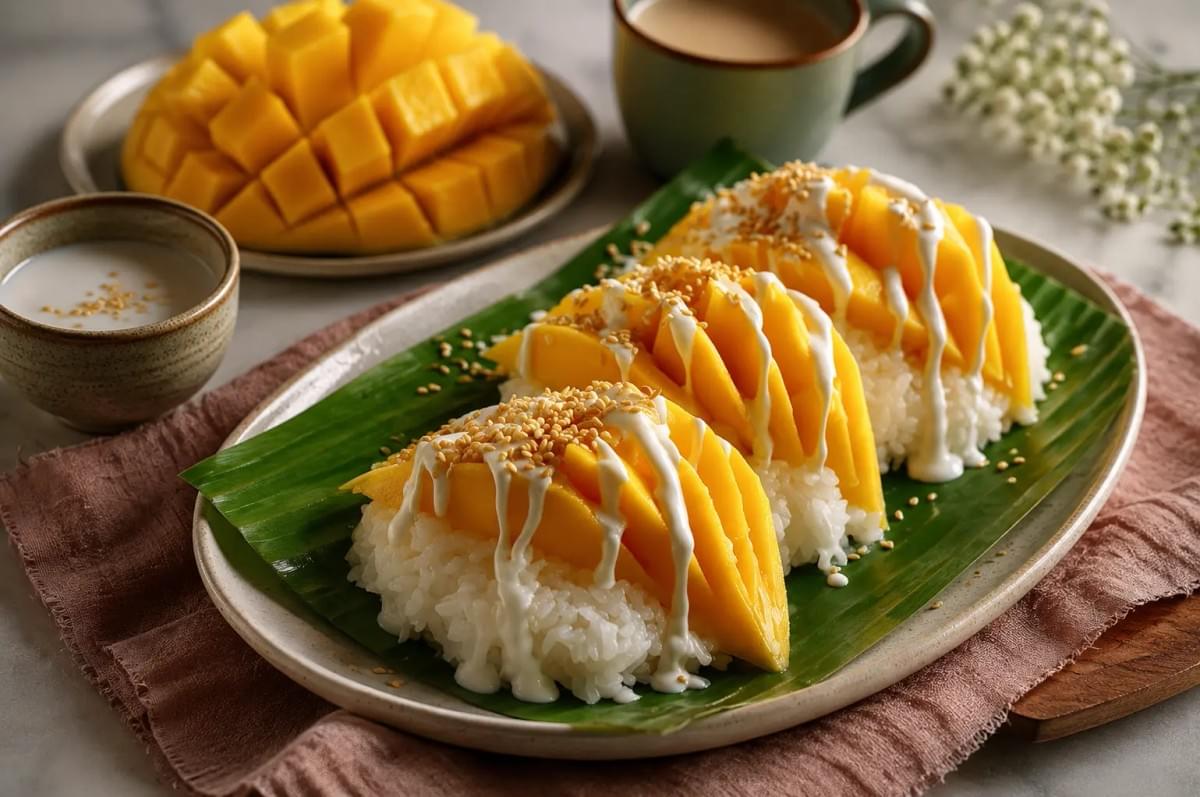
The mango does a lot of heavy lifting here, so choose well.
In Thailand, the classic choice is Nam Dok Mai, a golden-yellow mango that is sweet, fragrant, and low on fiber. If you can find it, grab it.
Outside Thailand, look for Ataulfo (also called Honey or Champagne mango). They are small, deep yellow, and beautifully sweet, with the same smooth flesh.
What to look for, wherever you shop:
- Give it a gentle squeeze. It should yield slightly, like a ripe peach.
- Smell the stem end. A ripe mango smells sweet and floral right there.
- Skip the fibrous types if you can, since stringy flesh spoils the soft, clean bite you want.
A little wrinkling at the skin is fine. That is often a sign of extra sweetness.
How to Make Thai Mango Sticky Rice
Read through once, then let's cook. You've got this.
Step 1: Rinse and soak the rice
Rinse the glutinous rice in a few changes of water, swirling with your hand until the water runs mostly clear. Then cover it with fresh water and let it soak for at least 4 hours (or overnight). Drain before cooking.
Step 2: Cook the rice (two methods)
Traditional steaming method (preferred)
This gives the best texture, distinct grains that stay tender and chewy.
- Line a steamer basket with cheesecloth or a thin cloth.
- Spread the drained rice in an even layer.
- Steam over simmering water for about 20 to 25 minutes, until the grains are soft and translucent. Give it a gentle stir halfway through so it cooks evenly.
Rice cooker or stovetop alternative
No steamer? No problem.
- Add the drained rice to a rice cooker or heavy pot with a little less water than usual (the rice is already soaked). Aim for water just level with the rice.
- Cook on the standard setting, or simmer gently on the stovetop with the lid on until the water is absorbed and the rice is tender, around 15 minutes.
- Let it rest, covered, for 5 minutes before fluffing.
The texture will be a touch softer than steamed, but still delicious.
Step 3: Make the coconut sauce
While the rice cooks, warm the coconut milk, sugar, salt, and pandan leaf (if using) in a small saucepan over low heat.
- Stir gently until the sugar and salt dissolve.
- Warm it through, but do not let it boil.
- Remove from the heat and fish out the pandan leaf.
Step 4: Combine
- Transfer the hot cooked rice to a bowl.
- Pour most of the warm coconut sauce over it, saving a couple of tablespoons for drizzling.
- Stir gently, then let it sit, covered, for 15 to 20 minutes. The rice will drink up the sauce and turn glossy and rich.
Step 5: Serve
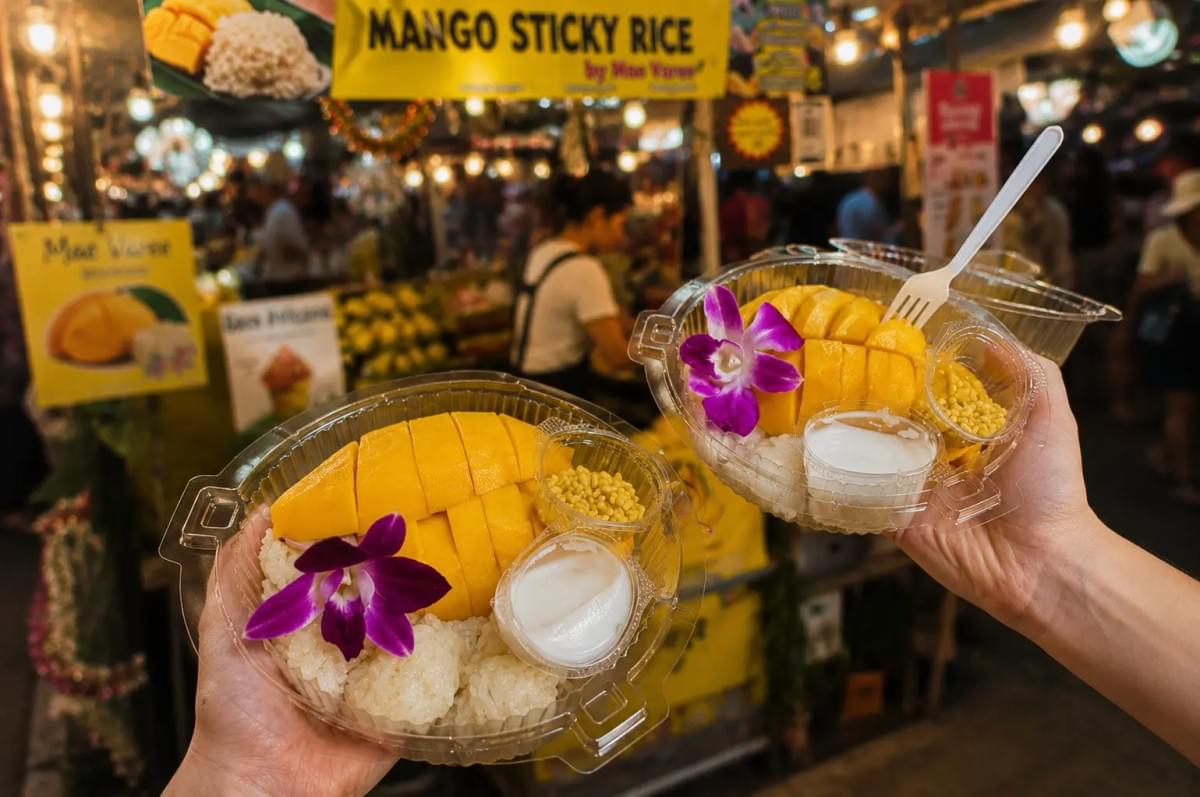
Spoon the rice onto plates. Lay the sliced mango alongside. Drizzle the reserved coconut sauce over the top, then scatter with toasted sesame seeds or mung beans.
Eat it a little warm, or at room temperature.
Tips for Perfect Sticky Rice
- Soak longer, not shorter. Undersoaked rice stays hard in the center. When in doubt, soak overnight.
- Warm rice, warm sauce. Pour the coconut sauce over hot rice so it soaks in properly. Cold rice resists it.
- Let it rest. Do not rush the soaking-in step. That 15 to 20 minutes is what makes the rice creamy instead of dry.
FAQ
Can I use jasmine rice instead of glutinous rice?
No. Glutinous rice is essential to the dish.
Do I really need to soak the rice?
Yes. Soaking softens the grains so they cook evenly and turn tender.
Why did my coconut sauce turn greasy?
It most likely got too hot and split. Keep the heat low and warm it gently.
What if my mango is not sweet enough?
Choose fruit that yields to a gentle squeeze and smells fragrant at the stem.
Can I make it vegan?
It already is.
One Last Spoonful
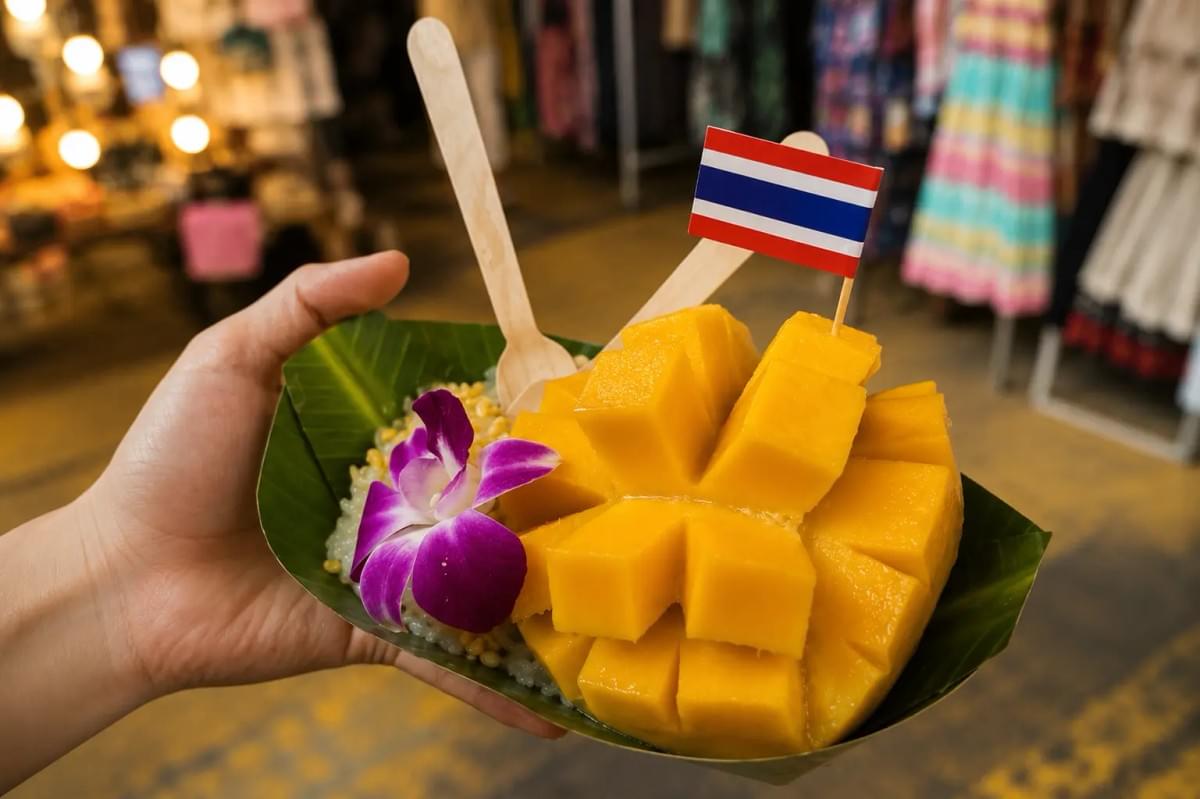
Some desserts try hard to impress. This one just shows up, quietly, and wins you over anyway.
Thai mango sticky rice is proof that a handful of humble ingredients treated with a little care can taste like something you remember for years.
Make it once, and I think it will find a place at your table too. When you do, come tell us how it went over at Our Food Rhythms.
