

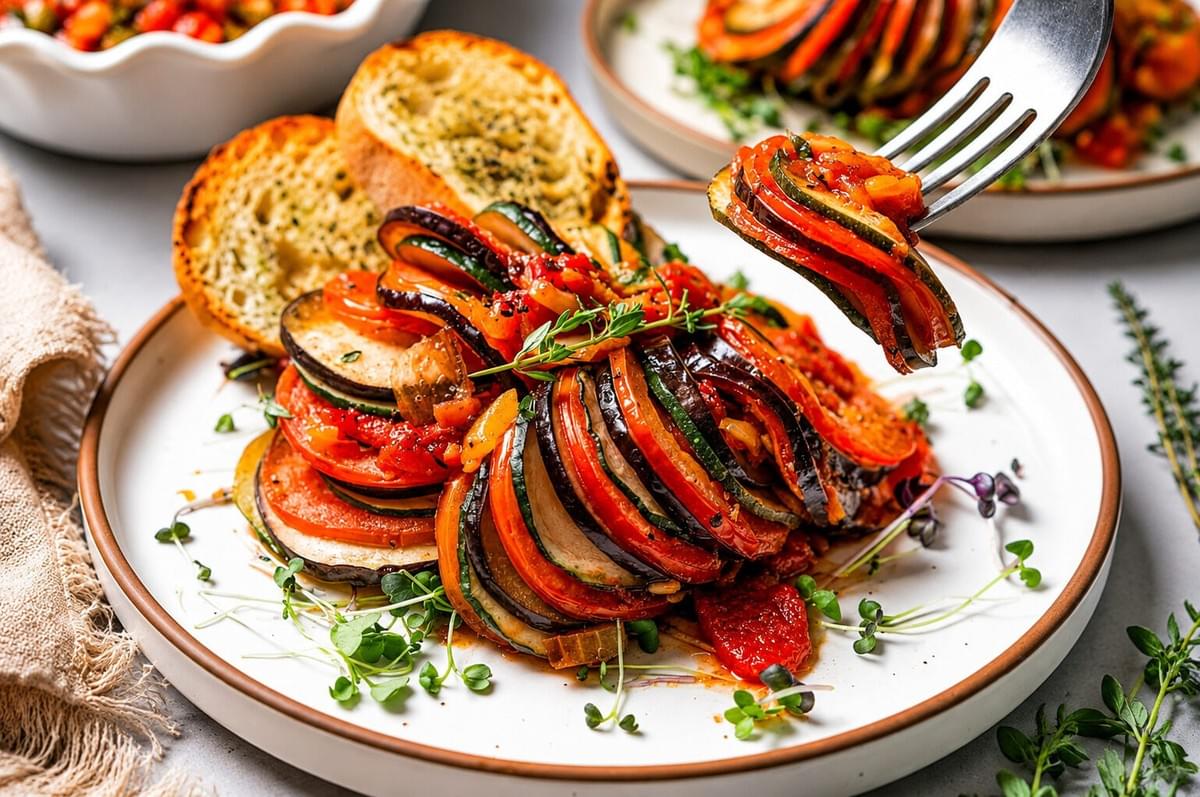
There is a stretch of summer when the vegetables get a little loud. The zucchini pile up faster than you can cook them. The tomatoes go soft and heavy on the vine. The eggplant sits there, glossy and purple, practically asking to be used.
That is ratatouille weather.
This is the dish that gathers all those late-summer stragglers into one warm, glossy pot. Soft vegetables, olive oil, garlic, and herbs, cooked slowly until everything melts together and tastes like more than the sum of its parts. It is savory and a little sweet, herby, and deeply comforting without being heavy.
Serve it warm with bread on a quiet weeknight. Serve it at room temperature on a hot day. Spoon it next to roast chicken for something a bit special. It bends to whatever you need, which is part of why I keep coming back to it.
Let me walk you through it.
A Quick Background on Ratatouille
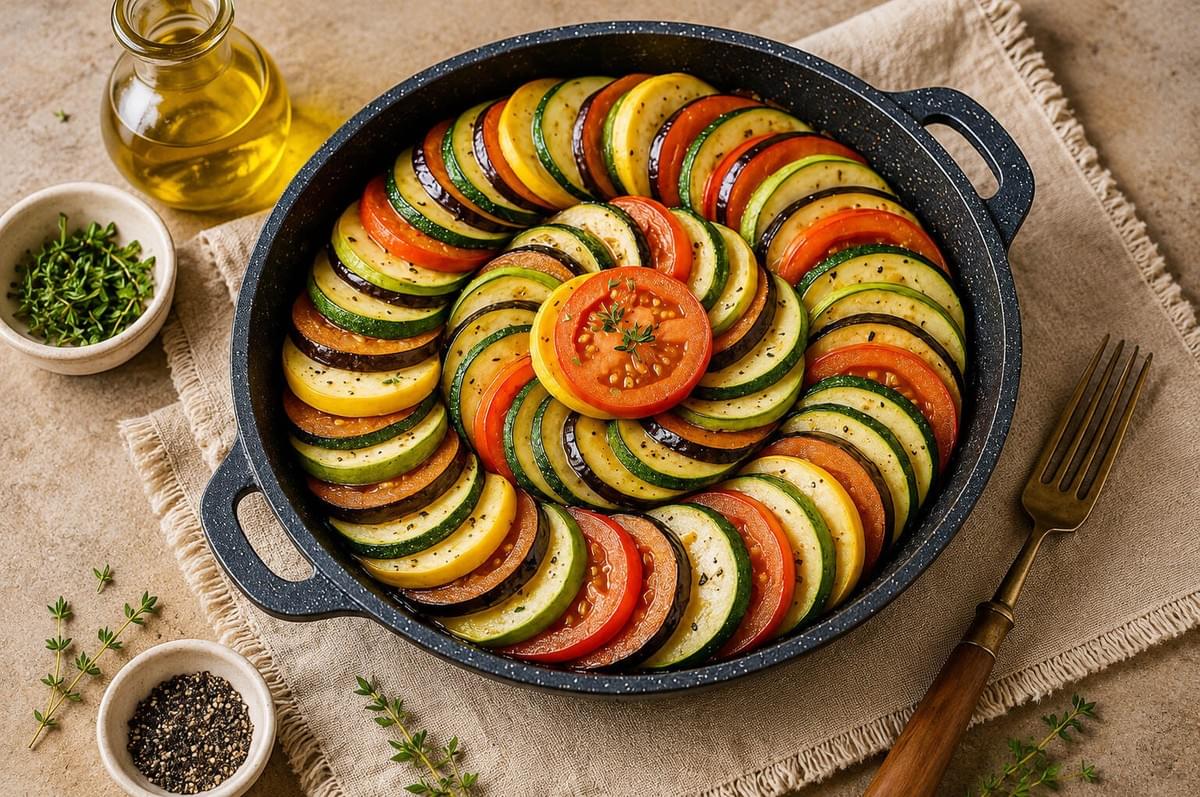
French ratatouille comes from Provence, in the sunny south of France, where cooks have long turned a garden's worth of summer vegetables into something humble and beautiful. It is peasant food in the best sense: vegetable-forward, unfussy, and built around whatever the season gives you.
There are a couple of ways to make it. One is the layered bake, where thin slices of vegetable are fanned out in a dish and roasted, the version that looks like a spiral and often shows up in photos. The other is the rustic stew, where the vegetables are cut into chunks and cooked on the stovetop until soft and jammy.
We are making the rustic stew today. It is the more traditional, more forgiving version, and honestly the one that tastes most like home. No fancy knife work, no perfect spiral. Just good vegetables and a little patience.
Ingredients
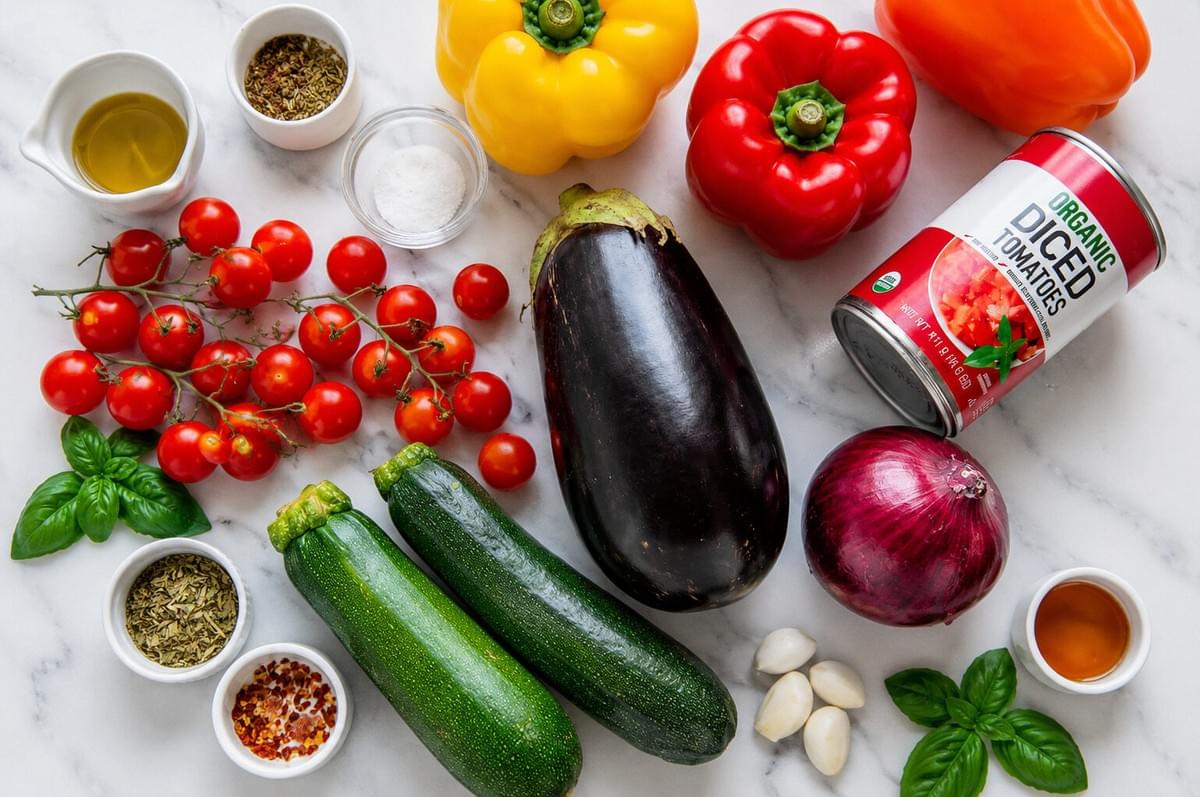
- 1 medium eggplant (about 1 pound / 450 g), cut into 1-inch cubes
- 2 medium zucchini (about 1 pound / 450 g), cut into 1-inch pieces
- 2 bell peppers (any color), seeded and chopped
- 4 to 5 ripe tomatoes (about 1.5 pounds / 680 g), chopped, or 1 can (14 oz / 400 g) diced tomatoes
- 1 large onion, diced
- 4 cloves garlic, minced
- 1/4 cup (60 ml) olive oil, plus more as needed
- 1 teaspoon fresh thyme leaves (or 1/2 teaspoon dried)
- A handful of fresh basil, torn
- Salt and black pepper, to taste
Tools Needed
- A large skillet or Dutch oven
- A sharp knife
- A cutting board
- A wooden spoon
- Nothing special. If you have a big, heavy pot, you are ready.
From Prep to Pot: Your Ratatouille Roadmap
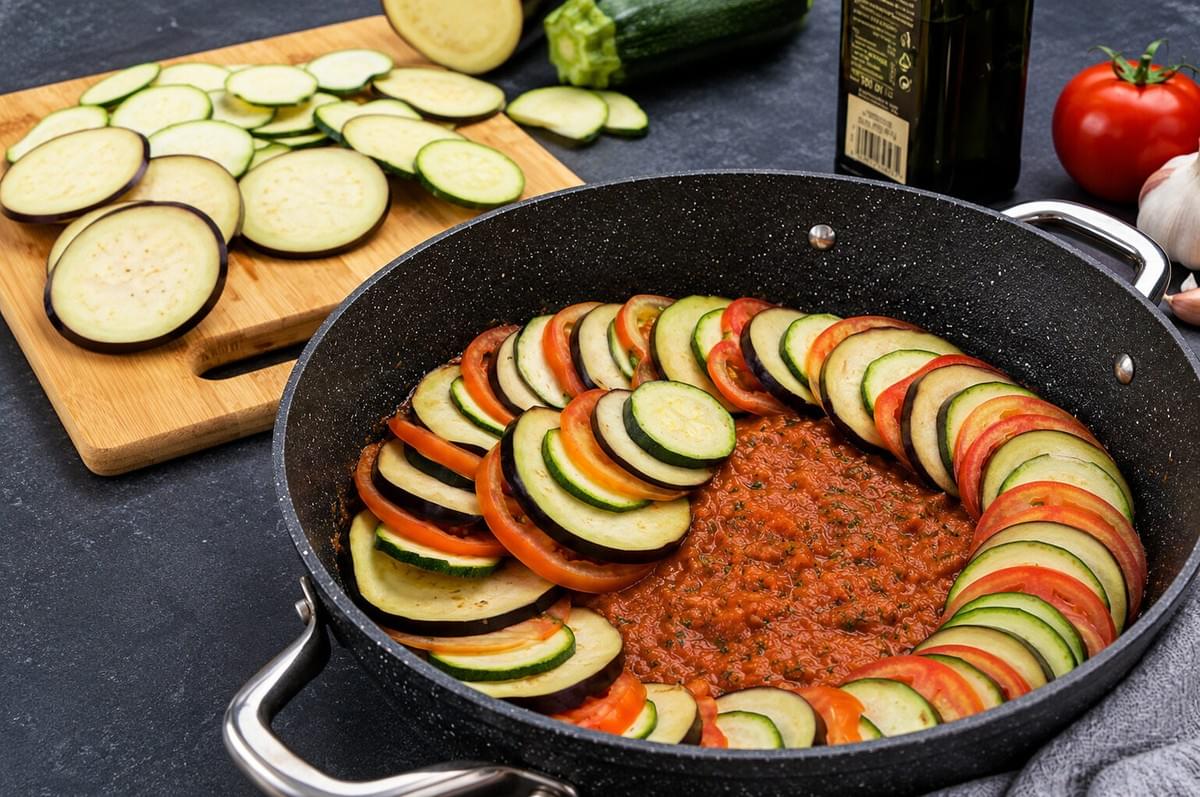
The key to good ratatouille is cooking the vegetables in stages, not all at once. It takes a little longer, but each one gets a chance to brown and develop flavor instead of steaming into mush. Trust the process.
- Brown the eggplant. Heat 2 tablespoons of olive oil in your skillet over medium-high heat. Add the eggplant and cook, stirring now and then, until softened and golden at the edges, about 6 to 8 minutes. Eggplant drinks up oil, so add a little more if the pan looks dry. Scoop it out and set it aside.
- Cook the zucchini. Add a splash more oil, then the zucchini. Cook for about 4 to 5 minutes, until it takes on a little color but still holds its shape. Set it aside with the eggplant. (Browning matters here. It builds the savory, roasted flavor that makes ratatouille taste like more than boiled vegetables.)
- Start the base. Lower the heat to medium. Add the remaining oil, then the onion and bell peppers. Cook gently for 6 to 7 minutes, until soft and sweet. Stir in the garlic and cook for another minute, until it smells wonderful.
- Add the tomatoes. Stir in the chopped tomatoes (or canned), the tomato paste if using, the thyme, and a good pinch of salt and pepper. Let this simmer for about 10 minutes, until the tomatoes break down into a loose, saucy base. Simmering just means keeping it at a gentle bubble, not a hard boil.
- Bring it all together. Return the eggplant and zucchini to the pan. Stir gently to coat everything in the tomato base. Add the red pepper flakes now if you like a little warmth.
- Simmer to meld. Turn the heat to low and let everything cook together, uncovered, for 20 to 25 minutes, stirring occasionally. This slow simmer is where the magic happens. The flavors settle in, the vegetables turn tender, and the whole thing goes glossy and rich.
- Finish. Taste and adjust the salt and pepper. Stir in the torn basil and a splash of balsamic vinegar if you want a little brightness. Turn off the heat and let it rest a few minutes before serving.
All in, you are looking at about an hour, with most of that being hands-off simmering.
Chef Tips
A few small things make a real difference.
Avoid soggy vegetables. Cook the eggplant and zucchini separately first, and give them room in the pan. Crowding traps steam, and steam turns everything to mush. Let them brown before they meet the tomatoes.
Balance the flavor. If your ratatouille tastes a little flat, add salt first, then a small splash of balsamic or a squeeze of lemon. If the tomatoes taste too sharp or acidic, a tiny pinch of sugar smooths them out.
Choose your texture. Like it chunkier? Cut the vegetables bigger and keep the simmer shorter. Prefer it soft and jammy, closer to a spread? Cut smaller and let it cook longer, stirring more often so it breaks down.
Serving Ideas
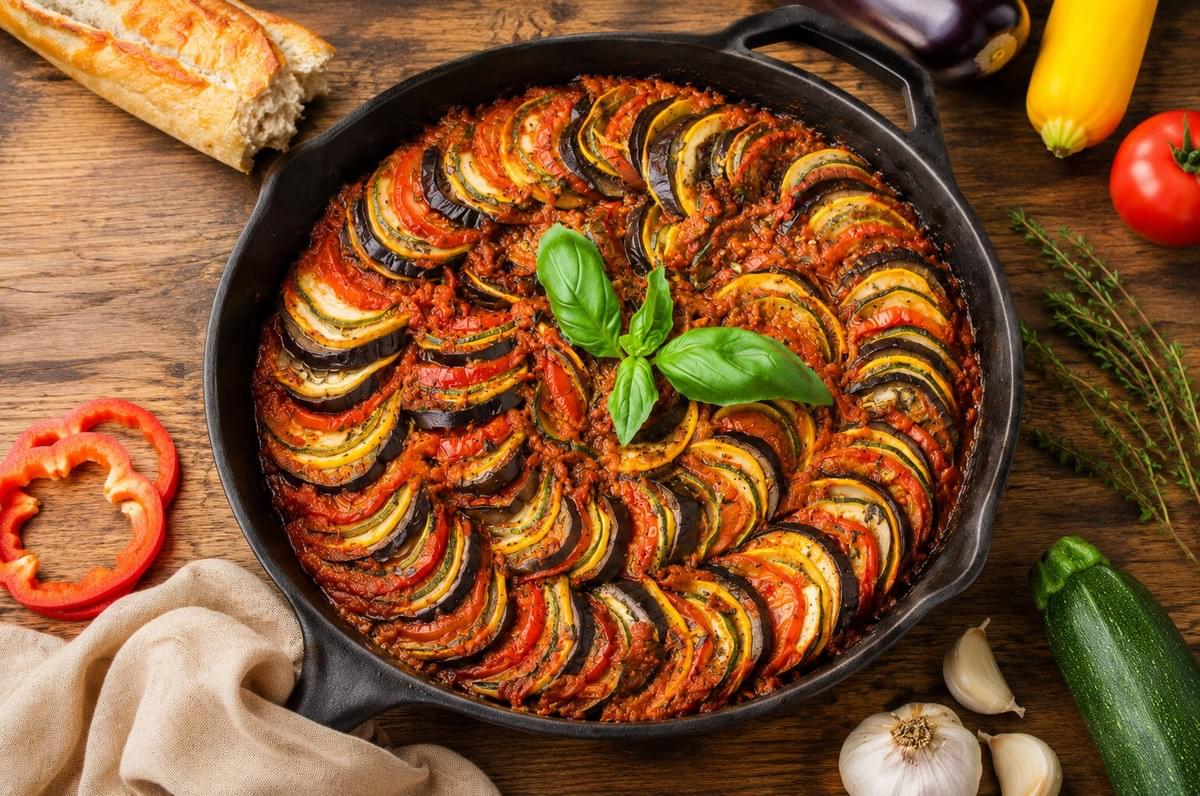
Ratatouille is generous. It goes with almost everything.
Spoon it over crusty bread, or pile it onto grilled sourdough for a simple lunch. Serve it over creamy polenta or tossed with pasta for a full meal. It sits beautifully next to roasted chicken or a piece of white fish.
For breakfast, make a little well in a bowl of warm ratatouille and crack an egg into it, then let it set. And leftover ratatouille, tucked into a sandwich with a slice of cheese, is a quiet weekday joy.
One more thing worth knowing: it is even better the next day. A night in the fridge lets the flavors settle and deepen. If you can make it ahead, do.
Storage and Reheating
Let the ratatouille cool, then store it in an airtight container in the fridge for up to 5 days. The flavor only improves.
To freeze, cool it completely and pack it into a freezer-safe container for up to 3 months. Thaw overnight in the fridge before reheating. The texture softens a little after freezing, which is perfectly fine for a stew like this.
Reheat gently in a skillet or saucepan over medium-low heat, adding a splash of water if it looks dry. The microwave works too. Enjoy it warm, or let it come to room temperature.
Come for the Vegetables, Stay for the Summer
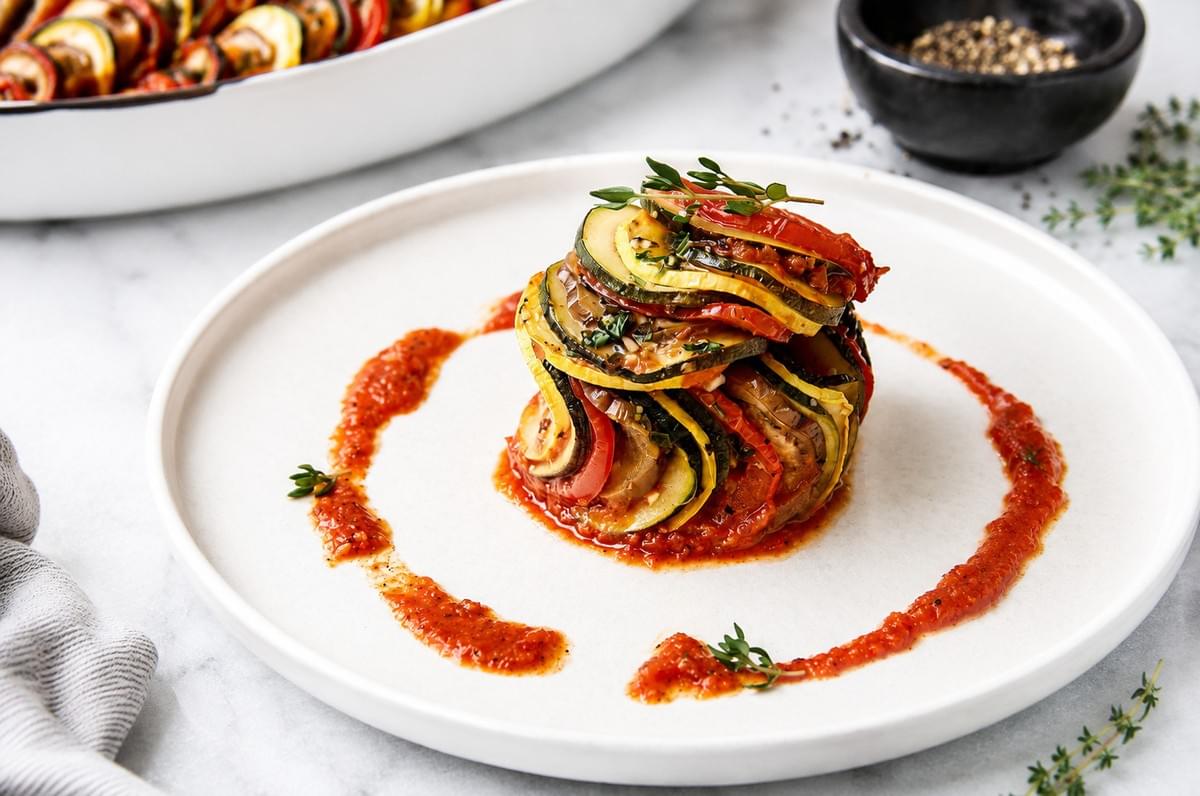
Ratatouille never asks for much. Just a pot, a little oil, and a pile of vegetables that need using.
So chop what you have, cook it slow, and let your kitchen fill with the smell of garlic and thyme. Taste as you go. Add a little more basil than you think you need. Then spoon it over bread, or pasta, or nothing at all, and enjoy the season while it lasts.
Make it once, tuck the leftovers away for tomorrow, and I think this one will find its way into your summer rotation. Happy cooking, friends.
Craving more recipes like this one? Head over to Our Food Rhythms for a full table of seasonal recipes, kitchen guides, and food stories that make cooking feel a little more like home.
