

There is a particular kind of panic that arrives mid-recipe. The onions are browning too fast, you still need to mince the garlic, and the sauce ingredients are scattered across three cabinets. The food suffers, and so does your mood.
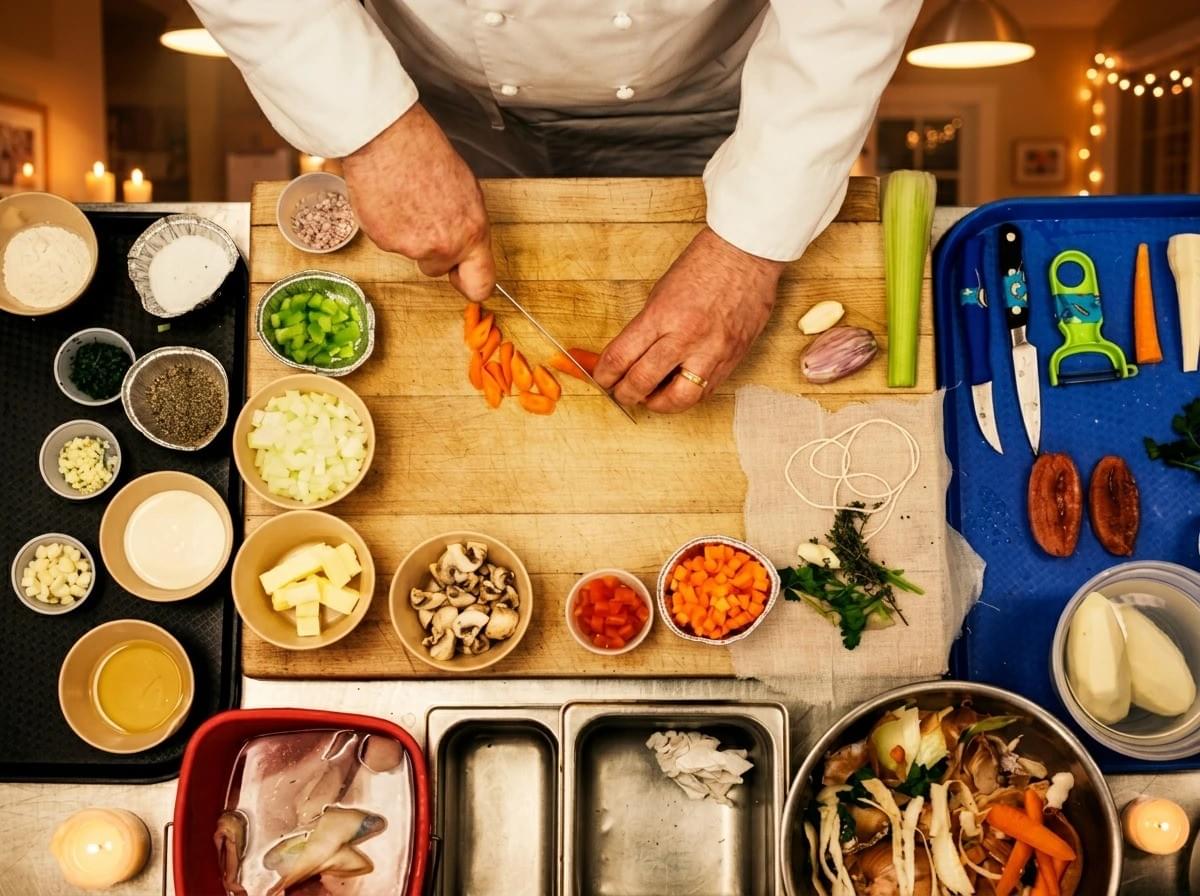
Mise en place is the quiet answer to that panic. The phrase is French and translates roughly to "everything in its place." In practice, it means doing your prep before you turn on the heat. You measure, chop, and arrange your ingredients first, so that cooking becomes a calm series of steps rather than a scramble.
I came to rely on it not because a textbook told me to, but because it changed how cooking felt. With everything ready, the stove stops being a source of stress. You move with intention. The meal comes together, and you are still standing there, present, instead of frantic.
This guide will walk you through what mise en place really is, how to build the habit, and how to do it without dirtying every bowl in your kitchen.
What Mise en Place Really Means
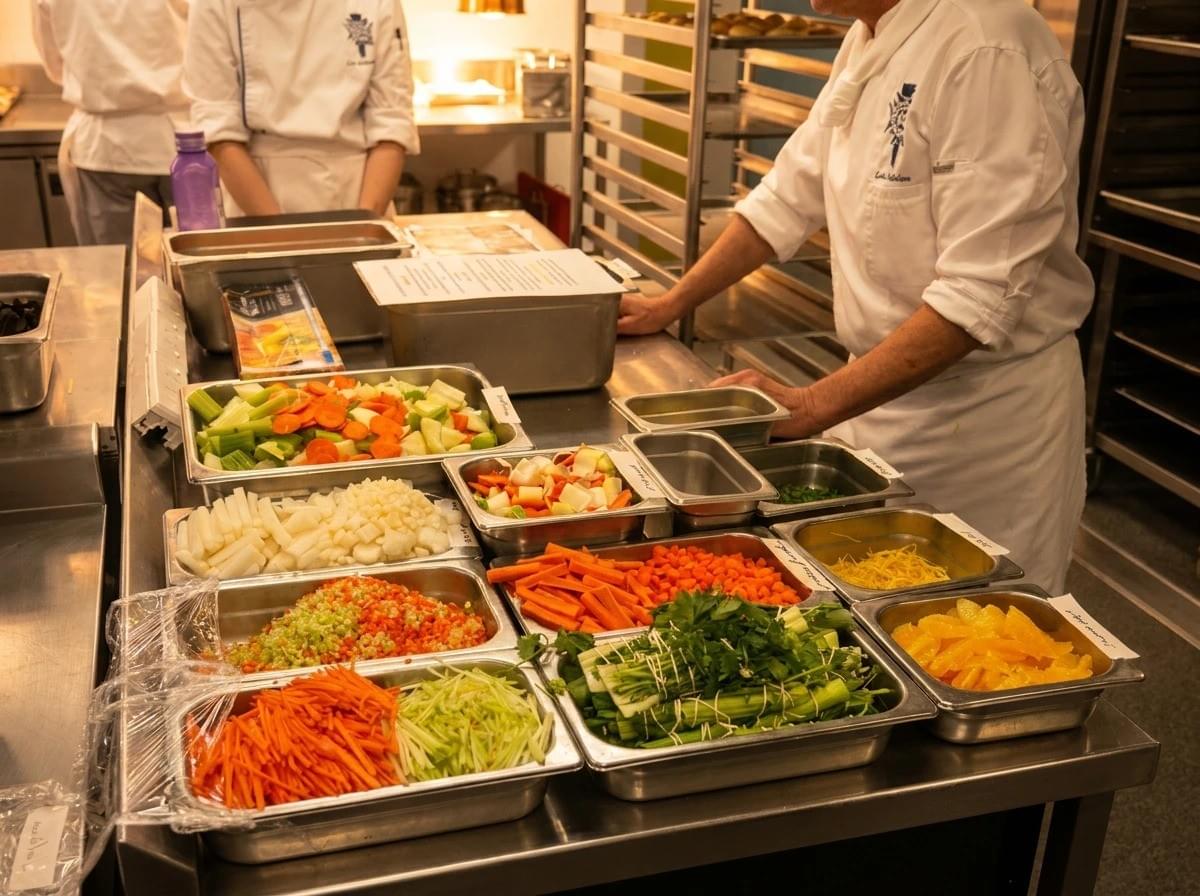
Mise en place is simply preparation done with order. You read the recipe, ready your ingredients and tools, and arrange them so each step flows into the next.
It is worth clearing up a few misconceptions, because they keep people from trying it.
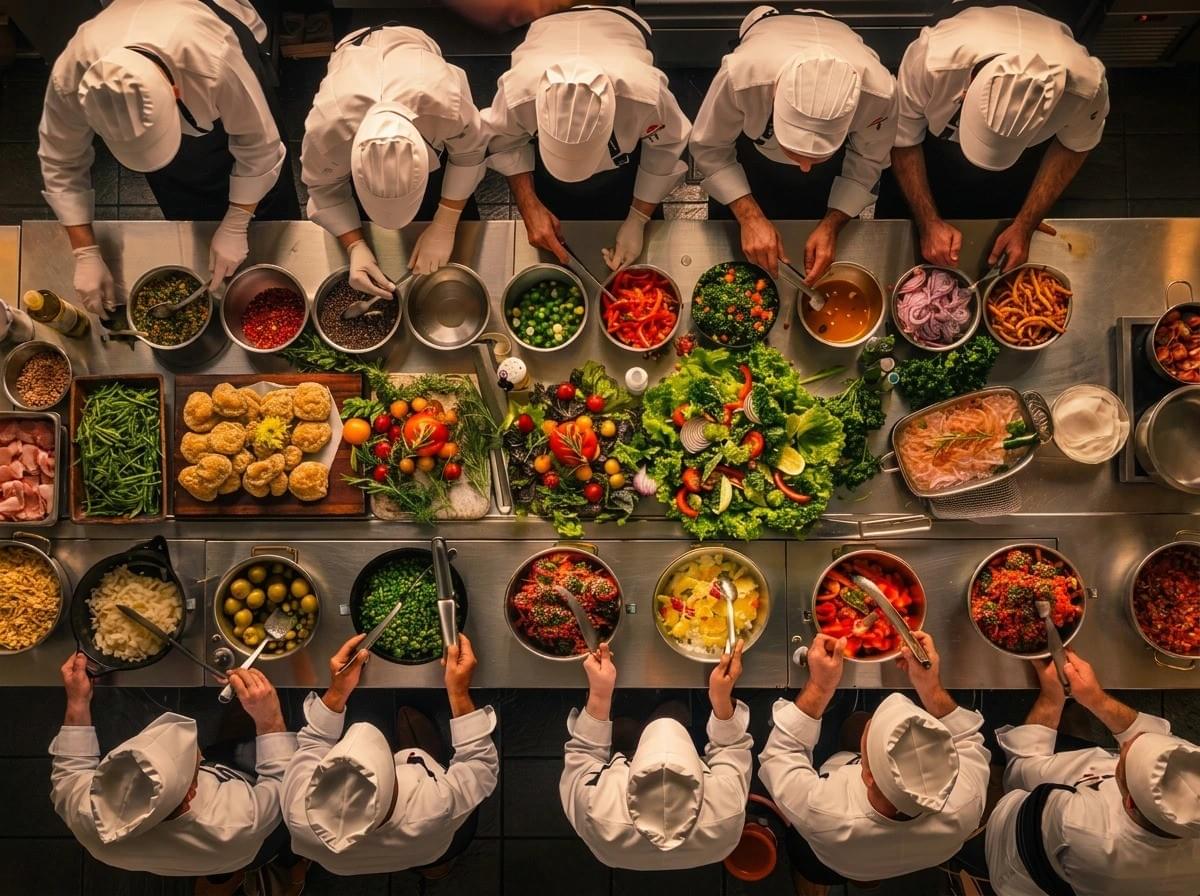
- It is not about a dozen tiny bowls. Restaurant kitchens use many containers because they cook the same dishes hundreds of times. At home, you can group ingredients and use far fewer.
- It does not make cooking fussy. The goal is the opposite. Good prep removes friction so the actual cooking feels smoother.
- It is not rigid. You can adapt it to your kitchen, your space, and the dish in front of you.
Meal Prep vs Mise en Place
These two get confused often. Meal prep usually means cooking entire dishes or components ahead of time, like batch-cooking grains on Sunday. Mise en place is the prep you do right before cooking a single meal. They work well together, but they are not the same thing. One stocks your fridge for the week. The other sets up your counter for the next thirty minutes.
Why It Helps: Speed, Accuracy, and Calm
The benefits are practical, and they show up fast.
- You cook faster. When ingredients are ready, you are not pausing to chop while something burns. The active cooking time shrinks.
- Fewer mistakes. Measuring ahead means you catch the missing ingredient before you start, not halfway through.
- Better timing. With everything staged, you can add items at the right moment instead of fumbling.
- Fewer burned dishes. No more scorched garlic because you were busy slicing peppers.
- Calmer cooking. This is the quiet gift. You are not racing the pan. You are guiding it.
- Easier cleanup. Prepping in one focused stretch means you can wash your board and tools before the cooking even begins.
The Mise en Place Workflow
Here is a simple order to follow. It works for almost any recipe, from a weeknight stir-fry to a slow Sunday roast.
- Read the entire recipe first. All the way through. Note the time-sensitive steps, the ones where things move quickly once heat is involved. This tells you what must be ready before you start.
- Clear your counter and set a working zone. Wipe the surface, move clutter aside, and give yourself an open space. A clear counter is a calmer counter.
- Gather your equipment. Pull out the right pan size, the sheet pan, the thermometer, the mixing bowls. Knowing your skillet is too small before you start saves real frustration.
- Prep ingredients in a sensible order. Wash produce, then chop, then measure and portion. Work from the items that take longest or that you will need first.
- Group ingredients by when they are used. Keep early items together, mid-cook items together, and finishing touches separate. This is the heart of good kitchen prep.
- Preheat and stage your tools. Get the oven or pan heating, and set your tongs, spatula, and ladle within reach before the heat is on.
Once this becomes routine, it stops feeling like a chore. It becomes the rhythm you cook to.
How to Do It Without Extra Dishes
The fear of a sink full of bowls keeps many home cooks from trying mise en place. It does not have to be that way.
- Use one board. Chop in sequence, moving from items that need separating to those that can mingle. Wipe the board between raw meat and vegetables, but otherwise, one board can handle a lot.
- Combine ingredients that go in together. If your onion, carrot, and celery all hit the pan at the same moment, prep them into the same bowl. There is no reason to separate what you will only recombine.
- Use a plate or parchment for staging. A single plate can hold your protein on one side and aromatics on the other. Parchment makes for easy transfer and even easier cleanup.
- Lean on smart shortcuts when they help. Pre-minced garlic, frozen chopped onions, or pre-washed greens are perfectly reasonable on a busy night. The point of mise en place is readiness, not purity. Use what gets you to a good meal.
Timing Examples
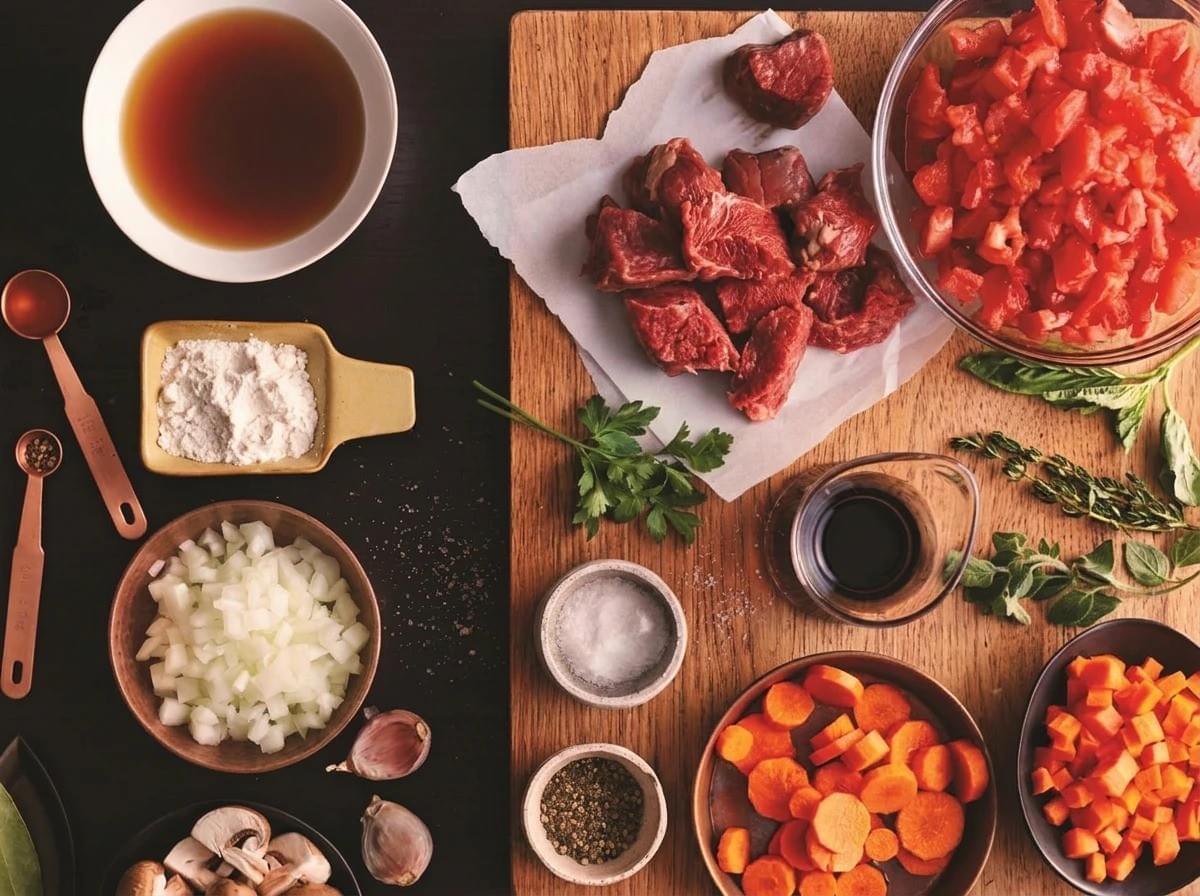
Let me make this concrete with two examples, one quick and one with more moving parts.
A 15 to 20 Minute Stir-Fry
Prep first, before any heat:
- Slice the protein and toss it with a little soy and cornstarch.
- Chop all vegetables and group them by cook time. Firmer items like carrots in one pile, quick items like snow peas in another.
- Mince the garlic and ginger together.
- Mix the sauce in a small bowl so it is ready to pour.
While cooking:
- Once the pan is hot, the dish moves fast. There is no chopping mid-stir, only adding. Protein first, then aromatics, then vegetables in order of firmness.
Save for the end:
- Finishing touches like sesame oil, scallions, or a squeeze of lime go in last, off or near the end of the heat.
The whole point here is that high-heat cooking gives you no time to prep midway. Everything must be ready before the pan smokes.
A Longer Recipe: Roast Chicken with Vegetables
Prep first:
- Pat the chicken dry, season it, and set it on a tray.
- Peel and cut the vegetables into even pieces, then toss with oil and salt.
- Measure any herbs, garlic, or pan-sauce ingredients and set them aside.
While it cooks:
- The oven does the long work, which frees you. Use that window to clean your board, wipe the counter, and set the table.
- Partway through, you might toss the vegetables or baste the bird. Because they are already prepped, this takes seconds.
Save for the end:
- Resting the chicken, building a quick pan sauce, and adding fresh herbs all happen at the finish.
A longer recipe rewards you with downtime. Mise en place lets you spend that downtime calmly instead of catching up.
Mise en Place for Different Cooking Styles
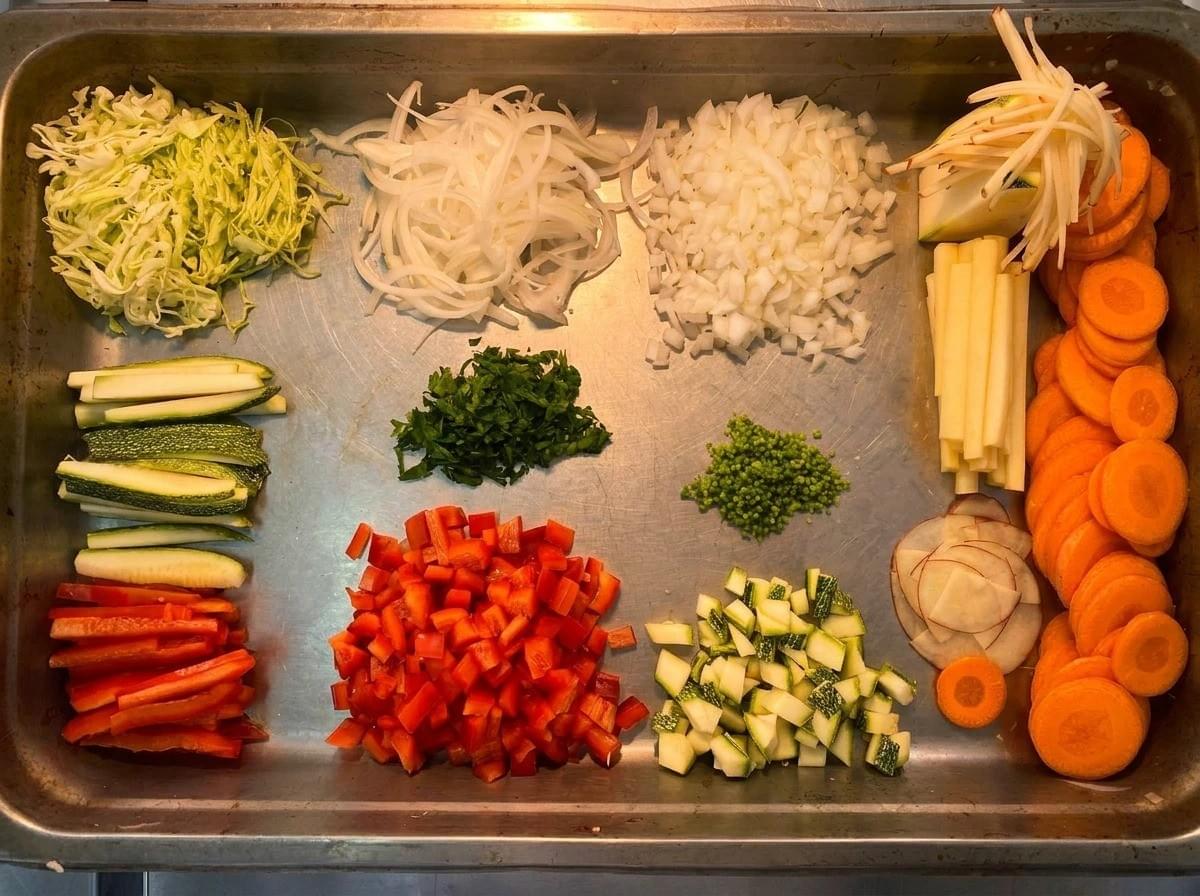
Different methods ask for different amounts of upfront prep.
Stir-Fry and High-Heat Cooking
This is where prep matters most. The heat is intense and the cooking is quick, often under five minutes. There is simply no time to chop once you begin. Everything, including the sauce, must be ready and within arm's reach.
Baking
Baking is precise. Measure carefully, bring ingredients to the right temperature, and line your pans before you start mixing. Once a batter is made, it often cannot wait, so readiness protects your results.
Roasting
Roasting is forgiving on timing but rewards even prep. Cut vegetables to similar sizes so they cook at the same rate. Season ahead. The long oven time gives you room to breathe.
Soups and Stews
These are the most relaxed. You can often prep as you go, since the pot simmers slowly. Still, chopping your aromatics ahead and measuring your liquids keeps the early sauté smooth, which is where flavor builds.
Food Safety and Keeping Things Fresh
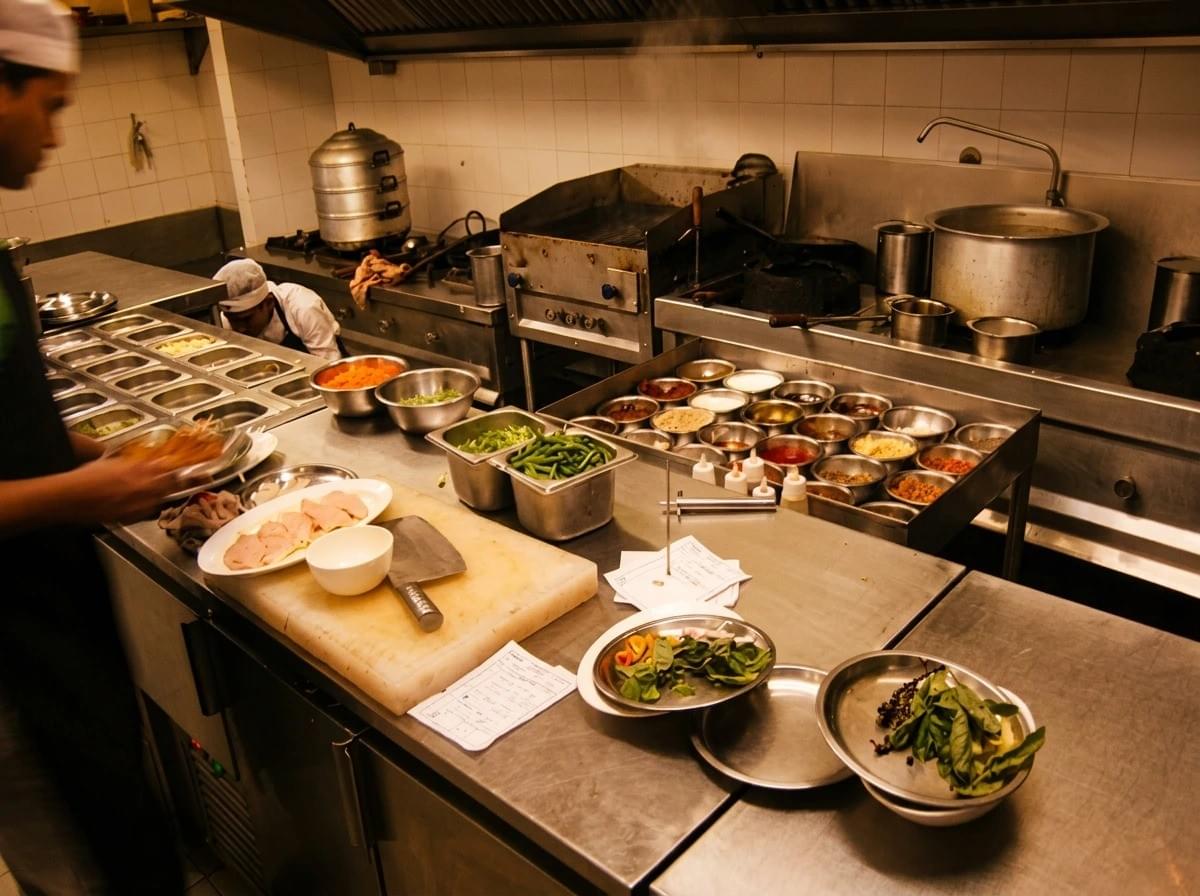
Good prep includes handling ingredients safely.
- Keep raw meat separate. Use a dedicated board or wash it thoroughly before it touches anything else. Store raw protein on the lowest fridge shelf so it cannot drip onto other foods.
- Wash your hands. After handling raw meat, eggs, or unwashed produce, wash before moving on.
- Mind the clock. Perishable items should not sit at room temperature for long. As a general rule, keep them out no more than two hours, and far less in a warm kitchen. If you prep ahead, return meat and dairy to the fridge until you need them.
- Keep herbs crisp. Wrap fresh herbs in a slightly damp towel, or stand them in a small glass of water like a bouquet.
- Prevent browning. A squeeze of lemon keeps cut apples or avocado from oxidizing. Peeled potatoes can sit in a bowl of cold water until you are ready to cook them.
Beginner Mistakes and Easy Fixes
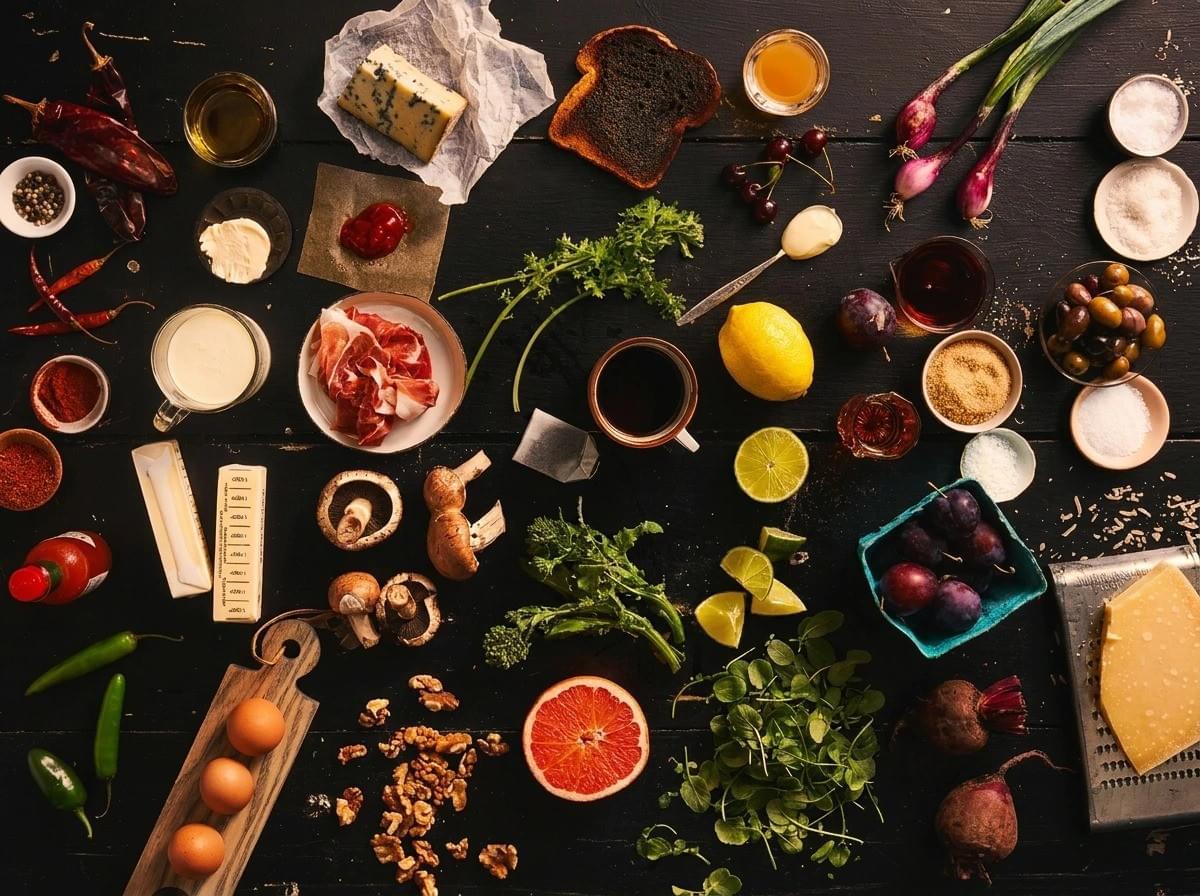
Almost everyone stumbles here at first. These are the common ones.
- Over-prepping. You do not need to mince garlic that the recipe wants sliced. Prep to the recipe, not beyond it.
- Prepping too early. Delicate herbs and cut fruit lose quality if they sit too long. Do the fragile prep last, closer to cooking.
- A cluttered counter. If your workspace is crowded, you will feel crowded. Clear it before you begin.
- Not grouping by timing. Random piles lead to confusion at the stove. Group by when each item goes in.
- Ignoring cook times. Read the recipe fully so a fast step does not surprise you. The fix is always the same: read first, then cook.
None of these are serious. They simply smooth out with a little practice.
A Simple Mise en Place Checklist
Keep this nearby until it becomes second nature.
- Read the full recipe and note quick steps.
- Clear and wipe your counter.
- Gather pans, bowls, and tools.
- Wash and chop produce.
- Measure and portion everything.
- Group ingredients by when they are used.
- Refrigerate anything perishable until needed.
- Preheat the oven or pan.
- Stage your tongs, spatula, and spoons.
- Begin cooking, calmly.
Start Small, Build the Habit
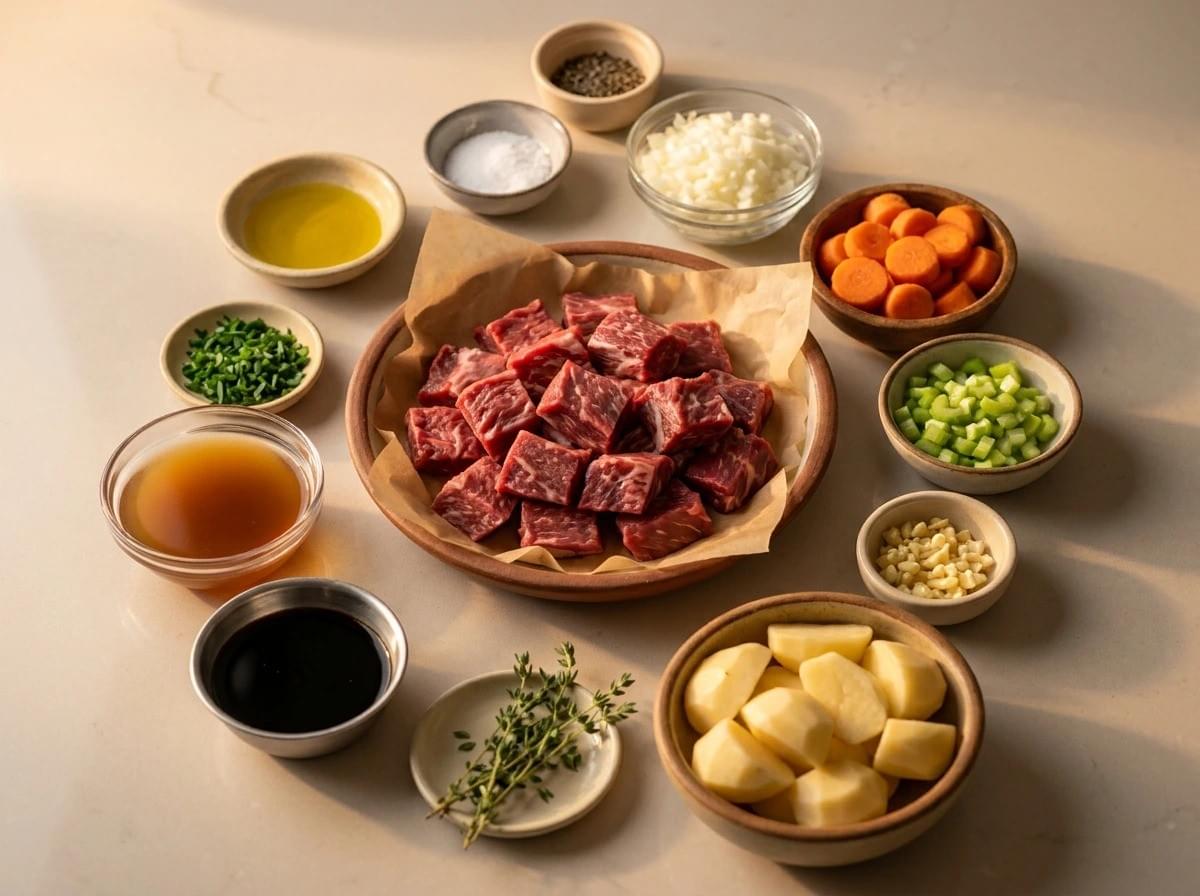
You do not need to overhaul your whole routine tonight. Pick one dish this week and prep it fully before you cook. Notice how it feels to stand at the stove with everything ready, with nothing left to chase.
That small shift is the whole idea. Mise en place is not about precision for its own sake. It is about giving yourself room to cook well, and to enjoy it. You will cook faster, yes, but more than that, you will cook calmer.
Preparing without the rush is a habit worth keeping. Start with one meal, and let it grow from there.
