

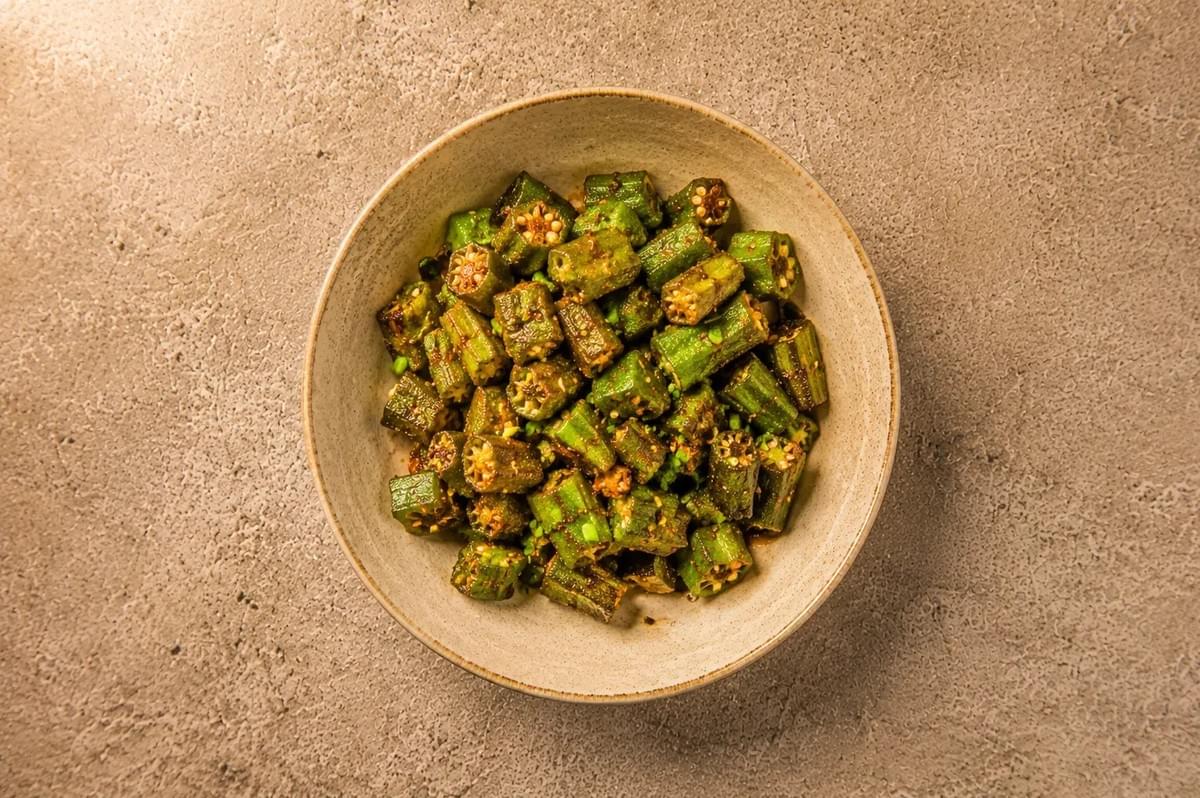
The first time I cooked okra, I expected a fight. I had heard the warnings, the whispers about slime, the shrugs from friends who swore it off years ago. So I stood at the stove, a little nervous, holding a handful of small green pods.
It turned out fine. Better than fine. The okra blistered up in a hot pan, edges going golden, and there was no goo, no drama. Just a tender bite with a little char and a fresh, almost grassy snap.
Here is the thing nobody told me back then: okra is mostly misunderstood. When you catch it young, when the pods are still slim and gentle, it behaves beautifully. The slime worry fades when you start with the right okra and treat it kindly.
So let me cook this one alongside you. We will pick the tender pods, get the pan good and hot, and let okra surprise you the way it surprised me.
Quick Bites Before You Cook
- Young okra pods are your friend. Smaller, slimmer pods stay tender and stay low on slime.
- High, dry heat is the secret. A hot pan and dry pods give you golden edges, not goo.
- Acid goes in at the end, not the start, to keep texture pleasant.
- This recipe is forgiving and ready in under 20 minutes, perfect for a weeknight.
Seasonal Spotlight: Okra at Its Most Gentle Stage
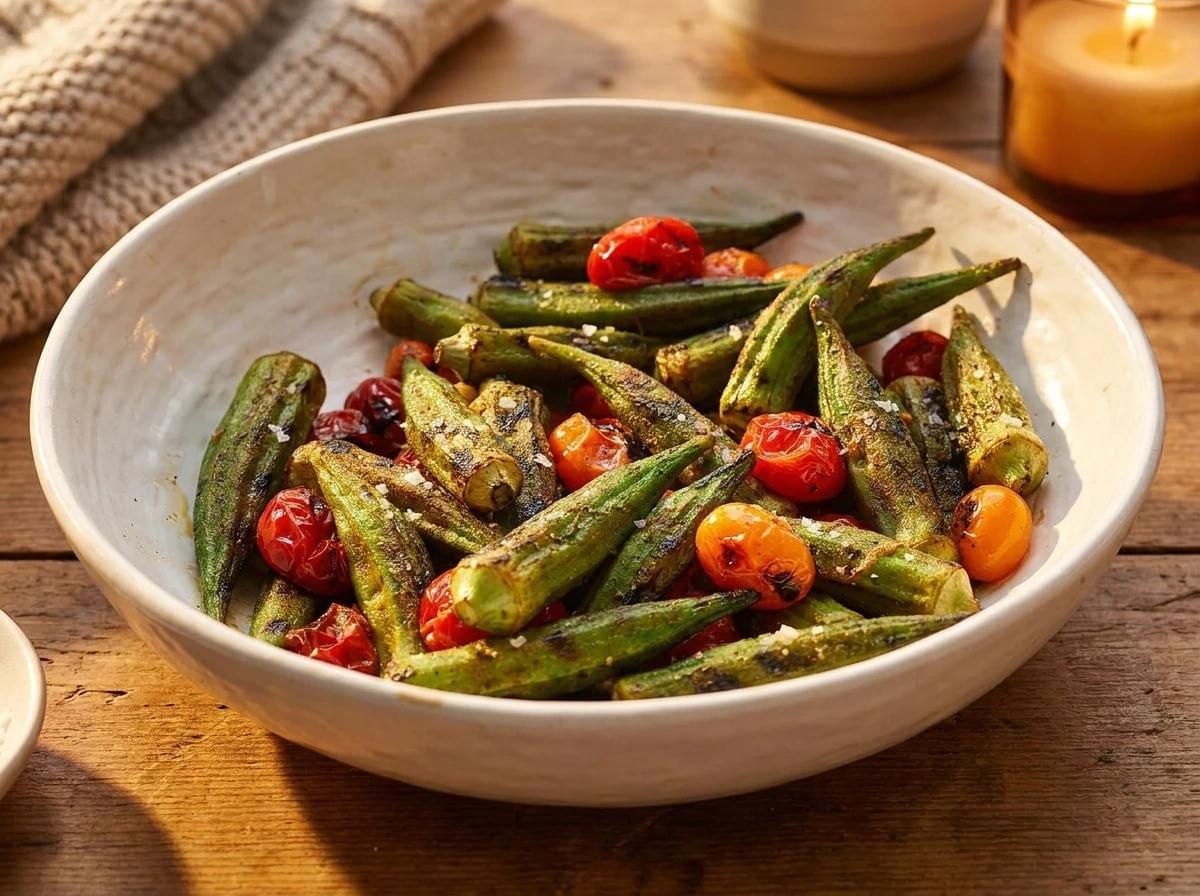
Okra season runs through the warm months, and the early-to-mid harvest is when the magic happens. "Okra at its most gentle stage" simply means young okra pods, picked before they grow long, woody, and fibrous.
A pod left too long on the plant turns tough. The seeds harden, the texture gets stringy, and yes, that is often when the slimy reputation earns its keep. Catch okra young, and you sidestep most of that.
How to Pick Tender Okra
When you are at the market or the garden, look for these cues:
- Size: Aim for pods around 2 to 3 inches long. Small is tender. Large is a gamble.
- The snap test: Gently bend the tip of a pod. If it snaps cleanly, it is young and fresh. If it bends like rubber, it is past its prime.
- Color: Look for vivid, even green (or deep red for red varieties). No dull, faded patches.
- Blemishes: Skip pods with dark spots, soft dents, or dry, shriveled ends.
Why Tenderness Matters
Tender okra cooks fast and stays pleasant to eat. The texture is crisp-tender, not stringy, and the cook time is short, which means less chance for the inside to go slippery. Young pods need just minutes of high heat. Older pods need more coaxing, and they still might not reach the same gentle bite.
In short, the okra does half the work for you. Pick well, and the cooking is easy.
The Recipe: Blistered Tender Okra
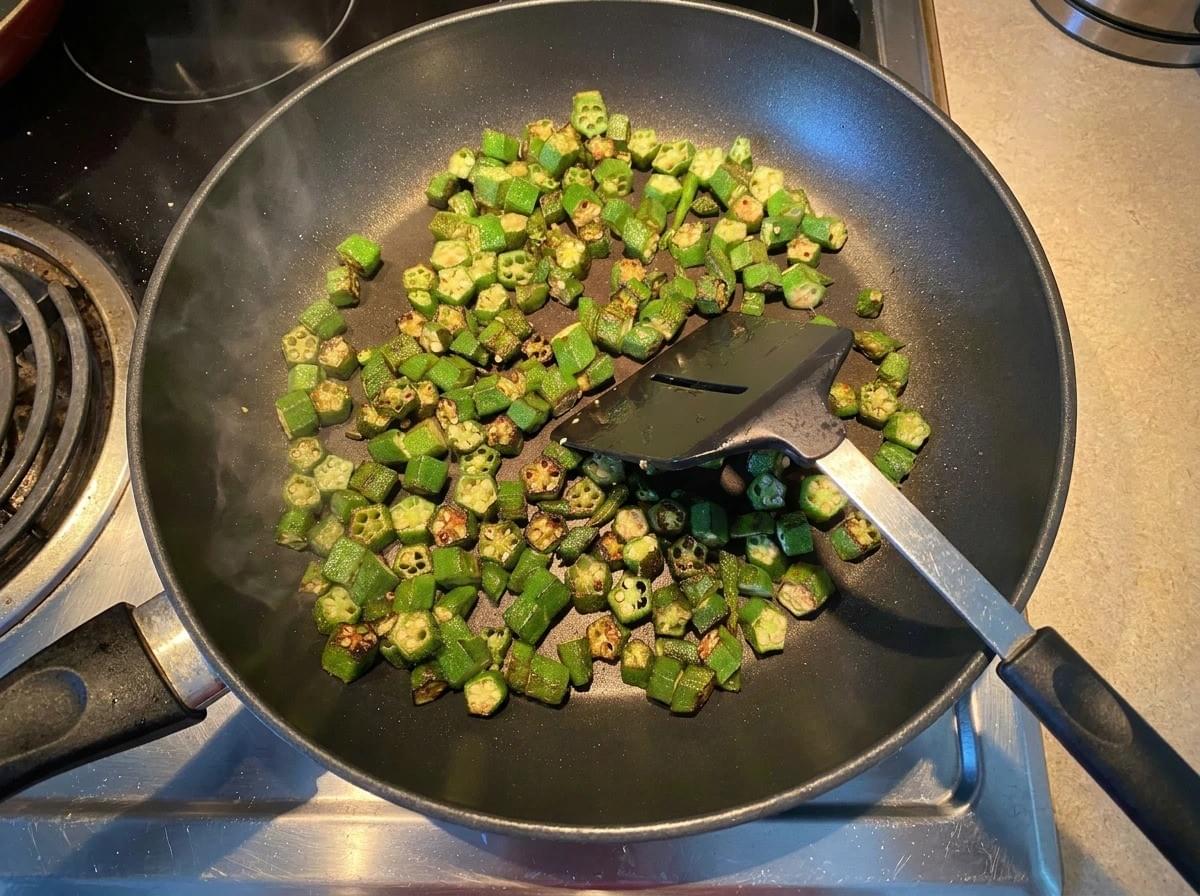
This is my go-to. A quick, high-heat sauté that blisters the pods until the edges turn golden and the centers stay just tender. It is bright, a little smoky, and reliably non-slimy.
- Prep time: 10 minutes
- Cook time: 8 minutes
- Total time: 18 minutes
- Servings: 4 as a side
Ingredients
- 1 pound (450 g) young okra pods, whole or halved lengthwise
- 2 tablespoons neutral oil (such as grapeseed or avocado)
- 1/2 teaspoon fine salt, plus more to taste
- 1/4 teaspoon black pepper
- 2 cloves garlic, thinly sliced
- 1/2 teaspoon smoked paprika (optional, for warmth)
- 1 tablespoon fresh lemon juice, added at the end
- Flaky salt and lemon wedges, for serving
Step-by-Step Instructions
1. Dry the okra well.
Rinse the pods, then dry them thoroughly with a clean towel. This is the most important step. Wet okra steams instead of blisters, and steam is where slime sneaks in. You want them bone dry, like they have never met water.
2. Trim, but lightly.
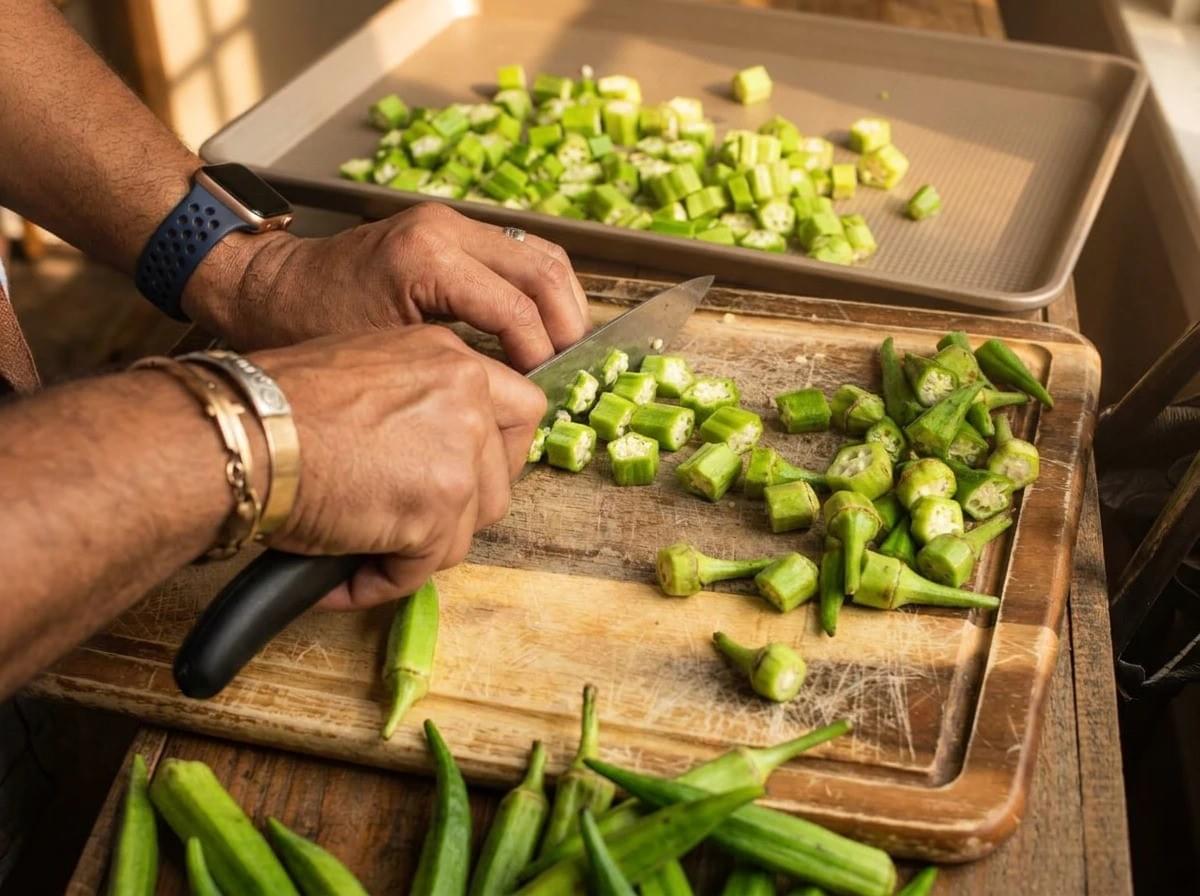
Trim just the very tip of the stem end. Leave the pods whole for less slime, or halve them lengthwise if you like more char and faster cooking. Do not cut into the seedy core more than you need to.
3. Heat the pan.
Set a large skillet (cast iron is lovely here) over medium-high heat. Add the oil and let it shimmer. You want it hot enough that a pod sizzles on contact. No timid pans allowed.
4. Sear without crowding.
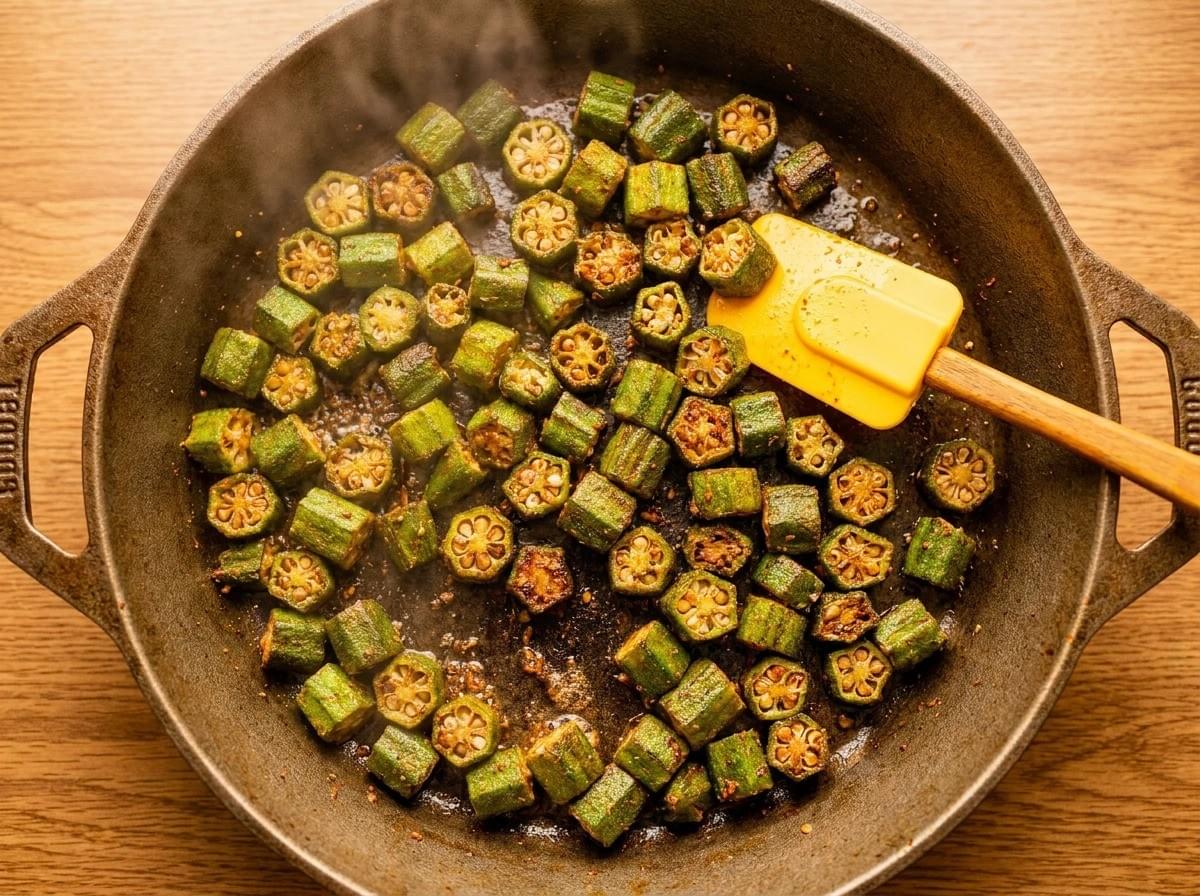
Add the okra in a single layer. If they overlap, work in two batches. Let them sit undisturbed for 2 to 3 minutes, until the undersides turn golden and blistered. You will smell something nutty and toasty. That is your cue.
5. Toss and finish the sear.
Add the salt, pepper, and smoked paprika. Toss once, then let the okra sear another 2 to 3 minutes. Stir minimally. Each time you move them, you cool the pan and slow the browning.
6. Add the garlic.
Scatter in the sliced garlic and cook for about 1 minute, just until fragrant and pale gold. Watch closely so it does not burn.
7. Finish with acid.
Turn off the heat and add the lemon juice. The pan will hiss. Toss to coat. Adding acid now, at the very end, keeps the texture crisp and bright rather than softening the pods.
8. Serve.
Tip the okra onto a plate, sprinkle with flaky salt, and tuck a few lemon wedges alongside. The pods should look glossy, golden, and a little blistered, with no slick film in the pan.
Serving Suggestions
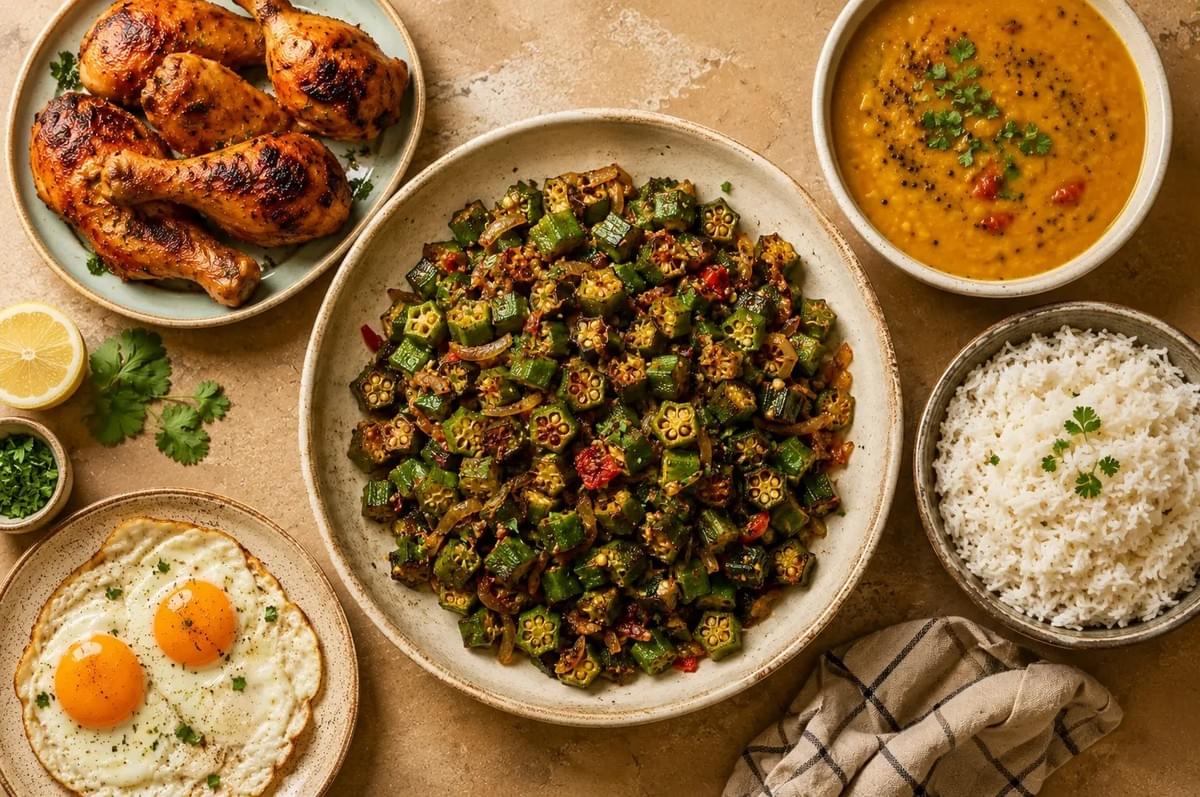
Blistered okra makes a quick, happy side for grilled fish, roast chicken, or a bowl of steamed rice and dal. Pile it next to fried eggs for a lazy weekend plate, or fold it into a warm grain salad with tomatoes and feta. It also disappears straight off the plate as a snack, which I will neither confirm nor deny happening in my kitchen.
Tips to Keep Okra Tender (and Slime in Check)
No fear-mongering here. These small habits keep things easy.
- Dry, dry, dry. Pat the pods completely dry before they hit the pan. Water is slime's best friend.
- Go hot. High heat blisters quickly and sets the exterior before the inside can turn slippery.
- Do not crowd. Crowded pods steam each other. Give them room, or cook in batches.
- Stir as little as you can. Let the okra sit and sear. Constant stirring cools the pan and brings out goo.
- Acid at the end. Lemon, vinegar, or tomato added late keeps texture firm. Added early, acid can sometimes soften pods too much.
- Keep pods mostly whole. The less you cut into the seedy center, the less slime you release.
Storage and Reheating
Cooked okra keeps in an airtight container in the fridge for up to 3 days. The texture is best the day you make it, but leftovers still have life in them.
To reheat and keep things crisp, skip the microwave (it tends to make okra soft and slippery). Instead, warm the pods in a hot, dry skillet for 2 to 3 minutes, tossing once, until heated through and the edges re-crisp a little. A quick blast in a 400°F (200°C) oven or air fryer works well too.
The Final Bite
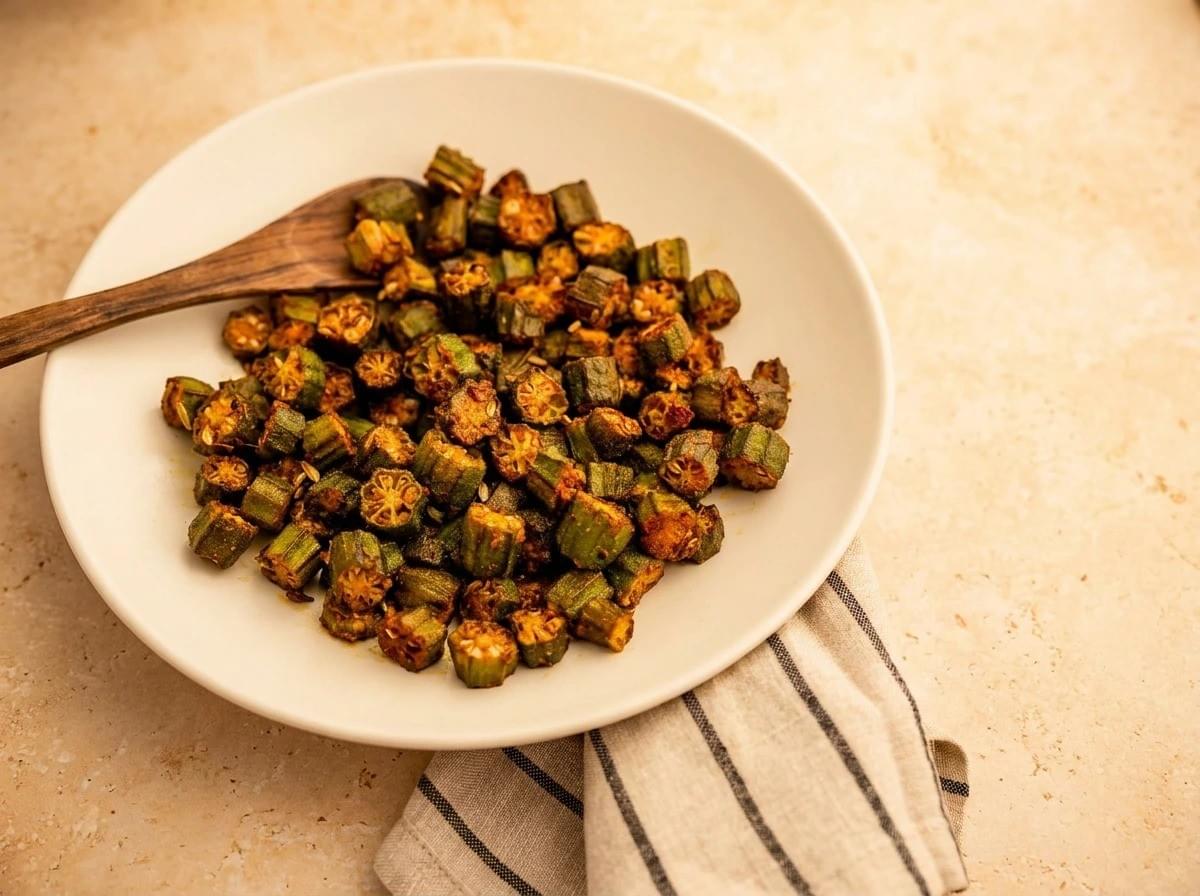
Okra does not need a fight, and it does not need fancy tricks. It just needs you to pick the gentle young pods, get the pan hot, and trust the sear. That first golden, blistered bite tends to win people over, even the skeptics who swore okra off years ago.
So grab a handful of tender okra this season, make this once the way it is written, then start playing. Add chili, swap the citrus, toss in herbs from the windowsill. Make it yours. And if it makes you pause over the plate for a second, well, that is the whole point.
Happy cooking, friends.
