

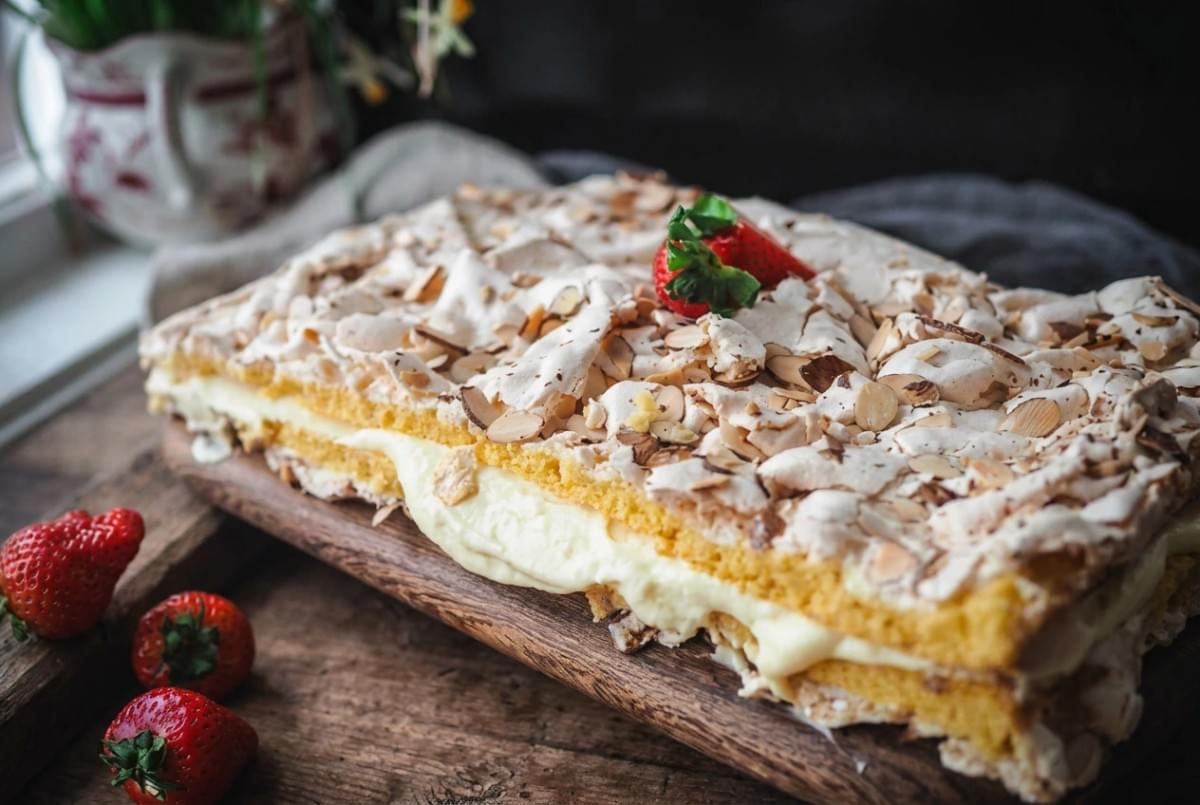
The first time I heard someone call a cake "the best in the country," I rolled my eyes a little.
Then I made it.
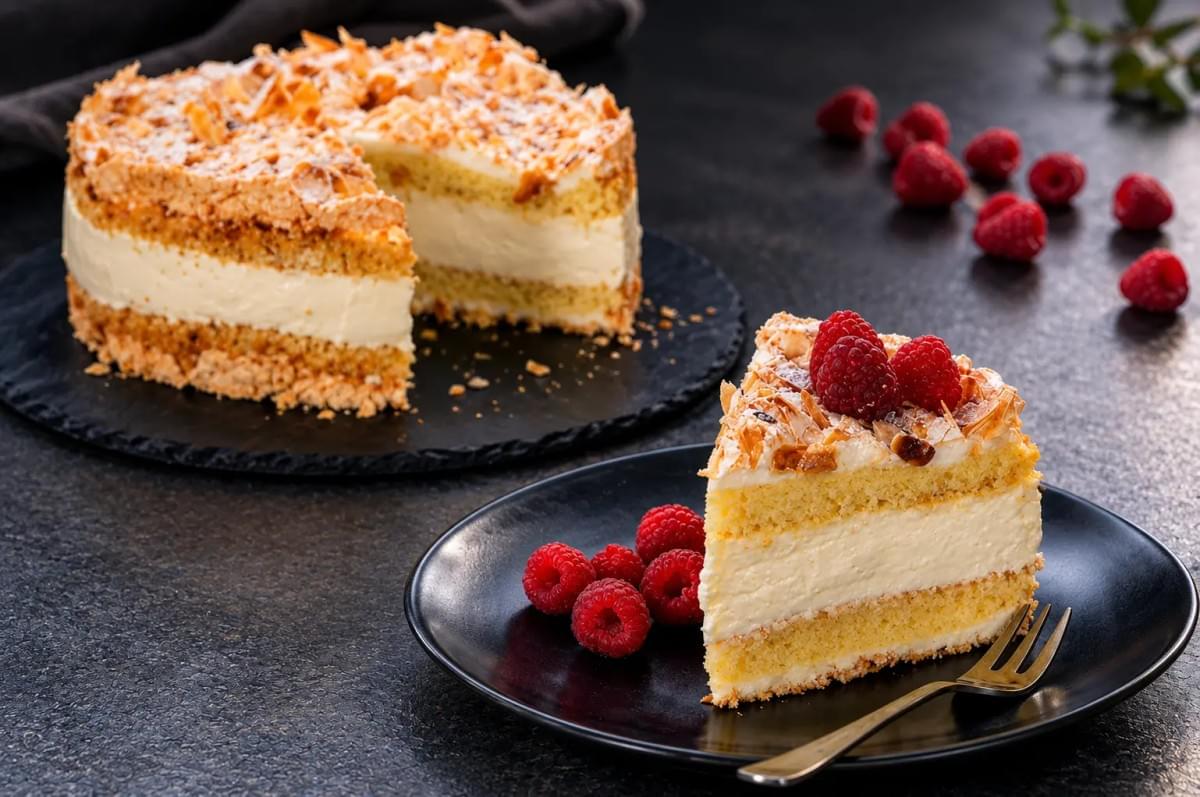
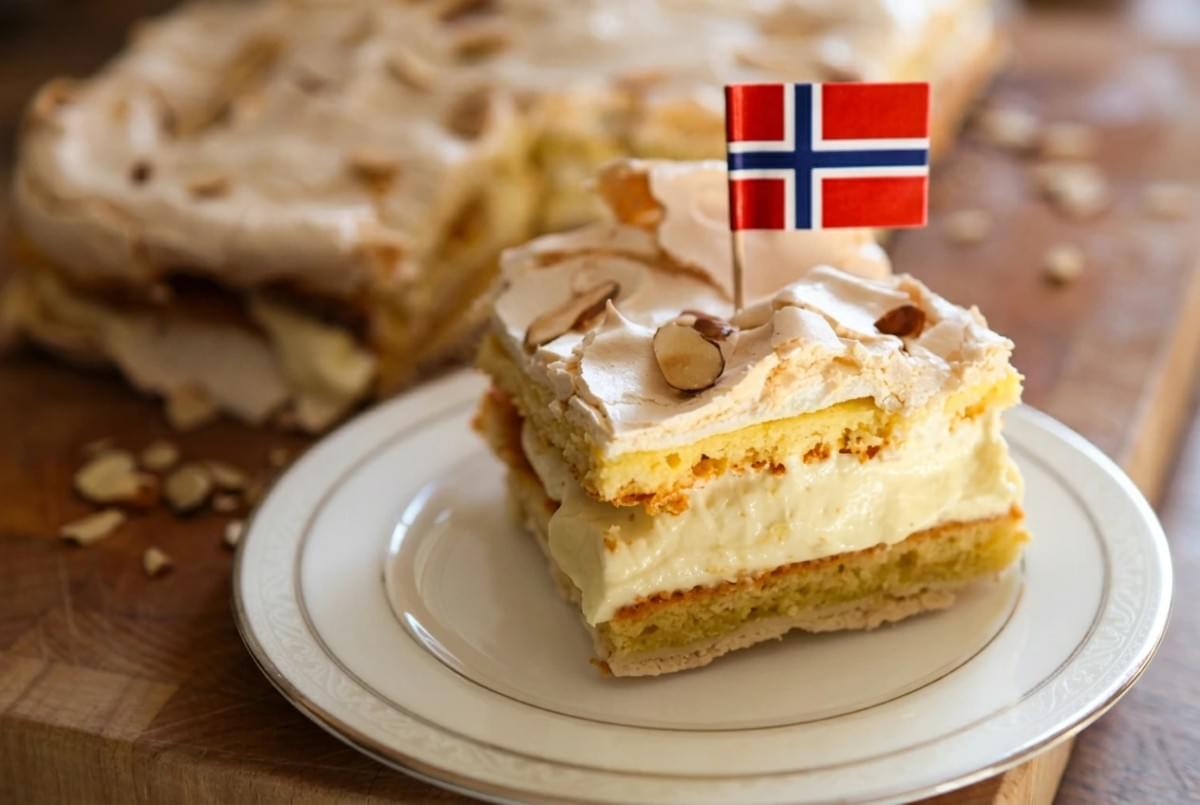
There is a moment, right after you slice into Kvæfjordkake, when the layers reveal themselves: soft cake, cool vanilla custard, and crackly meringue with toasted almonds. It does not shout. It just sits there, quietly certain of itself.
This is a cake people bake for birthdays and long summer afternoons. It takes some patience, yes. But nothing here is out of reach. Let me walk you through it, step by gentle step.
A Little Background
Kvæfjordkake comes from the north of Norway, from a place called Kvæfjord. Somewhere along the way, it earned the nickname "verdens beste" ("the world's best"). Norwegians say it with a small shrug and a smile, and once you taste it, you understand the confidence.
If you are wondering how to say it, try "KVAY-fyor-kah-keh." Close enough. Nobody will mind if you stumble.
At its heart, this is a Norwegian layered cake built from humble parts: butter sponge, homemade vanilla custard, and meringue baked right onto the cake, finished with almonds.
What Makes This Cake Special
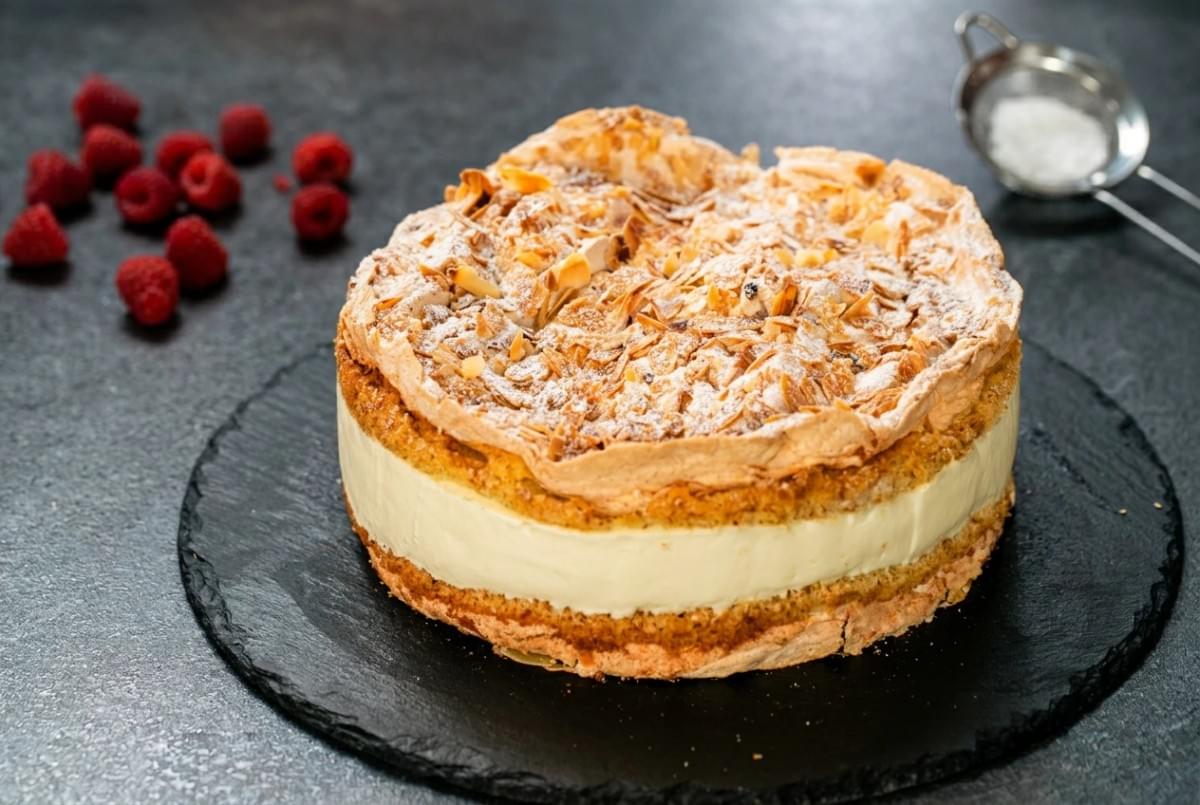
- Four layers, four textures. Soft sponge, silky custard, crisp-then-chewy meringue, and crunchy almonds.
- The meringue bakes onto the cake. No separate assembly, no fuss.
- The contrasts are the whole point: cool against warm, soft against crisp, sweet against nutty.
- It is worth the effort. Some cakes disappear from memory. This one lingers.
Ingredients and Substitutions
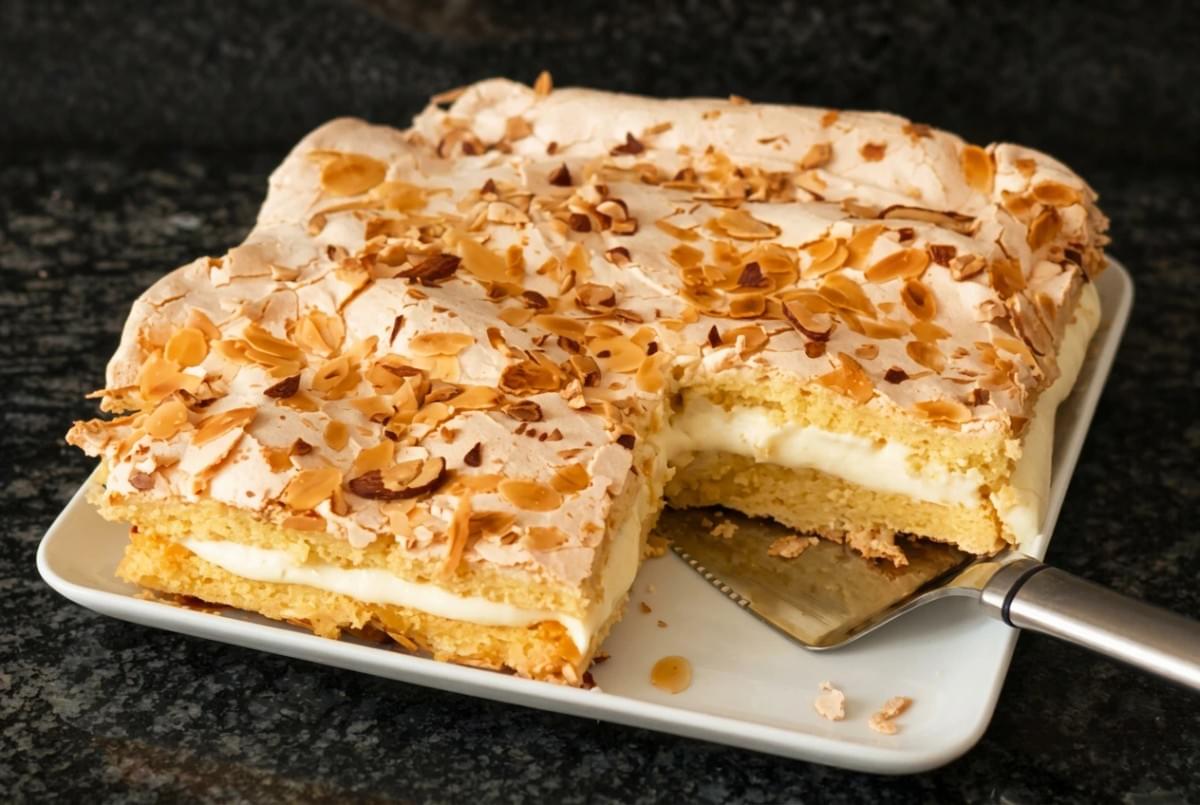
Grouped by component, so you can work through it calmly.
For the sponge base
- 1/2 cup (115 g) butter, softened
- 1/2 cup (100 g) granulated sugar
- 4 egg yolks (save the whites for the meringue)
- 1/2 cup (120 ml) milk
- 1 cup (125 g) all-purpose flour
- 1 teaspoon baking powder
- 1 teaspoon vanilla extract
For the meringue topping
- 4 egg whites (the ones you saved)
- 1 cup (200 g) granulated sugar
- A pinch of salt
For the toasted almonds
- 1/2 cup (50 g) sliced almonds
Sliced almonds toast quickly and lie flat, but chopped almonds work too if that is what you have. They just give a chunkier bite.
For the vanilla custard
- 1 1/4 cups (300 ml) milk
- 3 egg yolks
- 1/4 cup (50 g) sugar
- 2 tablespoons cornstarch
- 1 teaspoon vanilla extract (or 1 teaspoon vanilla paste, for those little flecks)
- 3/4 cup (180 ml) heavy cream, whipped
A few honest notes: Vanilla paste gives you flecks and a deeper flavor, but extract does the job beautifully. If you want a shortcut, folding whipped cream into a good store-bought vanilla pudding gets you close. And to avoid a runny custard, cook it patiently until it truly thickens and coats a spoon, then chill it fully before folding in the cream. Warm custard and whipped cream do not mix kindly.
Tools You Will Need
- Two mixing bowls
- An electric mixer (a hand mixer is fine)
- A 9x13 inch (23x33 cm) baking pan
- Parchment paper
- A whisk
- A saucepan for the custard
- A spatula
- A thermometer (optional, but nice for the custard)
Step-by-Step Instructions
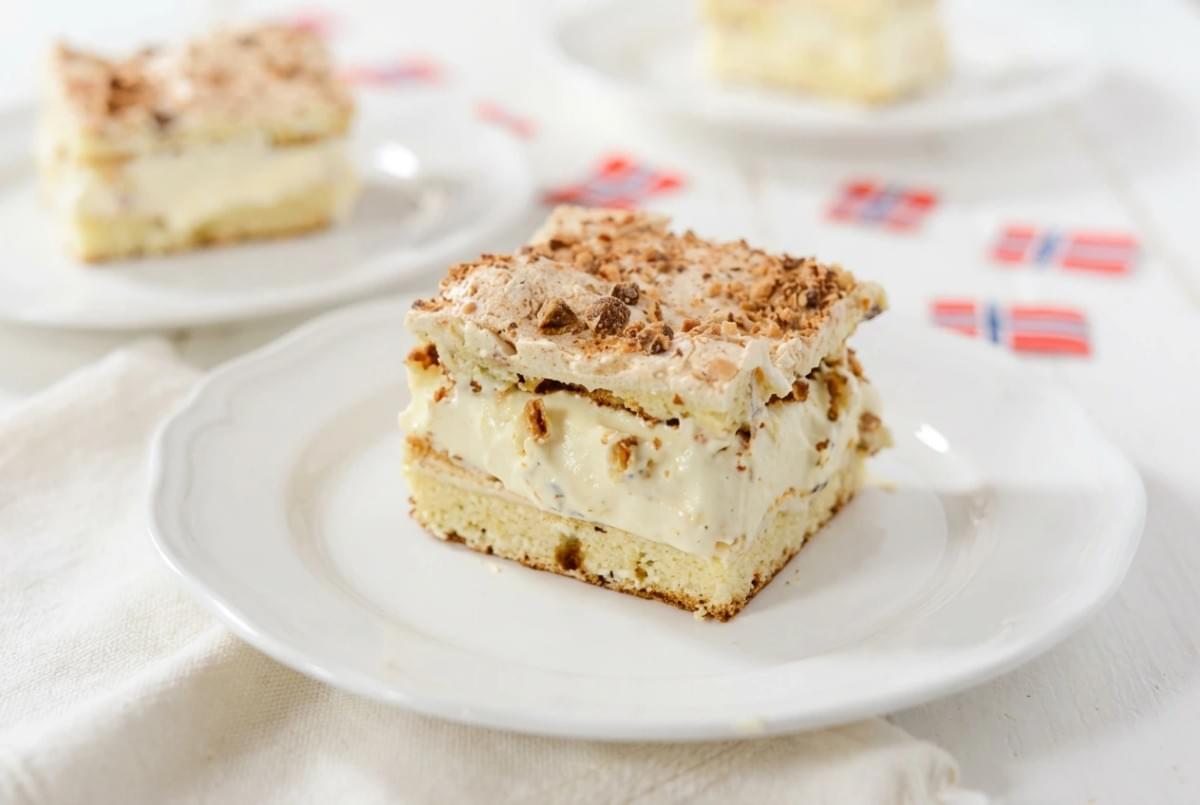
Read through once, then let's bake together.
1. Prep the pan and oven
Heat your oven to 350°F (175°C). Line the 9x13 pan with parchment, leaving a little overhang so you can lift the cake out later.
2. Make the sponge base
Beat the softened butter and sugar until pale and creamy, about 2 to 3 minutes. Add the egg yolks one at a time, then the vanilla. Pour in the milk (do not worry if it looks a little curdled). Whisk the flour and baking powder together, then fold them in gently until smooth. Spread this batter evenly across the lined pan. It will be a thin layer, and that is exactly right.
3. Make the meringue and add almonds
In a clean, dry bowl, beat the egg whites with a pinch of salt until foamy. Add the sugar a spoonful at a time, beating until the meringue is thick, glossy, and holds stiff peaks. This takes a few minutes, so let it get there. Spread the meringue gently over the raw cake batter, right to the edges. Scatter the sliced almonds evenly over the top.
4. Bake
Slide the pan into the oven and bake for about 30 to 35 minutes. You are looking for a meringue that has turned golden and crisp on top, with the almonds toasted and fragrant. The cake underneath should be set and spring back to a light touch. If the meringue browns too quickly, tent it loosely with foil for the last few minutes.
5. Cool completely
Let the cake cool fully in the pan. The meringue firms up as it rests, so resist the urge to rush this part.
6. Make the custard
While the cake cools, warm the milk in a saucepan until steaming but not boiling. In a bowl, whisk the egg yolks, sugar, and cornstarch until smooth. Slowly pour in the hot milk, whisking constantly, then return everything to the pan. Cook over medium-low heat, stirring the whole time, until it thickens into a custard that coats the back of a spoon, about 3 to 5 minutes. Stir in the vanilla. Pour it into a bowl, press plastic wrap onto the surface (this stops a skin forming), and chill until cold.
7. Finish the custard
Once the custard is fully cold, whip the heavy cream to soft peaks and fold it in gently. This gives you a light, spoonable filling.
8. Assemble the layers
Lift the cooled cake out using the parchment. Cut it in half crosswise, so you have two rectangles. Spread the custard generously over one half, meringue side up. Place the second half on top, meringue side up again, so both crisp layers face the sky. Handle it kindly here. The meringue is delicate.
9. Chill and serve
Chill the assembled cake for at least an hour so it settles and slices cleanly. Then cut into squares and serve.
Food Rhymes Fix-It Corner
Little bumps happen. Here is how to smooth them out.
- Meringue weeping or cracking? A few cracks are normal and pretty. Weeping usually means undissolved sugar, so add it slowly next time and beat until fully glossy.
- Custard too thin? It needed more time on the heat. Return it to the pan and cook a little longer, stirring, until it thickens properly.
- Custard too thick? Whisk in a splash of milk to loosen it before folding in the cream.
- Cake sticking? Parchment is your friend. Line the pan fully, and always let the cake cool before lifting.
- Soggy layers? Make sure the custard is fully chilled and thick before assembling. A runny filling soaks in fast.
- Messy slices? Chill the assembled cake, then use a sharp knife wiped clean between cuts.
Make-Ahead and Storage
Kvæfjordkake actually likes a little rest, so it suits making ahead.
- Custard: Make it up to a day in advance and keep it chilled, then fold in the cream when you are ready to assemble.
- Baked cake base: Bake it a day ahead and store it covered at room temperature.
- Assembled cake: Keep it in the fridge, loosely covered, for up to 2 days. The meringue softens a touch over time but stays lovely.
- Freezing: The custard-filled cake does not freeze well, since the texture shifts. This one is happiest fresh.
Serving Suggestions
This cake was made for slow company.
Serve it cold, in generous squares, with a strong cup of coffee alongside. A handful of fresh berries (raspberries or strawberries) brings a bright, tart note that plays well against the sweet meringue. A whisper of powdered sugar on top never hurts. Mostly, though, it wants a table, a few people, and no particular rush.
One Last Slice
Some cakes are made to impress a room. This one is made to gather people around a table and keep them there a little longer.
Kvæfjordkake asks for some patience and a couple of bowls, but it gives back layers of soft, cool, crisp, and nutty, all in one honest bite. You do not need a special occasion to bake it. Baking it might just become the occasion.
If you make this Kvæfjordkake recipe, come tell us how it went. We would love to know whether you served it with berries, with coffee, or simply stood at the counter and had a square before anyone else got the chance.
If you loved this recipe, head over to Our Food Rhythms for more cozy, step-by-step cooking inspiration.
