

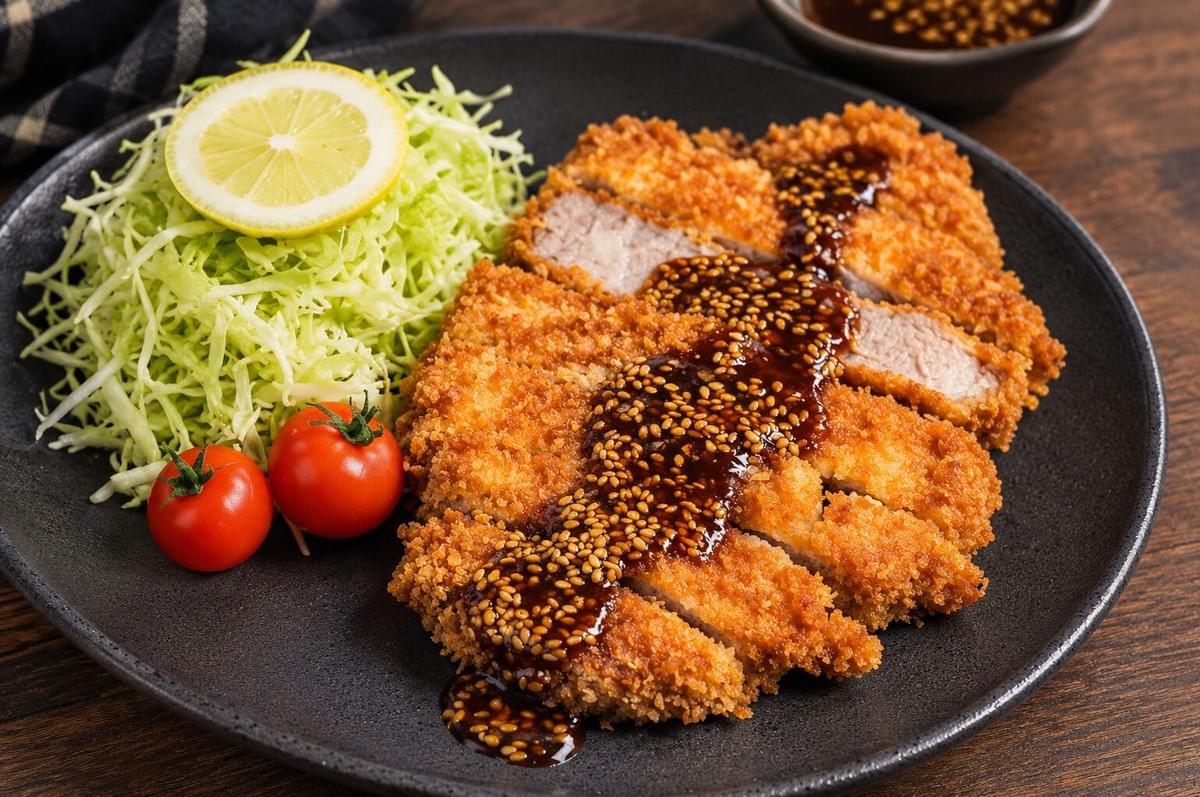
There is a sound tonkatsu makes when your knife goes through it.
A soft crunch, then a give. The crust shatters just a little, and steam slips out from the pale pork inside. You have not even tasted it yet, and already you know.
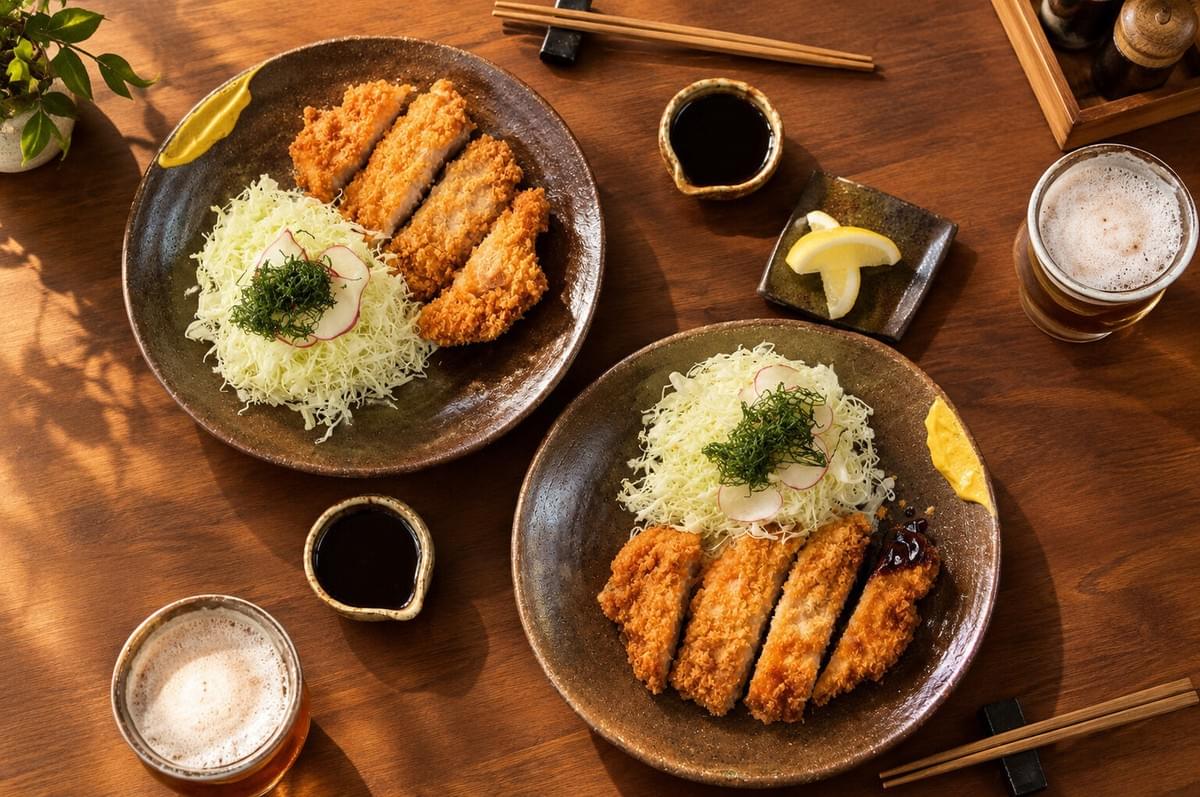
That first bite is the whole reason we fry: crisp on the outside, juicy in the middle, a smear of thick brown sauce catching in the ridges of the panko. It is comfort food that happens to be a little bit thrilling.
If you have only ever had tonkatsu at a restaurant, let me put your mind at ease. It is far simpler than it looks. A few pantry things, a pan of hot oil, and a bit of patience. You can do this.
Let's cook.
What is Tonkatsu? (Quick Background)
Tonkatsu is a breaded, deep-fried pork cutlet—and the name says exactly that. "Ton" means pork, and "katsu" comes from the word cutlet.
It belongs to a family of Japanese dishes called yoshoku (Western-style food reimagined through a Japanese lens). Somewhere in the early twentieth century, the fried cutlet arrived, got coated in panko, and quietly became a national comfort.
What sets it apart is the panko crust. Panko breadcrumbs fry up lighter and crispier than regular crumbs, so the coating stays airy instead of dense. The pork inside stays tender. And it almost always comes with the same quiet companions: a mountain of finely shredded cabbage, a bowl of steamed rice, a cup of miso soup, and a pool of dark, tangy tonkatsu sauce.
Why You'll Love This Tonkatsu Recipe
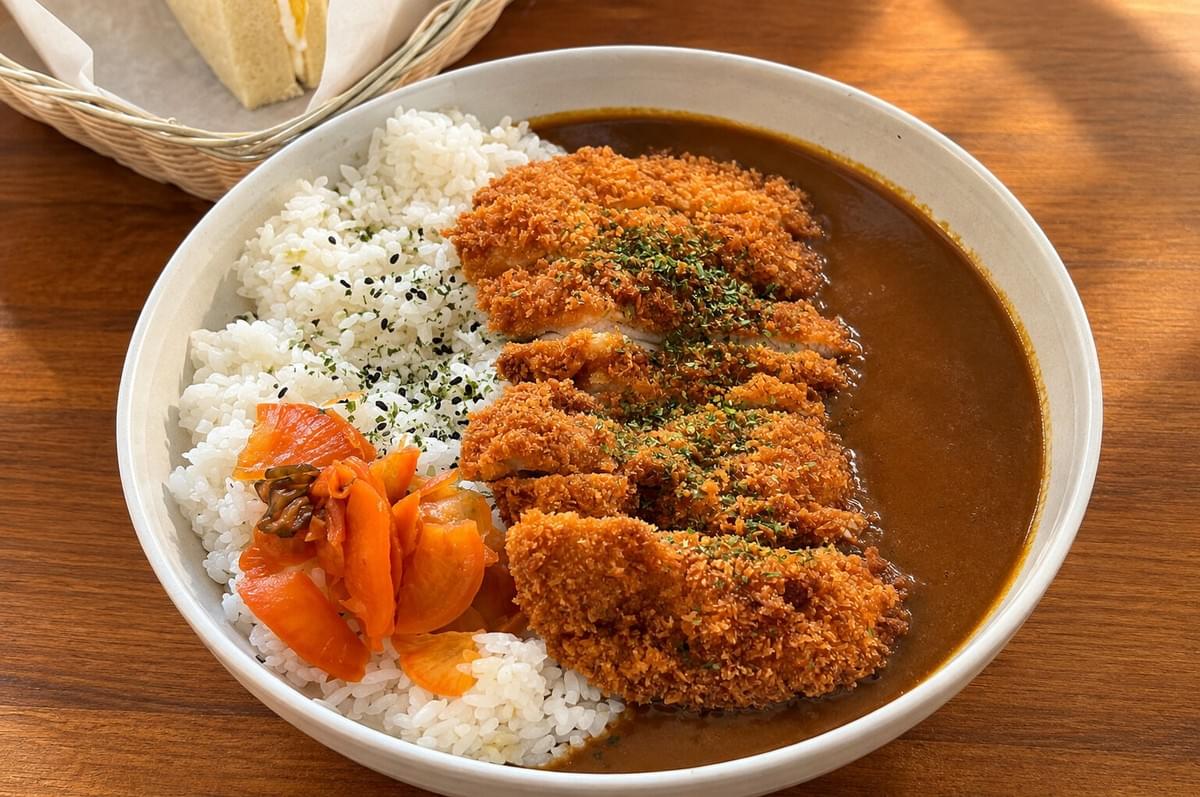
- The crust turns golden, shatter-crisp, and stays that way.
- The pork stays juicy inside, never dry.
- The ingredients are simple and mostly pantry-friendly.
- It brings that noodle-shop, corner-restaurant feeling right into your kitchen.
- Leftovers become a sandwich or a rice bowl the next day.
- Once you learn the breading rhythm, it is genuinely easy.
Key Ingredients (and Smart Substitutions)
Nothing here is fussy. A few notes to help you choose well.
Pork cutlets. You have two good options. Pork loin (rosu) has a strip of fat along the edge that keeps things rich and juicy, and it is the classic choice. Pork tenderloin (hire) is leaner and more delicate, nice if you prefer something lighter. Either works. Aim for cutlets about half an inch (1.5 cm) thick before pounding.
Panko breadcrumbs. These are the soul of the crust. Panko is made from crustless bread, dried into large, airy flakes. They fry up crisp and open, not tight and heavy like fine breadcrumbs. Do not swap them for regular crumbs if you can help it.
Flour and eggs. Your breading station. Plain all-purpose flour and a couple of beaten eggs. Together they form the glue that holds the panko on.
Neutral oil. Use something with a high smoke point and no strong flavor. Vegetable, canola, or peanut oil all work well for frying.
Cabbage and lemon. The classic side. Cabbage, sliced as thin as you can, piled cool and crunchy beside the hot cutlet. A wedge of lemon to squeeze over the top.
Tonkatsu sauce. You can buy a bottle (Bulldog is the well-known brand), or stir together a quick homemade version. More on that below.
Tools You'll Need
- A skillet or shallow heavy pan for frying
- A kitchen thermometer (highly recommended for oil temperature)
- Three shallow bowls or plates for the breading station
- A wire rack set over a tray
- Tongs
- Paper towels
How to Make Tonkatsu (Step-by-Step)
Read through once, then let's go. Set up your breading station before you start, so everything is ready when your hands get messy.
1. Pound the pork
Lay each cutlet between two sheets of plastic wrap and pound gently to an even thickness, about half an inch (1.5 cm). Even thickness means even cooking. If your pork has a rim of fat, make a few small cuts through it so the cutlet does not curl up in the oil.
2. Season
Sprinkle both sides with a little salt and pepper. Simple, but do not skip it.
3. Set up the breading station
Line up three bowls: flour in the first, beaten eggs in the second, panko in the third. This flour → egg → panko order matters. Each layer helps the next one stick.
4. Dredge in order
Coat the pork in flour and shake off the excess. Dip it into the egg, letting the extra drip away. Then press it into the panko, gently patting so the crumbs cling all over. Keep one hand for the dry steps and one for the wet, and your fingers will not turn into breaded mittens.
5. Let it rest briefly
Set the breaded cutlets on your wire rack for 5 to 10 minutes before frying. This small pause helps the coating settle and stay put in the oil.
6. Heat the oil
Pour about an inch (2.5 cm) of oil into your pan and heat it to 340°F to 350°F (170°C to 175°C). A thermometer really helps here. No thermometer? Drop in a few panko crumbs. They should sizzle and rise steadily, not burn instantly or sit there doing nothing.
7. Fry until golden
Lower the cutlets in gently, away from you. Fry for about 3 to 4 minutes per side, until deep golden and crisp. Do not crowd the pan. Cook one or two at a time so the oil stays hot. The pork is done at an internal temperature of 145°F (63°C).
8. Rest on a rack
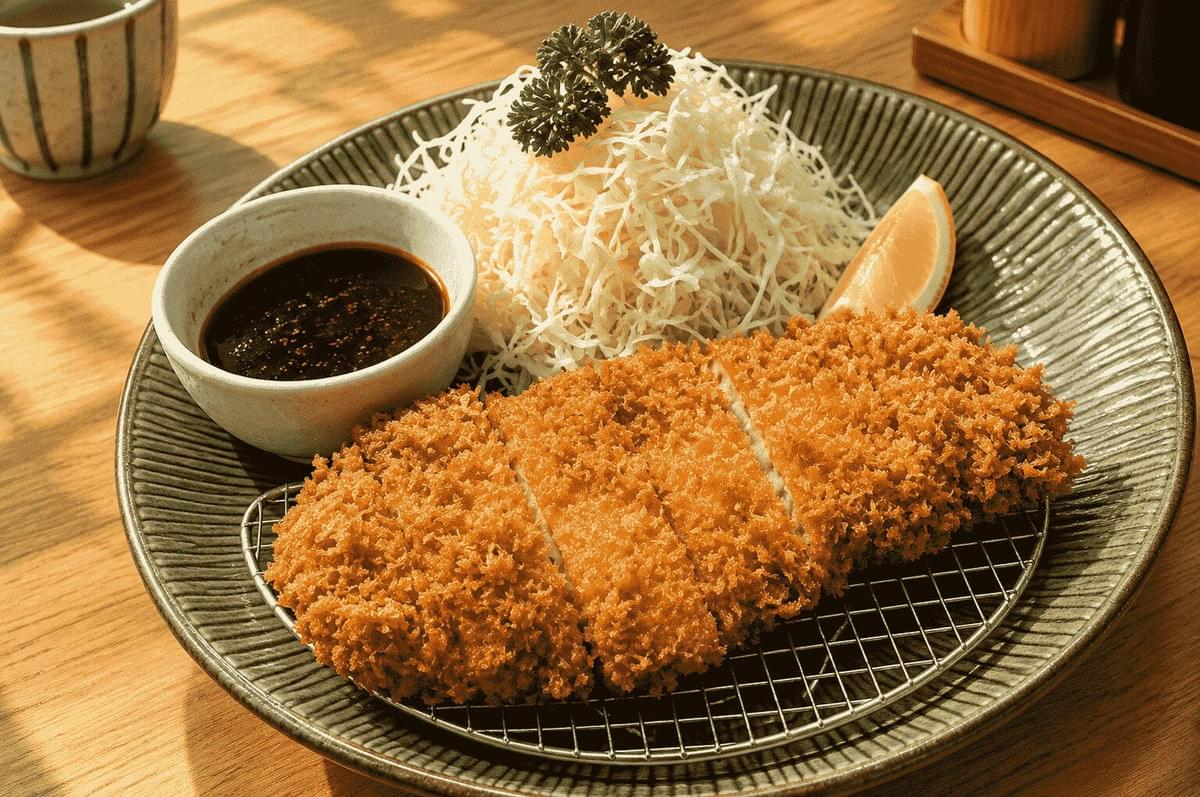
Lift the cutlets onto the wire rack, not onto paper towels or a plate. A rack lets air circulate underneath, so the bottom stays crisp instead of going soggy in its own steam. Rest for a few minutes.
9. Slice and serve
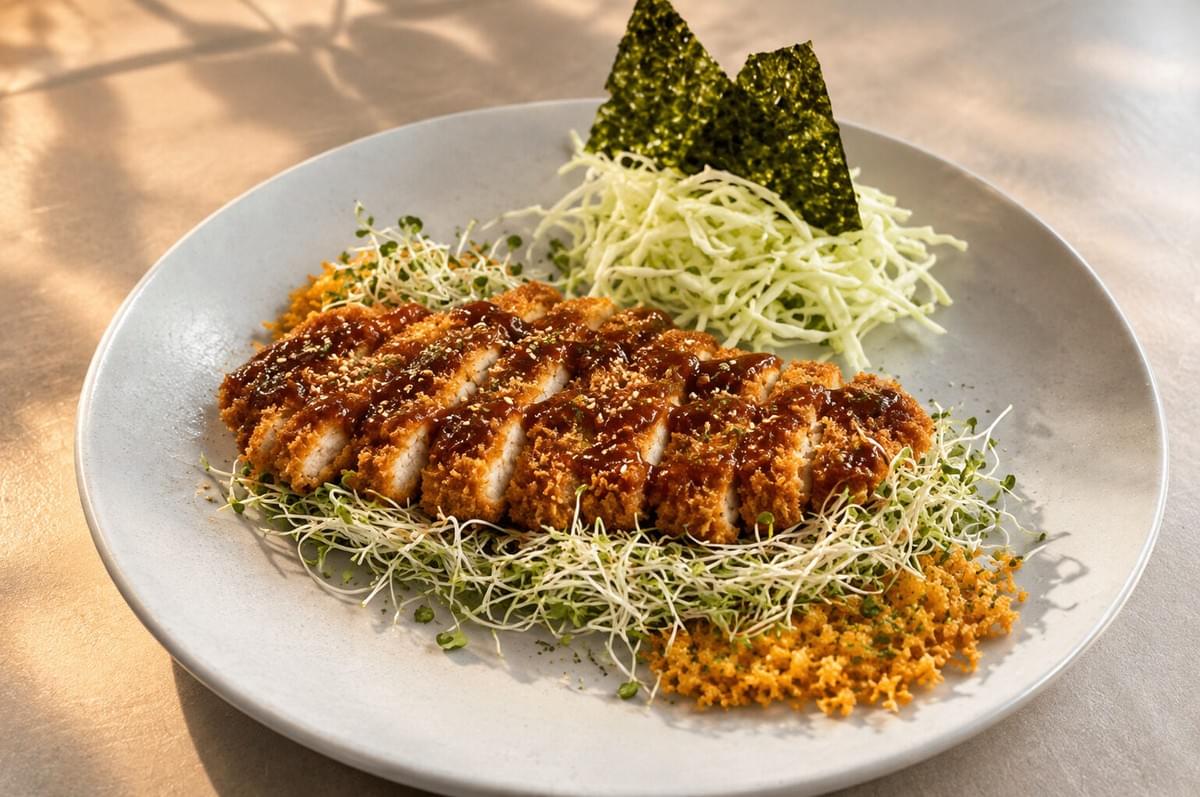
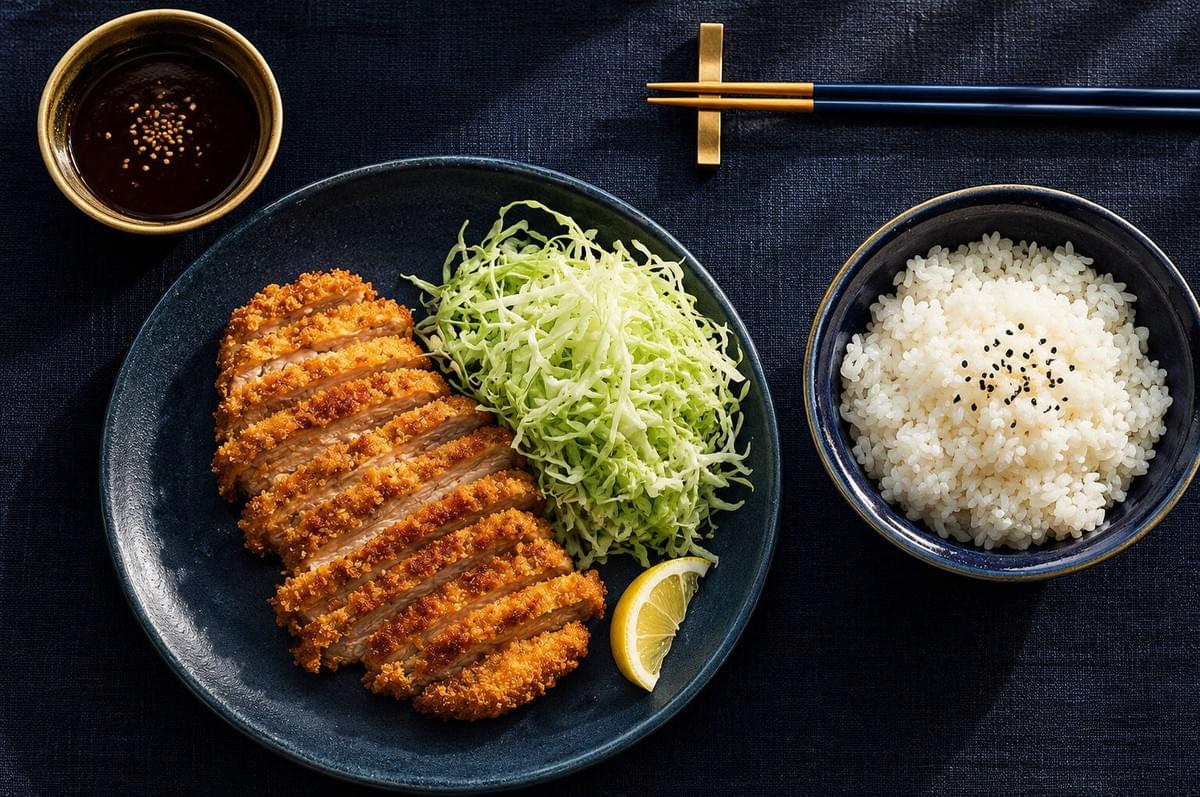
Cut the cutlet crosswise into strips, about three-quarters of an inch (2 cm) wide. Slicing this way keeps the crust intact and makes it easy to pick up with chopsticks. Fan the strips onto the plate and serve hot.
Pro Tips for Ultra-Crispy Tonkatsu
- Watch the oil temperature. Too cool and the crust drinks up oil and turns greasy. Too hot and it browns before the pork cooks through. That 340°F to 350°F window is your friend.
- Do not overcrowd the pan. Adding too much at once drops the oil temperature fast. Fry in small batches.
- Press the panko gently. A soft, firm pat helps the crumbs hold without crushing their airy texture.
- Rest the breaded cutlets before frying. Even a few minutes helps the coating grip.
- Use a rack, not a plate. This is the single easiest way to keep the bottom crisp.
- Keep one hand wet, one hand dry. It keeps your breading clean and your sanity intact.
- Skim stray crumbs from the oil between batches, so they do not burn and darken the next cutlet.
- Let the pork come closer to room temperature before frying, so the center cooks evenly.
- Re-crisp leftovers in the oven or air fryer, around 350°F (175°C), rather than the microwave, which turns the crust soft.
Serving Suggestions
The classic way is a full set meal, and it is hard to improve on. Sliced tonkatsu, a heap of cold shredded cabbage, a bowl of steamed rice, a cup of miso soup, and a few pickles on the side. Tonkatsu sauce over the pork, a squeeze of lemon over the cabbage.
Want something handheld? Make a katsu sando. Tuck a cutlet between two slices of soft white bread, add sauce and a little cabbage, and cut it into neat halves.
Have leftovers and a craving for something saucier? Turn it into katsudon. Simmer the sliced cutlet briefly with onion in a sweet-savory broth, slide a beaten egg over the top, and serve it all over a bowl of rice.
A Quick Tonkatsu Sauce
No bottle on hand? Stir together this simple version: 3 tablespoons ketchup, 2 tablespoons Worcestershire sauce, 1 tablespoon oyster sauce, and 1 to 2 teaspoons sugar. Taste and adjust. It is thick, fruity, and tangy, and it comes together in a minute.
Storage and Reheating
Tonkatsu is happiest fresh, but it keeps reasonably well.
Store cooled cutlets in an airtight container in the fridge for up to 2 days. For longer, freeze the breaded cutlets (cooked or uncooked) for up to a month, wrapped well.
To reheat and keep that crunch, skip the microwave. Warm them in an oven or air fryer at about 350°F (175°C) for a few minutes until hot and crisp again. If frying from frozen, let them thaw first for even cooking.
Recipe Card
Tonkatsu (Japanese Crispy Pork Cutlet)
- Prep time: 20 minutes
- Cook time: 15 minutes
- Total time: 35 minutes
- Servings: 2
Ingredients
- 2 pork loin or tenderloin cutlets, about 1/2 inch (1.5 cm) thick
- Salt and pepper, to taste
- 1/2 cup (60 g) all-purpose flour
- 2 large eggs, beaten
- 1 1/2 cups (90 g) panko breadcrumbs
- Neutral oil, for frying (about 1 inch / 2.5 cm deep)
- Shredded cabbage and lemon wedges, to serve
- Tonkatsu sauce, to serve
Quick tonkatsu sauce (optional)
- 3 tablespoons ketchup
- 2 tablespoons Worcestershire sauce
- 1 tablespoon oyster sauce
- 1 to 2 teaspoons sugar
Instructions
- Pound the pork to an even thickness and make small cuts through any rim of fat.
- Season both sides with salt and pepper.
- Set up three bowls: flour, beaten egg, and panko.
- Coat each cutlet in flour, then egg, then panko, pressing gently.
- Rest the breaded cutlets on a wire rack for 5 to 10 minutes.
- Heat the oil to 340°F to 350°F (170°C to 175°C).
- Fry the cutlets 3 to 4 minutes per side, until golden and cooked to 145°F (63°C) inside.
- Rest on a wire rack for a few minutes.
- Slice crosswise into strips and serve with cabbage, rice, and tonkatsu sauce.
Notes
- Keep the oil temperature steady and fry in small batches.
- Rest on a rack, not paper towels, to keep the crust crisp.
- Stir the quick sauce ingredients together and adjust to taste.
- Nutrition information is an estimate only and will vary with ingredients and portion size.
FAQ
Can I bake or air-fry tonkatsu?
Yes. For the oven, toast the panko in a dry pan until golden first, then bake the breaded cutlets at 400°F (200°C) until cooked through. In an air fryer, spray the cutlets with a little oil and cook around 400°F (200°C), flipping halfway. The texture is a touch different from deep-fried, but still crisp and good.
What oil is best for frying?
A neutral oil with a high smoke point. Vegetable, canola, and peanut oil all work well and let the pork and panko shine.
How do I know the pork is cooked?
The surest way is a thermometer. Pork is safely cooked at an internal temperature of 145°F (63°C). The crust should be deep golden all over.
Why is my breading falling off?
Usually one of three things: the pork was too wet before flouring, the coating did not rest before frying, or the oil was too cool. Pat the pork dry, follow the flour-egg-panko order, rest the cutlets briefly, and keep the oil hot.
What can I use instead of tonkatsu sauce?
The quick homemade version above (ketchup, Worcestershire, oyster sauce, and sugar) is close and easy. In a pinch, a good Worcestershire sauce or a barbecue-style sauce will get you in the neighborhood.
Can I use chicken instead of pork?
Absolutely. The same method makes chicken katsu. Use boneless thighs or breast, pounded to an even thickness.
Why did my crust turn out greasy?
The oil was likely too cool, so the coating soaked it up instead of crisping fast. Check the temperature and let it recover between batches.
Some meals are made to impress a crowd. This one is made for a quiet, satisfying dinner at home, the kind that ends with a clean plate and no regrets.
Give it a try this week, then come tell us how it went over at Our Food Rhythms. We would love to know whether you kept it classic with rice and cabbage, or tucked it into a sandwich and ate it standing at the counter.
