

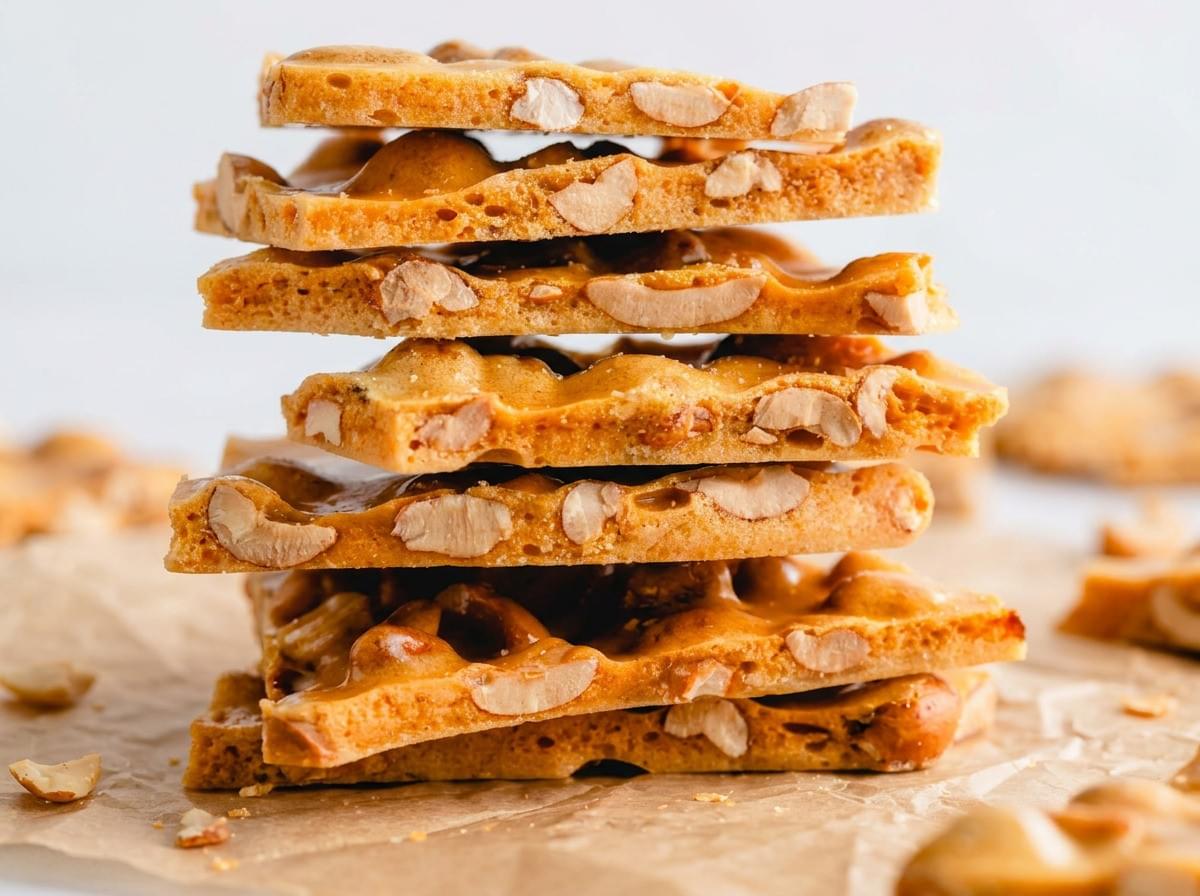
The first batch of peanut brittle I ever made looked like a chewy amber slab that could double as a doorstop. It bent when I bit it. The flavor was there, but the snap was not, and that snap is the whole point.
So I made it again. And again. Now I can tell you exactly where things go right and wrong, because I have lived through the burnt, the chewy, and the grainy.
This peanut brittle recipe gives you the good stuff: thin, glassy sheets that shatter when you break them, deep roasted peanut flavor, and zero burnt bitterness. No doorstops here. Just candy that snaps clean and tastes like it should.
Grab a heavy pan and let's go.
What Peanut Brittle Actually Is
Peanut brittle is a hard sugar candy studded with peanuts. You cook sugar (and usually corn syrup) until it hits a high temperature, fold in nuts and a little baking soda, then spread it thin and let it set. Once cool, it breaks into crisp, jagged pieces.
It shows up around the world in different forms, from Indian chikki to American holiday tins. People love it because it is humble, it travels well, and it turns four cheap pantry items into something that feels generous. A good brittle is the kind of candy you keep sneaking off the counter.
Why baking soda matters
Here is the small bit of food science that changes everything. When you stir baking soda into hot sugar, it reacts and releases tiny carbon dioxide bubbles. Those bubbles aerate the candy, which is what makes brittle brittle instead of a dense, tooth-cracking sheet of hard candy. The texture goes light and snappable. Skip it, and you get glass.
What "hard crack" means
Candy makers talk about sugar "stages," which really just describe how hot the sugar is and how it behaves when cooled. The hard crack stage sits at 300 to 310°F (149 to 154°C). At that point, the sugar has cooked off enough water that it sets firm and snaps cleanly once cool. That is exactly where you want brittle. Stop short, and it stays chewy. Go too far, and it burns.
Ingredients
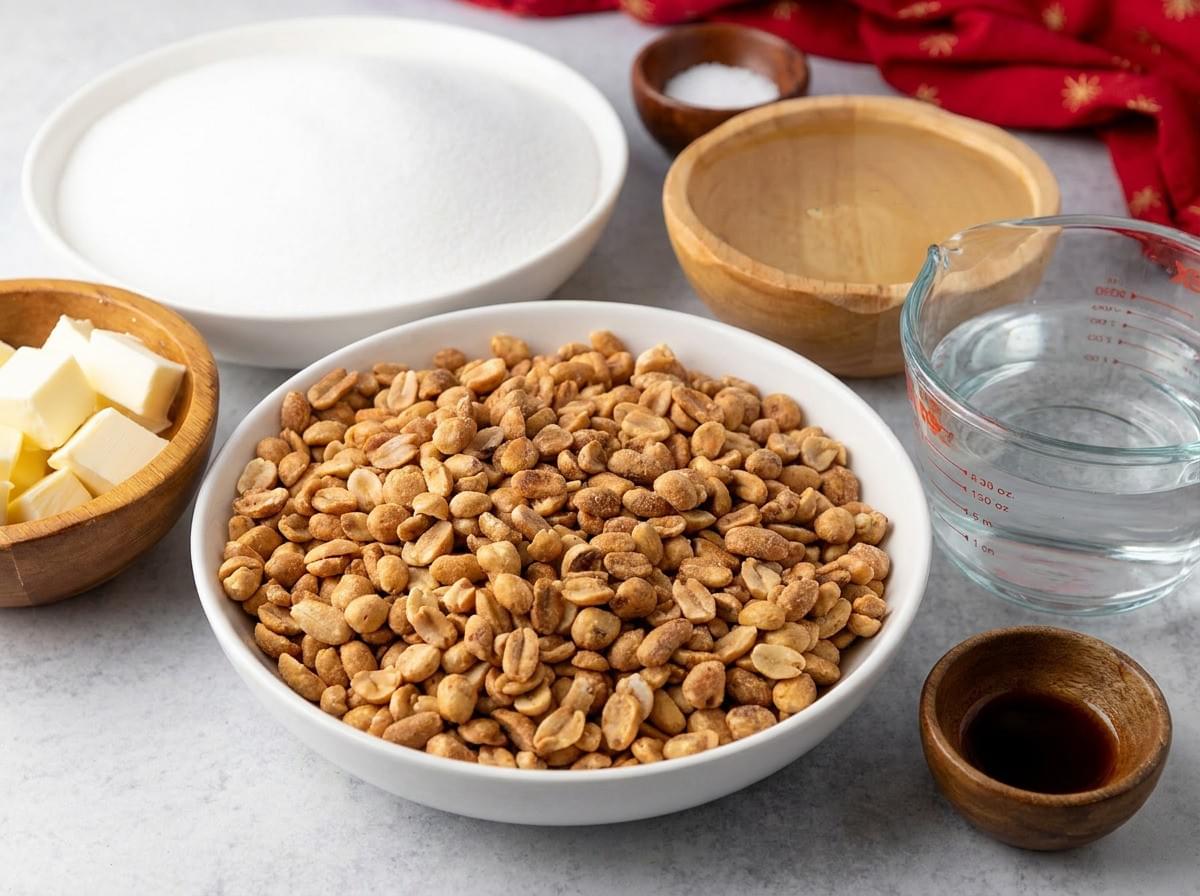
Four core players, plus a couple of optional friends.
- Sugar (1 cup / 200 g): The backbone. Plain granulated white sugar is all you need.
- Light corn syrup (1/2 cup / 120 ml): This is your anti-crystallization insurance. It keeps the sugar smooth and helps prevent grainy brittle. If you must, you can swap in golden syrup.
- Water (1/4 cup / 60 ml): Helps the sugar dissolve evenly at the start so it cooks smooth.
- Raw peanuts (1 cup / 145 g): The star. Raw peanuts toast as the sugar cooks, which deepens the flavor. Roasted peanuts work too, but add them later so they do not scorch.
- Salted vs unsalted: Salted peanuts give a nice sweet-salty balance. If you use unsalted, add a pinch of salt to the syrup.
- Butter (2 tablespoons / 28 g): Adds richness and a little gloss.
- Baking soda (1 teaspoon): The aerator. Non-negotiable for true brittle texture.
- Vanilla (1 teaspoon, optional): A warm background note. Stir it in with the baking soda.
- Cayenne (1/4 teaspoon, optional): For a quiet kick that plays beautifully against the sweet.
Nut swaps: Peanuts are classic, but cashews, almonds, or a mixed-nut blend all work. Just keep the total volume the same.
Your Brittle Toolkit
You do not need much, but a few things matter.
- Heavy-bottom saucepan: This is the big one. A thick base spreads heat evenly so you avoid hot spots that burn the sugar.
- Candy thermometer: Optional but strongly recommended. It takes the guesswork out of hitting the hard crack stage. (I have the cold water test below if you go without.)
- Sheet pan: For spreading the brittle thin.
- Parchment or a silicone mat: So nothing sticks. A silicone mat is my favorite here.
- Heatproof spatula: For stirring and spreading. Hot sugar will melt a flimsy one, so use silicone or wood.
A real safety note: Molten sugar is no joke. It runs around 300°F and it sticks to skin. Keep kids and pets out of the splash zone, do not taste-test the hot syrup, and long sleeves are not a bad idea. Move with intention, not panic.
The Secrets to Brittle That Actually Snaps
This is the part that turns "I tried" into "I nailed it."
How to avoid burning
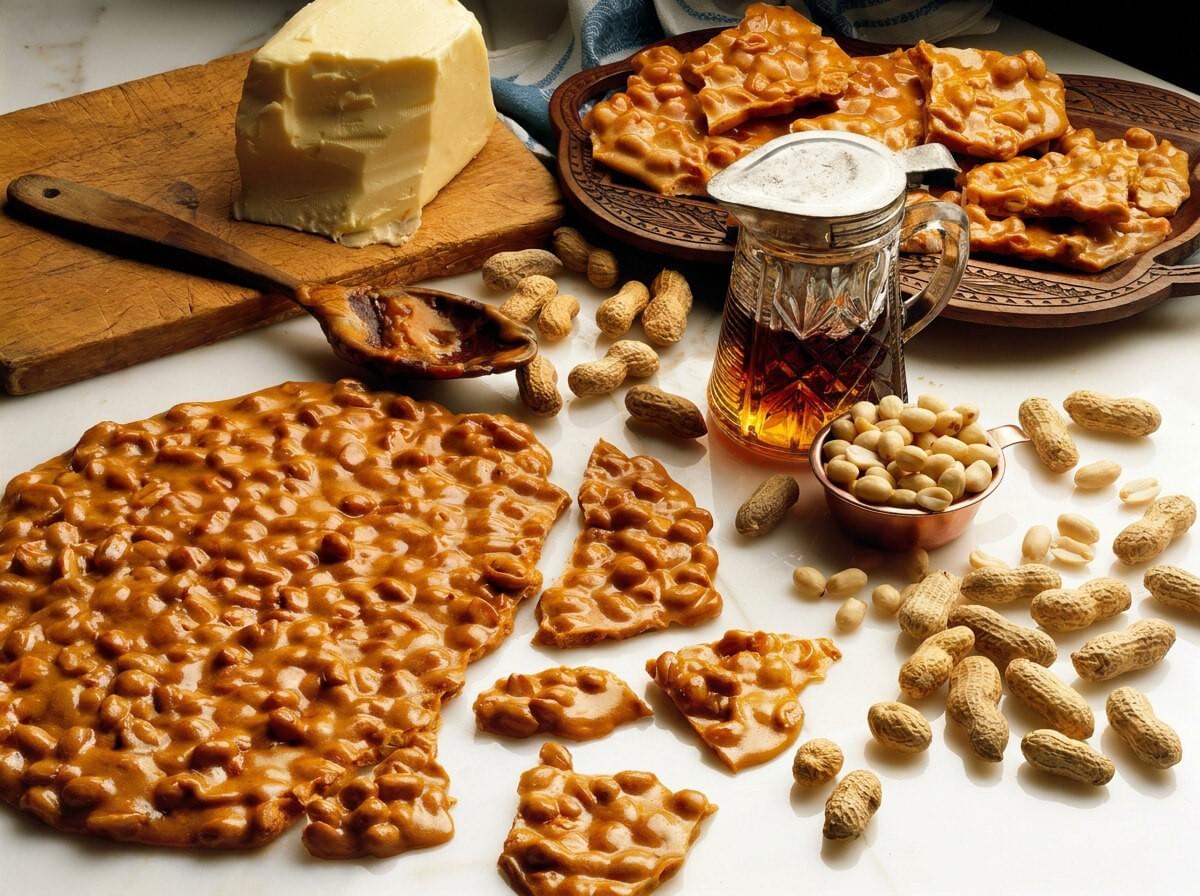
Heat control is everything. Cook over medium heat, not high. Once the syrup turns pale gold, watch it like a hawk, because it goes from golden to brown to burnt fast. Color is your friend: you want a warm amber, like honey, not a dark mahogany. If you smell anything sharp or acrid, you have gone too far.
How to get it thin
Speed wins. Once you add the baking soda, the brittle foams and starts setting, so pour fast and spread faster. Tip the pan to let the mixture run, and use your heatproof spatula to nudge it into a thin layer. For extra-thin peanut brittle, you can lift one edge of the silicone mat and let gravity stretch it before it firms up.
When to add baking soda
Add it off the heat, right at the end, after you stir in the butter and vanilla. The moment it hits, the syrup will foam up and lighten in color. That foam is the aeration happening. Stir just enough to combine, maybe three or four seconds, then pour. Over-stirring deflates those bubbles.
Watch the humidity
Brittle hates a humid kitchen. Sugar pulls moisture from the air, so on a rainy or muggy day your brittle can turn tacky. Pick a dry day if you can, and store it airtight the moment it cools.
If it starts to smoke or goes too dark
Be honest with yourself here. If the syrup is smoking or has gone deep brown, it is bitter and there is no saving it. Pull it off the heat, let it cool safely, toss it, and start fresh. Burnt sugar will not improve with peanuts on top.
Now Let's Make It: The Full Walkthrough
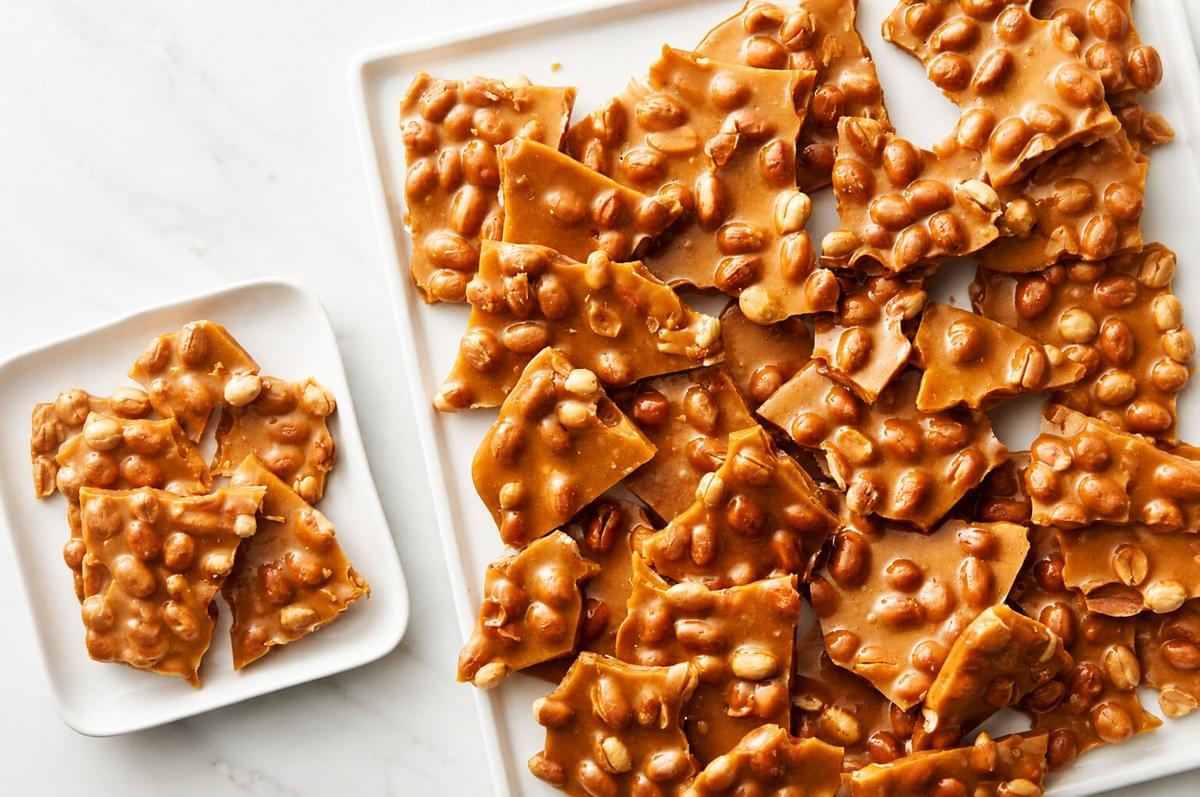
Have everything measured and within reach before you start. This moves quickly.
- Prep your pan. Line a sheet pan with a silicone mat or parchment. Set it right next to the stove. Measure out your baking soda, butter, and vanilla so they are ready to grab.
- Combine and dissolve. In your heavy saucepan, stir together the sugar, corn syrup, and water over medium heat until the sugar dissolves. The mixture will look cloudy, then clear.
- Add the peanuts. Stir in the raw peanuts. (If using roasted, hold them for step 5.) Keep stirring occasionally so they toast evenly in the syrup.
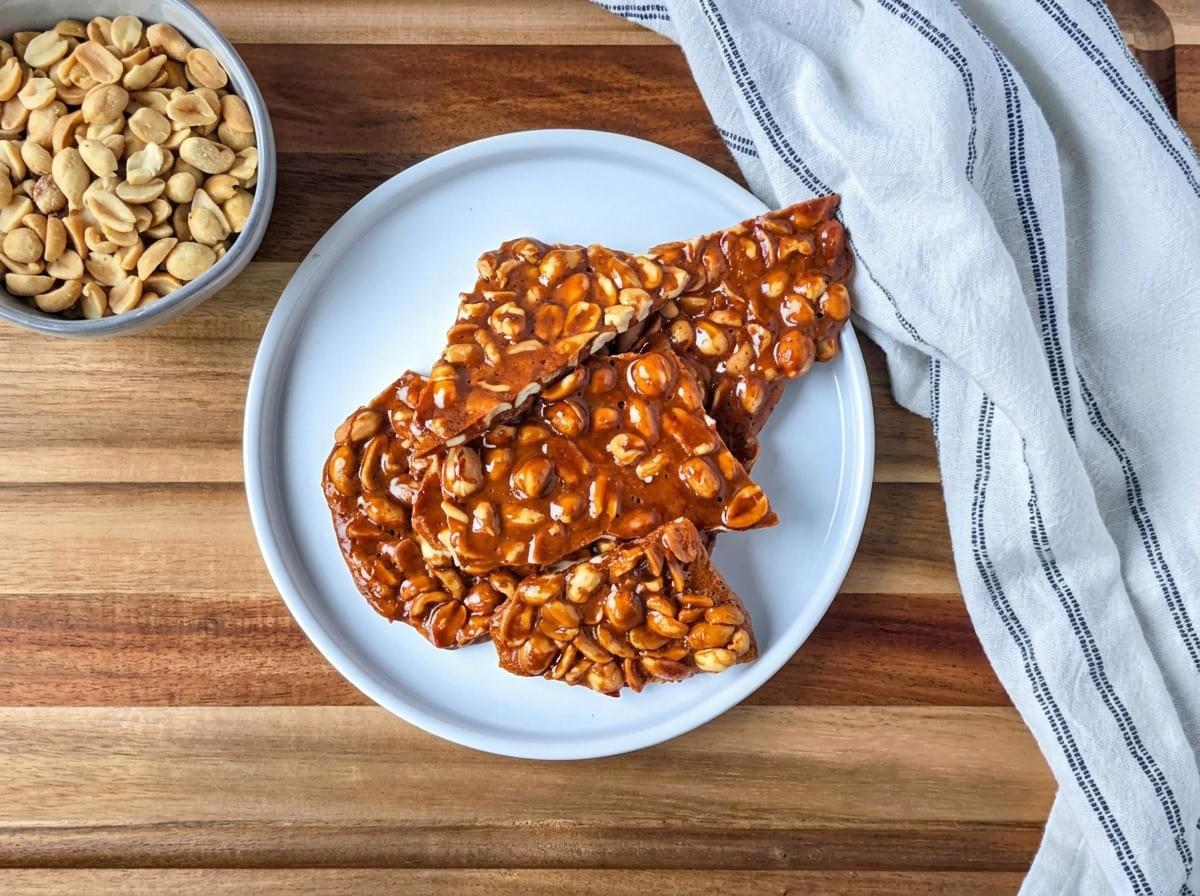
- Cook to hard crack. Let it bubble away, stirring now and then. The syrup will thicken and slowly turn golden. Clip on your thermometer and cook until it reads 300 to 310°F (149 to 154°C). You will smell toasted peanuts and see a warm amber color.No thermometer? Cold water test: Drop a little syrup into a glass of very cold water. At hard crack stage, it forms hard, brittle threads that snap when you bend them. If they bend without snapping, keep cooking.
- Add the finishers. Pull the pan off the heat. Quickly stir in the butter and vanilla (and roasted peanuts, if using). Then add the baking soda. It will foam and lighten. Stir just to combine, only a few seconds.
- Pour fast. Immediately pour the foaming mixture onto your lined pan. Use the spatula to spread it thin, working quickly before it sets.
- Cool fully. Let it sit undisturbed for about 30 to 45 minutes until completely hard and cool to the touch. Then break it into pieces with your hands or a tap of a knife handle.
That snap when it breaks? That is the sound of success.
Brittle is chewy or bends. It did not reach hard crack stage. The sugar held too much moisture. Next time, cook it longer, to that 300 to 310°F target, and lean on the thermometer or cold water test.
Bitter or burnt taste. Too hot, too dark, or cooked too long. Drop your heat to medium and pull the syrup at amber, not brown. Burnt sugar cannot be rescued, so trust the color cues.
Too thick. You either poured too slowly or used too small a pan. Move faster next time, spread with the spatula, and use a full sheet pan so it has room to stretch thin.
Grainy or gritty sugar. This is crystallization, usually from undissolved sugar or stray crystals on the pan walls. Make sure the sugar fully dissolves at the start, and do not over-stir once it is boiling. The corn syrup is there to help, so do not skip it.
Storage and Freshness
Once your brittle is cool and broken, store it in an airtight container at room temperature. Layer pieces between parchment so they do not fuse together. Kept dry and sealed, it stays crisp for about two to three weeks.
Skip the fridge. The moisture in there is the enemy of snap.
If it goes tacky: Humidity can soften brittle over time. To re-crisp, spread the pieces on a lined sheet pan and warm them in a low oven, around 200°F (93°C), for 10 to 15 minutes. Let them cool fully and they should firm back up.
The Sweet Sound of Success
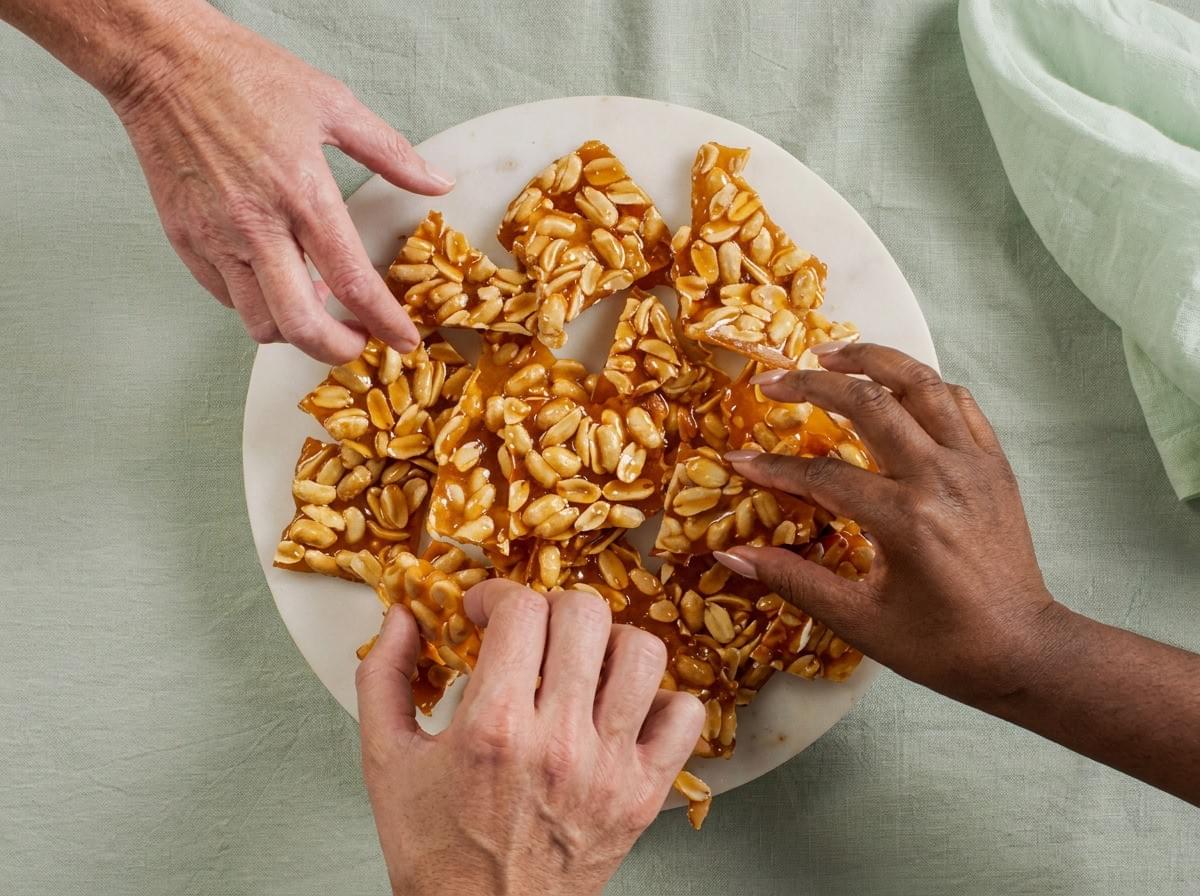
Peanut brittle is one of those recipes that surprises people. The ingredients are pantry-simple, the whole process takes under an hour, and the result looks and tastes like something that took real effort. Once you understand the amber color, the fast pour, and that satisfying foam from the baking soda, it just clicks.
Start with the base recipe, then make it yours. Swap in cashews, drizzle on dark chocolate, or shake in a little cayenne for heat. Pack a tin for a friend, or keep it on the counter and let it disappear piece by piece.
Peanut brittle is one of those recipes that surprises people. The ingredients are pantry-simple, the process takes under an hour, and the result looks and tastes like something that took real effort. Once you understand the amber color, the fast pour, and that satisfying foam from the baking soda, it just clicks.
Start with the base recipe, then make it yours. Swap in cashews, drizzle on dark chocolate, or shake in a little cayenne for heat. Pack a tin for a friend, or keep it on the counter and let it disappear piece by piece.
That snap when it breaks is all yours. You earned it. Happy cooking, friends. For more recipes like this one, visit us at Our Food Rhythms.
