

To walk through the bustling streets of any Thai city is to embark on a culinary adventure. The air is thick with the tantalizing aromas of grilling meats, fragrant spices, and sweet coconut milk. This is the world of Thai street food, a vibrant, democratic, and deeply ingrained part of the country’s culture. It is here, at the humble carts and open-air stalls, that you will find some of the most authentic and delicious food Thailand has to offer.
Thai street food is more than just a quick and affordable meal; it is a way of life. It reflects a culture that values fresh ingredients, complex flavor profiles, and the joy of sharing food. From savory noodle dishes to spicy salads and sweet treats, the variety is staggering. This guide will introduce you to the essential dishes that define this incredible culinary landscape, exploring their ingredients, flavors, and cultural significance.
The Cultural Heartbeat of Thailand
In Thailand, street food is not just for tourists. It is an integral part of daily life for locals from all walks of life. The day often begins with a bowl of noodle soup or a skewer of grilled pork from a trusted vendor and ends with a late-night snack on the way home. This food culture is built on specialization, with many vendors dedicating their lives to perfecting a single dish.
This tradition fosters an environment of incredible quality and consistency. A vendor who only makes Khao Man Gai (chicken and rice) has likely refined their recipe over generations. This focus on a single dish allows for high-quality, fresh ingredients and a level of mastery that is hard to replicate in a restaurant with a large menu. It is this dedication that makes Thai street food a truly authentic and exceptional experience.
The Must-Try Dishes
While the options are nearly endless, a few iconic dishes serve as a perfect introduction to the world of Thai street food.
Pad Thai (Stir-Fried Noodles)
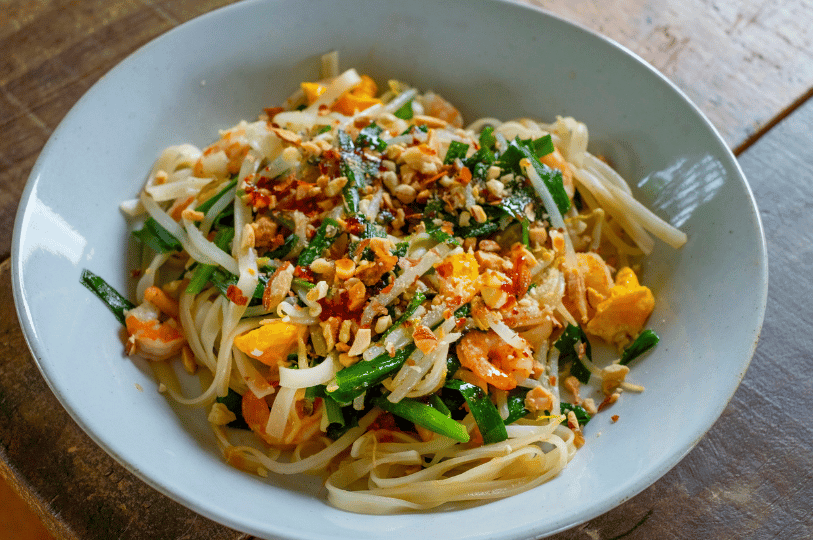
Perhaps the most famous Thai dish worldwide, Pad Thai is a stir-fried noodle dish that perfectly balances the four key elements of Thai cuisine: salty, sweet, sour, and spicy.
- Ingredients: The dish features thin rice noodles stir-fried with tofu, dried shrimp, bean sprouts, and chives in a sauce made from tamarind paste, fish sauce, palm sugar, and chili. It is often served with a side of crushed peanuts, lime wedges, and extra chili flakes.
- Flavor Profile: A well-made Pad Thai is a harmonious blend of flavors. The tamarind provides a tangy sourness, the palm sugar adds a gentle sweetness, and the fish sauce gives it a savory depth. The diner can then customize the spice level to their liking.
Som Tam (Green Papaya Salad)
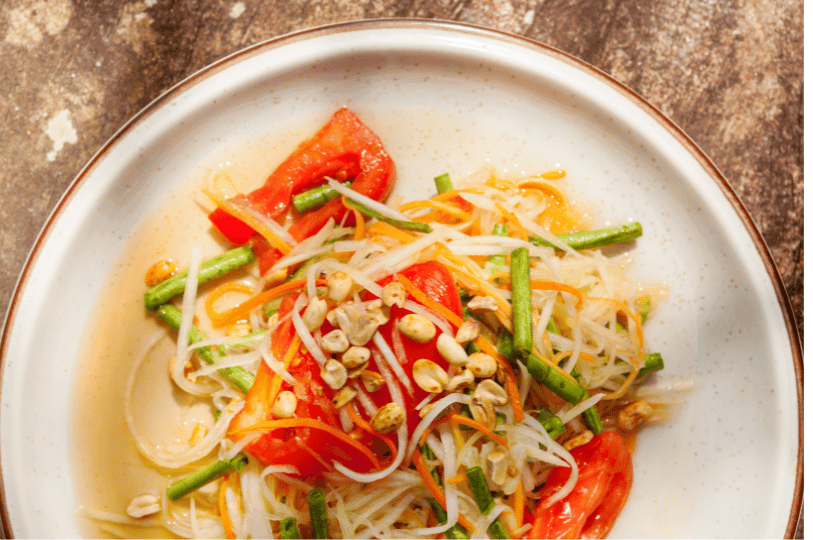
This fiery and refreshing salad from the Isan region of northeastern Thailand is a flavor explosion. It is a staple dish that showcases the Thai love for bold, fresh flavors.
- Ingredients: Unripe green papaya is shredded and pounded in a clay mortar and pestle with a mix of ingredients that can include cherry tomatoes, green beans, peanuts, dried shrimp, garlic, and fresh chilies. The dressing is a potent combination of lime juice, fish sauce, and palm sugar.
- Flavor Profile: Som Tam is intensely flavorful, a powerful combination of spicy, sour, salty, and sweet. The texture is just as important, with the crunchy papaya providing a perfect contrast to the other ingredients.
Moo Ping (Grilled Pork Skewers)
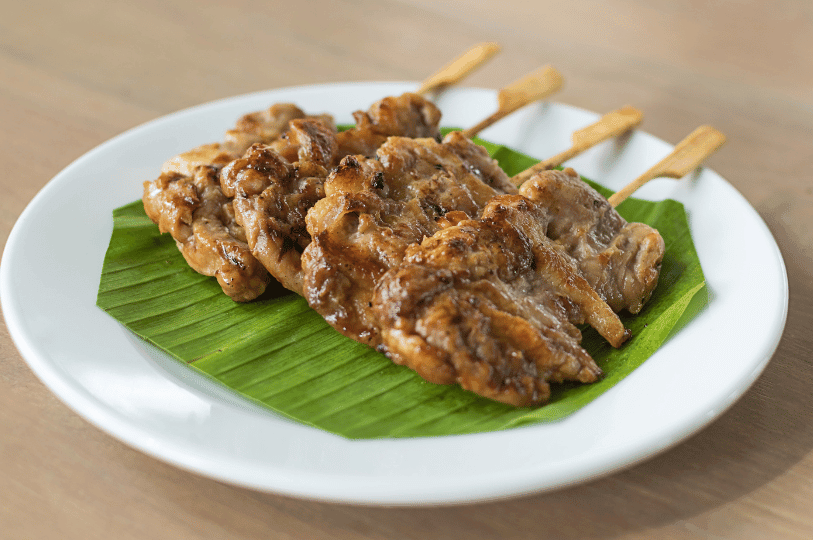
The smell of Moo Ping grilling over hot coals is one of the most iconic scents of a Thai morning. These savory-sweet pork skewers are a popular breakfast item or all-day snack.
- Ingredients: Thin slices of pork shoulder are marinated in a mixture of coconut milk, fish sauce, soy sauce, garlic, and palm sugar. They are then threaded onto bamboo skewers and grilled until tender and slightly caramelized.
- Flavor Profile: Moo Ping is a masterful balance of sweet and savory. The coconut milk tenderizes the meat and adds a subtle richness, while the grilling process imparts a delicious smoky char. It is often served with a small bag of sticky rice.
Khao Man Gai (Chicken and Rice)
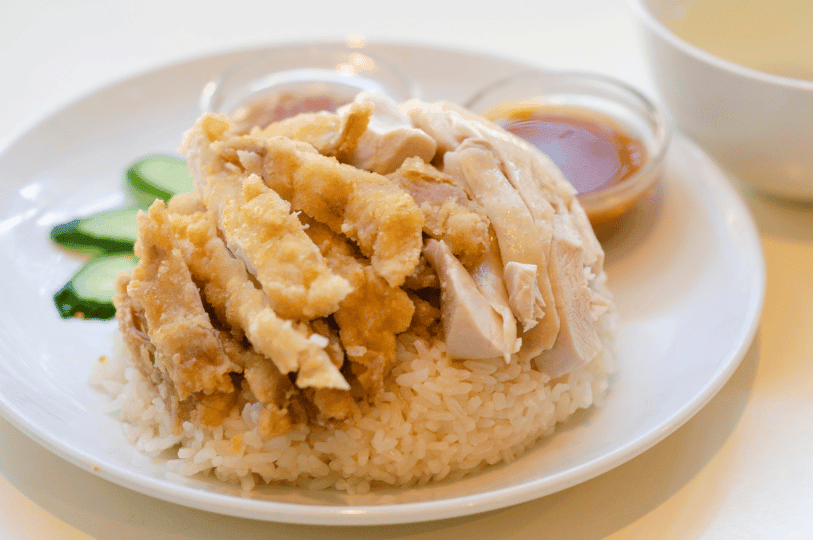
A deceptively simple dish, Khao Man Gai is the Thai version of Hainanese chicken rice. It is a comforting and deeply flavorful meal that relies on the quality of its components.
- Ingredients: A whole chicken is gently poached in a broth seasoned with garlic and ginger. The rice is then cooked in this flavorful chicken broth, absorbing all its richness. The dish is served with slices of the poached chicken over the fragrant rice, accompanied by a bowl of the broth and a pungent dipping sauce made from fermented soybeans, ginger, garlic, chilies, and vinegar.
- Flavor Profile: The dish is subtle yet complex. The rice is aromatic and savory, while the chicken is incredibly tender and moist. The dipping sauce provides a powerful kick of flavor that cuts through the richness of the chicken and rice.
Essential Sips and Sweets
The street food experience extends beyond savory dishes. Refreshing drinks and delightful desserts are an integral part of the culinary journey.
Cha Yen (Thai Iced Tea)
This iconic bright orange drink is a welcome respite from the Thai heat.
- Ingredients: Strongly brewed black tea, often a specific blend that includes star anise and other spices, is sweetened with sugar and condensed milk, then poured over ice and topped with a swirl of evaporated milk.
- Flavor Profile: Sweet, creamy, and slightly spiced, Thai iced tea is a rich and refreshing treat that perfectly complements a spicy meal.
Khao Niao Mamuang (Mango Sticky Rice)
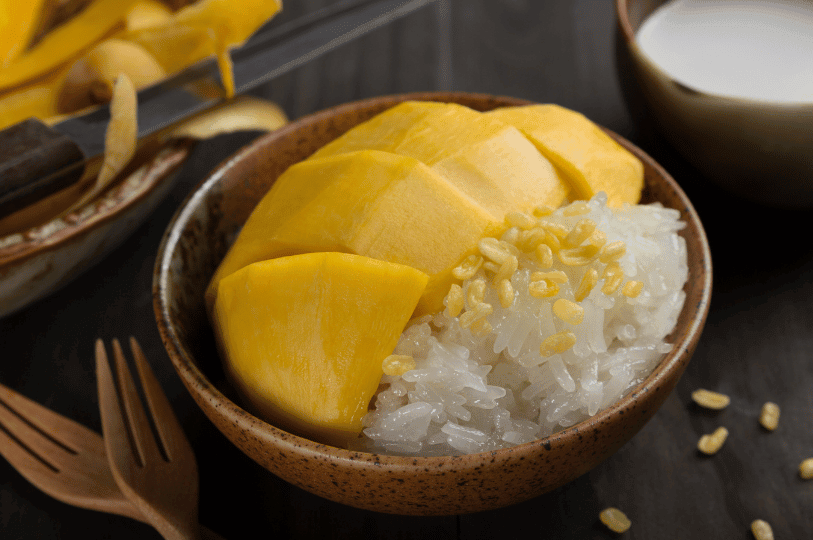
Khao Niao Mamuang is arguably the most famous Thai dessert, especially popular when mangoes are in season.
- Ingredients: Sweet sticky rice is steamed and then soaked in sweetened coconut milk. It is served with slices of ripe, juicy mango and often topped with a drizzle of salted coconut cream and a sprinkle of toasted mung beans for crunch.
- Flavor Profile: The dessert is a beautiful harmony of sweet, creamy, and slightly salty flavors, with the fresh, fragrant mango providing a perfect counterpoint to the rich sticky rice.
Tips for Finding the Best Street Food
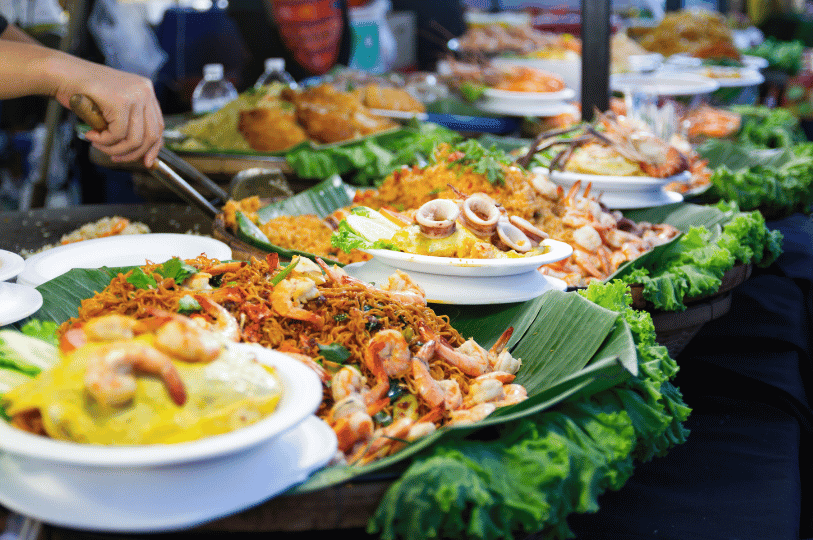
Navigating the world of street food can be part of the fun. Here are a few tips to help you find the best and most authentic vendors, whether you are in Thailand or exploring a Thai community in your own city.
- Look for a Crowd: The most reliable indicator of a great street food stall is a long line of locals. If the local community flocks to a particular vendor, you can be confident that the food is both delicious and safe.
- Specialization is Key: As mentioned, the best street food often comes from vendors who specialize in one or two dishes. A cart that only sells Pad Thai is likely to have perfected its recipe.
- Observe the Hygiene: Look for vendors who keep their workspaces clean. Check that raw and cooked ingredients are kept separate and that the vendor handles money and food with different hands or uses gloves.
- Freshness is Visible: Great street food vendors prepare their dishes to order. Look for stalls where you can see the ingredients being freshly cooked in front of you.
An Invitation to Explore
Thai street food is a universe of flavor waiting to be discovered. It is an invitation to eat like a local, to savor dishes perfected over generations, and to experience a culture where food is at the heart of community and daily life. Whether you are wandering the sois of Bangkok or visiting a local Thai festival, we encourage you to be adventurous, follow the enticing aromas, and dive into one of the world’s greatest culinary traditions.
